Most match-eligible donors rely on some kind of matching gift forms to complete their end of the matching gift process. However, these forms (and the steps taken to submit them) can look wildly different from one company to the next.
In order to best simplify and guide employee donors through the submission process, it’s important that you understand the ins and outs of paper, electronic, and e-submission match forms—plus form alternatives.
From the nonprofit side, giving your supporters the tools they need to complete a match request helps maximize the matching gift revenue you ultimately collect.
On the other hand, as a company, considering all available options for submission forms can make a big difference as you work to develop and finetune your matching gift program.
In this guide, we’ll provide everything you need to know about corporate matching gift forms, including:
As a main source of corporate philanthropy, matching gifts are not an opportunity you want to miss out on. That’s true regardless of whether you’re looking at it from the nonprofit or the business perspective.
The right matching gift forms—and an understanding of how to use them—can bring your team’s strategy to the next level.
Let’s get started!
What are matching gift submission forms?
Matching gift submission forms are a specific type of documentation used within the corporate matching gift process.
When a company launches a matching gift program, it typically provides employees with access to a blank form (note: while some companies may still offer paper options, these forms are most often made available online and hosted within a corporate matching vendor platform). This document typically incorporates a number of fields that share context into the individual donation, the receiving nonprofit, and the team member submitting the request.
The form is then completed by the donor after making their initial nonprofit contribution as a way to formally request a match from their employer.
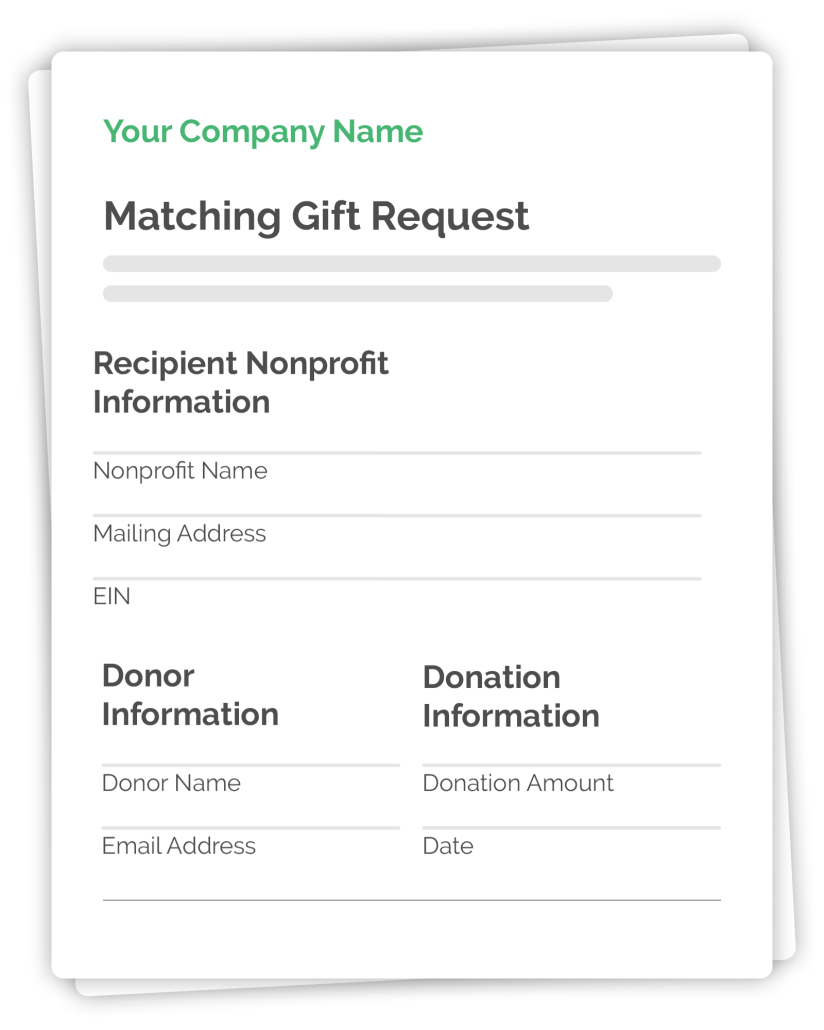
Then, the application is submitted to the company through the business’s specified channel. From there, the employer reviews the provided materials, verifies the initial donation, ensures the gift meets the company’s matching criteria, and approves the match.
Why matching gift forms matter
From start to finish, the matching gift process encompasses a few key phases. These include the initial donation, the employee request, the match review, and finally, the corporate gift.
Of these stages, the majority of match-eligible gifts drop off before or during the employee request component. For nearly all companies, the request stage involves the employee donor filling out an online matching gift form. And the ease with which an individual can complete their match form directly correlates to fulfilled matching gift success.
In other words, the best matching gift forms result in more matching gifts.
If that’s not enough of an answer, let’s take a closer look at why corporate matching gift forms matter…
To Donors
From the donor’s perspective, a matching gift form comprises the vast majority of the matching gift experience. Without it, there’s no employer donation ultimately secured, thus inhibiting the amplified giving impact an individual is aiming to make.
Not to mention, the donor is the one who actively completes the form to request a match on behalf of their favorite organization. It makes sense that a positive user experience is a priority for this key stakeholder!
To Nonprofits
An estimated $4 to $7 billion in available matching revenue goes unclaimed each year. That’s funding that could be going to nonprofit causes but is ultimately left on the table by qualifying organizations and their donors.
In fact, most fundraising groups see only a fraction of the matching gift dollars available to them. Since one of the most significant roadblocks facing incomplete matches is the submission process, nonprofits understand that optimized matching gift forms can go a long way toward driving matches to completion.
To Companies
Companies invest time and effort into launching their matching gift programs. It goes without saying that they want employees to partake. After all, heightened staff participation levels result in better overall CSR—and, with it, increased employee engagement, improved company culture, unique cause marketing benefits, elevated brand reputation, and more.
However, complicated request processes can be a significant hindrance to team-wide engagement with the offerings. Thus, companies want to establish easy-to-use corporate match forms that provide positive experiences for their employees.
Elements of a corporate matching gift form
Regardless of the type of form a company utilizes, most matching gift submissions request the same pieces of information. And this information generally falls into three overarching categories:
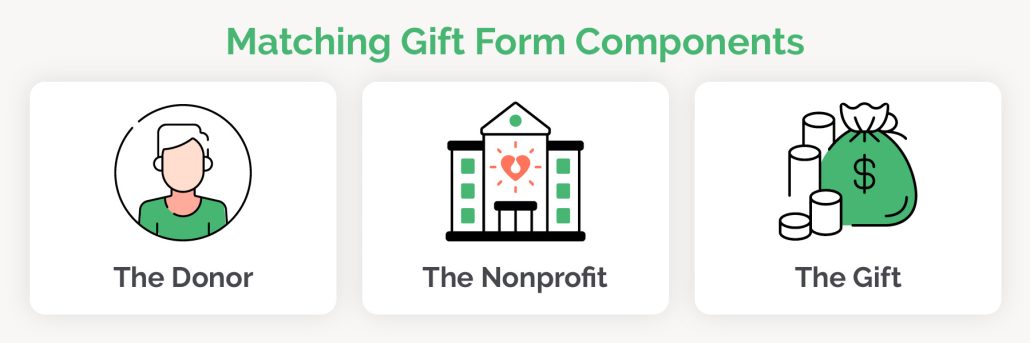
Donor Information
Companies typically request a number of personal data points relating to the individual employee within the matching gift application. Though it can vary greatly from business to business, this information might include:
- The donor’s name
- Employee identification number
- Corporate email address
- Personal mailing address
- Phone number
Providing these details generally certifies that the donor is who they say they are (i.e., an employee of the company from which they’re requesting a match). Plus, it ensures the employer knows who is requesting the matching gift for their own records and to track participation and donation totals over time.
Nonprofit Information
Most match forms also ask specific questions pertaining to the organization an individual has supported. This might include:
Information about the nonprofit can help determine that the organization meets the company’s eligibility requirements (i.e., mission type). Not only that, but it also ensures that the person in charge of the corporate matching program has appropriate contact information for the nonprofit group, should they need to get in touch to verify the initial donation.
Donation Information
This final section is typically where the company asks employees to provide details regarding the original donation. Again, this enables the employer to determine whether the initial gift qualifies for a match (falls within the donation threshold, is submitted prior to the submission deadline, etc.).
Commonly required fields include:
- Gift amount
- Transaction date
- Payment currency
- Donation method
Many companies also request proof of the original donation, which nonprofits often provide in the form of tax-deductible gift receipts. And that’s where the individual donor’s side of the matching gift submission typically ends.
However, some employers require the recipient organization to verify the initial contribution themselves. In those cases, a vital step of the matching process falls into the hands of the nonprofit group.
After an employee completes the matching gift request, the nonprofit is typically notified (whether by mail or within a CSR portal) that an employee has requested a match. At this point, the organization must log into the company’s verification system to confirm that the specified employee made a donation to the cause. They may even be asked to provide a letter verifying the organization’s IRS-sanctioned 501(c)(3) status.
3 types of matching gift submission forms (and alternatives)
There are currently three main types of matching gift forms. These include paper, electronic, and Double the Donation’s standard form. However, innovative corporate giving platforms are developing streamlined submission processes that allow donors to bypass the matching gift form altogether.
Each company that offers a matching program is able to establish its own match request process. This includes selecting one or more matching gift forms and/or alternatives to accept.
Let’s take a closer look at each submission type, and the general process asked of donors to complete it.

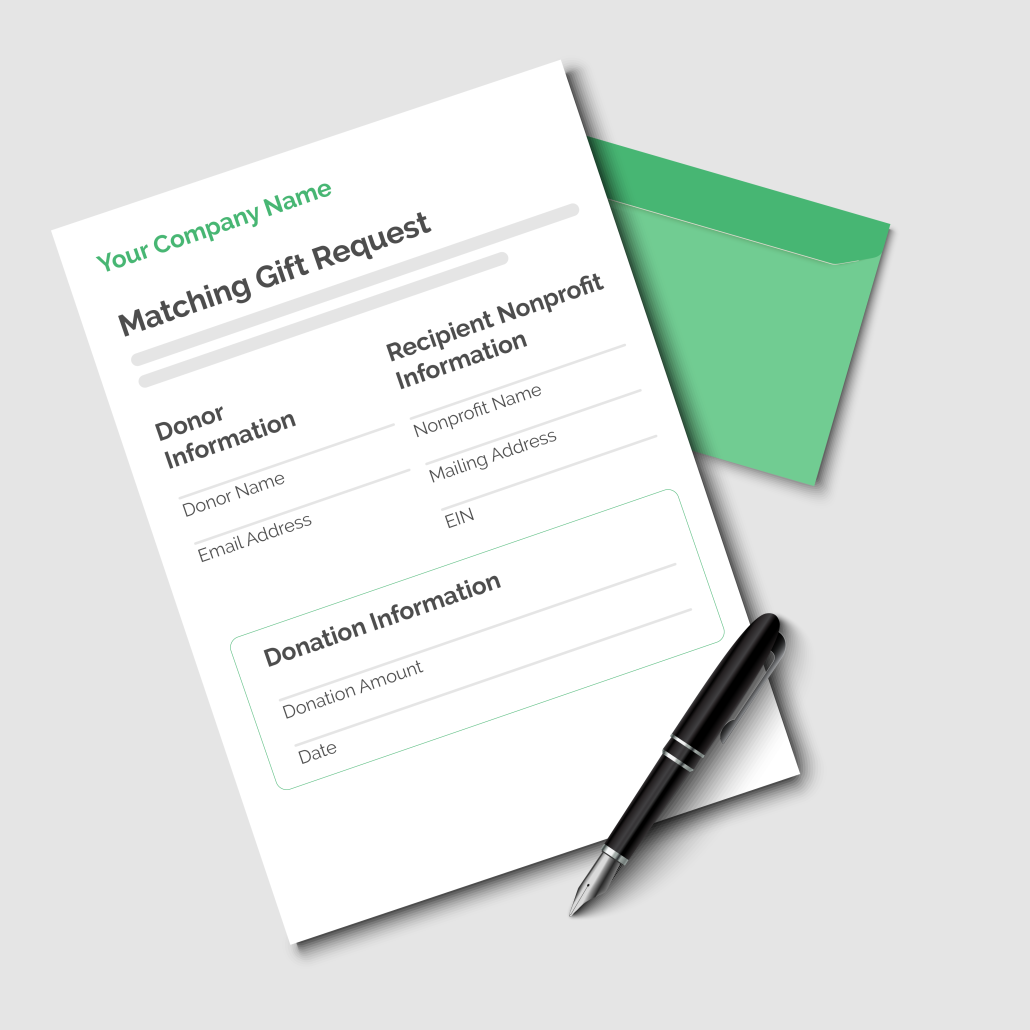
Paper Matching Gift Forms
When it comes to matching gift forms, paper documents are where it all started. In fact, the first-ever matching gift program was developed before the internet was even invented!
Today, however, most matching gift donors prefer electronic forms; though some companies continue to accept—or even require—traditional paper documentation.
We don’t recommend companies use this type of outdated match form. After all, it’s a lot of extra work for the donor, the nonprofit, and the company itself. Still, it’s important to understand the process should you run into a situation involving paper submission forms in any case.
And here’s how it typically works. Employees at corporations with paper match forms go through the following steps to submit their match requests:
Match Eligibility Identification
The first step involved in any matching gift process is determining match program eligibility. And there can be quite a few factors at play here, including whether the company matches employee gifts at all, whether the employee in question qualifies for matching, whether the donation amount and recipient organization meet the company’s standards, and more.
This information can be uncovered in a few ways, from the company itself to a third-party tool such as Double the Donation.
Request Form Location
The next phase of the process involves locating the appropriate matching gift form. And unfortunately, this can be a bit trickier with paper forms compared to other types of matching gift submissions.
Double the Donation or the employer may provide access to printable versions of the forms online, or they may be requested in person from the HR department or company leadership.
Paper Matching Gift Form Submission
Once the match request forms have been accessed, donors are prompted to complete and submit the document via the channel established by the company. Some employers may accept the forms in person (again, likely to the HR office or manager), while others may require match forms to be submitted via mail to a provided address. Others yet can offer some sort of fillable PDF option, which may be completed and submitted online.

Electronic Matching Gift Forms
Technology is rapidly progressing, so it makes sense that many companies have transitioned to electronic forms. Doing so not only reduces programming costs and administrative lift but also simplifies participation for employees.
Electronic forms give donors a bit more freedom regarding when, where, and how easily they complete their requests.
Here’s what the process typically looks like:
Employee Sign-In / Registration
To access and complete electronic matching gift forms, employees usually have to log into the company’s CSR platform. This step typically involves creating or signing in with a username and password for the site.
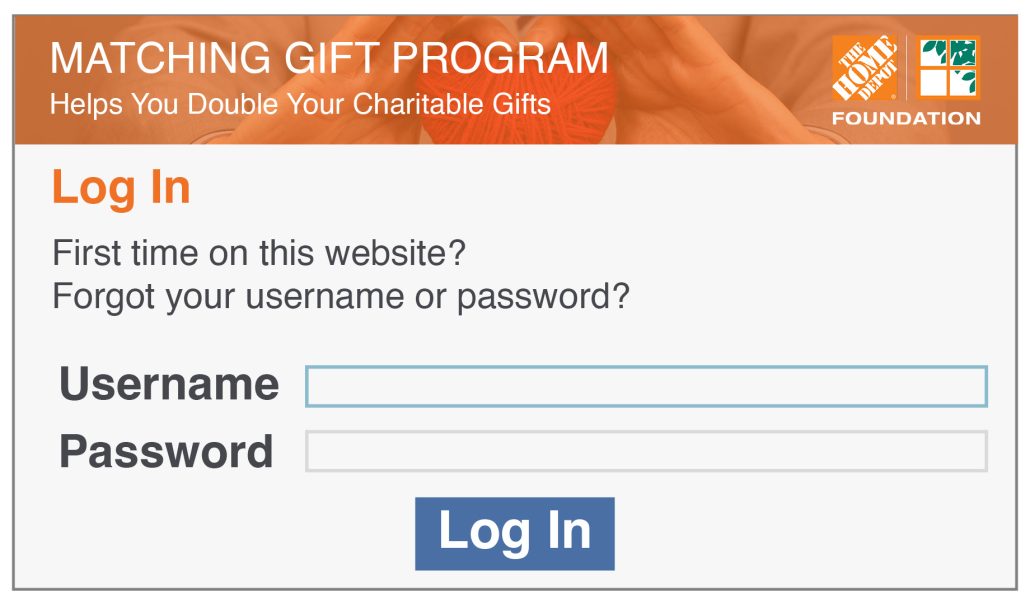
In order to locate the login page, individuals may be directed from their company’s HR department or manager, or they might receive a link through the nonprofit to which they contributed—specifically if the organization uses Double the Donation’s tools.
Match Request Submission
Once in, the employee is prompted to complete the actual request process.
Like paper forms, individuals are asked to register their match requests by providing key data points. Though the exact process can vary based on the CSR portal a company uses, donors generally begin by searching for (or adding) the nonprofit they’ve supported from the portal’s list of verified causes.
From there, individuals typically provide a number of data points pertaining to their recent gifts—such as payment type, domain amount, currency, transaction date, and more.
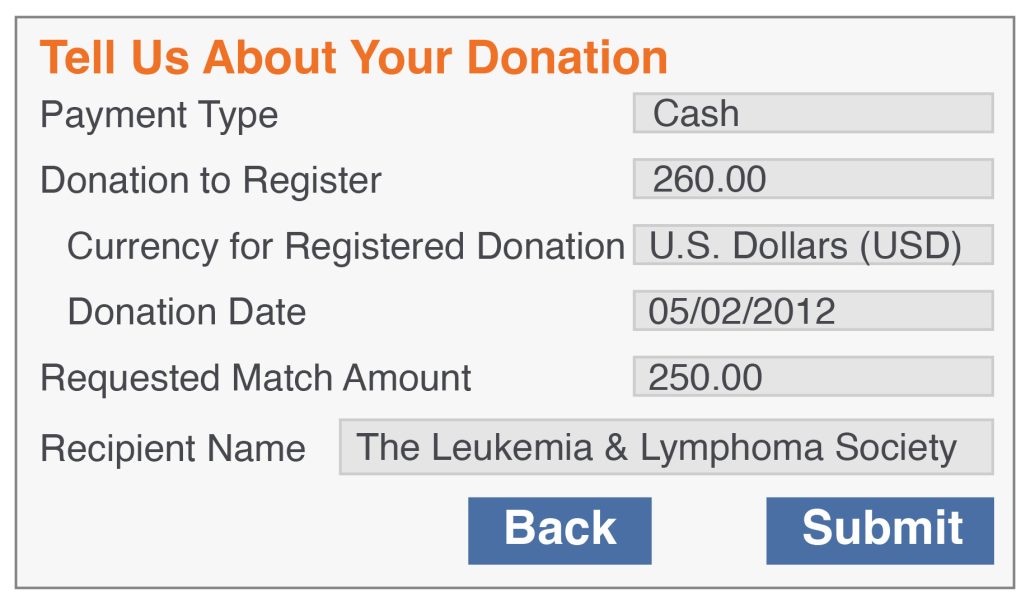 Then the request is complete, and donors can submit their application with a click of a button!

Double the Donation’s Standard Matching Gift Form
Somewhere between a paper matching gift request and a complete online submission portal is Double the Donation’s intuitive standard match form.
Companies can easily opt into accepting this online form, which then enables streamlined automated electronic submissions for their employees. With this offering, donors can more easily complete their matching gift requests, thus increasing program usage and impact overall.
Double the Donation aims to make matching gifts as simple as possible, and the standard form was designed for just that purpose.
Here’s what the process looks like for eligible donors submitting the standard matching gift form:
Employer Selection
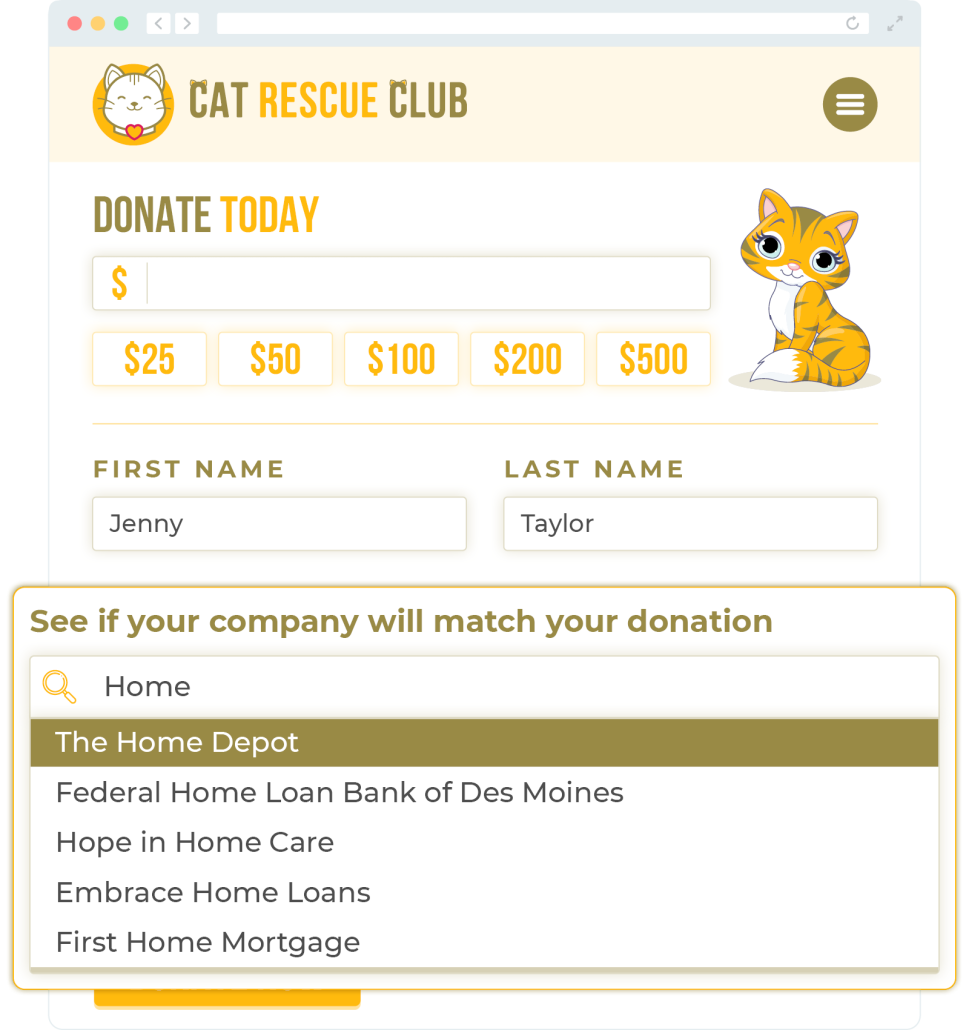
As donors give to nonprofits that use Double the Donation’s matching gift software, they’re prompted to enter their employing company in an auto-completing search tool embedded in the donation form. This is done to uncover match eligibility and determine whether the company accepts the standard matching gift form.
Identity Verification and Authorization
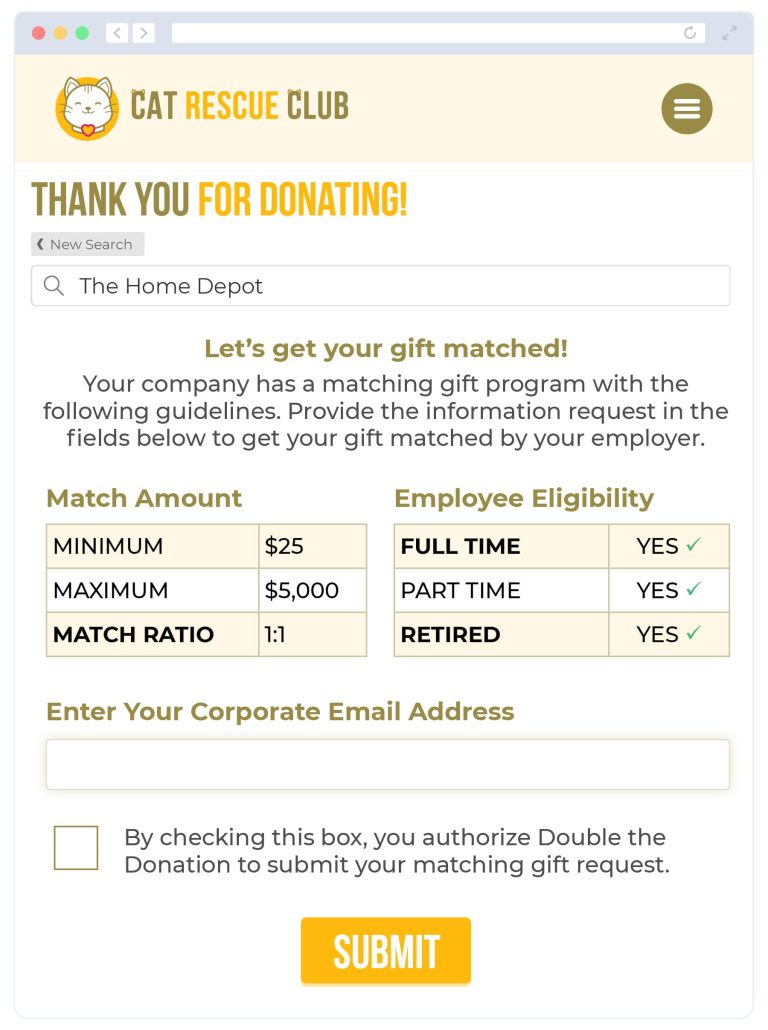
If so, the donor is provided with an opportunity to submit their match automatically, directly from the organization’s gift confirmation screen. Typically, all they are required to do here is verify their identity by providing a corporate email address and check a box that authorizes Double the Donation to submit the match request on their behalf.
Behind-the-Scenes Submission
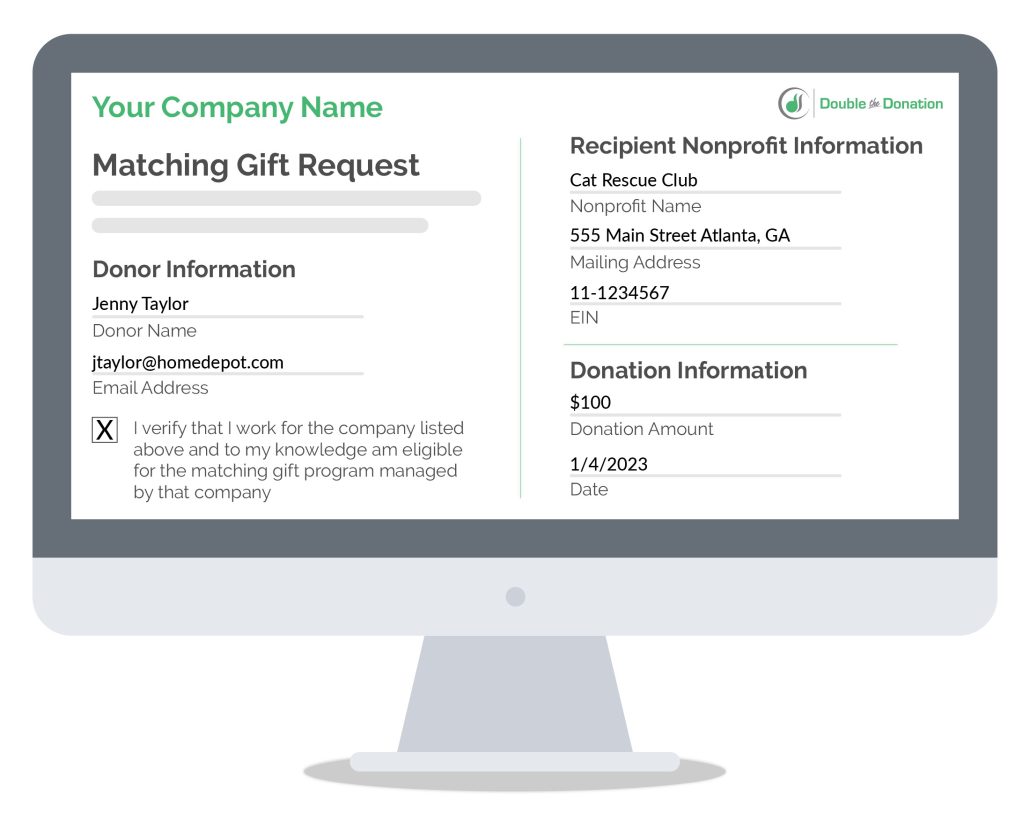
Once authorized, Double the Donation pulls necessary information from the donation process itself and automatically fills in the blanks on the premade standard matching gift form. Upon completion, the form is sent as a PDF document to the matching gift coordinator designated by the company to review and approve as usual.

Matching Gift Form Alternative — Auto-Submission
Online match portals that facilitate electronic request forms have long been working to streamline and improve the match submission process. And Double the Donation shares the same goal.
Now, Double the Donation is partnering with select CSR software providers to do exactly that. By providing an innovative matching gift form alternative, auto-submission allows qualifying donors to submit match requests without a matching gift form at all.
Auto-submission was recently moved out of beta and is now growing its integrated network with CSR solutions.
All they’re typically asked to do is enter their corporate email address on the gift confirmation screen and authorize Double the Donation to submit a match on their behalf. From there, the integrated software ecosystem collects necessary data points and funnels the information directly to the employer’s corporate giving platform behind the scenes.
Then, the company reviews and approves the match within the software system as usual.
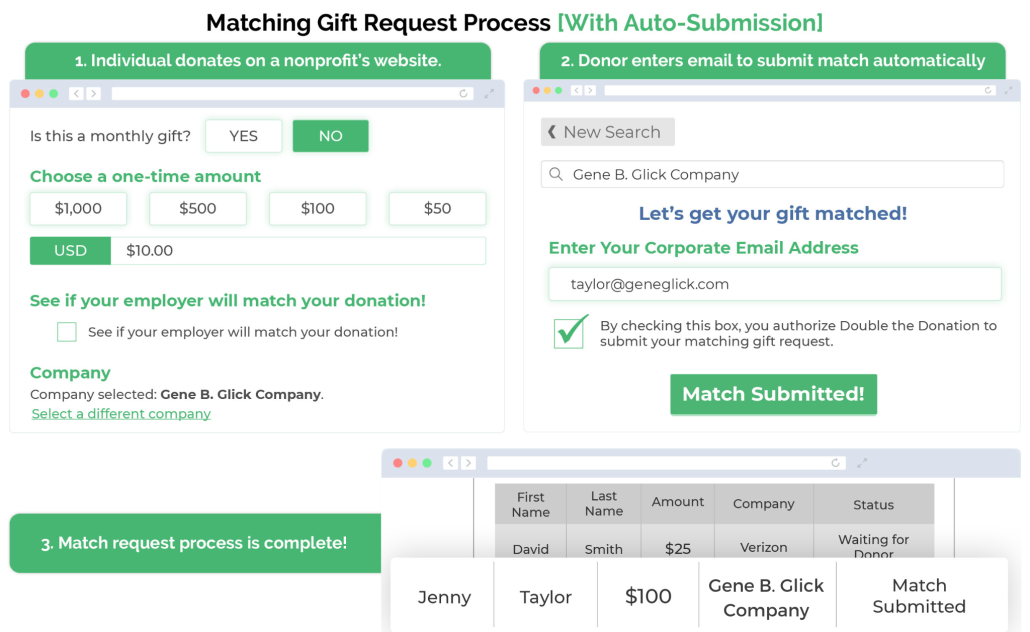
This revolutionary new function benefits donors (with streamlined submission processes and fewer roadblocks), nonprofits (with increased match revenue), and companies (elevated program participation) alike. It’s a win-win-win!
And as more companies and CSR providers begin rolling out the feature in partnership with Double the Donation, an ever-growing number of nonprofit supporters will be able to leverage the matching gift form alternative.
Learn more about matching gift auto-submission here.
How a matching gift database fits in
Double the Donation has compiled the industry’s most in-depth source of matching gift information. Our comprehensive database provides access to details regarding more than 24,000 companies’ (equating to approximately 99.68% of all match-eligible donors) program guidelines and request processes.
By sharing a summary of each company’s matching gift program, we aim to make it increasingly easy for donors to complete their matches on behalf of the organizations they support.
When donors search for their employers using the associated database search tool, they’ll instantly receive any available guidelines for their employers’ programs. If available (which, over 91% of companies’ forms are), a direct link to online match forms and other related documents will be given to them, too!
Here’s an example of what you might see when searching for an employer with Double the Donation’s matching gift database search tool:

Donors will also be provided with other relevant information, such as:
- The company’s match ratio;
- Minimum and maximum match amounts;
- Eligible employee groups (full-time, part-time, retired, spouses, etc.);
- Qualifying nonprofit mission types;
- Match request processes and forms (online or offline);
- Submission deadlines;
- Other available programs (i.e., volunteer grants).
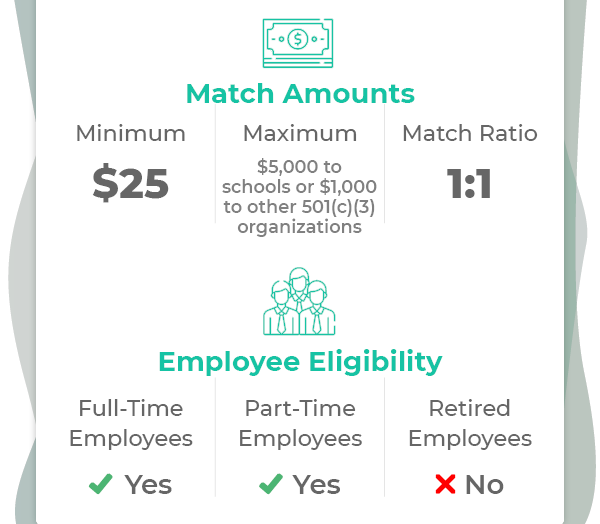
A corporate database can provide powerful insights into thousands of companies’ matching gift programs and next steps. That can go a long way toward maximizing program participation for donors by simplifying the processes involved.
Nonprofits interested in benefiting from our innovative matching gift database and automation software can do so by requesting a demo here.
As for companies, make sure your giving program is included in our comprehensive database of corporate match information. This enables employees to have quick and easy access to program guidelines and forms from their favorite organizations’ giving pages! Click here to add your company to Double the Donation’s matching gift database.
Wrapping Up
Matching gift forms play a crucial role in the overall matching gift process—not to mention strategic corporate match fundraising.
At this point, your team should know all about the different types and components of corporate matching gift forms, the value for nonprofits, companies, and donors, and more. Now, it’s time to get out there and start maximizing your matching gift revenue!
Interested in learning more about matching gift best practices? Check out these additional recommended resources:
Take matching a step further with auto-submission functionality.



Corporate Volunteering Platforms: Boost Employee Engagement
/in Learning Center, Corporate Consulting /by Adam WeingerCompanies that serve their communities stand out to customers and employees. With robust corporate social responsibility (CSR) initiatives in place, businesses can engage their employees and prove their commitment to bettering the world around them.
With 63 million Americans already volunteering with nonprofits each year, corporate volunteerism is an easy way for companies to get started with CSR. To ensure your program runs smoothly, invest in a corporate volunteering platform. This type of tool facilitates the logistics of corporate volunteerism, making it easy for employees to participate.
In this article, we’ll cover the basics of corporate volunteerism and corporate volunteering platforms, including:
Whether you’re new to corporate volunteerism or want to make your existing program more efficient, corporate volunteering platforms are an excellent investment in your company’s CSR efforts.
What Is Corporate Volunteering?
Through corporate volunteering programs, companies encourage their employees to volunteer their time with charitable causes. These programs typically involve businesses promoting or organizing volunteer opportunities for their team. They may also feature incentives for volunteering, such as volunteer time off or volunteer grants.
What Are the Benefits of Corporate Volunteering?
While corporate volunteering clearly helps nonprofits gain more volunteer support, what about businesses? Why should your company start a corporate volunteering program?
There are so many advantages your company can unlock by starting a corporate volunteering program, including: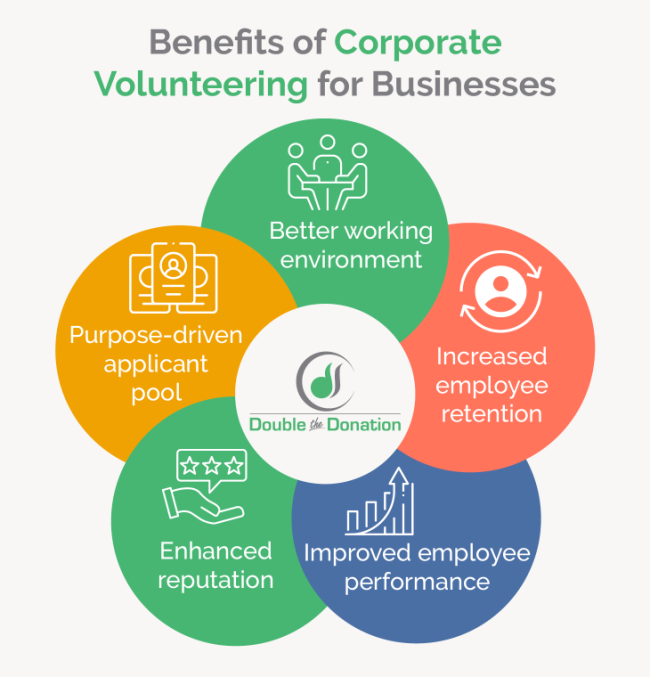
From employees to customers to job applicants, corporate volunteerism allows your company to develop stronger, longer-lasting relationships with a variety stakeholders.
What Are Corporate Volunteering Platforms?
Corporate volunteering platforms are a form of volunteer management software. These tools help companies manage their corporate volunteerism programs and streamline communication with volunteers. By investing in a corporate volunteering platform, you can formalize your program and take your CSR efforts to the next level.
What Are the Top Features of Corporate Volunteering Platforms?
Each corporate volunteering platform has its unique features. We’ve compiled a list of some of the top features to look for when choosing your own platform: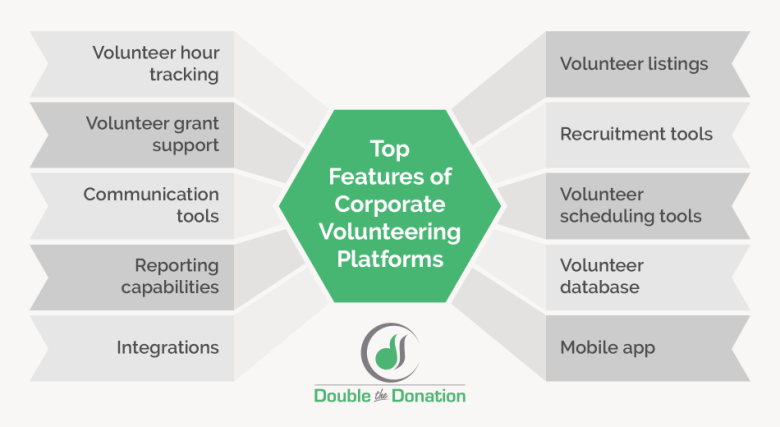
Of course, your company may not need all of these features to successfully manage your corporate volunteer program. Take the time to sit down with your team and determine which features are necessary before investing in a platform.
How Do You Select A Corporate Volunteering Platform?
With the different potential features in mind, you may be wondering how you should proceed with choosing a corporate volunteering platform. Follow these steps to make the best decision for your company: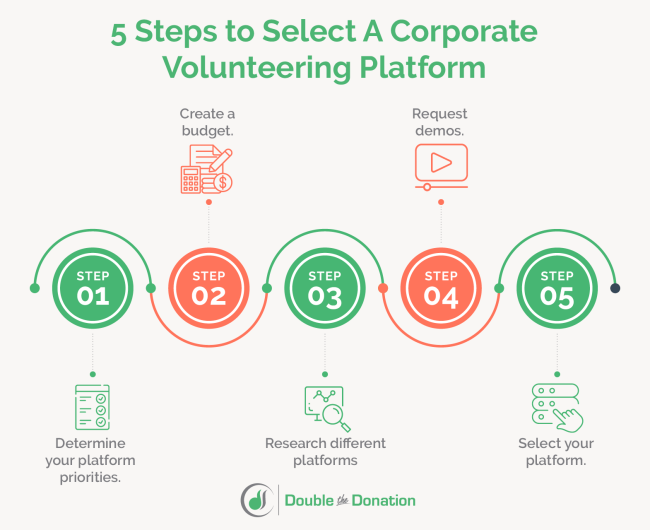
To ensure your corporate volunteering platform is effective, you’ll want to make sure your employees know how to use it. Schedule a meeting to teach your employees the ins and outs of the platform and answer any questions they may have.
Wrapping Up & Additional Resources
Starting a corporate volunteerism program is a great first step in developing your CSR repertoire. With the right corporate volunteering platform, you can take your program to the next level, engaging more employees and helping tons of worthy causes.
If you’re looking for additional ways to enhance your corporate volunteering program, check out the following articles:
Workplace Giving Platforms: 5 Ways You Can Boost CSR Success
/in Corporate Consulting, Learning Center /by Adam Weinger- What are workplace giving platforms?
- 5 benefits of workplace giving solutions
- How to start using workplace giving platforms
- Workplace giving trends

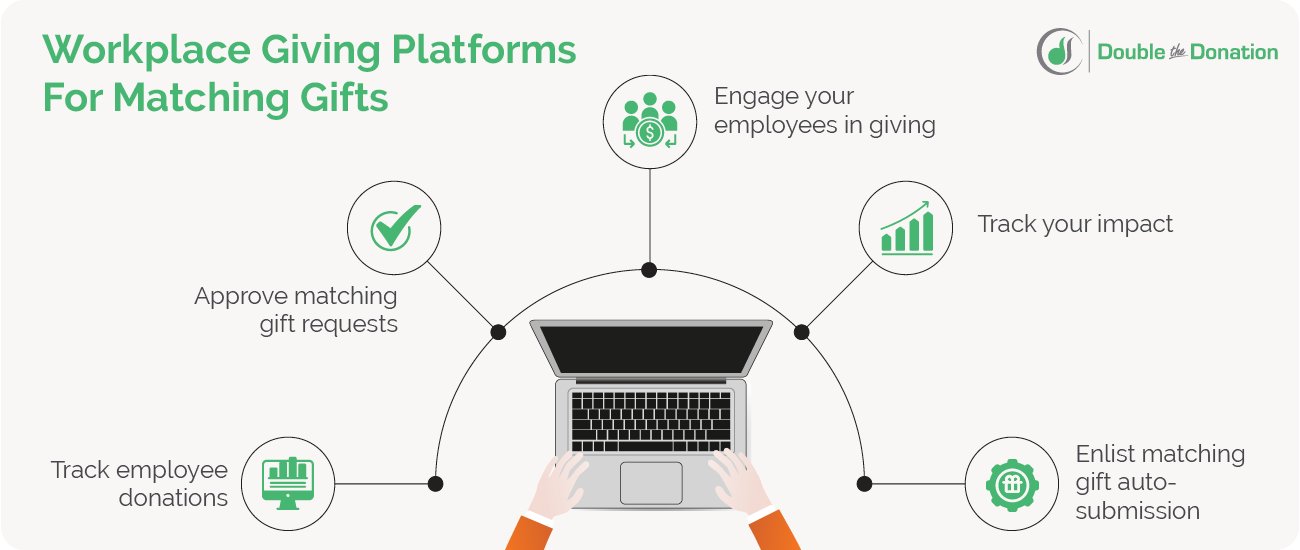
- Track employee donations. Keep track of all employee donations in one central location so you can manage all of your incoming data more easily.
- Approve matching gift requests. Approve match requests automatically or with a single click based on minimum/maximum match amounts, eligibility requirements, and other guidelines your company has put in place.
- Engage your employees in giving. Engage your employees in the causes they care about by using a workplace giving platform that’s easy to navigate, flexible, and shows your company cares about giving back.
- Track your impact. Workplace giving platforms should offer robust, real-time reporting so you can keep track of the social good your company is doing.
- Enlist matching gift auto-submission. Instead of requiring employees to complete a separate request process for matching gifts, some CSR platforms now offer innovative auto-submission functionality through a recently out-of-beta integration with Double the Donation’s tools. All it asks for is a corporate email address from the employee donor, and the software system processes the request from there!
Learn how to make matching gifts easy with auto-submission functionality!
- Planned shifts
- Event capacity planning
- Registrations
- Volunteer signups
- Logged volunteer hours
- Your overall impact
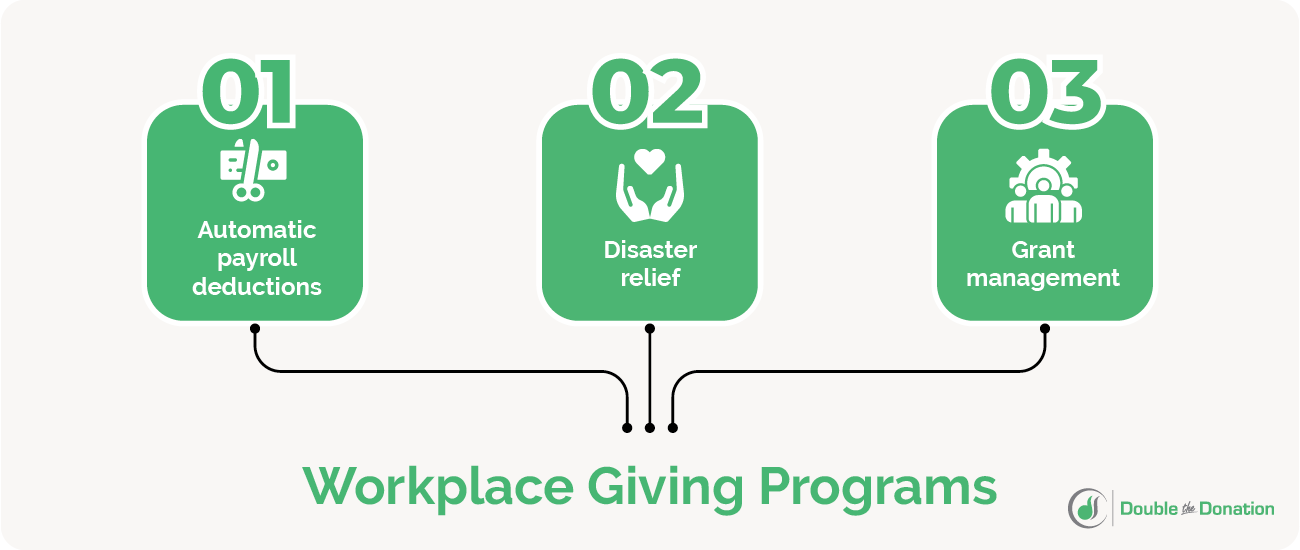
- Automatic payroll deductions: Workplace giving platforms with payroll integrations and features allow employees to select a nonprofit from a large database of pre-vetted 501(c)(3) organizations. From there, they can choose to set up a recurring deduction through the platform for as long as they’d like.
- Disaster relief: Workplace giving solutions often offer tools to quickly create new disaster relief campaigns. After all, the faster companies can launch a campaign, the faster they’ll be able to collect and disburse funds to nonprofits in need.
- Grant management: Many companies and foundations provide annual grants to important causes and organizations around the world. Workplace giving platforms can help grantmaking organizations manage all aspects of the grantmaking process, including grant proposals, approvals, budgets, and goals.
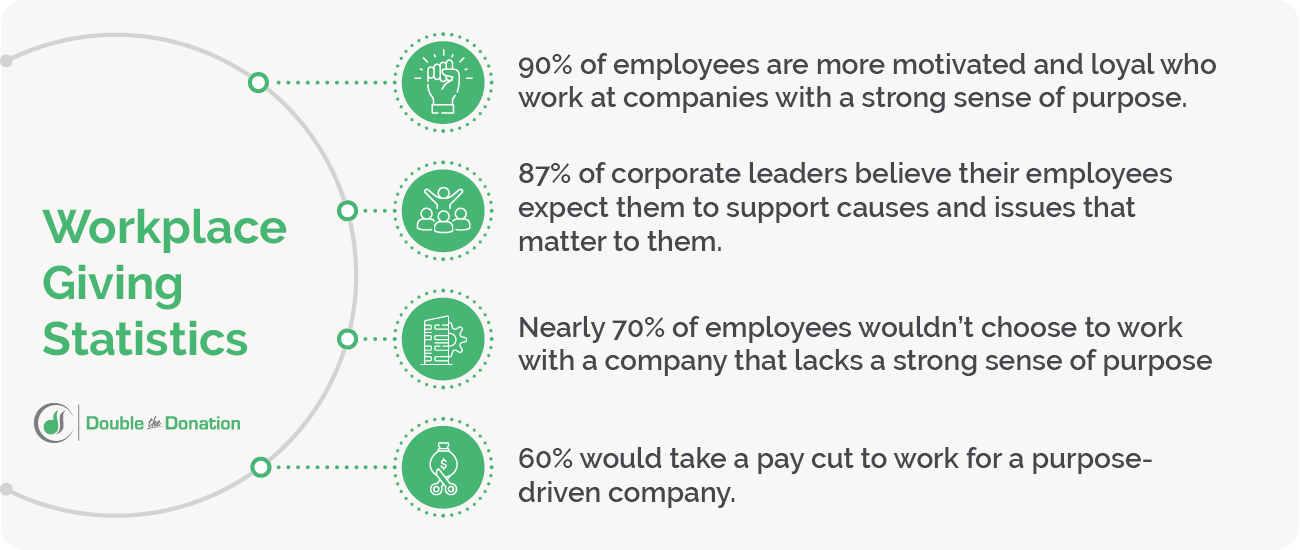
- 90% of employees are more motivated and loyal who work at companies with a strong sense of purpose. When you invest in software that standardizes the process for getting involved in workplace giving, your program will become a central part of the workplace culture. That way, employees will know your company is serious about making a difference.
- 87% of corporate leaders believe their employees expect them to support causes and issues that matter to them. Workplace giving platforms, like matching gift databases, can help employees determine their eligibility for certain programs and contribute to the nonprofits of their choice. This encourages employees to support the causes they care about—and lets them know your company is behind them all the way.
- Nearly 70% of employees wouldn’t choose to work with a company that lacks a strong sense of purpose, and 60% would take a pay cut to work for a purpose-driven company. By leveraging workplace giving platforms, your company can effectively spread the word about its giving opportunities and standardize the process for getting involved.
- Demonstrate your commitment. Having a workplace giving program in place is one thing, but investing in software to promote and streamline the process demonstrates a deep level of commitment to charitable giving. When you invest in a dedicated workplace giving platform, employers and community members alike will know your company is committed to making a difference.
- Measure your impact. Your workplace giving platform may offer tools for tracking and reporting the impact of your program through metrics like employee volunteer hours and dollars donated. Use these features to share the tangible impact your company makes
- Partner with nonprofits. With the right tools, your company can pair its workplace giving platform with nonprofits’ solutions to maximize donations and raise awareness about your program. For example, if your platform integrates with Double the Donation, you can allow employees to automatically submit matching gift requests on a nonprofit’s website. This raises awareness of your program among nonprofits, which may lead to future partnerships and endorsements.
- The software’s capabilities: Make a comprehensive list of the tool’s features and determine which ones you’ll use the most. Which features do you need in a platform for your specific giving program?
- The vendor’s reputation: Check reviews for the provider of the software. For further insight, you can ask other company leaders for their feedback on platforms they’ve tried.
- Ease-of-use: Request a demo of the platform to familiarize yourself with how it’s used. That way, you can determine if you’re comfortable with the tool and how easy it will be for employees to access it, as well.
It’s no secret that corporate social responsibility (CSR) is on the rise. According to Double the Donation’s corporate giving statistics, 39% of companies plan to expand their workplace giving programs in the next two years, and CSR is growing in popularity across companies all over the world.
However, 78% of donors are unaware of their company’s program specifics, which is why workplace giving platforms are crucial to your company’s CSR success. We’ve created this guide to explore everything you need to know about workplace giving platforms, including:
When it’s easy for employees to participate in workplace giving programs, your company will do more than help its community. Employee engagement levels, your CSR reputation, and nonprofit causes will reap the benefits of an organized and streamlined process for managing workplace giving. With that in mind, let’s get started!
What are workplace giving platforms?
Workplace giving is an employer-sponsored program through which employees can donate to charitable causes in various ways, including matching gifts, volunteer grants, and automatic payroll deductions.
Depending on the type of program your company offers, you’ll have to facilitate different donation methods. For example, if you choose to offer volunteer grants, you’ll have to track employees’ volunteer hours. That’s where workplace giving platforms come into play.
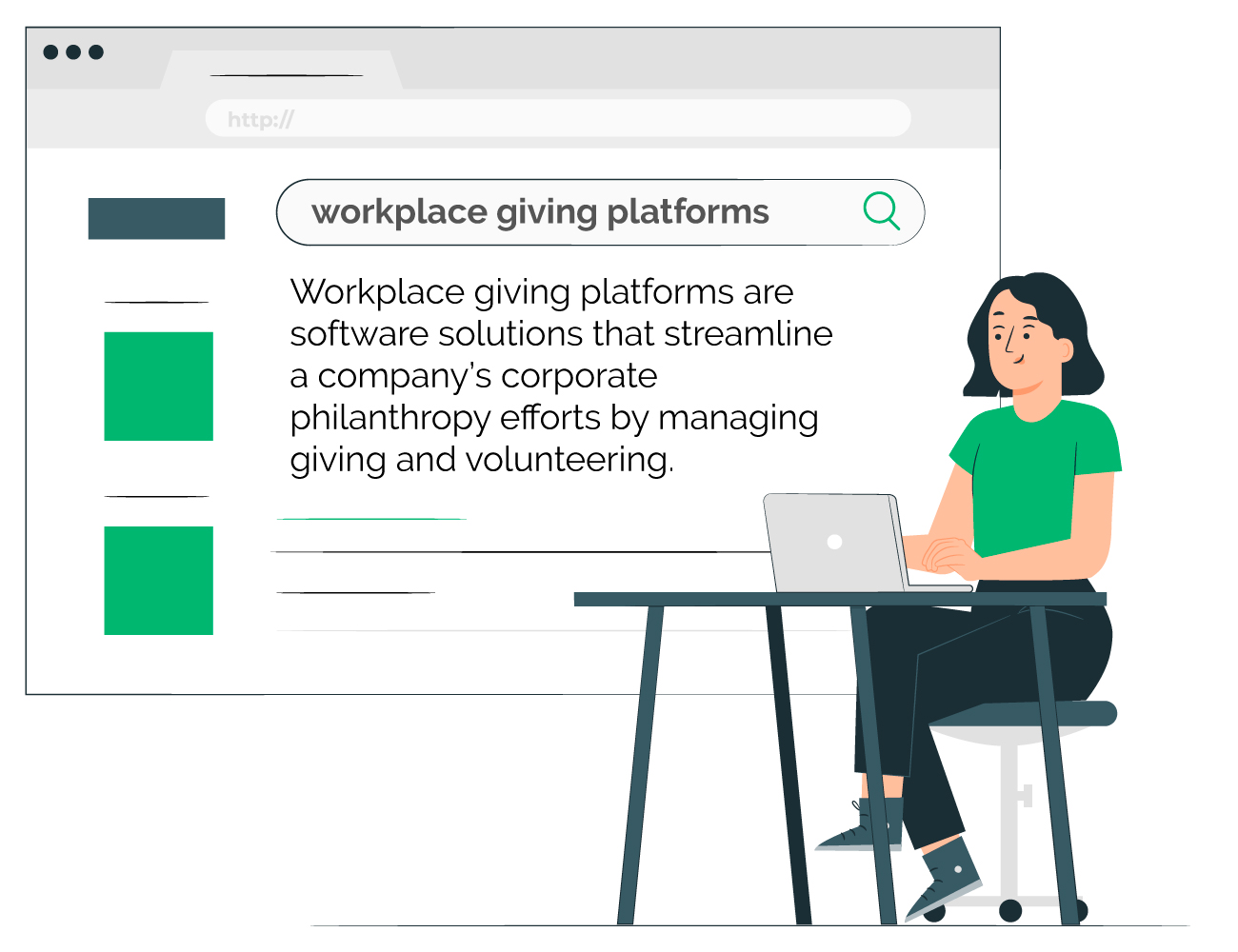
Workplace giving platforms are software solutions that streamline a company’s corporate philanthropy efforts by managing giving and volunteering.
Using workplace giving tools, companies can efficiently manage their philanthropy programs, keep their employees engaged through easy participation, and boost the impact of their CSR initiatives. Let’s take a closer look at the ways workplace giving platforms can maximize your company’s CSR success.
5 benefits of workplace giving platforms
The type of workplace giving platform you need depends on the program your company runs, but there are software options for nearly every type of program. Let’s take a look at how specific platforms can benefit your company’s programs.
1. Matching Gift Management
Matching gift programs are one of the most common offerings companies have in terms of workplace giving.
By essentially doubling the donations their employees make to eligible nonprofits (based on the company’s guidelines), companies benefit nonprofits and help their employees make a difference for the causes they care about. However, running a matching gift program takes a lot of organizational power, especially if your company has many participating employees and donations to track.
To make it easy for employees to participate, choose a workplace giving platform that allows you to:
The right workplace giving platform should help your company manage its matching gift program with ease, streamline your overall giving process, and encourage employee participation.
2. Volunteer Management
In addition to matching gift programs, corporate volunteerism is becoming a larger component of workplace giving. Volunteerism can take many forms, and as companies develop or expand their volunteer programs, the right workplace giving platform can keep them on track for success.
To dive deeper into the ways that corporate giving programs can manage volunteerism, we’re going to break it down into three categories: volunteer opportunities, volunteer tracking, and volunteer grants.
Volunteer Opportunities
The first hurdle your company may encounter when developing a corporate volunteering program is actually finding volunteer opportunities for your employees. Using a workplace giving platform that offers a database of both virtual and in-person volunteer opportunities can help you jump that hurdle easily and efficiently.
Workplace giving platforms vet the nonprofits in their databases, meaning your employees can rest assured that they’ll be working with reputable causes and organizations. Beyond sifting through nonprofit organizations for you, workplace giving platforms also help you create custom volunteer events for your employees, offering features such as:
It’s great to get employees involved in your volunteer program, but it’s especially important that volunteers get to have a say in the opportunities available to them. That’s why offering a database of volunteer events is essential. Many companies also offer paid time off for volunteering (known as VTO), which gives employees a direct incentive to participate and increases employee engagement levels.
Volunteer Tracking
Once your volunteer opportunities have been confirmed, workplace giving platforms go further and allow you to track all elements of your employees’ volunteer efforts. This includes:
Employees can easily track their hours for any kind of volunteer event, while you can view all the wonderful work they’re doing from one central location.
Volunteer Grants
Another way to engage employees in corporate volunteerism is by offering volunteer grants, which are monetary grants awarded to nonprofits in response to employees’ volunteer hours with that organization.
Like with matching gift programs, workplace giving platforms help you monitor volunteer grant requests that come through. As employees track their hours and request grants, you can easily approve and process each request in the same central system—much like you would with matching gifts.
All of these components of volunteer programs are important. Whether you’re offering VTO, trying to make it easy for employees to find volunteer opportunities, or processing volunteer grant requests on a regular basis, workplace giving platforms take the extra legwork out of the equation.
3. Additional Workplace Giving Program Management
Of course, workplace giving is made up of more than just matching gifts and volunteer programs. There are tons of different programs that contribute to CSR, and choosing the right workplace giving solutions can help streamline all of them.
Workplace giving platforms can help you manage:
Workplace giving platforms also help companies build a community within their teams by supporting causes that are important to them.
Use a workplace giving platform to set goals, select nonprofits, spotlight volunteer opportunities, and more. These tools allow you to create a sense of urgency and keep your employees engaged in nonprofit causes and events all year long.
4. Employee Engagement
Whether you’re running a grant program, launching an employee giving campaign, offering payroll deductions, or starting other types of workplace giving programs, choosing the right solution to meet your company’s needs will benefit more than just your team and your brand. It will also deeply engage your employees and strengthen your company’s workplace culture.
Here are a few ways your workplace giving platform can engage employees:
It’s clear: Employees are more dedicated to companies that support charitable giving, and workplace giving platforms can help you show your support by simplifying the giving process! Check our list of employee engagement ideas to learn more.
5. Company Reputation
According to NonprofitsSource’s guide to workplace giving, an established giving program can enhance your reputation in the community. And just as your workplace giving platform plays an important role in your program, it also has a large impact on your brand reputation!
Use your solution to:
Workplace giving and improved company reputation are components of a cyclical strategy to increase the impact your company makes. Your efforts to give charitably will enhance your brand reputation, which will recruit more customers and supporters for your company. In turn, you’ll receive more resources to invest back into your workplace giving program, making a greater impact overall.
How to start using workplace giving platforms
1. Determine your needs
To start using workplace giving platforms, you’ll first need to decide which solution makes the most sense for your company. When researching platforms, consider the following:
Don’t shy away from any questions you have for the software provider or during the demo. After conducting thorough research, choose a platform and get started!
2. Educate employees
Your employees are a key part of your workplace giving efforts—after all, their giving is often the first step in your company taking action to give charitably.
Create training materials to go over the platform (and your giving program) with employees. Teach them how to use the platform and how to make the most of your workplace giving programs.
Be sure to incorporate informative materials about workplace giving in new employee onboarding, as well. This ensures that every employee learns about workplace giving from the very beginning of their tenure with your company, maximizing the potential of their giving.
3. Promote your program
Leverage your company’s most frequently used communication channels to promote your workplace giving program, including social media, your website, email newsletters, and any other messaging platforms you use. This not only puts your program in front of employees but also garners the attention of nonprofits, which may partner with you after seeing your commitment to workplace giving.
Workplace giving trends
Interested in exploring new and upcoming trends surrounding workplace giving and the technology that empowers it? Staying on top of changes in the industry can help you ensure your team is equipped with the best tools possible.
Here’s what we’ve seen recently:
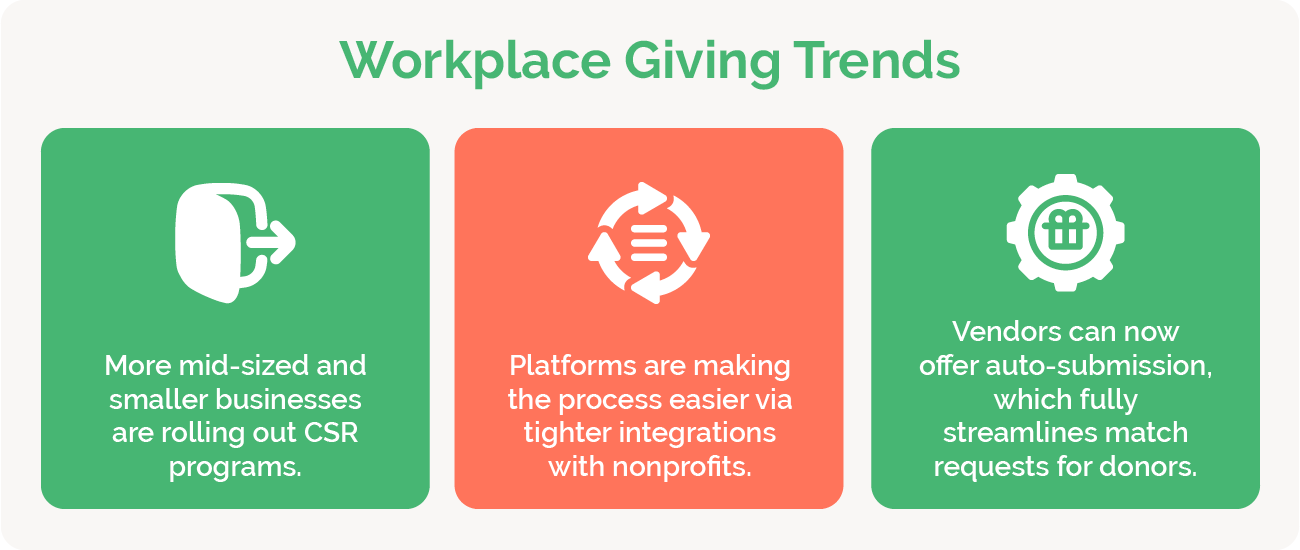
1. More mid-sized and small businesses are rolling out CSR programs.
Historically, workplace giving programs such as matching gifts, volunteer grants, and more have been primarily offered only by the largest businesses.
Now, these types of programs are becoming more accessible than ever for mid-sized and small businesses as well! Why? For one thing, the sector’s been seeing increasingly flexible pricing scales for workplace giving platforms, making streamlined management more attainable for companies of all shapes and sizes.
Not only that, but new corporate giving vendors are entering the game with a specific focus on targeting mid-level businesses. This takes a lot of the administrative burden away from company leadership itself, meaning more corporations are willing and eager to roll out the programming.
If you’d like to be inspired by some small and mid-sized businesses with big workplace giving programs, take a look at these examples of CLMA-certified companies:
We love seeing new companies establishing and growing their workplace giving—whether through matching gifts, volunteer grants, or other engaging initiatives for employees. In the end, it means more nonprofit funding, more workplace engagement, and more socially responsible businesses powering good in our communities. We’re excited to find out which companies are next!
2. Workplace giving platforms offer tighter integrations with nonprofits.
Corporate philanthropy programs essentially form partnerships between companies and nonprofits. Workplace giving programs take things a step further, empowering companies to directly support the organizations that their employees are already giving to.
Workplace giving platforms know this, and that’s why they’re aiming to make the process of using their software as quick and easy as possible for both their corporate clients and, particularly, for their clients’ end users: employees. A huge part of that involves developing tighter relationships with the nonprofits on the receiving end of the programs.
For example, though software providers are focused on selling their tools to corporations offering workplace giving programs, most have built out separate nonprofit management portals with which organizations can facilitate their end of the workplace giving process. Within these nonprofit-specific portals, organizations can easily go in and verify individual donations, volunteer hours, etc., in order to move the requests to the next step. And this end of the platform is typically free for nonprofit causes, helping to further build those relationships through streamlined and accessible technology.
Plus, offering tighter integrations with nonprofits helps make the employee and donor experience more optimal as well. When an organization has already established an account with the workplace giving platforms their supporters use, individuals can typically complete their request process more easily—for instance, having the ability to select from a search of pre-approved organizations rather than having to input all the information for the cause from scratch.
3. Vendors can now offer auto-submission, which fully streamlines match requests for donors.
In order to provide workplace giving technology that truly streamlines and simplifies matching gift programs for donors, nonprofits, companies, and employees, some providers have rolled out brand-new auto-submission functionality, which recently completed its beta testing.
Individuals can now submit their matching gift requests to their employers with a single click directly from the donation confirmation pages of the organizations they support. All they have to do is enter their corporate email address and check, “Yes, submit my matching gift request!”
This video explains how it works.
Now, this helps in a few key ways. For one, it enables organizations to capitalize on donors’ giving momentum right when they’re at their highest level of engagement with the cause: while giving. It minimizes the risk of them saying, “Oh, I’ll do that later,” and then never coming back to it.
Not to mention, it also significantly decreases the amount of time and effort required of a donor to complete the process. Whereas a donor may have previously been asked to provide information about themselves, their donations, and the organizations to which they give, now all they need is an email address. The software ecosystem handles the rest of the data behind the scenes!
This simplicity helps in a few key ways:
At this time, auto-submission functionality is made available through workplace giving platforms that integrate with Double the Donation’s matching gift tools. Currently, this includes these corporate giving software providers:
That means that when an employee works for a company outsourcing their workplace program management to a CSR vendor like Millie, Selflessly, or POINT, they are already eligible to participate in auto-submission. That is, as long as the organizations they’re giving to also employ Double the Donation’s software.
But auto-submission remains a rapidly growing innovation; with the solution now out of beta, it will will soon incorporate many more corporate vendors (and their clients), companies (and their employees), and nonprofits (and their donors). And we can’t wait to watch all the matching gift requests being processed when they do!
Additional Resources on Workplace Giving Platforms
If you’re looking for more information about workplace giving and the platforms that can help you be successful, check out the additional resources below:
Top Corporate Giving Software to Drive Employee Engagement
/in Learning Center, Corporate Consulting /by Julia BeltranWhen it comes to engaging employees in your company’s workplace giving programs, finding tools that promote participation can be challenging. However, it’s well worth the effort since the easier it is for employees to take part in workplace giving, the more likely they are to do so—and the more nonprofits benefit as well.
To help your search, we’ve compiled a list of the top corporate giving software to drive employee engagement, create an organized giving process, help your company promote corporate philanthropy, and fine-tune your corporate giving strategy.
Here are some top popular options:
Use this list to find the best corporate giving software for your company and start boosting employee participation in your workplace giving programs. Plus, we’ll also explore top trends seen in modern corporate giving software platforms and how they impact companies, employees, nonprofits, and donors.
One term you might see as you set off in search of the perfect corporate giving software is the CLMA. This designation, which refers to Certified Leaders in Matching Automation, recognizes corporate giving software solutions that go above and beyond in ensuring a seamless and accessible matching gift experience for the programs it facilitates.
Keep an eye out for the following badge to locate CLMA-certified providers.
Millie
Overview of This Corporate Giving Software
Millie is one of the top corporate giving platforms, offering features that support corporate matching gifts, volunteer management, campaign management, and more.
Using Millie, your company can create volunteer events, search for volunteer opportunities, match employee donations according to your budget, and build campaigns around an event or cause.
Millie allows your company to create a social impact program that’s easy to use, flexible, and budget-friendly.
Why This Corporate Giving Software Stands Out
Millie enables companies to give charitable dollars—funds specifically marked to be donations—to their employees and customers. Recognize outstanding employees and develop deeper relationships with customers and prospects by sending charitable gift cards that can be donated to nonprofit organizations.
Offers Matching Gift Auto-Submission?
Yes! This corporate giving software can be integrated with Double the Donation, the industry’s leading matching gift tool with auto-submission functionality. Employees of companies that use Millie will be prompted to enter their corporate email addresses from the nonprofit gift confirmation page to automatically submit their matching gift requests, making it easier than ever for team members to participate in employee giving.
Yes! Millie is a Certified Leader in Matching Automation, meaning the platform is known to offer the most accessible, streamlined, and transparent matching gift experience in the industry.
Pricing
Millie charges monthly fees based on the number of employees you have.
POINT
Overview of This Corporate Giving Software
POINT is a collaborative volunteer platform that provides local nonprofit leaders with the tech tools they need for free, while companies can use the platform to engage employees and boost their CSR programs.
Using the POINT app, companies can manage volunteerism, giving, and partnerships all in one platform that’s easy for employees to use.
When local nonprofits post volunteer opportunities, your company can easily reserve spots for team members or send the information to employees for them to sign up themselves. You can also easily send gifts through a donation tool, strengthen nonprofit partnerships, and leverage automatic reporting.
Why This Corporate Giving Software Stands Out
When a company buys a subscription to POINT, a registered 501(c)(3) organization gets access to POINT’s platform for free. This allows nonprofits to easily find and manage volunteers, saving them time so they can focus their efforts elsewhere.
Offers Matching Gift Auto-Submission?
Yes! POINT integrates with Double the Donation to enable auto-submission functionality. Corporate employees using POINT can enter their email addresses. Then, they’ll receive a list of organizations associated with their app profile which they can submit their match request to. From there, the request is processed automatically!
CLMA-Certified?
Yes! POINT is a Certified Leader in Matching Automation, meaning the platform is known to offer the most accessible, streamlined, and transparent matching gift experience in the industry.
Pricing
Pricing for POINT depends on the number of employees in your company. Visit their website to book a demo.
Selflessly
Overview of This Corporate Giving Software,
Selflessly is an all-in-one giving platform for corporate social responsibility designed to empower small and medium-sized businesses’ corporate philanthropy efforts.
This tool offers a range of solutions, including workplace giving, volunteering, gift matching, and reporting.
With Selflessly’s corporate giving software solution, businesses can better engage employees, improve their image with consumers, and support the philanthropic efforts they care about.
Why This Corporate Giving Software Stands Out
Corporate gift matching is a key component of many companies’ giving efforts, making Selflessly’s donation matching tools one of its greatest assets. Plus, their partnership with Double the Donation allows Selflessly to streamline the giving process for businesses and their employees continually!
Offers Matching Gift Auto-Submission?
Yes! Selflessly features innovative auto-submission technology made available through a seamless integration with Double the Donation Matching. All employees have to do is provide their corporate email address on the nonprofit’s donation confirmation screen, and the rest of the process will be completed automatically.
CLMA-Certified?
Yes! Selflessly is a Certified Leader in Matching Automation, meaning the platform is known to offer the most accessible, streamlined, and transparent matching gift experience in the industry.
Pricing
Selflessly’s dedicated team works with each customer to make sure pricing fits their needs. Visit their website to request a demo or custom pricing.
Field Day
Overview of This Corporate Giving Software
Field Day is an all-in-one social impact platform that helps companies facilitate corporate volunteering, donation matching, impact reporting, and professional services programs.
Using Field Day, companies can manage their entire social impact program under one roof to maximize their corporate giving efforts.
With their central hub for donation management and matching along with their volunteer event management system, Field Day makes it simple for corporate employees to give back to the causes they care about.
Why This Corporate Giving Software Stands Out
In addition to their corporate giving platform, Field Day also helps companies run impact campaigns that drive employee connection. Their help with the curation, execution, and reporting of impact campaigns ensures companies can create one of a kind campaigns.
Offers Matching Gift Auto-Submission?
Yes! Field Day offers auto-submission functionality through their seamless integration with Double the Donation. Companies who use Field Day to facilitate their donation matching program enable their employees to submit matching gift requests directly from the confirmation page of a nonprofit’s donation form. This makes for a seamless employee experience and boosts engagement!
CLMA-Certified?
Yes! Field Day is a Certified Leader in Matching Automation, meaning the platform is known to offer the most accessible, streamlined, and transparent matching gift experience in the industry.
Pricing
Field Day offers a Sandard Plan and an Enterprise Plan for companies of different sizes. Visit their website to book a demo.
Uncommon Giving
Overview of This Corporate Giving Software
Uncommon Giving is a comprehensive corporate giving software solution that empowers businesses to manage and amplify their philanthropic efforts. Designed to streamline the process of corporate social responsibility (CSR), the platform enables companies to facilitate employee giving, manage charitable contributions, and track the impact of their donations.
With features like customizable giving options, automated payroll deductions, and detailed reporting, Uncommon Giving makes it easy for companies to integrate philanthropy into their workplace culture. Additionally, the platform fosters employee engagement by offering a wide array of giving opportunities, including matching gifts, volunteer grants, and fundraising initiatives, helping businesses align their charitable activities with their corporate values and goals.
Why This Corporate Giving Software Stands Out
What makes Uncommon Giving stand out is its lightweight, intuitive solution for companies and their employees, making it easier than ever to get involved with company-sponsored philanthropy. With an easy-to-use mobile app, portable giving wallet, and powerful reporting tools, the platform streamlines the entire giving process, enhances employee engagement, and allows companies to effectively track and maximize the impact of their philanthropic efforts.
Offers Matching Gift Auto-Submission?
Yes! Uncommon Giving integrates with Double the Donation’s industry-leading matching gift software to offer groundbreaking auto-submission functionality. This means employees using the tools can benefit from one-click matching gift submissions straight from their favorite charities’ giving forms.
Yes! Uncommon Giving has earned the CLMA designation for corporate giving software thanks to its dedication to providing seamless and accessible matching gift experiences for its users.
Pricing
Uncommon Giving has pricing that begins at $1,999/year. The platform encourages companies to get a demo to learn more and see the tools in action!
America’s Charities
Overview of This Corporate Giving Software
America’s Charities offers a variety of CSR tools for companies looking to grow their philanthropy programs.
Companies can choose from several software options, including three workplace giving technology solutions, special funds management (like employee assistance funds and disaster relief), and standalone services like charitable funds management and payment processing.
One of the most popular solutions, America’s Charities Engage, is an end-to-end giving and CSR solution that lets businesses manage grantmaking, donation matching, workplace giving, employee engagement, and volunteers.
Why This Corporate Giving Software Stands Out
One size does not fit all, which is why America’s Charities offers a broad range of workplace giving-related services and software solutions. They have also had 40 years of experience in this field and have raised more than a half-billion dollars for tens of thousands of charities through various workplace giving programs.
Offers Matching Gift Auto-Submission?
No, this platform does not yet offer matching gift auto-submission functionality.
CLMA-Certified?
No, this platform is not yet a certified leader in matching automation.
Pricing
Contact America’s Charities for specific pricing information and to request a demo.
Benevity
Overview of This Corporate Giving Software
Benevity is one of the leading providers of corporate giving software, offering companies employee engagement tools.
Benevity’s platform helps companies find volunteer opportunities, set up and run volunteer grant programs, manage matching gifts, enable payroll donations, and more.
Using Benevity, your company can create a purpose-driven culture for employees, engage employees in current issues, and make participating in your social good programs easy with a mobile app.
Why This Corporate Giving Software Stands Out
Benevity automates every part of your employee engagement program. This provider also offers integrations with Workday, VolunteerMatch, and Okta to provide employees with better, more convenient access.
Through the Benevity Causes portal, nonprofits gain access to corporate and individual donors and volunteers, leading to even more support from companies.
Offers Matching Gift Auto-Submission?
No, this platform does not yet offer matching gift auto-submission functionality.
CLMA-Certified?
No, this platform is not yet a certified leader in matching automation.
Pricing
Contact Benevity to learn more about their services and pricing.
Bright Funds
Overview of This Corporate Giving Software
Bright Funds is a leading provider of corporate giving software as a service for workplace giving,
volunteering, and grants management.
With a personalized, intuitive experience, Bright Funds makes it easy for your employees to do good.
Companies can set up their Bright Funds’s platform in less than a day with all the features they need to get their CSR program going. That includes matching gifts, volunteer events, custom campaigns, real-time reporting, and more. The fund model allows companies to create funds for disbursement to one or more nonprofits for maximum flexibility.
Why This Corporate Giving Software Stands Out
With nearly a decade of experience, Bright Funds helps companies of all sizes multiply their impact through a comprehensive CSR platform. In addition to a seamless user experience, the platform supports global giving and helps companies save time with simple program administration, employee engagement tools, and managed donations disbursement.
Bright Funds’ integrations with other popular workplace management systems such as ADP, Okta, Workday, Zenefits, and VolunteerMatch provide a better experience while simplifying implementation.
Plus, the Bright Network is a free portal for nonprofits, allowing them to optimize workplace fundraising with digital tools such as electronic payments and donor reports.
Offers Matching Gift Auto-Submission?
No, this platform does not yet offer matching gift auto-submission functionality.
CLMA-Certified?
No, this platform is not yet a certified leader in matching automation.
Pricing
Bright Funds supports companies of all sizes. Fees start at $2 per month per employee for companies under 300 employees and scale based on employee count. Contact Bright Funds for more details and register for a free 30-day trial.
CyberGrants
Overview of This Corporate Giving Software
CyberGrants, soon to be Bonterra, is another top corporate giving software solution that offers fully integrated tools for grants management, employee giving, volunteerism, disbursement, disaster relief, and more.
Using CyberGrants, you can create several innovative CSR programs from matching gifts and political action campaigns to charitable spending accounts.
Their real-time reporting, automated payroll, and rules-based approvals make it easy for companies to roll out social good programs and manage them efficiently.
Why This Corporate Giving Software Stands Out
CyberGrants specializes in two areas: employee giving and grants management. That means if you’re looking for an all-in-one solution for managing grant applications, disbursements, matching gifts, employee donations, and volunteer programs, CyberGrants is a great option.
Offers Matching Gift Auto-Submission?
No, this platform does not yet offer matching gift auto-submission functionality.
CLMA-Certified?
No, this platform is not yet a certified leader in matching automation.
Pricing
Contact CyberGrants for a demo and to learn more about pricing.
SmartSimple
Overview of This Corporate Giving Software
SmartSimple is a robust corporate giving solution that offers grant management, employee giving, matching gifts, volunteer management, volunteer grants, and more.
Using SmartSimple’s tools, you can streamline every step of your workplace giving programs, manage volunteering, administer your matching gift programs, and focus on in-kind giving.
Beyond their many corporate giving tools, SmartSimple offers detailed reports, dashboards, and maps using real-time data.
Why This Corporate Giving Software Stands Out
Beyond its many robust corporate giving solutions, SmartSimple also offers a goals-tracking feature, which allows companies to track goals for each CSR and giving initiative. Define and measure your goals for all of your efforts. Then, share them with the rest of your company and its stakeholders to showcase your philanthropic impact.
Offers Matching Gift Auto-Submission?
No, this platform does not yet offer matching gift auto-submission functionality.
CLMA-Certified?
No, this platform is not yet a certified leader in matching automation.
Pricing
Visit SmartSimple’s website for pricing information and to request a demo.
YourCause
Overview of This Corporate Giving Software
YourCause is a top corporate giving software solution for managing workplace giving, employee volunteering, grants, and more.
Boost participation and employee engagement using their CSRconnect solution, which allows companies to manage disaster relief, seasonal campaigns, year-round matching, peer-to-peer fundraising, and volunteer events.
In addition to tracking donations and hours, YourCause provides robust reporting features that allow teams to track data and recognize outstanding employee participants.
Why This Corporate Giving Software Stands Out
YourCause offers a free portal that allows verified nonprofit organizations to create and manage volunteer events, access donor information, and engage with companies and their employees. In turn, this can help your company form stronger relationships with nonprofits.
Offers Matching Gift Auto-Submission?
No, this platform does not yet offer matching gift auto-submission functionality.
CLMA-Certified?
No, this platform is not yet a certified leader in matching automation.
Pricing
Contact YourCause to request a demo and get more information about pricing.
Corporate Giving Software Trends | What We’re Seeing
Corporate giving software has become increasingly important in powering companies’ giving programs. In recent years, it’s evolved and come a long way in terms of user experience, accessibility, and functionality. And we’re still seeing and expecting big shifts as innovation continues.
Let’s walk through a few key trends that pertain to corporate giving software and how they impact the industry.
Increasing ease of use for companies, employees, and more
As corporate giving technology continues to develop, both the corporations and the nonprofit organizations they support can benefit exponentially. Meanwhile, continuously updated platforms make staying current with the latest advances in technology even easier.
Recently, corporate giving software providers have focused on elevating the UX for the backend users (i.e., the companies purchasing the tools) as well as the front-end users (i.e., corporate employees) to optimize program participation.
The most advanced platforms are becoming Certified Leaders in Matching Automation, demonstrating a strong commitment to delivering meaningful value for employees, employers, and the nonprofits they support. By integrating with workplace fundraising automation tools designed for nonprofits, these platforms help streamline giving programs, boost participation, and drive greater impact across the board.
More programs and tools catering to small and mid-size businesses
Corporate giving has historically been primarily exclusive to the largest corporations. There are many reasons for this. Most prominently, the technology infrastructure used to manage CSR programs was designed with Fortune 500 and other mega companies in mind.
Now, however, more and more providers are prioritizing tools that are both accessible and affordable for smaller and mid-level companies as well. In turn, corporate giving participation has opened up to businesses of all shapes and sizes, enabling more employers to take part with ease.
Additional Corporate Giving Resources
If you’re looking to learn more about corporate giving, employee engagement, or the tools that can help you expand your CSR program, check out these resources below!
Corporate Matching Gift Forms | The Ultimate Guide
/in Learning Center, Corporate Consulting, Learning Center /by Adam WeingerMost match-eligible donors rely on some kind of matching gift forms to complete their end of the matching gift process. However, these forms (and the steps taken to submit them) can look wildly different from one company to the next.
In order to best simplify and guide employee donors through the submission process, it’s important that you understand the ins and outs of paper, electronic, and e-submission match forms—plus form alternatives.
From the nonprofit side, giving your supporters the tools they need to complete a match request helps maximize the matching gift revenue you ultimately collect.
On the other hand, as a company, considering all available options for submission forms can make a big difference as you work to develop and finetune your matching gift program.
In this guide, we’ll provide everything you need to know about corporate matching gift forms, including:
As a main source of corporate philanthropy, matching gifts are not an opportunity you want to miss out on. That’s true regardless of whether you’re looking at it from the nonprofit or the business perspective.
The right matching gift forms—and an understanding of how to use them—can bring your team’s strategy to the next level.
Let’s get started!
What are matching gift submission forms?
Matching gift submission forms are a specific type of documentation used within the corporate matching gift process.
When a company launches a matching gift program, it typically provides employees with access to a blank form (note: while some companies may still offer paper options, these forms are most often made available online and hosted within a corporate matching vendor platform). This document typically incorporates a number of fields that share context into the individual donation, the receiving nonprofit, and the team member submitting the request.
The form is then completed by the donor after making their initial nonprofit contribution as a way to formally request a match from their employer.
Then, the application is submitted to the company through the business’s specified channel. From there, the employer reviews the provided materials, verifies the initial donation, ensures the gift meets the company’s matching criteria, and approves the match.
Why matching gift forms matter
From start to finish, the matching gift process encompasses a few key phases. These include the initial donation, the employee request, the match review, and finally, the corporate gift.
Of these stages, the majority of match-eligible gifts drop off before or during the employee request component. For nearly all companies, the request stage involves the employee donor filling out an online matching gift form. And the ease with which an individual can complete their match form directly correlates to fulfilled matching gift success.
In other words, the best matching gift forms result in more matching gifts.
If that’s not enough of an answer, let’s take a closer look at why corporate matching gift forms matter…
To Donors
From the donor’s perspective, a matching gift form comprises the vast majority of the matching gift experience. Without it, there’s no employer donation ultimately secured, thus inhibiting the amplified giving impact an individual is aiming to make.
Not to mention, the donor is the one who actively completes the form to request a match on behalf of their favorite organization. It makes sense that a positive user experience is a priority for this key stakeholder!
To Nonprofits
An estimated $4 to $7 billion in available matching revenue goes unclaimed each year. That’s funding that could be going to nonprofit causes but is ultimately left on the table by qualifying organizations and their donors.
In fact, most fundraising groups see only a fraction of the matching gift dollars available to them. Since one of the most significant roadblocks facing incomplete matches is the submission process, nonprofits understand that optimized matching gift forms can go a long way toward driving matches to completion.
To Companies
Companies invest time and effort into launching their matching gift programs. It goes without saying that they want employees to partake. After all, heightened staff participation levels result in better overall CSR—and, with it, increased employee engagement, improved company culture, unique cause marketing benefits, elevated brand reputation, and more.
However, complicated request processes can be a significant hindrance to team-wide engagement with the offerings. Thus, companies want to establish easy-to-use corporate match forms that provide positive experiences for their employees.
Elements of a corporate matching gift form
Regardless of the type of form a company utilizes, most matching gift submissions request the same pieces of information. And this information generally falls into three overarching categories:
Donor Information
Companies typically request a number of personal data points relating to the individual employee within the matching gift application. Though it can vary greatly from business to business, this information might include:
Providing these details generally certifies that the donor is who they say they are (i.e., an employee of the company from which they’re requesting a match). Plus, it ensures the employer knows who is requesting the matching gift for their own records and to track participation and donation totals over time.
Nonprofit Information
Most match forms also ask specific questions pertaining to the organization an individual has supported. This might include:
Information about the nonprofit can help determine that the organization meets the company’s eligibility requirements (i.e., mission type). Not only that, but it also ensures that the person in charge of the corporate matching program has appropriate contact information for the nonprofit group, should they need to get in touch to verify the initial donation.
Donation Information
This final section is typically where the company asks employees to provide details regarding the original donation. Again, this enables the employer to determine whether the initial gift qualifies for a match (falls within the donation threshold, is submitted prior to the submission deadline, etc.).
Commonly required fields include:
Many companies also request proof of the original donation, which nonprofits often provide in the form of tax-deductible gift receipts. And that’s where the individual donor’s side of the matching gift submission typically ends.
However, some employers require the recipient organization to verify the initial contribution themselves. In those cases, a vital step of the matching process falls into the hands of the nonprofit group.
After an employee completes the matching gift request, the nonprofit is typically notified (whether by mail or within a CSR portal) that an employee has requested a match. At this point, the organization must log into the company’s verification system to confirm that the specified employee made a donation to the cause. They may even be asked to provide a letter verifying the organization’s IRS-sanctioned 501(c)(3) status.
3 types of matching gift submission forms (and alternatives)
There are currently three main types of matching gift forms. These include paper, electronic, and Double the Donation’s standard form. However, innovative corporate giving platforms are developing streamlined submission processes that allow donors to bypass the matching gift form altogether.
Each company that offers a matching program is able to establish its own match request process. This includes selecting one or more matching gift forms and/or alternatives to accept.
Let’s take a closer look at each submission type, and the general process asked of donors to complete it.
Paper Matching Gift Forms
When it comes to matching gift forms, paper documents are where it all started. In fact, the first-ever matching gift program was developed before the internet was even invented!
Today, however, most matching gift donors prefer electronic forms; though some companies continue to accept—or even require—traditional paper documentation.
We don’t recommend companies use this type of outdated match form. After all, it’s a lot of extra work for the donor, the nonprofit, and the company itself. Still, it’s important to understand the process should you run into a situation involving paper submission forms in any case.
And here’s how it typically works. Employees at corporations with paper match forms go through the following steps to submit their match requests:
Match Eligibility Identification
The first step involved in any matching gift process is determining match program eligibility. And there can be quite a few factors at play here, including whether the company matches employee gifts at all, whether the employee in question qualifies for matching, whether the donation amount and recipient organization meet the company’s standards, and more.
This information can be uncovered in a few ways, from the company itself to a third-party tool such as Double the Donation.
Request Form Location
The next phase of the process involves locating the appropriate matching gift form. And unfortunately, this can be a bit trickier with paper forms compared to other types of matching gift submissions.
Double the Donation or the employer may provide access to printable versions of the forms online, or they may be requested in person from the HR department or company leadership.
Paper Matching Gift Form Submission
Once the match request forms have been accessed, donors are prompted to complete and submit the document via the channel established by the company. Some employers may accept the forms in person (again, likely to the HR office or manager), while others may require match forms to be submitted via mail to a provided address. Others yet can offer some sort of fillable PDF option, which may be completed and submitted online.
Electronic Matching Gift Forms
Technology is rapidly progressing, so it makes sense that many companies have transitioned to electronic forms. Doing so not only reduces programming costs and administrative lift but also simplifies participation for employees.
Electronic forms give donors a bit more freedom regarding when, where, and how easily they complete their requests.
Here’s what the process typically looks like:
Employee Sign-In / Registration
To access and complete electronic matching gift forms, employees usually have to log into the company’s CSR platform. This step typically involves creating or signing in with a username and password for the site.
In order to locate the login page, individuals may be directed from their company’s HR department or manager, or they might receive a link through the nonprofit to which they contributed—specifically if the organization uses Double the Donation’s tools.
Match Request Submission
Once in, the employee is prompted to complete the actual request process.
Like paper forms, individuals are asked to register their match requests by providing key data points. Though the exact process can vary based on the CSR portal a company uses, donors generally begin by searching for (or adding) the nonprofit they’ve supported from the portal’s list of verified causes.
From there, individuals typically provide a number of data points pertaining to their recent gifts—such as payment type, domain amount, currency, transaction date, and more.
Double the Donation’s Standard Matching Gift Form
Somewhere between a paper matching gift request and a complete online submission portal is Double the Donation’s intuitive standard match form.
Companies can easily opt into accepting this online form, which then enables streamlined automated electronic submissions for their employees. With this offering, donors can more easily complete their matching gift requests, thus increasing program usage and impact overall.
Double the Donation aims to make matching gifts as simple as possible, and the standard form was designed for just that purpose.
Here’s what the process looks like for eligible donors submitting the standard matching gift form:
Employer Selection
As donors give to nonprofits that use Double the Donation’s matching gift software, they’re prompted to enter their employing company in an auto-completing search tool embedded in the donation form. This is done to uncover match eligibility and determine whether the company accepts the standard matching gift form.
Identity Verification and Authorization
If so, the donor is provided with an opportunity to submit their match automatically, directly from the organization’s gift confirmation screen. Typically, all they are required to do here is verify their identity by providing a corporate email address and check a box that authorizes Double the Donation to submit the match request on their behalf.
Behind-the-Scenes Submission
Once authorized, Double the Donation pulls necessary information from the donation process itself and automatically fills in the blanks on the premade standard matching gift form. Upon completion, the form is sent as a PDF document to the matching gift coordinator designated by the company to review and approve as usual.
Matching Gift Form Alternative — Auto-Submission
Online match portals that facilitate electronic request forms have long been working to streamline and improve the match submission process. And Double the Donation shares the same goal.
Now, Double the Donation is partnering with select CSR software providers to do exactly that. By providing an innovative matching gift form alternative, auto-submission allows qualifying donors to submit match requests without a matching gift form at all.
Auto-submission was recently moved out of beta and is now growing its integrated network with CSR solutions.
All they’re typically asked to do is enter their corporate email address on the gift confirmation screen and authorize Double the Donation to submit a match on their behalf. From there, the integrated software ecosystem collects necessary data points and funnels the information directly to the employer’s corporate giving platform behind the scenes.
Then, the company reviews and approves the match within the software system as usual.
This revolutionary new function benefits donors (with streamlined submission processes and fewer roadblocks), nonprofits (with increased match revenue), and companies (elevated program participation) alike. It’s a win-win-win!
And as more companies and CSR providers begin rolling out the feature in partnership with Double the Donation, an ever-growing number of nonprofit supporters will be able to leverage the matching gift form alternative.
Learn more about matching gift auto-submission here.
How a matching gift database fits in
Double the Donation has compiled the industry’s most in-depth source of matching gift information. Our comprehensive database provides access to details regarding more than 24,000 companies’ (equating to approximately 99.68% of all match-eligible donors) program guidelines and request processes.
By sharing a summary of each company’s matching gift program, we aim to make it increasingly easy for donors to complete their matches on behalf of the organizations they support.
When donors search for their employers using the associated database search tool, they’ll instantly receive any available guidelines for their employers’ programs. If available (which, over 91% of companies’ forms are), a direct link to online match forms and other related documents will be given to them, too!
Here’s an example of what you might see when searching for an employer with Double the Donation’s matching gift database search tool:
Donors will also be provided with other relevant information, such as:
A corporate database can provide powerful insights into thousands of companies’ matching gift programs and next steps. That can go a long way toward maximizing program participation for donors by simplifying the processes involved.
Nonprofits interested in benefiting from our innovative matching gift database and automation software can do so by requesting a demo here.
As for companies, make sure your giving program is included in our comprehensive database of corporate match information. This enables employees to have quick and easy access to program guidelines and forms from their favorite organizations’ giving pages! Click here to add your company to Double the Donation’s matching gift database.
Wrapping Up
Matching gift forms play a crucial role in the overall matching gift process—not to mention strategic corporate match fundraising.
At this point, your team should know all about the different types and components of corporate matching gift forms, the value for nonprofits, companies, and donors, and more. Now, it’s time to get out there and start maximizing your matching gift revenue!
Interested in learning more about matching gift best practices? Check out these additional recommended resources:
Take matching a step further with auto-submission functionality.
How to Craft a Complete Corporate Charitable Giving Policy
/in Corporate Consulting, Learning Center /by Adam WeingerAs a corporate leader, you know that achieving your company’s goals depends on the collective efforts of your executive team, employees, and other stakeholders. The same goes for your corporate giving initiatives. As philanthropy becomes an expanding priority for companies and consumers around the world, it’s more important than ever to rally everyone in your company to make a combined difference in the community.
While corporate giving programs are appealing to many socially conscious employees, many of them may not participate simply because they aren’t aware of the opportunities. That’s why creating a corporate charitable giving policy is vital to the long-term success of your program.
If your company needs a corporate giving policy, we’ve got you covered. We’ll walk through all the basics and best practices in the following sections:
More than 26 million individuals work for companies with matching gift programs, but over 78% of them are unaware that their company offers this program or know any program specifics. Crafting a comprehensive corporate charitable donations policy is an easy and necessary solution to this lack of awareness.
What is a Corporate Charitable Giving Policy?
Corporate giving is one aspect of a company’s corporate social responsibility (CSR), or its role in promoting social good within the community. According to the CSR pyramid, businesses should promote social good in all economic, legal, ethical, and philanthropic areas of their operations. Philanthropic activities like contributing funds, services, and other resources to charitable causes demonstrate that companies are interested in more than just making a profit.
A corporate charitable giving policy outlines your company’s approach, guidelines, and processes for corporate giving. It serves as a source of truth for administrators and participants alike, spelling out essential details such as eligibility criteria and deadlines.
Only 19% of companies include more than a single paragraph on matching gift programs in accessible employee handbook materials or their website. Rather than leaving your employees in the dark, encourage them to embrace your corporate giving efforts by enlightening them about your programs. The more information you provide upfront, the easier it will be for employees to get involved.
Benefits of Corporate Giving
An official corporate charitable donations policy allows your company to tap into the full benefits of corporate giving. By demonstrating a more serious investment in philanthropy, you’ll be able to:
To access these benefits, you’ll need to set up an effective corporate giving program that employees are enthusiastic to get involved in.
At the same time, corporate giving affects more than just your company. Thanks to these initiatives, nonprofits can raise more funds, find more volunteers, and acquire more resources for their causes. Mutually beneficial nonprofit-corporate partnerships allow both parties to expand their audiences and achieve more.
Main Types of Corporate Giving Programs
In your company’s corporate giving policy, you’ll specify all of the various corporate giving opportunities that you offer. While these will differ from company to company, let’s explore some of the main types you might include in your policy:
Matching Gifts
A matching gift program allows employees to double the impact of their donations to nonprofits. After they make a gift to a cause they care about, they can submit a matching gift request to their employer. As long as they meet all the criteria, the company will typically match that gift amount and make a contribution of its own to the nonprofit.
Whether or not your company already has a matching gift program, staying up-to-date on popular program guidelines ensures that you design a rewarding experience for your employees. Consider these common matching gift guidelines and trends to inform your corporate charitable giving policy:
If your company is looking to increase participation in its matching gift program, think about lowering your minimum match requirement and increasing your match ratio. This way, you’ll inspire employees to make a difference by giving however much they’re comfortable with.
Volunteer Grants
Corporate volunteer grants are another popular type of philanthropy similar to matching gifts. However, instead of matching donation amounts, companies award monetary grants to nonprofits after their employees volunteer a certain number of hours there.
In your corporate charitable donations policy, you’ll explain parameters such as eligibility criteria, restrictions, minimum volunteer hours required, and deadlines. Additionally, you’ll need to include how much funding you’ll award for every hour volunteered.
Beyond volunteer grants, there are a few other ways your company can encourage volunteerism among employees. For example, you can provide volunteer time off (VTO) to empower more employees to get involved in their community or organize corporate volunteer events to promote team-building.
Community Grants
Through community grants, companies dispense financial support directly to nonprofits, usually to address a local need or priority within their communities. To obtain this funding, nonprofits must meet the qualifications for the grant and complete an application process, which involves explaining what they’ll use the money for.
A community grant will typically align with your company’s overall mission and values. For instance, a healthcare company may offer grants for nonprofit programs related to improving the health of community members. You can also engage employees by asking for their input in the community grants you provide, such as by giving them the opportunity to nominate nonprofits or vote on causes to support.
Sponsorships
With sponsorships, companies can construct mutually beneficial partnerships with nonprofits as part of their corporate philanthropy strategy. You’ll fund a nonprofit’s event or project, and as thanks for your support, the nonprofit will recognize your company in its promotional materials. This leads to a win-win for both parties, as the nonprofit receives essential funds to conduct its activities and your company benefits from extra marketing.
In-Kind Donations
Your company can supply nonprofits with more than just monetary resources through in-kind donations. These gifts include various goods or services that can power a nonprofit’s mission. For example, you may contribute office equipment, gift baskets for an upcoming auction, or venue space for an event. Additionally, you could involve more employees by having them volunteer to provide free services to a nonprofit, such as graphic design or legal consulting.
Scholarships
Many companies choose to invest in next-generation talent by starting corporate scholarship programs. High school and college students can apply for these opportunities and secure significant funds to cover expenses such as tuition, educational materials, and other school-related needs. You can even focus your scholarships on areas relevant to your company’s sector to cultivate a talent pool of promising candidates in the future.
What to Include in a Corporate Charitable Donations Policy
Regardless of the corporate giving opportunities your company offers, the key to a successful program lies in communicating them effectively to your employees, nonprofits, and other stakeholders. A corporate charitable giving policy should be detailed yet concise, so readers can easily access all the information they need.
These are the main elements you should include in your corporate giving policy:
Overview
At the beginning, include a brief overview explaining the purpose of your corporate giving program. Connect these goals to your company’s larger mission and values. This will ensure that employees understand how their participation contributes to the overall success of your company and inspire them to get involved. Additionally, include a point of contact that employees can reach out to with questions.
Focus Area
If your corporate giving program centers on specific causes or areas of focus, specify these in your employee charitable giving policy. This way, your employees will know which types of nonprofits you prioritize supporting. For example, an education software company may primarily direct its corporate philanthropy efforts toward nonprofits with education-related causes.
Eligibility
Outline the requirements that organizations must meet to be eligible for your support. One common condition among U.S. companies is that only 501(c)(3) entities can benefit from their philanthropic initiatives.
Also, clarify which employees are eligible to participate in your program. Some companies limit engagement in their programs to full-time employees, while others allow part-time and even retired employees to get involved.
Restrictions
List any restrictions or exclusions in your corporate giving program. For instance, your company might have geographical limitations on the nonprofits you support. Or, you might opt not to include political or religious organizations, even if they have 501(c)(3) status.
However, it’s important to note that the percentage of Russell 1000 companies offering “unrestricted matching gifts” grew over 48% over the past three years. This means that more businesses are shifting their programs to broaden their support and create a more significant impact in their communities.
Giving Programs
Include all of your company’s corporate giving opportunities in this section, from matching gifts to scholarships. Be specific about details such as:
In the case of volunteer grants, be sure to mention if there is a minimum number of hours an employee must volunteer before they’re eligible to submit a request.
Request Guidelines
In this section of your corporate charitable giving policy, walk through the exact steps an employee should take to submit a matching gift or volunteer grant request. The easier the process, the more likely employees will actually participate in your program.
For instance, 96% of employees prefer that their employer matches donations they make directly to a nonprofit, rather than only those made on the company’s corporate giving platform. Having flexible giving options and eligibility criteria allows you to better accommodate varying employee preferences and interests.
5 Steps to Create a Corporate Charitable Giving Policy
Ready to put together your company’s charitable giving policy and start powering change within your community? Use these basic steps as a jumping-off point:
Consider creating multiple versions of your corporate giving policy. In doing so, you can share an external, public-facing document that focuses on showcasing your company’s values, devotion to philanthropy, desired impact, and commitment to transparency. Then, you can circulate an internal, employee-facing policy that includes more specific details on eligibility and participation.
Furthermore, once you’ve prepared your corporate charitable giving policy, make sure your company is equipped with all the tools to carry out its program.
For example, workplace giving software that integrates with matching gift tools like auto-submission simplifies the process for employees by automatically submitting requests on their behalf after they donate. This can significantly elevate your corporate giving program’s participation rates and help your company generate more of an impact.
3 Stellar Examples of Corporate Charitable Giving Policies
To set your company’s corporate giving policy and program up for success, it’s best to stay informed about the latest philanthropy trends and best practices. Let’s take a look at well-designed policies produced by other charitable companies.
IBM
As a multinational technology company, IBM considers itself a leader in CSR, detailing numerous charitable giving initiatives in its Benefits Summary. In a dedicated section for CSR, it lists the following opportunities for employees to get involved in, such as:
IBM’s policy stands out due to the variety of engagement options the company provides to employees. This encourages more employees to participate according to their preferences and interests.
Verizon
On Verizon’s corporate philanthropy page, the company shares two separate corporate giving policies for matching gifts and volunteer grants. This allows them to go into more detail about each opportunity.
The matching gifts program policy delves into eligibility criteria, request deadlines, and exclusions. It even includes administrative notes, including when to expect matching payments and where to go for more questions about the program.
Similarly, the volunteer grants program policy covers eligibility criteria and other specifics such as the maximum amount that Verizon will contribute to a nonprofit per employee each year.
General Electric
The GE Foundation offers a comprehensive matching gift policy for employees, featuring General Electric’s logo on every page and even reports when it was last updated.
The company lists everything in clear sections, including:
Under each section, General Electric goes into specifics about which types of organizations are ineligible, such as religious organizations, and how the foundation confirms gifts made to nonprofits.
Enhancing Philanthropy with a Corporate Giving Policy
A corporate charitable giving policy sets all of your company’s philanthropy efforts in stone. However, this doesn’t mean that everything is permanent. After you’ve shared the policy with employees and other stakeholders, be sure to collect feedback on both your giving program and the policy itself. Doing so enables you to identify areas to improve, details to clarify, and ways to engage more employees in corporate giving in the long term.
If you’re looking for tips and best practices for embracing corporate philanthropy and building a better workplace at your company, check out these additional resources:
Company Spotlight: Get Inspired by Checkr’s Groundbreaking Matching Gift Program
/in Learning Center, Corporate Consulting, Company Spotlights, Matching Gift Companies, Learning Center /by Adam WeingerCompanies participate in corporate giving for a number of reasons. A corporate executive might be inspired to give back to a particular cause that resonates with them and their values. A different company might do so in order to engage with its employees on a deeper level, fostering a positive workplace culture and driving satisfaction and retention. Another yet may choose to give in order to receive tax benefits or boost their public image.
Tons of businesses partake in matching employee gifts, and most intend to reap all of the benefits listed above. But there are a few that truly stand out in their efforts—specifically when it comes to corporate matching gifts.
One such company? Checkr!
Want to find out how? We’ve compiled information to provide you with a solid understanding of the Checkr corporation, its philanthropy and matching gift endeavors, and what makes it stand out from the crowd.
This includes:
Let’s begin with the basics.
Company Background: About Checkr
Checkr, Inc. was founded in 2014 with a unique idea to modernize and advance the traditional background check process—while removing common obstacles and enabling a fairer hiring process for all.
Today, this background check screening company aims to aid other businesses with the right technology to make the right recruitment and hiring choices. Checkr is built on the idea of fair chance hiring that works to make the hiring process as even as it can be for all candidates—including those with criminal backgrounds.
And Checkr understands the importance of corporate philanthropy in an overall business plan—especially pertaining to strategic recruitment and retention practices. They’ve even written several blog posts citing matching gifts and overall corporate giving programs as key components for How to Recruit Talented Leaders and How to Increase Employee Retention at Your Small Business. Not to mention, the Checkr team offers its own corporate giving initiatives—including, but not limited to, matching employee donations to charitable causes.
Current Matching Gift Program Guidelines
Checkr matches charitable gifts made by all full and part-time employees at a 1:1 rate. With no minimum donation amount and open match availability to nearly all nonprofit causes, Checkr aims to make its employee matching gift program as accessible as possible.
Not to mention, they utilize matching gift auto-submission functionality to enable one-click matching gift requests, which ensures the process is quick and easy for employee participants.
Let’s take a quick look at Checkr’s employee matching donation guidelines:
New Feature! Auto-Submission With Millie and Double the Donation
Checkr’s employee donation-matching program has many admirable features that make it one of our top matching gift companies. But what really makes this employer stand out in its offering is its matching gift auto-submission functionality.
Checkr employs corporate giving platform Millie to facilitate its matching gift program. Historically, that meant providing an employee-facing portal with which team members can log in, provide basic information about their recent donations, and submit their matching gift requests.
In fact, all an individual has to do is enter their corporate email address from the confirmation screen of their favorite organization’s donation page. They won’t be rerouted to a separate submission platform or be required to reenter donation details. The software ecosystem handles it all seamlessly behind the scenes!
What to Know About Checkr’s CSR Partner, Millie
In order to bring their philanthropy to the next level, the Checkr team chooses to leverage a social impact platform called Millie. Millie describes itself as offering a simple and flexible matching gift solution that’s budget-friendly for all companies. And for Checkr, Millie is able to help simplify the facilitation of their matching gifts and other corporate giving programs!
Here’s a look at Millie’s key offerings:
Plus, Millie has been at the forefront of corporate giving innovation with its new auto-submission partnership with Double the Donation, which is in its final stages of testing and refinement. This allows businesses like Checkr and more to streamline and elevate philanthropy, ultimately bringing advantages to every party involved. We’re excited to see what they do next, and how they bring forward-thinking companies along with them.
Other Corporate Social Responsibility Initiatives
In addition to Checkr’s standout matching gift program, here are a few other CSR efforts that the background check company pursues:
The Checkr website states that “Checkr has committed to the Pledge 1% corporate philanthropy movement, pledging to donate one percent of its employees’ time, one percent of its product, one percent of the equity, and one percent of the profits every year to the mission of enabling fair chances.”
But they often go farther than just one percent! In fact, much of Checkr’s corporate offerings revolve around its overall mission of fair chance hiring.
Concluding Thoughts
Matching gift programs continue to expand in terms of both prevalence and potential. And companies like Checkr are leading the pack. By enabling innovative auto-submission, Checkr is demonstrating matching gift programs of the future.
And while bringing inspiration to other corporate leaders, they’re also benefiting their employees by offering next-level engagement experiences, the nonprofits receiving increased funding through the matching programs, and even their own bottom line.
Dive deeper into corporate matching gifts! Learn more with these additional corporate giving resources from Double the Donation:
What Matching Grants for Nonprofits Are and How to Find Them
/in Learning Center, Fundraising Ideas, About Double the Donation /by Adam WeingerCorporate Citizenship: Creating Meaningful Community Impact
/in Corporate Consulting, Learning Center /by Adam WeingerWith 77% of consumers aiming to support socially responsible companies and 93% of employees believing that companies must lead with purpose, it’s increasingly important for businesses to give back to their communities to set themselves apart from the competition. That’s where corporate citizenship comes in—by centering this concept at your organization, you’ll be able to reap a variety of benefits and see even greater success.
To help you embrace corporate citizenship at your company, we’ll cover the following topics:
By the end of this guide, you’ll have a comprehensive understanding of corporate citizenship and the steps you can take to prioritize it in your business. Let’s get started!
Definition of Corporate Citizenship
Corporate citizenship is defined as a company’s contribution to the community it operates in. This concept covers how the company exercises its rights, responsibilities, obligations, and privileges within the local environment to meet its legal, ethical, and economic responsibilities. Organizations that prioritize corporate citizenship measure their success not just with return on investment (ROI) but also their social impact.
Focusing on corporate citizenship also brings a variety of benefits, empowering businesses to:
As expectations for businesses grow higher, your company must rise to meet them to stay competitive. From employees to customers to society at large, these groups all care about your company’s purpose and how you’re giving back to the community. Great corporate citizenship goes beyond surface-level issues. Instead, it requires you to establish practices and initiatives that address a variety of challenges using your unique resources.
Corporate Citizenship versus Corporate Social Responsibility
You may be thinking: Wait a minute! This sounds familiar. Isn’t corporate citizenship just a synonym for corporate social responsibility?
While there are varying definitions of corporate citizenship and corporate social responsibility (CSR), according to the Boston College Center for Corporate Citizenship (BCCCC), corporate citizenship is a larger umbrella term that encompasses CSR. Corporate citizenship refers to the impact a business has on society. CSR refers to the specific activities that are happening within a company that will further its corporate citizenship. This includes projects, campaigns, and initiatives.
Additionally, another term that is associated with corporate citizenship and CSR is environmental, social, and corporate governance (ESG). This term helps us to categorize corporate citizenship efforts as environmental, social, or governance-related.
So, for example, let’s say a restaurant has decided to focus more on corporate citizenship. They start by considering the amount of food waste they produce. To reduce that waste, they then decide to donate any leftover food to local food pantries. In this situation, the food donation program would be considered CSR that aids in environmental and social causes. Add this program to the restaurant’s other rights and responsibilities in society, and you get a greater picture of their corporate citizenship.
Developing Corporate Citizenship: The 5 Stages
According to the BCCCC, there are five stages to corporate citizenship. In this section, we’ll go over each stage to help you determine which stage your organization is in and how you can become a better corporate citizen. Let’s dive in!
1. Elementary
At the elementary stage of corporate citizenship, an organization is more concerned about complying with existing laws than it is about creating a positive impact on its community. There’s little to no actual interest in corporate citizenship from leadership. Any CSR programs are undefined, underdeveloped, or even nonexistent. Any efforts made are mostly to protect the organization’s reputation, and these efforts are often viewed as performative.
That’s not to say that all organizations in the elementary stage of corporate citizenship are only doing the bare minimum because they don’t care about social or environmental good. For example, some small businesses may be at this stage simply because they do not have the resources for further community involvement.
2. Engaged
In this stage, company leaders begin to take an interest in society’s expectations and corporate citizenship. They experience the beginnings of a mindset shift for their organization’s role and responsibilities. Corporate citizenship in this stage is policy-focused—leaders create programs or initiatives that encourage employees and managers to take part in social and environmental good. Plus, they begin to have more discussions with shareholders and stakeholders who are interested in more innovative corporate citizenship practices.
Although organization leaders and employees are engaged with corporate citizenship, at this stage they’re still reactive in their policies rather than proactive. This is still only the start of corporate citizenship, and companies still have lots of room for improvement.
3. Innovative
As companies move through the stages of development, they gradually become more involved and proactive about corporate citizenship. In this stage, policies become more defined as business leaders discover methods that work for their organizations. This leads to an increase in program launches to support corporate citizenship, such as corporate philanthropy initiatives.
During this time, there may be some internal restructuring to make it more convenient for the company to fulfill its responsibilities. Additionally, there are usually increased discussions with stakeholders, experts, and leading companies.
4. Integrated
By the end of the innovative stage of corporate citizenship, a company’s biggest challenge will be to create a cohesive citizenship strategy. In the integrated stage, leaders are constantly setting new standards and monitoring performance in all areas, including social, environmental, and financial.
At the end of this stage, a company’s corporate citizenship efforts will be fully integrated into its core values, everyday activities, and lines of business. Plus, they’ll determine exactly how deep their commitment to citizenship is.
5. Transforming
A company in the transforming stage is often viewed as a leader in corporate citizenship. These organizations take their citizenship extremely seriously, and many aspire to make the world a better place. They partner extensively with other organizations to address problems socially and environmentally. Businesses in this stage are the ones everyone else looks up to as an example of great corporate citizenship.
Getting Started with Corporate Citizenship
If you’re unsure how your organization approaches corporate citizenship, then it’s likely that your company is in one of the first few stages of developing a corporate citizenship strategy. If you’re ready to begin your journey, consider these jumping-off points:
As you develop programs and make changes to become a better corporate citizen, share them with stakeholders and your customer base. Inform them of your intention to focus on corporate citizenship and ask them if they have any feedback for your company. By doing so, you’ll not only be including your community in the discussion, but you’ll also be crowdsourcing suggestions and getting a read on how your organization is perceived from the outside.
Examples of Corporate Citizenship
To help you understand how you can center corporate citizenship in your organization, here are a few examples of organizations with great corporate citizenship programs:
Becoming a good corporate citizen requires you to go above and beyond compliance on social and environmental matters. While that may seem overwhelming to an organization that’s just starting, keep in mind that it’s extremely difficult to jump straight to the transforming stage from the elementary stage of corporate citizenship. Start small and slowly grow your efforts to become a leader in the corporate citizenship space.
Additional Resources
Being a good corporate citizen comes with many benefits for your business, but above all, it allows your organization to be a responsible member of society. As you begin making adjustments to focus on corporate citizenship, don’t be afraid of making large operational changes. By doing so, you’ll better engage your employees, enhance your reputation, and make a greater difference in your community.
If you’re interested in more resources about corporate citizenship, check out the ones below:
Matching Donation Challenges: A Guide to Increasing Gifts
/in Learning Center, Fundraising Ideas, Learning Center /by Adam WeingerWhen nonprofits want to spark urgency, inspire generosity, and rally donors around a common goal, matching donation challenges are a powerful tool. By setting a fundraising target and inviting a donor or group of donors to match contributions once the goal is met, these campaigns create momentum and motivate supporters to act quickly.
When planned strategically, a matching donation challenge can generate excitement, amplify donor impact, and help your organization reach (or even exceed) its goals. In this guide, we’ll cover everything you need to know to make your next challenge campaign a success, including:
By the end of this article, you’ll be able to confidently host a matching gift challenge of your own. Let’s get started!
What is a Matching Donation Challenge?
A matching donation challenge, which is also referred to as a challenge grant, is a fundraising initiative in which a major donor, foundation, or corporate partner pledges to match contributions made within a specific timeframe. These challenges are designed to build excitement, create urgency, and motivate donors to give, knowing their gifts will be multiplied.
For example, a supporter or corporate partner might pledge to match every dollar donated up to $20,000 over the course of a weekend. If your nonprofit raises $20,000 from individual contributions during that period, the challenger will add another $20,000—doubling the total raised.
Matching challenges can be structured around different goals, such as:
Raising a certain dollar amount within the challenge window.
Securing a specific number of donors during the campaign.
Driving engagement during a fundraising event.
These gift challenge initiatives aren’t limited to nonprofits alone. For instance, the popular convention Dragon Con selects a charity each year and organizes a dollar-for-dollar match during the convention dates, encouraging attendees to give generously.
Benefits of Matching Donation Challenges
Matching donation challenges offer nonprofits a variety of benefits, including the following:
These benefits make matching donation challenges uniquely suited to augment your existing fundraising efforts. For example, if you have a year-end giving strategy in place, take advantage of the increased generosity at the end of the year and create a matching challenge for the last few days of December. That way, you’ll maximize the gifts that your nonprofit receives.
How to Set Up a Matching Donation Challenge
To properly leverage the benefits of a matching donation challenge, you need to know how to organize your initiative. Follow these six steps to help ensure your fundraising success.
1. Identify challenge details.
The first step to creating a successful matching donation challenge is to identify the details of the challenge. Ask yourself the following questions:
By answering these questions, you’ll lay the groundwork for a carefully planned challenge. For example, if you decide that your matching donation challenge will be your main fundraising event of the summer, your plans should look different than if it will be the grand finale of your year-end giving campaign. In the former instance, you’ll be structuring your summer fundraising around your matching donation challenge. In the latter, you’ll need to plan other fundraising events and initiatives on top of your matching donation challenge.
2. Establish your goals.
As with any other fundraising initiative, the main goal of a matching donation challenge is to increase donations to power your nonprofit’s mission. After identifying the details of your challenge, consider how your fundraising initiatives have fared in the past to help inform what your goal should be.
For example, let’s say that you’re the leader of an organization dedicated to funding breast cancer research. You host an annual Pinktober fundraising campaign, and you usually raise around $50,000. However, this year, you’d like to raise $75,000 instead—$25,000 more than usual. You can plan to use a matching donation challenge to raise this amount, making your goal $25,000.
What’s interesting about a matching donation challenge is that the match amount generally represents half of your goal. In the case of the Pinktober fundraising campaign, your goal is to raise an additional $25,000 with your challenge. To have a successful matching donation challenge and fundraising campaign, you need to secure a partner who’s willing to match at least $12,500 worth of donations.
3. Seek out a matching donation partner.
After deciding on the details of your challenge and determining your goal, your next step is to seek out your matching donation partner. This individual or group will be responsible for putting forth the funds to match the donations made by your supporters.
Individuals and groups that are commonly nonprofit matching donation partners include:
When reaching out to potential partners, frame your ask in terms of the benefits that they’ll receive. For instance, if you share a similar target audience as a business, you might share your audience’s demographics and explain how, in exchange for their generosity, you’ll market their business in your advertising materials. As a result, they’ll gain exposure to new prospective customers. Plus, your corporate partner will get a boost in their reputation by working with your organization.
Keep in mind that you don’t have to limit yourself to a single partner! If multiple individuals or organizations are willing to be your partner for your matching donation challenge, don’t hesitate to accept multiple partnerships to help you reach your goal.
4. Promote your matching donation challenge.
Generating enough awareness is also critical to matching donation challenges. To create that sense of urgency and entice your supporters into giving, you need to have a strong marketing strategy.
Therefore, we recommend spreading information about your challenge through the following marketing channels:
Announce your matching donation challenge in advance of the challenge’s start date to build excitement. Be sure to include the dates of the challenge, the dollar amount of donations that will be matched, and any restrictions on donations. For example, if your partner will match $25,000 at a 1:1 ratio but only if the donations are $100 or less, include that information in your materials.
By thoroughly marketing your challenge, you’ll be able to create a sense of immediacy to support your cause, resulting in more donations for your organization.
5. Monitor challenge progress.
When your matching donation challenge begins, monitor your donation progress toward the match maximum. Be sure to provide this information to your supporters as well; transparency about funds received will create a sense of trust. Additionally, if individuals see that you are nearing your match goal, they may be more likely to donate to your nonprofit.
With the right software, you can even create fundraising thermometers or leaderboards that automatically update as gifts are made.
6. Follow up after the event.
At the close of your matching donation challenge, report the results to your match partner and supporters. That way, your partner will know how much they’ll need to match, and your supporters will know if you met your goal or not.
Regardless of whether your goal was met, be sure to thank all parties involved in the challenge. For instance, you might email thank-you notes to all of your supporters, write handwritten thank-you notes to your top donors, and spotlight your match partner on social media. By stewarding these relationships effectively even after the match period ends, you’ll ensure future support for your nonprofit.
3 Best Practices for Successful Matching Donation Challenges
Now that you know how to set up your matching donation challenge, let’s take a look at three best practices to ensure your success.
1. Simplify your matching donation challenge with software.
Without dedicated tools, your matching donation challenge will require a large amount of manual, time-consuming work from your nonprofit’s team members. The right software solutions will simplify your challenge, reduce work for your staff, and make it easier for you to garner support.
Useful tools for matching donation challenges include:
Set your nonprofit up for success by investing in the right tools for your matching donation challenge. Thoroughly research your options to find the right choice for your nonprofit’s unique needs.
2. Strategically choose when to host your challenge.
At certain times of the year, individuals are more likely to give to nonprofits. If you host your matching donation challenge during these moments, you’ll be able to reap the benefits of increased generosity.
For example, the end of the year is a well-known season of giving, with 30% of annual giving happening in December. Aside from the holidays, GivingTuesday, a day of global generosity, also occurs the Tuesday after Thanksgiving. This makes year-end a particularly appealing time for a matching donation challenge, as it’s more likely that donors will give.
Other periods of increased giving include cause months, which is a month or period that is dedicated to a specific cause. For instance, February is Black History Month, March is Women’s History Month, June is Pride Month, and so on. If your nonprofit’s mission aligns with an existing cause month, consider hosting your matching donation challenge during that period for increased visibility for your cause.
3. Emphasize increased impact.
As you’re constructing your marketing materials for your matching donation challenge, keep in mind that the increased impact of gifts is not just the challenge’s primary benefit for your nonprofit. It is also a compelling reason for donors to lend their support.
Emphasize this benefit to donors as you make your appeal for donations. Stress that there’s no extra financial obligation on their end, as your matching partner will provide the additional funds.
Consider using the following language in your marketing materials:
Encourage donors to make gifts by strategically positioning the impact they’ll be able to generate for your organization. Since your matching donation challenge only lasts for a limited amount of time, make sure to use time-bound language like “Donate by midnight” and “Give by Friday” to spur action.
Additional Resources
Matching donation challenges are powerful opportunities for nonprofits to generate a greater-than-usual amount of monetary support for their cause. By investing in the right software solutions, strategically choosing your challenge timing, and emphasizing the increased impact of gifts made during your challenge, you’ll be well on your way to generating the funds your nonprofit needs to power your mission.
If you’d like to learn more about matching gifts, take a look at the following resources:
How to Implement Corporate Social Responsibility Software
/in Learning Center /by Adam WeingerCorporate social responsibility (CSR) programs are an effective way for businesses to engage employees while also boosting their reputation through corporate citizenship. In fact, 72% of consumers state they are more likely to recommend a brand that supports a good cause over one that doesn’t.
However, deciding you want to launch a CSR program is just the first step. To be effective, philanthropy needs to be organized. This enables you to maximize your resource allocation, ensure you’re helping reputable causes, and accurately report your impact to employees and consumers.
One key element of modern CSR programs is software. CSR software for businesses enables you to track every aspect of your philanthropic activities, helping you make the biggest impact possible.
To help, this guide will explore the essentials of CSR software by looking at:
Sponsorships, corporate volunteerism, workplace giving, and other CSR efforts have the potential to make a real difference in your community. The right software will aid your efforts to keep you on track, make your processes more efficient, and help you do good in the world.
What is CSR Software?
CSR software is essentially any business-oriented software solution that enables for-profit organizations to participate in CSR activities. As such, CSR software encompasses platforms with a variety of functionalities, including management tools for:
Essentially, any philanthropic activity that your company might participate in is likely to have a corresponding CSR software solution you can invest in. Note that many CSR platforms will have features to facilitate multiple types of corporate giving. However, different software has different focus areas, so consider what type of program you want to launch before looking into platforms.
5 Features to Look for in CSR Software
Once you know what type of philanthropy program you want to launch, you can start creating a list of top CSR platforms you’re considering. Assess these candidates based on their user-friendliness, how well they align with your budget, and whether they have the necessary features.
While your priorities will depend on your specific corporate giving program, a few top features to look for include:
1. Employee Giving Features
While there are types of corporate philanthropy that don’t involve employees, using a solution with employee giving program features will put your business in a good position to start one if you later have an interest in doing so. And many corporations end up launching some sort of giving program for their employees as it lets them have an active role in helping their communities.
For example, one popular type of employee giving program that highly benefits from software is matching gifts. Here’s a breakdown of technology’s role in this specific CSR program:
Matching gifts are an especially effective type of CSR program because they give employees an extra incentive to participate. After all, 84% of donors state that they’re more likely to make a donation if they know it will be matched.
2. Reporting Tools
Employees and consumers want to interact with businesses that engage in corporate philanthropy. Make sure your CSR software will equip you with the reporting tools you need to gather data, keep it organized, and create reports showing your impact.
Reporting tools allow you to understand how well your CSR initiatives are performing, if resources should be allocated differently, and what tangible difference you have made. For a real-life example, let’s talk about a trend we saw in 2023. Many companies that previously paused their matching gift programs started them back up partly due to data demonstrating their importance.
Additionally, reporting helps you maintain transparency. Employees who participate in a workplace giving program want to know that their contributions are going to specific nonprofits that then use them to fulfill their missions. Plus, straightforward reports on your philanthropic spending will be useful when completing your business’s tax forms.
3. Nonprofit Vetting
Some CSR platforms connect corporations with a list of trusted nonprofits or provide them with the tools to vet nonprofits’ credentials. Ensuring you’re working with reputable organizations is essential for making an impact through your philanthropic efforts.
Software that provides a database of nonprofits looking for sponsorships, business partnerships, and other CSR assistance can also help you find new organizations to support. For example, you might search for small local nonprofits that do important work but get overlooked when compared to nationally known charitable organizations.
If your business only wants to work with specific types of nonprofits, databases with filtering tools can be incredibly useful. For example, you might set your parameters to exempt religious organizations, show only organizations that receive a certain amount of revenue annually, and sort by proximity to your business’s headquarters.
You can use this information to determine which organizations you’ll support and even provide a list to employees as part of your workplace giving program. They might appreciate having a range of organizations to support.
When choosing a CSR vendor, ask them about their vetting process, specifically what criteria they use. Some systems have different weights that can inadvertently penalize small but still reputable organizations.
4. Vendor Support
Purchasing any new software application is a major investment, and businesses need CSR software solutions that come from reliable vendors. Research vendor reviews from past clients to get trustable opinions on their professionalism, experience, and helpfulness. Specifically, look up whether the vendor provides the following:
Buying new software can be a lengthy process, so make the most of this time by getting to know your potential providers. Request demos, ask questions, and check reviews of their software to make a fully informed decision before committing to a purchase.
5. User Convenience
It’s possible but difficult to run a low-tech CSR program. This method involves keeping physical forms organized long-term, which means you’ll need a good printer and lots of file cabinet space. These systems also tend to be slower and require more effort on both your employees and leadership’s parts, lowering participation.
In contrast, software enables you to keep all relevant program information in one location that anyone with a computer and internet connection can access. This can help you engage remote employees, speed up your programs, and stay organized.
For example, let’s take a closer look at one CSR feature we discussed earlier: matching gift auto-submission.
Auto-submission is a new technology in the CSR space, but it can make matching gifts a significantly faster and easier process. Here’s a comparison of the matching gift request process with and without auto-submission:
Without Auto-Submission
With Auto-Submission
Any technology that can cut down an eight-step process to a three-step process is worth considering. Participating in CSR programs is entirely voluntary, and user-friendly software can make all the difference in whether or not your employees decide to engage.
How to Implement Your CSR Software: 5 Steps
Once you’ve chosen your CSR software, you’ll need to plan your implementation. This involves not just setting up your software but gaining employee buy-in as well.
This process will vary based on your business’s past experiences with CSR programs, but in general, businesses can follow these five steps:
1. Develop Your CSR Program
Your chosen software manages your CSR program, so ensure you know what type of CSR program you intend to launch and how you’ll configure the software to facilitate it.
For example, you might choose a CSR software solution with matching gift functionalities to promote your employee giving program. From there, you’ll need to develop that matching gift program and set up your CSR software to:
These questions are a combination of fleshing out your CSR program and your software’s role. Make sure the process for participating in any CSR programs is fully ironed out before presenting it to employees or consumers to avoid questions, confusion, or mishaps.
2. Host a Training Session
As with any new software you implement, determine how you will train employees to use it. This might involve sending out a recording and detailed instructions on how to use the software, hosting a live demo, or even having members of your CSR vendor’s team conduct the training session for you.
Whichever method you choose, be sure to create detailed documentation that covers how to use the software, fixes for recurring technical issues, and information on how to handle system updates. When you hire new employees or if a member of your technical team leaves, this documentation will speed up training and ensure knowledge is maintained.
3. Promote CSR Participation
Once your software is set up, it’s time to promote your CSR activities like corporate volunteer days and employee giving. To do this, you need to make your employees aware of your programs and motivate them to participate.
Lack of knowledge of CSR programs is more prevalent than you might realize. For instance, 78% of donors are unaware of whether their employer offers a matching gift program, leaving a lot of money on the table that’s earmarked for philanthropy.
Make sure your employees know about and are incentivized to participate in CSR by implementing strategies like these:
Additionally, employees may advocate for the creation of new CSR programs. Consider employee requests, the costs and benefits of these programs, and whether your current software is equipped to handle them. In some cases, you might find your CSR platform can already facilitate what your employees are asking for.
4. Gather Employee Feedback
After rolling out your new CSR software, be open to employee questions, suggestions, and frustrations. Workplace giving programs only succeed when employees buy into them, and ensuring that employee voices are heard and concerns are addressed is the first step to attaining that buy-in.
Create formal surveys and ask questions like:
This feedback can help you make targeted improvements to your CSR program and point to future software upgrades. For example, you might learn that many employees are unaware your CSR software has corporate volunteerism functionality and send out written directions or a recording of someone navigating the platform showing how to access them. Or, you may learn that certain processes are slow and dissuade employees from participating in them, leading you to consider a new CSR software solution altogether.
Keep a record of employee feedback and refer back to it when announcing changes in your CSR program to demonstrate your commitment to listening to employees. This can not only boost buy-in for specific CSR initiatives but also help improve your workplace culture in general.
5. Explore Newly Added Features
When implementing your CSR software, take the time to explore all of its features. CSR vendors continuously update their platforms to provide better, more convenient corporate giving experiences, and a new update might bring new functionalities that improve your CSR program.
For one example, we previously discussed new technology for matching gifts, auto-submission. As the technology sees wider adoption, more CSR vendors may allow users to turn on auto-submission, enabling businesses’ employees to submit their matching gift applications in seconds.
Since your initial purchase, check if your CSR platform offers new tools like auto-submission or any other feature that will improve your corporate philanthropy programs.
CSR Software: Final Thoughts
CSR software has evolved over the last few years, providing new, innovative ways to make corporate philanthropy as easy as possible. These platforms will continue evolving as well, inventing new features to improve convenience, transparency, and impact.
For businesses interested in getting started with CSR, choosing a software solution is a major first step. Along with what you’ve learned here, continue exploring the ins and outs of CSR with resources like these: