How to Collect, Manage, and Use Your Nonprofit’s Donor Data
Every donation, event registration, and volunteer shift adds to the donor data your organization collects. Thanks to fundraising technology and digital marketing, that information is easier than ever to access and put to work. Donor data shows who your supporters are, what motivates them to give, and how to keep your cause top of mind. This guide covers how to collect, manage, and use donor data to strengthen your fundraising strategy.
What Is Donor Data?
Donor data refers to the information that nonprofits collect about their individual donors. The most common types of supporter data organizations store include:
- Full names, preferred nicknames, and titles
- Contact information such as mailing addresses, emails, and phone numbers
- Employer information (including workplace giving eligibility)
- Preferred communication channels
- Donation history and average gift amount
- Wealth indicators (such as real estate or stock holdings)
- Other engagement history (such as events attended and hours volunteered)

To organize this information, nonprofits typically store data in a donor database or a customer relationship management (CRM) system. Nonprofits can integrate external tools (such as online donation forms and event management software), so new donor details will automatically be added to supporters’ profiles within the main database.
Why Is Donor Data Important?
Data provides you with actionable insights into supporter behavior, giving history, and preferences, allowing organizations to tailor outreach effectively. Leveraging these details optimizes your fundraising strategies and builds stronger connections. Using this information helps your organization:
Cultivate donor relationships.
Storing supporter data can reveal effective engagement opportunities, preferred communication channels, and more. This allows organizations to address specific donor motivations and program interests, enabling them to send more targeted, relevant messages that build lasting connections.
Prevent donors from lapsing.
Jitasa’s guide to donor analytics explains that donor data helps monitor individual engagement, including warning signs that supporters are starting to disengage. If someone stops giving or reading emails, you can reach out before they lapse entirely.
Demonstrate impact.
Storing engagement history allows you to track the impact of contributions on your mission. You can highlight individual impact when thanking donors to show them the tangible outcomes their support made possible, building credibility and trust.
Tap into corporate philanthropy.
Gathering employer names helps pinpoint donors eligible for corporate giving programs, such as matching gifts and volunteer grants, that drive additional support for your cause without requiring more from donors. Investing in a matching gift solution can help if you lack this information.
What Donor Data Should We Collect?
The more you know about your donors, the better you can tailor your fundraising efforts and communication strategies to individual needs and preferences. This deepens donor engagement and builds philanthropic support for your cause.
Understanding giving histories, communication preferences, interests, and more helps your organization craft targeted appeals that build long-term donor loyalty. We briefly touched on the common types of supporter data nonprofits gather, but it’s worth a closer look.
The Most Actionable Data Point: Employment Data
If you want to instantly multiply your revenue, employment data is the most valuable information you can collect beyond a name and email address.
Knowing where a donor works is the single most actionable insight you can have. It opens three distinct avenues for increased revenue:
- Matching gift eligibility: This is the most immediate benefit. If you know a donor works for a company that offers matching gifts like Microsoft or Disney, you know their donation may be eligible to be doubled, or even tripled, through the program. Without this data point, that matching revenue remains hidden.
- Financial capacity: A job title and employer name provide a strong baseline for wealth screening. A “Senior VP at a Fortune 500 company” has a very different giving capacity than an “Entry Level Associate.” This helps you determine the right ask amount.
- Affinity and connection: Employment data reveals corporate culture. If a donor works for a company with a strong CSR (Corporate Social Responsibility) program, they are likely already primed to engage with nonprofits.
When you prioritize the collection of employment data, you move your strategy from simple fundraising to true Fundraising Intelligence.
Other Essential Data Points
Once you have employment data, round out your profiles with these other critical categories:
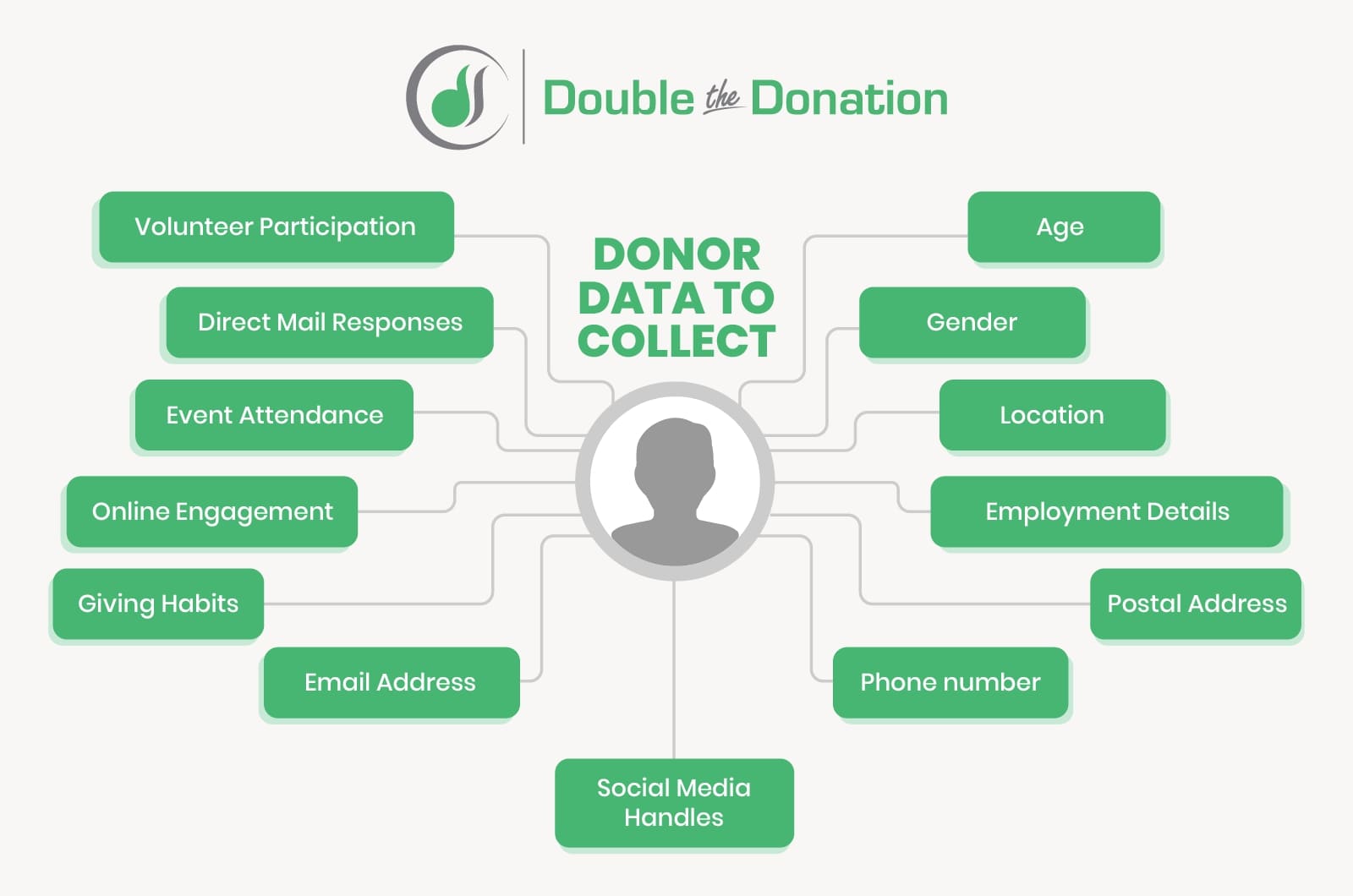
- Demographics: Get to know supporters based on their characteristics. Demographic donor data typically includes age, gender, location, and employment details.
- Contact information: Collect supporters’ postal addresses, phone numbers, email addresses, and social media handles. This allows you to connect via multiple channels and reach the right people for your email solicitations, phonathon fundraisers, and other campaigns.
- Giving habits: Common giving data you’ll want to collect includes gift amounts, frequency, preferred methods, and recency. You can also track recent upgrades and downgrades in support to stay on top of lapsed engagement.
- Interactions: The types of interactions nonprofits record vary from organization to organization. For inspiration, you might track event attendance, social media engagement, volunteer activities, website visits, email open rates, and direct mail response rates.
Storing this kind of information helps you separate your community into meaningful segments and deliver targeted fundraising appeals to each group.
How to Effectively Manage Donor Data
Applying data effectively drives deeper donor relationships. Follow these three recommendations to maintain a clean CRM and maximize fundraising:
Use Data Appends to Build Stronger Profiles
You can use reliable data sources to enhance profiles and append missing database elements. A trustworthy data append service pulls details like:
- Employer information to uncover matching gift eligibility
- Landline and cell phone numbers
- Email and mailing addresses
- Birthdates
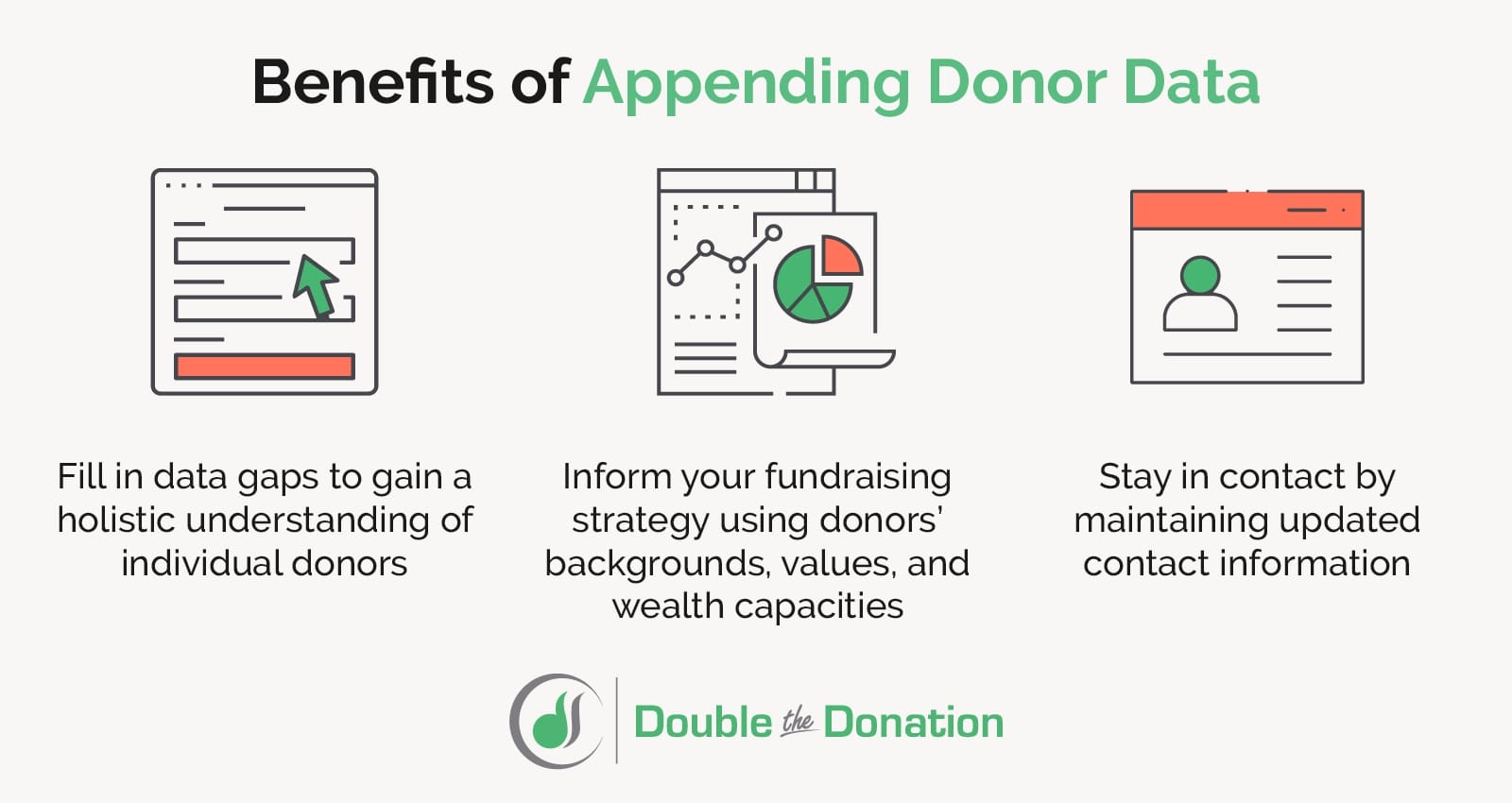
Backed with these insights, your team can:
- Fill in gaps: Establish a complete understanding of your donors and their motivations by filling in missing details.
- Enhance your fundraising strategy: Demographic and behavioral data inform cultivation and stewardship plans.
- Stay in contact: Append missing or outdated contact details when supporters move or change numbers.
The appending process requires sending a constituent file to your provider, who matches it to an external database. Learn more in our data append starter guide.
Use Your Donor Data to Personalize Communication
Show individuals you care by using donor data to:
- Craft tailored messages for segments. Segment donors based on interests and engagement levels to send personalized emails or direct mail campaigns.
- Send relevant engagement opportunities. Store past history to share applicable opportunities, like corporate giving eligibility or upcoming events.
- Use the right outreach channels. Reach out using the channels each donor checks most frequently, whether that’s email, text, or direct mail.
Even a few well-built segments, like first-time donors or lapsed givers, can take your nonprofit marketing up a notch by making every message feel written for the person reading it.
Protect Donor Data By Taking Security Precautions
Failing to secure personal information can result in data leaks, violating donor trust and resulting in lost supporters. Secure your donor database by taking these steps:
- Implement access controls. Restrict access to sensitive information only to those who need it to do their jobs.
- Use reliable software. Ensure all systems exercise proper security practices and encrypt data to make it unreadable to unauthorized users.
- Regularly update and patch systems. Keep software up to date with security patches to prevent vulnerabilities.
Protecting donor data protects donor trust. Each safeguard shows supporters their information is in good hands, which keeps them giving with confidence.
Frequently Asked Questions
What is a donor database?
A donor database is a system used to store and manage supporter information. It centralizes contact details, giving histories, engagement tracking, and details about your interactions with supporters. This software allows organizations to segment audiences, personalize outreach, and run fundraising campaigns efficiently.
How do organizations collect donor data?
Organizations collect donor data through multiple touchpoints, including online donation forms, event registrations, and newsletter signups. Integrations with event management software and payment processors automatically sync new supporter details into the main database, keeping records accurate.
Why is donor data important?
Accurate data fuels modern fundraising strategies. It helps organizations cultivate stronger relationships, prevent donor churn, and identify major gift prospects. By understanding supporter behaviors and preferences, teams can demonstrate clear impact and secure long-term financial support.
What information should be collected from donors?
Core data points include full names, contact information, and donation histories. To maximize revenue, it is crucial to collect employment data. Knowing a donor’s employer reveals corporate matching gift eligibility, financial capacity, and alignment with corporate initiatives.
Wrapping Up & Other Resources to Explore
Collecting data is just the first step. Keeping your database clean, secure, and rich with actionable insights positions your organization for long-term growth.
To build a complete strategy, explore these resources:
- Prospect Research: A Nonprofit’s Key to Better Fundraising. Pair wealth indicators with giving history and employment data to spot major gift prospects already in your database.
- Workplace Giving vs. Payroll Giving: What’s the Difference? Learn how the two programs differ so you can promote the right employer giving option to each donor.
- What is a Data Append and Why Does it Matter for Nonprofits? Explore how data enrichment services can fill in gaps in your organization’s data so you have more information to guide your strategy.