How Nonprofits Can Unlock Powerful Corporate Sponsorships
What Is a Corporate Sponsorship?
Corporate sponsorships are strategic partnerships in which businesses provide capital, resources, or services (such as corporate grants and in-kind donations) to support a charitable cause. In return, the business gains brand exposure, community goodwill, and employee engagement, creating a reciprocal relationship that helps both organizations achieve their goals.
While many nonprofits focus heavily on individual donor giving, corporate sponsorships offer a diverse revenue stream and positive social image that can maximize your operations and grow your support. However, the corporate landscape is competitive. It’s not enough to send a request and hope for the best. You must also prove that your nonprofit adds value to the company’s bottom line.
Corporate philanthropy is a two-way street, and businesses are looking for organizations that help them meet their own community and social impact goals. If you’re ready to move beyond cold outreach and into strategic partnerships, this guide will show you exactly how to do it. We’ll cover:
- The Basics of Corporate Sponsorships: What You Should Know
- Locating Corporate Sponsorship Opportunities
- Top Companies With Standout Sponsorship Programs
- How to Pitch (and Secure) a Corporate Sponsorship
- Tips for Cultivating Relationships with Corporate Sponsors
- Other Kinds of Corporate Giving Programs to Keep in Mind
Understanding the importance of corporate sponsorships is just the beginning. Securing the right partnerships is another story entirely. Let’s get started!
The Basics of Corporate Sponsorships: What You Should Know
A corporate sponsorship is a form of support that nonprofits receive from corporations, often to fund specific events, programs, or projects. According to Double the Donation’s Nonprofit Corporate Engagement report, more than 62% of surveyed organizations reported that sponsorships yielded the highest return on investment among collaborative activities.
Here’s what you should know about these opportunities in order to make the most of them.
Corporate Sponsorship Types
Corporate sponsorships can take many forms, and they are not a one-size-fits-all offering.
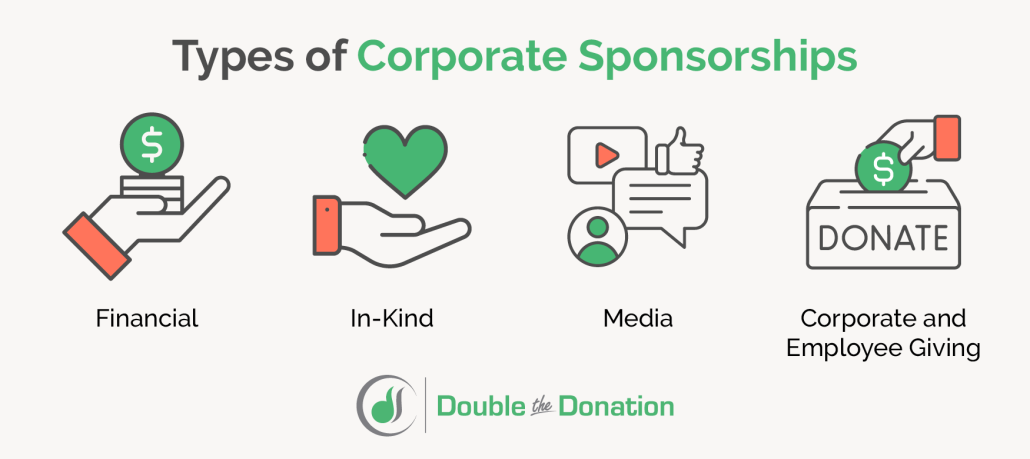
Here are a few examples of common types you’ll likely see:
- Financial Sponsorships: As the most popular form of sponsorship, this occurs when a company donates money to an event or program. Generally, nonprofits recognize the company through various materials, such as signage, merchandise, and online advertising, in exchange for its support.
- In-Kind Sponsorships: An in-kind sponsorship involves a company donating goods or services to an event or project. For example, a restaurant might provide catering services, or a spa may donate free gift packages as a raffle prize.
- Media Sponsorships: Some companies cover the cost of promoting a nonprofit event through media sponsorships. This could include radio promotions, TV ads, or printed advertisements to help spread the word.
- Corporate and Employee Giving Sponsorships: Beyond typical sponsorships, other forms of corporate giving can help your nonprofit. These include automatic payroll deductions, volunteer programs, and corporate matching gifts.
Prominent Benefits of (Win-Win) Corporate Sponsorships
The best part about corporate sponsorships is that they benefit both parties (the company and the nonprofit) in multiple ways. Let’s take a look at a few of the key advantages.
How Nonprofits Benefit From Sponsorship Agreements:
- Increased awareness. By leveraging a company’s audience, nonprofits can share their mission with more people.
- Acquisition of new supporters. Corporate sponsorships can transform a company’s customers into their nonprofit partner’s supporters.
- Boosted credibility. If potential supporters see a well-known company supporting your nonprofit, they can be confident they’re contributing to a legitimate cause and organization.
How Companies Benefit From Sponsorship Agreements:
- Positive brand recognition. Helping nonprofits gives companies a chance to live up to their proclaimed values and demonstrate their community involvement.
- Attracting new customers. Just as a company’s customers can turn into a nonprofit’s supporters, a nonprofit’s supporters can also be converted into the corporate sponsor’s customers.
- Happy employees. When companies practice social responsibility, their employees can feel good knowing they’re working at a business that honors their values and supports worthy causes.
Mitigating Risk: Key Considerations for Smart Corporate Sponsorships
Clearly, corporate partnerships offer tons of advantages. But before diving into the process, there are a few things your organization should be aware of as you prepare for a sponsorship:
- Legal compliance. Depending on the agreement you make with a business, the sponsorship may be considered a commercial co-venture. This usually occurs during cause-marketing campaigns that involve sharing revenue (e.g., a retailer selling a shirt and donating a portion of the proceeds to your organization). However, it’s best to check with a lawyer to ensure you are complying with the law and adhering to your state’s licensing requirements.
- Dependency. Relying too heavily on funding or resources from corporate sponsors, particularly just one or two businesses, could leave your nonprofit vulnerable if a business cannot or does not continue its support. Build a robust network of corporate connections and diversify your revenue sources to ensure your nonprofit is sustainable.
- Potential conflicts. Conflicts are possible in any relationship, ranging from a misread email to ethical concerns. You can limit conflicts by selecting corporate sponsors whose values align with yours and by clearly communicating shared responsibilities and expectations early in the relationship. Ensuring all sponsorship agreements are in writing can help prevent and navigate issues that may arise.
However, don’t let these factors prevent your nonprofit from taking advantage of the benefits of a corporate sponsorship. Proper diligence, careful documentation, and clear communication can help you manage and prevent these concerns.
Locating Corporate Sponsorship Opportunities
When seeking corporate sponsorships, it’s important to be intentional about who you choose to work with. As you research potential partners, consider the following tips to narrow down your search.
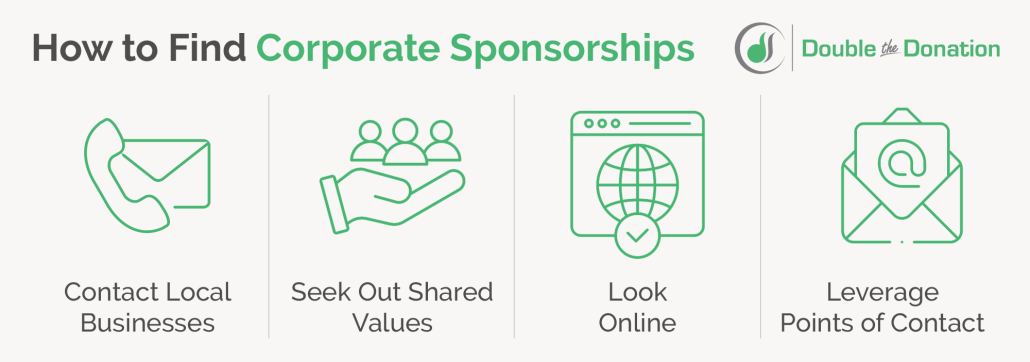
Contact Local Businesses
Start local! Approach the businesses in the immediate area of your upcoming event. To find candidates, use resources like:
- Your local chamber of commerce directory
- Networking opportunities
- Professional networking sites like LinkedIn
- Social media platforms
These businesses are more likely to see the value in sponsoring an event in their own community, which can greatly impact their decision to partner with you. Plus, smaller local businesses often have less competition for available funding.
Seek Out Shared Values
A corporate partner should align with your organization’s mission. For instance, if you’re an environmental organization, you should work with a corporation that values sustainability, environmental conservation, and other related issues. Your organization could lose credibility if you partner with a corporation that substantially harms the environment or has received negative press.
Browse a business’s website, social media platforms, and other resources to get a feel for its values. Many companies list their values publicly. Then, discuss these values with the company’s point of contact before confirming the sponsorship to ensure you understand what they mean in practice.
Use a Searchable Database
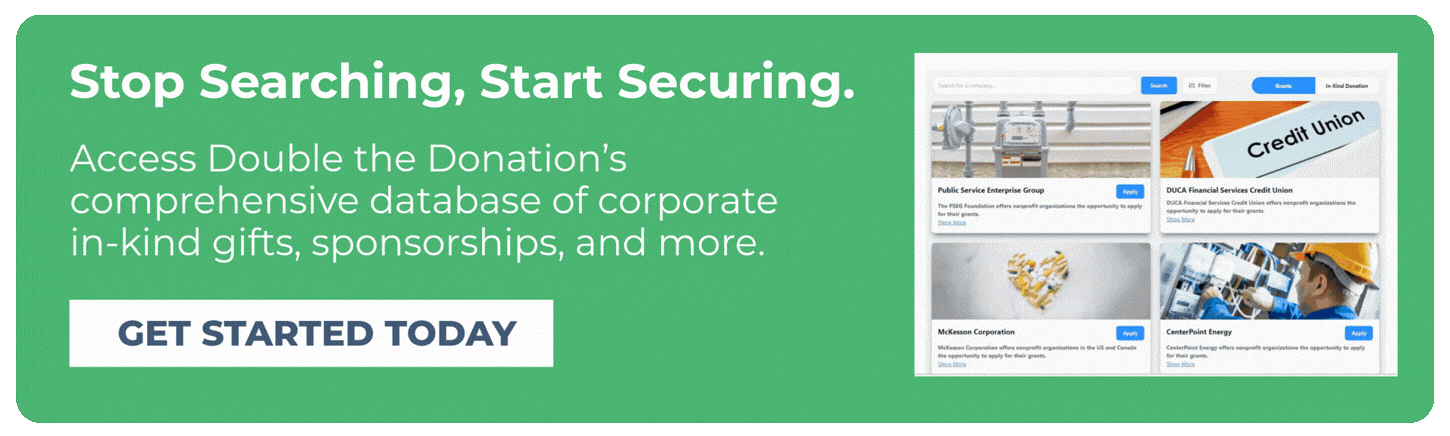
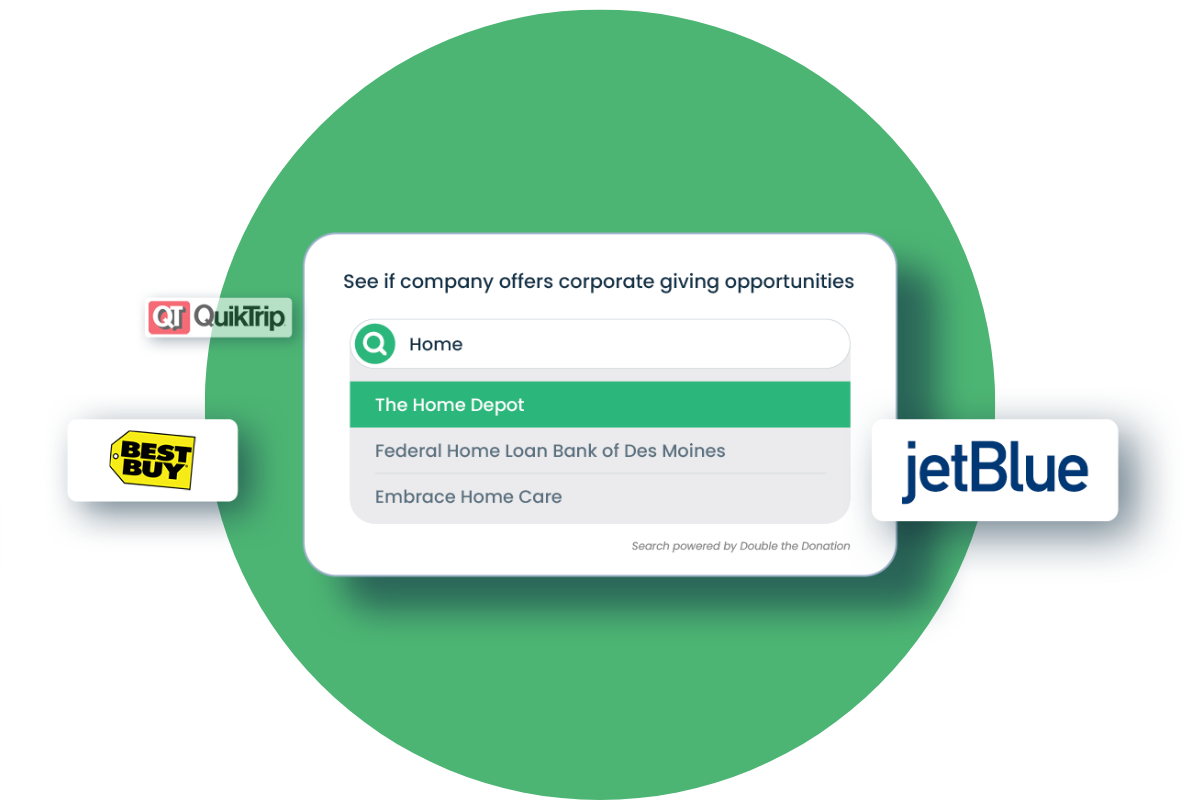
Target your search by utilizing searchable corporate giving databases. Platforms like Double the Donation offer comprehensive insights into available corporate sponsorships, grants, and more.
By leveraging these specialized tools, you can identify businesses with a proven track record of philanthropy (and easily accessible program applications!). These companies are significantly more likely to engage in new partnerships than those without established giving histories, and the right database can reveal niche opportunities you might otherwise overlook.
Leverage Your Connections
If your board members, key donors, or other members of your organization have connections or contacts at a particular company, ask them to reach out directly and request a sponsorship. Or, at the very least, see if they’d be willing to make a warm introduction for your organization. This is where your donor employment information can really come in handy!
Top Companies With Standout Sponsorship Programs
When developing your list of potential partners, it’s often helpful to examine the companies that are already leading the way in philanthropy. By exploring their existing initiatives, you can learn what they prioritize in a partner and how they structure their community support.
While every business is different, these examples offer a clear roadmap of what success looks like in the corporate giving landscape.
1. Wells Fargo
Wells Fargo has sponsored 2.89% of organizations, according to ZipSprouts’ database of nonprofit sponsors, placing them at #1 on the list of top corporate sponsors. Their sponsorship approach is primarily focused on strategic funding priorities, including financial opportunity, housing access, and small business growth. The company typically uses an invitation-based grant process for organizations aligned with these specific impact goals.
“Wells Fargo is committed to building an inclusive, sustainable future for all through a focus on opening pathways to economic advancement, championing quality, affordable homes, empowering small businesses to thrive, and driving an equity-focused transition to a low-carbon economy.”
In addition to their sponsorship programs, Wells Fargo also offers employee matching gifts and volunteer grants. The company matches up to $2,000 per employee at a 1:1 ratio.
Learn more about Wells Fargo’s sponsorship programs here.
2. PepsiCo
PepsiCo has sponsored 0.98% of nonprofits in a database of nonprofits that publicly list their sponsors, placing them at #6 on the list of top corporate sponsors. Their philanthropic efforts are largely funneled through the PepsiCo Foundation, which prioritizes long-term sustainable solutions in food security, water access, and economic opportunity.
“At the heart of the PepsiCo Foundation is our belief in the potential possessed by the people and communities we serve. There are far too many communities around the world, however, that are systemically excluded from access to the essential resources they need to grow, prosper and thrive — like nutritious food, safe water and economic opportunity. That is why the PepsiCo Foundation’s work focuses on the creation of sustainable and innovative solutions to these three critical socioeconomic issues.”
In addition to their sponsorship programs, PepsiCo matches employee donations up to $10,000, with a minimum donation amount of $25. The company also offers a generous volunteer grant program.
Learn more about PepsiCo’s sponsorship programs here.
3. Bank of America
Bank of America has sponsored 0.92% of nonprofits in a database of nonprofits that publicly list their sponsors, placing them at #8 on the list of top corporate sponsors. A core element of their sponsorship program includes high-profile partnerships with cultural and educational institutions aimed at improving community access to the arts and educational resources.
“We have countless strong nonprofit alliances around the country, which include grants and sponsorships to local organizations that help improve financial lives and entire communities. Some areas we concentrate on are workforce development and education, basic needs like food and housing, and community development.”
In addition to their sponsorship programs, Bank of America offers matching gifts and volunteer grant opportunities. The company matches donations to most nonprofits up to $5,000 at a 1:1 ratio.
Learn more about Bank of America’s sponsorship programs here.
4. The Coca-Cola Company
The Coca-Cola Company has sponsored 0.72% of nonprofits in a database of nonprofits that publicly list their sponsors, placing them at #11 on the list of top corporate sponsors. They operate a centralized online application system for community support requests, and they focus their sponsorship and grant resources on initiatives that promote water conservation, education, and diversity.
“Our mission is to make a difference in communities around the world by investing in transformative ideas and institutions that address some of our most pressing global challenges.”
In addition to its sponsorship programs, The Coca-Cola Company offers a generous matching gift program. The company contributes up to $20,000 per employee per year, matching at a 2:1 ratio.
Learn more about The Coca-Cola Company’s sponsorship programs here.
5. Walmart
Walmart has sponsored 0.68% of nonprofits in a database of nonprofits that publicly list their sponsors, placing them at #12 on the list of top corporate sponsors. A significant portion of their community support is driven by the “Spark Good” local grants program, which provides cash grants to local organizations to address specific needs in the communities where their stores and distribution centers operate.
“We seek to create value in the communities around the world where we operate, strengthening them through local grants supporting programs that help them thrive.”
In addition to their sponsorship programs, Walmart matches donations of up to $25,000 made by executive-level employees at a 3:1 ratio. The company also offers a volunteer grant program.
Learn more about Walmart’s sponsorship programs here.
6. McDonald’s
McDonald’s has sponsored 0.67% of nonprofits in a database of nonprofits that publicly list their sponsors, placing them at #14 on the list of top corporate sponsors. Their sponsorship efforts are focused on community-based fundraising and volunteer engagement, with long-standing commitments to initiatives such as Ronald McDonald House Charities and scholarship programs.
“We show our commitment to helping others by facilitating fundraising and engaging volunteers for Ronald McDonald House Charities® programs and the McDonald’s® HACER® National Scholarships. Through involvement in youth sports, local charities and events that inspire the world, giving back is an essential part of the way we operate every day.”
In addition to their sponsorship programs, McDonald’s offers a very generous matching gift program, matching up to $10,000 in employee donations (depending on role) per year at a 1:1 ratio.
Learn more about McDonald’s sponsorship programs here.
How to Pitch (and Secure) a Corporate Sponsorship
Once you’ve identified corporations you want to partner with, it’s time to plan how you’ll approach them. Forming the right ask depends on your goals, who you’re reaching out to, and when you plan to make contact. Here are some strategies to help you make the ask.
Promote Your Sponsorship Page
Creating a dedicated sponsorship page on your nonprofit’s website is a great way to condense the must-know information about sponsoring your organization. Be sure to include vital information, such as:
- A case for support that explains why you need sponsors
- The benefits corporate partners would receive by supporting your organization
- Your available sponsorship tiers (including the specific perks or advantages that each level unlocks)
- How an interested company can reach out to your team to initiate a partnership
Then, be sure to promote this page across your channels. You can even tap into paid advertising for free with the Google Ad Grant! If approved, your team can promote content, such as your sponsorship page, in Google Search Results for relevant keywords at no cost.
Check out examples of leading nonprofits’ sponsorship pages here to get inspired!
Set the Right Sponsorship Levels
Just as you receive a variety of donation amounts from individual supporters, establish multiple sponsorship levels for corporations to choose from. If you have an event with hundreds or thousands of attendees, make sure your sponsorship levels are high enough (e.g., $1,000 and up). On the other hand, if you’re planning a smaller event and have difficulty securing a large sponsorship, consider offering a lower level with fewer perks.
Here are a few examples:
- Title Sponsor ($10,000+): Secure exclusive “Presented By” naming rights, a keynote speaking slot, premier logo placement on all collateral, and 10 VIP passes.
- Platinum Partner ($5,000): Receive high-visibility branding on stage and digital displays, verbal recognition during the program, and 6 VIP passes.
- Gold Advocate ($2,500): Gain standard logo placement on the event website and signage, a feature in the post-event newsletter, and 4 general admission tickets.
- Silver Supporter ($1,000): Benefit from a digital presence with a backlink on our website, inclusion on the venue’s “Supporter Wall,” and 2 general admission tickets.
- Community Friend ($500): Support the cause with a text-only listing in the digital program and a “Proud Supporter” digital badge for your company’s social media.
The bottom line is that you don’t want sponsorships priced so high that no one participates, but by keeping levels elevated, sponsors will feel the event is well-run and that you have confidence in what you’re doing.
Be Creative
You can ask a company to sponsor just about anything! Use the creative elements of your event that already exist and turn them into sponsorship perks. Then, be sure to position them as excellent sponsorship opportunities for your potential partners.
Explain Why You’re a Perfect Fit
As you make your ask, explain how this corporate partnership will contribute to building up the company’s brand. Do your missions align? What will working with your nonprofit help the company achieve in terms of its own goals? Keep these ideas in mind and communicate them as clearly as possible.
Ask About the Company’s Objectives
That said, asking the company directly about its objectives and priorities demonstrates that you’re genuinely interested in bringing value to the partnership. Remember, your corporate sponsors have objectives, or “missions,” of their own. They’ll want to know they’re supporting a nonprofit that aligns with these goals and that the sponsorship can help them achieve them.
Tell a Story
Explain to potential sponsors how their sponsorship can directly impact someone in line with your mission. For instance, “$1,000 will help us provide meals to 5 families of 4 for a week.” Additionally, share how last year’s sponsors were able to help your organization accomplish its goals.
Tailor Your Ask
Rather than using a single template and filling in names, make your ask personal by writing individualized letters. These should be addressed to the right person at the company who is most likely to be receptive to your cause.
Make sure you do your research on who to ask. Go beyond just marketing contacts and speak to anyone who will sympathize with your mission and also be in a position to create a plan of action!
Leverage Your Data
Always back up your corporate sponsorship asks with supporter data. Determine which demographics a sponsor is targeting, and provide them with information about your event that is relevant. For example, if a company tends to target women aged 50 to 60, let them know how many people or what percentage of participants attending your event fall into that group.
Meanwhile, your donors’ employment information can come in handy here, too! If a company’s staff is already supporting your cause, let the company know how they can get deeper involved while growing employee engagement.
Find the Right Timing
The timing of your sponsorship ask is important. Many larger companies earmark a specific amount of money each calendar year for charitable giving, so be sure to ask when the best time is for them to consider a sponsorship.
Oftentimes, you have to get your ask in very early to even be considered. Other times, you may need to adjust your strategy to the business you’re reaching out to. For instance, if you’re reaching out to an accounting firm during tax season, you’re most likely not top-of-mind, and your request may go unanswered.
Propose a Plan
Part of crafting an appealing sponsorship ask means outlining your campaign initiatives and success metrics. This should involve defining your fundraising goal and the impact it will have.
Use numbers and data to support your proposal. But also be sure to define your success metrics and use KPI benchmarks that show when you’ve achieved your fundraising goals. Be specific about how your organization plans to meet its objectives, and link this process to ongoing projects, as well.
Draft a Sponsorship Agreement
The biggest thing that will demonstrate that you’re professional and committed to the partnership is a sponsorship agreement. It should outline your goals, expectations, and other deliverables for your organization and the company. It’s also a good idea to include how you’ll recognize the company for its support, such as with advertising materials, merchandise, or event printouts.
Follow Up
Haven’t heard back? Don’t give up! Continue to communicate with companies after you’ve reached out with a corporate sponsorship request. Always check back to ensure someone has received your call, email, or letter. If not, ask to speak with the appropriate person at the company, or resend your request to a new contact.
Be Willing to Pivot
If a business declines to offer a monetary sponsorship, consider asking for a non-monetary sponsorship instead, such as coupons for free services on event day. You can also request that a portion of their proceeds on the day of the event be donated back to the organization. A business in the area could host the kick-off party, packet pick-up, or after-event party.
You can also reach out to companies to provide services you’ll need at the event, such as photography, DJ/entertainment, signage, food, portable toilets, and tent/chair rentals. The value of their goods or services can certainly equate to a sponsorship level.
Tips for Cultivating Relationships With Corporate Sponsors
Once you’ve secured a sponsorship, don’t let the relationship fall by the wayside. In addition to presenting your partnership in a professional light, continuing to recognize and work with your sponsor can have a huge impact on your organization.
A recent nonprofit survey indicates that 1 in 3 nonprofits engage with their corporate sponsors less than once a quarter. But that’s not nearly enough to retain their ongoing support as a strategic partner in your organization!
Here are some effective ways to work with a sponsor after they’ve agreed to support your cause:
Treat Them Like Part of the Team
Treat your corporate sponsors like part of the team, because they are part of the team. Many sponsors will feel more engaged and recognize that they’re getting more from their sponsorship if they hear from you often. This doesn’t mean sending them an email every day; rather, it involves treating them like a team member.
Use the same engagement tools and approaches you use with participants to connect with your sponsors. For fundraising events, offer them a free team captain registration, help them set up their page, and provide fundraising coaching. The more a sponsor raises and the larger their team, the more exposure they will get. This will, in turn, make them feel like they’re getting more out of the partnership.
Pay Attention to the Little Things
Yes, big perks matter, but the little touchpoints make a big difference, too. Send a handwritten thank-you letter or a note from a participant or beneficiary of your cause’s work. If the sponsor also fundraised for your campaign, create a top fundraiser certificate and send it to them by mail.
These seemingly small touchpoints acknowledge the importance of their support, yet the cost is minimal, which demonstrates good stewardship by not wasting the sponsor’s funds.
Thank Your Sponsors Publicly
Feature sponsor logos and information in your event materials, such as merchandise, pamphlets, and online advertisements and emails. Then, give a shoutout on social media! Tag their company or business page, and publicly thank them in a post.
This will help your sponsor gain exposure as a reward for supporting your event, and it will also help solidify your partnership as beneficial and worthwhile for the company’s branding. Most likely, the company will then re-post the content to its full audience to help your event reach new constituents.
Other Kinds of Corporate Giving Programs to Keep in Mind
Corporate sponsorships are a fantastic source of funding and support for your nonprofit’s events and projects. But don’t forget to research other forms of company-sponsored giving, too. Especially when combined with a dedicated partnership, these programs can maximize your fundraising revenue and keep your supporters engaged.
Here are a few types of corporate giving opportunities your nonprofit should seek out:
Matching Gifts
Corporate matching gifts are the most popular type of corporate giving program, with more than 26 million individuals working for companies that offer these initiatives.
Through these programs, companies agree to match their employees’ donations to eligible nonprofits. Typically, matches occur at a 1:1 ratio, but some companies will match at an even higher rate. This means that your donors’ gifts could be doubled (or even tripled!) at no additional cost to the supporter.
To help raise awareness among supporters about matching gifts, consider investing in matching gift software. A solution like Double the Donation offers:
- A comprehensive matching gift database that houses information about thousands of companies and their corporate giving programs. Donors can search for their employers using a straightforward search tool that can be easily embedded on your website.
- Email automation tools that help you identify matching gift opportunities within your existing donor database and trigger emails to relevant donors.
- Corporate email detection tools that can identify opportunities based on a donor’s email domain. For example, the platform can infer that a donor using an email address like donorname@wellsfargo.com likely works for Wells Fargo.
- Matching gift auto-submission for donors whose employers use a CSR software vendor that partners with Double the Donation.

Custom Matching Gift Partnerships
Some companies may not feel prepared to launch a full-fledged matching gift program for their staff. However, they want to find a way to support nonprofit causes and inspire their employees to do the same.
Our recommendation? Establish a custom (or “one-off”) matching gift program in which a company agrees to match employee donations to a single organization. These are typically more targeted partnerships than a standard matching gift program, allowing deeper relationships between a nonprofit and a corporate sponsor.
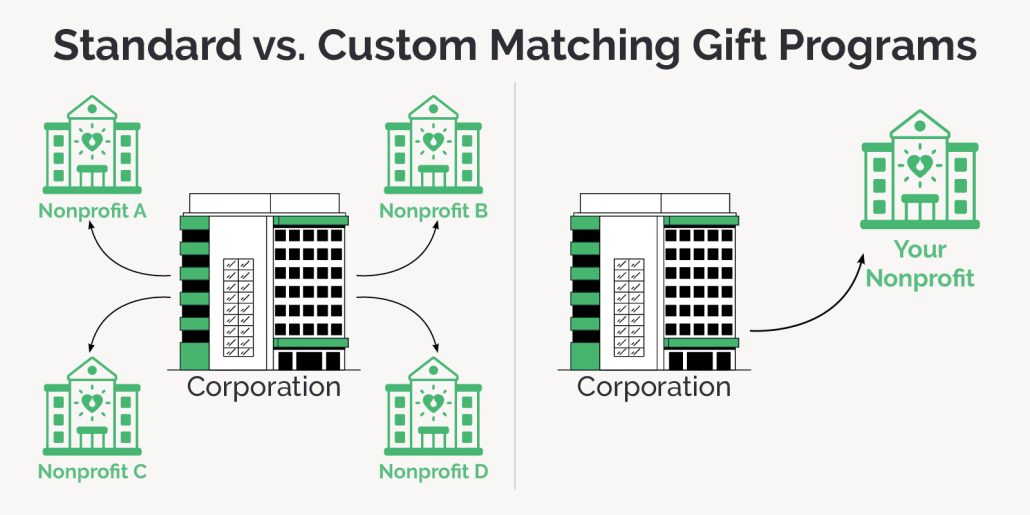
Organizations that use Double the Donation can create custom match programs that are exclusive to their own database tool. And when auto-submission is enabled, transaction details are automatically passed from the nonprofit’s donation page to the business offering the program, allowing it to facilitate its programming with minimal lift
Volunteer Grants
Your nonprofit likely already relies on volunteer assistance. But what if there were a way to turn volunteer hours into another revenue stream for fundraising?
Volunteer grants are a common form of corporate philanthropy in which companies provide monetary grants to organizations where their employees volunteer. If you fold this into your already established corporate partnerships, you may very well end up with extra funds for your mission!
Even if your volunteers don’t come from existing corporate partners, encourage them to look up their eligibility for grant funding. To simplify this process, many corporate giving databases (including Double the Donation) also offer information about volunteer grants. Embed the search tool into your volunteer page and registration forms for easy access!
Volunteer Time Off (VTO)
Volunteer time off (VTO) is paid time off that employees can use to volunteer. VTO hours are designated specifically for volunteer opportunities with registered nonprofit organizations, meaning employees can take time off during the workday to help your organization.
VTO policies can also bring significant benefits, such as:
- Providing more volunteers without investing time and resources into recruiting
- Expanding your volunteer pool to target more consistent volunteers, increasing referrals, and providing additional support for future events, programs, and campaigns
- Attracting diverse skill sets (e.g., professional services like graphic design) to help you accomplish more with the help of your supporters
- Boosting retention by giving these new volunteers an easy way to fit future volunteer shifts into their busy schedules
These programs ultimately provide employees with flexibility and help them fulfill their desire to better their communities with their employers’ support.
Payroll Giving
Payroll giving is another perk of building relationships with companies. Within these programs, employees can arrange to have a certain amount deducted from their paycheck and automatically donated to a nonprofit of their choice.
Some of the top advantages of encouraging payroll giving participation among supporters include:
- A lack of transaction fees
- The ability to build long-term relationships (particularly if you provide updates about the impact of these gifts)
- Reliable funding you can count on
These recurring donations can make a huge difference for your organization. Like a typical monthly giving program, these contributions make budgeting easier and more accurate, helping you plan projects to fulfill your mission and maximize your funding.
Top Tip: Managing workplace giving can be tricky without the right tools. Seek out software that can help you identify opportunities, collect data, and share insights for these often-overlooked types of corporate giving. This way, you can capitalize on more opportunities for support, growing your funding and engagement through a centralized platform.
Wrapping Up & Additional Corporate Sponsorship Resources
Corporate sponsorships can have a huge impact on more than just the money your organization brings in. They also affect your organization’s brand recognition, exposure, and credibility. Be sure to choose the right corporate partners for your sponsorships and put in the necessary research to find the best match.
Looking to dive deeper into corporate philanthropy? Check out these additional resources below:
- Double the Donation’s Matching Gift Academy. Learn how matching gifts can inform your corporate sponsorship approach! Dive into our Matching Gift Academy (free for current Double the Donation users!) to expand your knowledge and prepare your team.
- Free Download: Templates for Requesting Sponsorships. Ready to pitch a sponsorship opportunity to a potential corporate partner? Check out these helpful tips and customizable templates!
- Corporate Philanthropy Examples: Companies Doing It Right. Looking for even more examples of companies that engage in corporate giving? Explore this list of top participants.