The Ultimate Guide to Modern Nonprofit Gift Processing
For many involved in nonprofit fundraising, the thrill of receiving a major donation is quickly followed by the administrative reality of data entry.
Nonprofit gift processing is far more than just depositing a check into a bank account. It is a complex series of steps that ensures every dollar is accounted for, every donor is thanked, and every financial report is accurate. When done correctly, this process builds trust with supporters and provides the clean data necessary for high-level strategic planning. However, when the process remains manual or fragmented, it can lead to missed opportunities and administrative burnout.
In this guide, we’ll walk you through everything you need to know about modern nonprofit gift processing to ensure your team is on the right track. This includes:
- Defining the Nonprofit Gift Processing Lifecycle
- Essential Gift Types for Nonprofits to Know
- Common Challenges in Manual Gift Processing
- Accelerating Gift Processing Workflows with Innovative Tech
- Best Practices for Maintaining Data Integrity
To fully optimize your development efforts, you need to consider the complete donation journey. This guide provides a technical deep dive into the stages of gift handling, the types of contributions you’ll encounter, and the roadblocks that often hinder success. Plus, we’ll examine how the latest software helps nonprofit leaders maintain data integrity as they scale their impact.
By understanding these core pillars, your team can ensure that no donation is left unprocessed and no corporate match goes unclaimed. Let’s begin by exploring the steps that make up a professional gift processing workflow.
Defining the Nonprofit Gift Processing Lifecycle
The technical lifecycle of a gift ensures that every contribution is handled with the highest level of financial oversight from the moment it is received until it is fully reconciled. A standardized lifecycle prevents funds from being lost in the shuffle and ensures that your accounting team remains in sync with your fundraising staff.
By following a structured approach, organizations can avoid reconciliation issues and ensure transparency for donors and auditors alike. Here’s what it generally looks like.
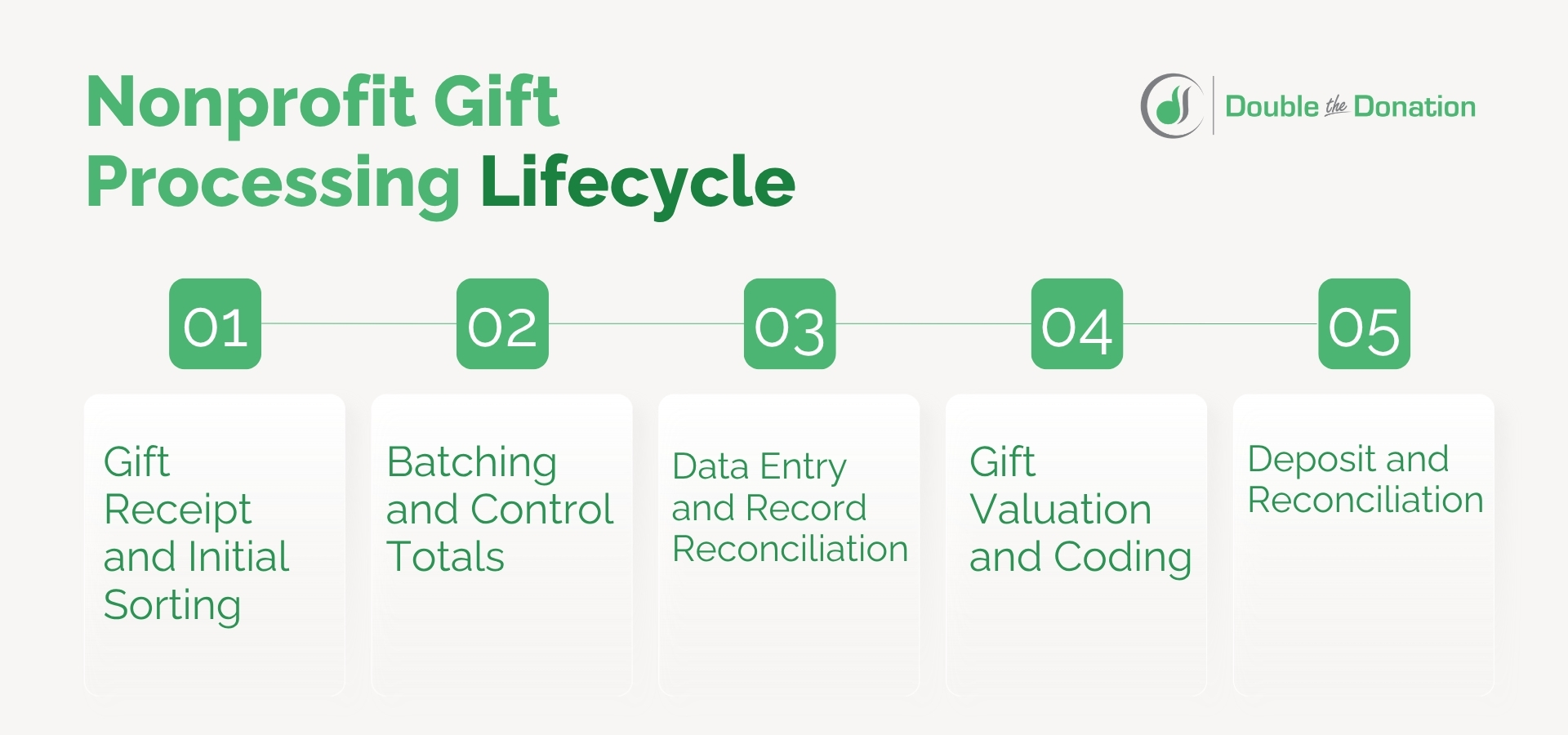
1) Gift Receipt and Initial Sorting
The first stage of the nonprofit gift processing lifecycle is the physical or digital receipt of the contribution. For physical mail, this involves a secure process for opening envelopes and immediately stamping checks with a restrictive endorsement.
From there, sorting is the process of separating gifts by payment method, such as cash, checks, or credit card slips. Digital gifts often arrive via integrated donation forms, where the software automatically classifies them.
It is critical at this stage to keep a primary log of all incoming items to create an initial paper trail for the finance department.
2) Batching and Control Totals
In the next step, batching is a specific technique used to group donations into manageable sets, typically by date or by fundraising campaign. For example, all checks received on a Monday morning might be grouped into a single batch. Before entering data into a database, the staff member calculates a control total, which is defined as the sum of all gifts in that batch.
This manual calculation serves as a safeguard. If the final total in the database does not match the control total, the team knows there was a data entry error that must be corrected before the batch is finalized.
3) Data Entry and Record Reconciliation
Once a batch is created, the information is entered into the nonprofit database or CRM (constituent relationship management) system. The most important part of this step is record reconciliation. At this stage, the gift processor must determine if the donor already exists in the system or if a new record needs to be created.
Accurate record reconciliation prevents duplicate records, which can clutter your database and lead to communication errors (such as sending two copies of the same letter to a single household). Meanwhile, detailed notes regarding gift sources and fund designations are also recorded during this phase.
4) Gift Valuation and Coding
Each gift must be assigned a specific code that indicates how the money can be spent. This includes the fund code, which indicates if the gift is for a specific program or general operations, as well as the appeal code, which tracks which marketing effort prompted the donation.
For non-cash gifts, such as stocks or in-kind goods, the organization must also follow specific legal guidelines for valuation. Accurate coding ensures that restricted funds are used exactly as the donor intended, which is a legal requirement for all 501(c)(3) organizations.
5) Deposit and Reconciliation
After the data is entered and the batch is closed, the physical funds are deposited into the organization’s bank account. Modern nonprofit gift processing often uses remote deposit capture technology, allowing checks to be scanned and deposited from the office.
Moving forward, the final step in the technical lifecycle is reconciliation. This is a collaborative process between the fundraising team and the accounting department. They compare the internal gift records against the bank statement to ensure every cent is accounted for. This (usually) monthly habit is the primary defense against internal fraud and accounting errors.
Essential Gift Types for Nonprofits to Know
To ensure proper nonprofit gift processing, maximize revenue potential, and maintain accurate records, it’s essential that fundraisers are familiar with a wide variety of donation types. Each kind of gift carries its own set of processing requirements, documentation needs, and tax implications. As the fundraising landscape continues to evolve, the variety of gift types expands.
From digital wallets and cryptocurrency to complex workplace giving programs, your internal systems must be flexible enough to handle diverse revenue streams. Let’s walk through the main categories you should be familiar with.
One-Time Cash Gifts 💵
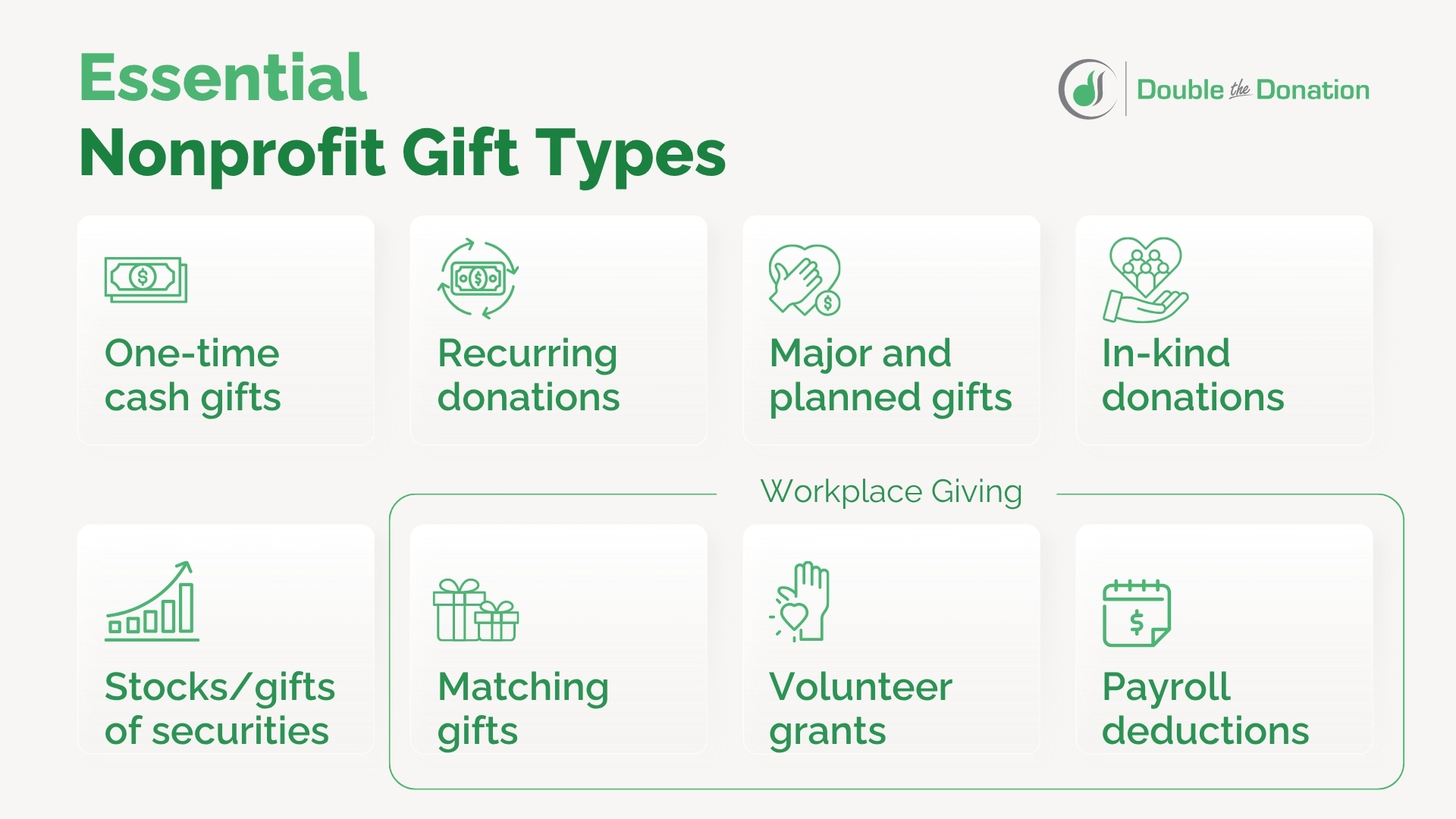
One-time cash gifts are the most common form of immediate support. These contributions are typically made via check, credit card, or direct bank transfer and are excellent for meeting urgent programmatic needs or capital campaign goals. Because these are singular transactions, the processing focus is on rapid acknowledgment and accurate coding to ensure the donor is promptly thanked and the funds are directed to the appropriate project.
Recurring Donations 🔁
Recurring donations are the gold standard for organizational sustainability. These supporters provide a predictable stream of income that allows for better long-term budgeting and strategic planning. However, processing these gifts requires a specialized system that can securely store payment tokens and automatically process transactions on a set schedule.
Because these donors are highly committed and represent a high lifetime value, their records should be flagged for special stewardship efforts to maintain their long-term loyalty.
Corporate Giving and Matching Gifts 💼
Corporate giving represents a massive opportunity for growth in nonprofit gift processing. This category includes:
- Matching gifts, where a company matches an employee donation, often doubling or even tripling the impact
- Volunteer grants, which are cash donations made by a company in recognition of an employee’s volunteer hours
- Payroll giving, which allows employees to have donations deducted directly from their regular paychecks
These gifts require specialized tracking, as the nonprofit must verify the initial donation or service hours before the corporation releases the funds. Identifying these opportunities during the initial gift lifecycle uncovers a hidden gem for increasing revenue without asking supporters to reach back into their wallets.
Major and Planned Gifts 🗓️
Major gifts are large contributions that often involve multi-year pledges or challenge match campaigns. Meanwhile, planned gifts, such as bequests in a will or charitable gift annuities, are focused on the long-term future of the organization. These gifts often come with complex legal agreements and specific restrictions on use.
The processing of a planned gift can take years, and fundraisers must track these “expected” gifts in their database long before the money actually arrives. This enables accurate pipeline reporting and ensures the organization is prepared to receive the assets when they are eventually liquidated.
In-Kind Donations 🥫
In-kind donations are gifts of goods or services rather than cash. Examples of this type include professional legal services, office equipment, or food for a community pantry or fundraising event. While no money changes hands, these gifts must still be processed and acknowledged for tax purposes, which is vital for accurately representing the full scope of resources available to the organization.
Securities and Complex Assets 📈
Donations of stock, mutual funds, cryptocurrency, or other securities are becoming increasingly popular due to their tax advantages for the donor. For the nonprofit, however, processing these gifts typically requires a brokerage account and a system for tracking the value of the asset at the time of transfer.
Top tip: Because stock and crypto prices can fluctuate rapidly, timing is everything during the gift-processing phase. The contribution must be recorded at the average value on the date it comes under the organization’s control.
Common Challenges in Manual Gift Processing
Manual processes are often the biggest bottleneck for growing nonprofits, leading to inefficiencies that can dampen fundraising momentum. But outdated systems do more than just waste time; they can create data inaccuracies that actively undermine donor engagement.
Understanding these common roadblocks is the first step toward overcoming them and building a more resilient system that can support a modern fundraising strategy.
High Rates of Human Error
When staff members are manually typing donor names, addresses, and gift amounts, mistakes are inevitable. A simple zip code typo can result in undeliverable mail, while a misplaced decimal point in a gift amount can cause massive headaches for the accounting department.
These errors often go unnoticed until it is time to send out year-end tax receipts, leading to a frantic rush to correct the data. Manual entry also increases the risk of creating duplicate donor records, which fragments your data and makes it impossible to see a supporter’s true lifetime value.
Delayed Acknowledgment Cycles
The speed at which a nonprofit thanks a donor is a major factor in their rate of retention. According to industry research, supporters who receive a thank-you within 48 hours are 4x more likely to give again compared to those who receive a delayed response.
Unfortunately, manual processing strategies (which require staff to export data, perform mail merges, print letters, and stuff envelopes by hand) often create a backlog, especially after a successful year-end campaign or a high-volume major event. If it takes three weeks or more for a donor to receive a thank-you letter, they may feel undervalued or wonder if their gift was received at all.
Difficulties in Managing Workplace Giving
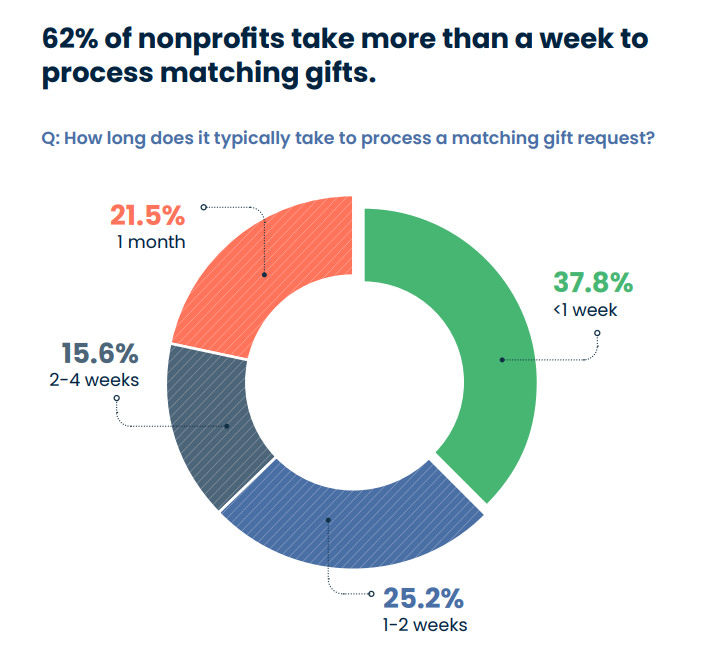
Recent research for the Nonprofit Corporate Engagement report indicates that 62% of nonprofits take more than a week to process matching gifts when relying on manual workflows, resulting in missed deadlines and donor frustration.
However, when organizations implement modern solutions, matching gift processing can be completed in a fraction of the time, allowing your team to secure corporate funds before the opportunity expires.
Another significant challenge in manual processing flows is the fragmented nature of workplace giving data. Since matching gifts and volunteer grants are often paid out through third-party corporate social responsibility portals, the information you receive does not always arrive in a format that matches your internal records.
Without automated tools, staff must manually cross-reference corporate checks against individual donors’ histories to determine which employee triggered the match. This disconnect often results in unclaimed corporate revenue or inaccurate data on which companies are your most active philanthropic partners.
Lack of Real-Time Reporting
Leadership teams need accurate information to make informed decisions about where to invest their resources. In a manual gift processing environment, reports are often outdated by the time they are finished. If the data entry team is a week behind on processing, the executive director cannot see the true results of an active campaign. This lack of visibility makes it difficult to pivot strategies or capitalize on sudden momentum.
Meanwhile, manual reporting workflows also make it harder to track specific key performance indicators (KPIs), such as the retention rate of new donors or the growth in matching gift revenue.
Security and Compliance Risks
Handling sensitive financial information manually inevitably poses severe security risks. For example, paper checks left unattended on desks or credit card numbers written on sticky notes are significant vulnerabilities that can lead to data breaches. Furthermore, manual systems make it harder to maintain compliance with Payment Card Industry standards.
There’s also the risk of a single point of failure: if the one person who understands the spreadsheet leaves the organization, the entire gift-processing system can collapse. On the other hand, an automated system provides a secure, centralized environment that protects both the donor and the cause.
Accelerating Gift Processing Workflows with Innovative Tech
For many of the reasons listed above, more and more organizations are moving away from traditional paper-based methods and toward integrated technology suites. By utilizing modern fundraising tech, nonprofits and schools can transform gift processing from a back-office burden into a strategic advantage for revenue generation.
Here’s what to look for as you work to improve your processes.
Integrated Donation Forms and CRMs
The most effective way to streamline processing is to ensure your donation forms are directly connected to your donor database. When an individual gives online, their information should flow automatically into their constituent record and your workplace giving platform. This eliminates the need for manual data entry and ensures accurate information is received.
These systems can also perform automatic duplicate checking, flagging potential “doubles” for staff review.
Streamlined Matching Gift Identification
One of the most powerful features of modern tech is the ability to identify matching gift opportunities in real time. During the donation checkout process, an embedded matching gift search tool can prompt donors to enter their employer’s name. The software then checks a comprehensive database to see whether that company has a match. If so, it provides the donor with the necessary forms.
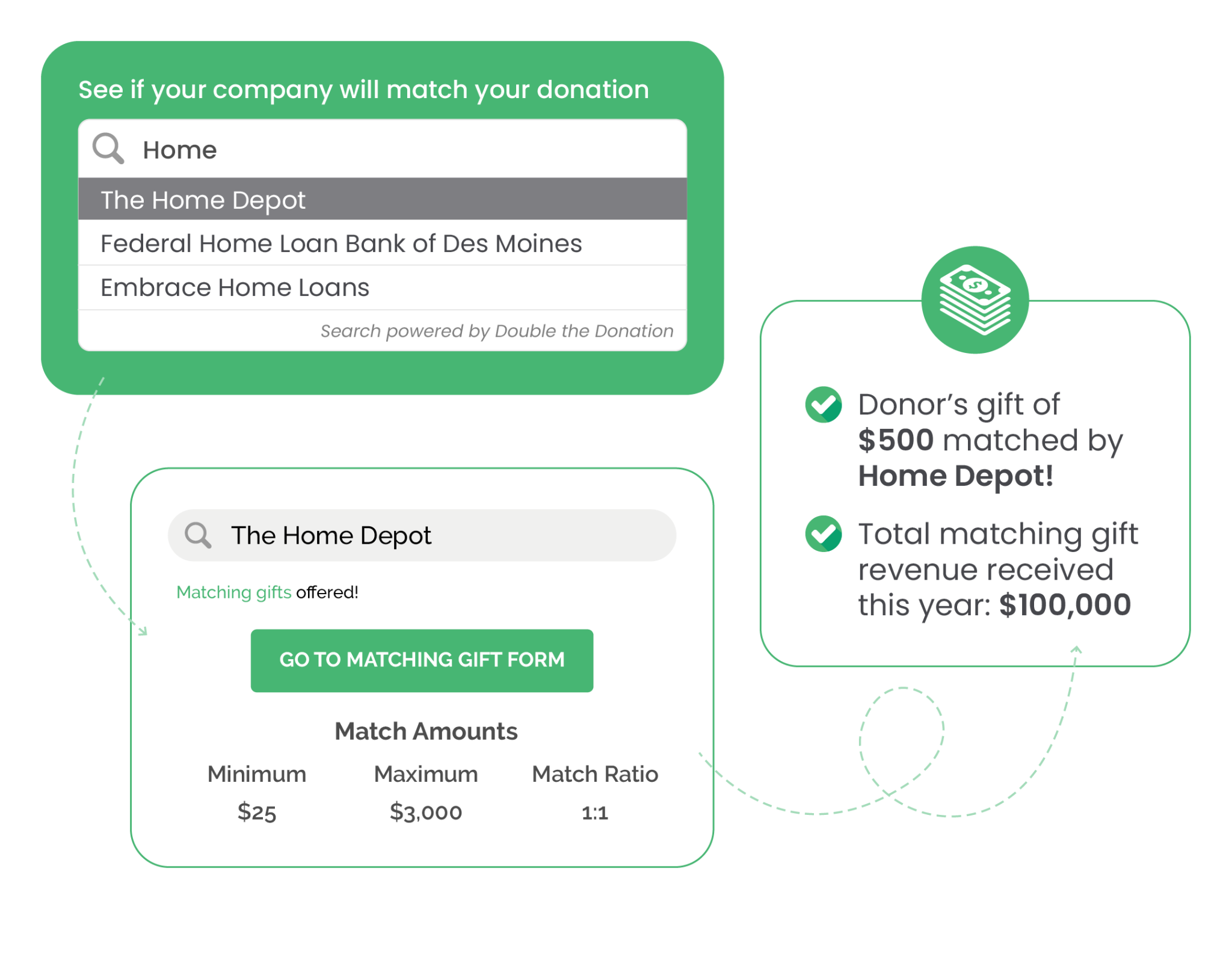
This groundbreaking technology captures matches that would otherwise go unclaimed, increasing revenue by more than 20% to 50% percent.
Automated Acknowledgments and Receipts
Automation can take the heavy lifting out of donor stewardship. To do so, many modern systems can be configured to send an immediate digital tax receipt upon processing a donation. By streamlining these routine communications, you can ensure that every donor is thanked promptly without overwhelming your team.
Advanced Analytics and Reporting Dashboards
Innovative technology often provides nonprofits with real-time dashboards that track their fundraising progress at a glance. From these tools, you can see exactly how much has been raised, which channels are performing best, and beyond. Such insights allow you to make strategic, data-driven decisions and tweak your existing tactics as needed.
Best Practices for Maintaining Data Integrity
Data integrity is the foundation of professional nonprofit gift processing and reliable financial reporting. Clean data ensures that your reports are accurate, your communications are personalized, and your financial records are audit-ready.
Standardize Data Entry Protocols
Every person who enters data into your system should follow an established set of rules. This includes standardized formats for addresses, phone numbers, names, employers, and more. For example, decide whether to use “Street” or “St.” and stick with it throughout the database.
A data dictionary is a helpful document that outlines these rules for all staff.
Maintain Regular Duplicate Management
Even with the best software, duplicate records can still find their way into your database. Supporters might use different email addresses or move to new homes. Therefore, we recommend performing a formal duplicate scan at least once a quarter.
Most modern databases include tools that identify potential duplicates based on shared names or addresses. Merging these records ensures that you have a single, comprehensive view of each individual’s engagement history.
Implement Internal Controls
Strong internal controls, including the segregation of duties, protect your organization from both errors and fraud. For example, the person who opens the mail is not the same person who reconciles the bank statement.
You should also have a clear approval process for adjusting or deleting gift records. Having additional eyes on every batch before it’s finalized can serve as an effective way to maintain accuracy.
Ensure Periodic Employment Data Refreshes
Since workplace giving is such a vital revenue stream, it’s important to keep your donors’ employment data up to date. People change jobs frequently, and an individual who did not qualify for a match last year might be eligible now.
For the best results, we recommend requesting employer information each time a supporter engages with your cause, whether that’s by making a donation or completing a volunteer sign-up. Alternatively, employer append services can also help fill in any remaining gaps!
Prioritize Ongoing Staff Training
The best software in the world is only as good as the people who use it. Regular training sessions ensure that your team stays up to date on new features and best practices. (Top tip: That’s why Double the Donation offers free access to the Matching Gift Academy for existing clients!) By investing in your team’s skills, you ensure your gift-processing system remains efficient as your organization continues to grow.
Plus, as your gift-processing needs evolve, your staff must be prepared to handle new, increasingly complex gift types and scenarios. In-depth training also reinforces the importance of data integrity and financial compliance.
Final Thoughts on Nonprofit Gift Processing
Mastering nonprofit gift processing is a vital step toward long-term organizational maturity. By moving from manual workflows to automated systems, you free your team to focus on what truly matters: your mission.
Whether you’re processing a recurring gift or a corporate match, each transaction represents an opportunity to strengthen supporter relationships. With the right technology and a commitment to financial transparency, your gift-processing operation will become a solid foundation for success.