Top Data Hygiene Best Practices for Nonprofits & Schools
Picture this: Your wildlife conservation foundation is gearing up for an upcoming campaign. Your marketing team composes an engaging series of emails, complete with stories about real beneficiaries, impact statistics, and supporter testimonials. Once the materials are ready, you send out the first batch of messages. But when you examine the open and click-through rates, they’re much lower than you anticipated, and your bounce rate is way too high. Worse yet, the donations that did come through are sitting in a processing queue because half of the records are duplicated, delaying their tax receipts.
What could have gone wrong?
While it’s possible your email didn’t catch your audience’s attention, it’s perhaps more likely that many of your supporters didn’t receive your email in the first place due to typos in your contact information, new email addresses, or a multitude of other reasons.
The above scenario demonstrates the importance of keeping your database organized and up to date through data hygiene best practices. In this guide, we’ll equip your team with the skills they need to clean up your constituent data by walking you through the following topics:
- What Is Data Hygiene?
- The Benefits of a Consistently Hygienic Donor Database
- Data Hygiene as the Foundation of Frictionless Gift Processing
- How Does Nonprofit Data Hygiene Relate to Workplace Giving?
- Top 5 Data Hygiene Best Practices for Your Nonprofit
With these tips and strategies in mind, you’ll be equipped to maintain a clean database filled with information that helps you connect with your audience and earn more support. Let’s get started with the basics.

What Is Data Hygiene?
Data hygiene refers to the process of cleaning your database. In this context, “cleaning” refers to updating, verifying, and supplementing the supporter information you’ve stored so it’s accurate and actionable.
While clean data is error-free and up to date, “dirty data” refers to outdated, incomplete, duplicated, or incorrect information. During the data hygiene process, your team will remove and correct as much dirty data as possible to ensure you’re basing decisions on accurate information and preserving resources for the right people with viable contact information.
In our opening example, the organization’s email address data was “dirty” because it contained outdated and incorrect supporter email addresses, preventing their messages from reaching supporters and limiting their fundraising potential.
Data hygiene best practices provide a framework for fixing errors and filling in gaps, ensuring your database is a comprehensive, reliable source of truth for supporter information.
The Benefits of a Consistently Hygienic Donor Database
Most organizations know that data is a useful tool for decision-making and for reaching supporters. Even so, this information is only helpful to your nonprofit’s team if it’s accurate and up to date, and data can quickly become outdated.
In fact, data decays at an average rate of 30% per year. This means that every year, nearly a third of the information you store about your supporters, finances, marketing efforts, fundraising campaigns, and other areas of your nonprofit is no longer viable.
That’s why it’s so important to keep your data clean. By updating outdated information and removing incorrect data, you can prevent data decay. The benefits of following data hygiene best practices include:

- Improved decision-making. When you regularly update your database, you can be confident you’re basing decisions on accurate information. Without following data hygiene best practices, you’re more likely to launch campaigns that don’t reach your audience, resonate with them, or generate a positive return on your investment.
- Higher engagement. Not only does clean data help you personalize your campaigns to your current audience, but it also encourages your supporters to interact with your content as it’ll be more relevant and engaging to them. For instance, if the nonprofit in the opening example were to append email addresses to its database, segment supporters into groups based on shared characteristics, and send targeted communications, it could increase its open rate by 82% and its click-through rate by 75%.
- Enhanced stakeholder relationships. Data-driven campaigns can help you build stronger relationships with prospects, donors, volunteers, and sponsors. Targeted, personalized messages make people feel seen and heard as individuals, enticing them to continue supporting your organization over the long term.
- Increased fundraising efficiency. Just like a for-profit organization, you have to spend money to make money, expending resources on marketing materials and staff member time. With clean data, you’ll reach the right people the first time, allowing you to reserve time and resources for those most likely to convert.
- Reduced costs. With more efficient fundraising operations, you’ll naturally save on costs associated with dirty data, such as sending materials to the same people multiple times and managing returned mail.
- Accelerated acknowledgment timelines: Clean data enables automated and accurate acknowledgment batch processing. When donor profiles are updated and verified, thank-you letters and receipts can be generated and sent within the ideal 48-hour window, drastically improving donor retention.
- Compliance with data regulations. Following data hygiene best practices ensures compliance with data laws and regulations, such as the General Data Protection Regulation and the California Consumer Privacy Act. You can highlight your compliance with these regulations on your website to build trust with donors and demonstrate your commitment to protecting their sensitive information.
- More accurate reporting. Updated, organized information makes it easier to compile accurate reports on your programs’ impact and share them with stakeholders such as donors and board members.
- Streamlined internal collaboration. Keeping your database up to date improves internal communication and team collaboration. For instance, if your fundraising team determines your organization’s major gift range based on recent fundraising data, your marketing team can develop branded outreach materials that are aligned with your major donors’ giving capacity.
Leveraging clean data creates a better experience for everyone involved in your nonprofit, from donors and sponsors to staff and volunteers.
Data Hygiene as the Foundation of Frictionless Gift Processing
While data hygiene heavily impacts your marketing, its truest test comes at the gift-processing desk. Nonprofit gift processing isn’t just about cashing checks or processing credit cards. It’s the systematic recording of a donor’s financial intent. When your database is plagued by dirty data, the gift processing cycle breaks down in several critical ways:
- Batch Processing Bottlenecks: Gift processors waste hours trying to match an incoming check to a donor record when the CRM contains multiple duplicates or outdated addresses.
- Inaccurate Tax Receipting: If a donor’s contact information or email is incorrect, legally required tax receipts and end-of-year statements bounce back, resulting in frustrated donors and unnecessary compliance risks.
- Mismatched Giving Histories: If a recurring gift or major donation is logged under a duplicate profile, a donor’s true lifetime value (or LTV) is obscured, leading to misinformed, potentially awkward future solicitations.
For effective fundraising (which relies on effective gift processing), a nonprofit’s development and accounting teams must always speak the same language. Data hygiene acts as the translator.
When data standards are lax, gift processing logs can conflict with the general ledger. Clean data ensures that fund restrictions, campaign codes, and appeal codes are perfectly aligned. In other words, regularly ensuring your data meets high-level hygiene standards prevents the nightmare of reconciliation discrepancies and ensures that every dollar processed is accurately accounted for.
How Does Data Hygiene Relate to Workplace Giving?
At Double the Donation, our specialty is helping nonprofits like yours earn more in matching gift and workplace giving revenue. If you’re not familiar, you may be wondering,
“How exactly does data hygiene relate to matching gifts and broader workplace giving?”
The reality is that when you adhere to data hygiene best practices, you’ll see the following benefits in your employee giving workflows:
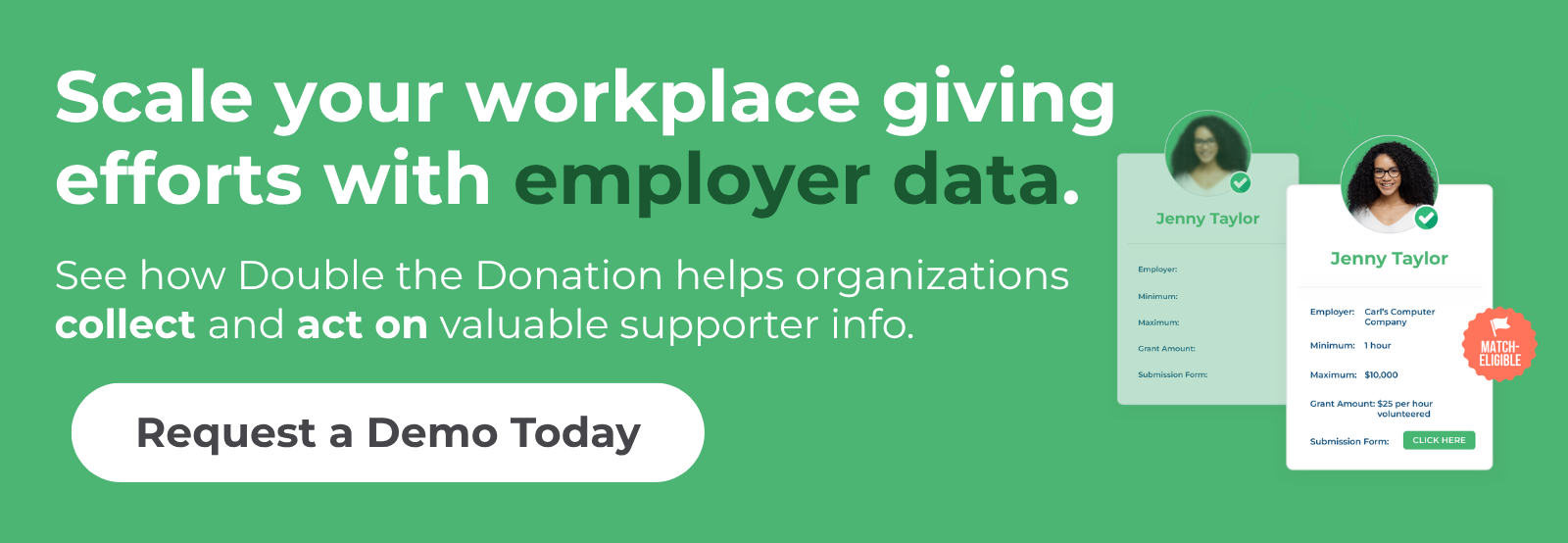
- Easier identification of workplace giving opportunities. Storing accurate, updated employer information in your database simplifies the process of assessing your supporters’ eligibility. Using a combination of precise employer data and Double the Donation’s workplace fundraising software, you can help donors recognize matching gift, volunteer grant, and payroll giving opportunities and then help them act on them.
- Timely follow-ups. When you already have up-to-date contact information, you can quickly follow up with supporters about workplace giving benefits and encourage them to send matching gift requests to their employers. Double the Donation even automates these communications so you can focus on achieving your mission!
- Maximized matching gift revenue. With more donors checking their matching gift eligibility and receiving communications about matching gifts, you’ll increase your matching gift revenue. As a result, you’ll unlock valuable funding for your organization at no additional cost to your supporters, helping you strengthen your mission and donor relationships.
- Enhanced reconciliation efforts. When corporate payouts arrive, gift processors are often left playing detective, trying to figure out which employee donation triggered the match. Clean employer data, paired with Double the Donation’s tracking insights (such as which CSR platform is handling the match), eliminates the guesswork. This empowers your finance team to map initial gifts to the correct match payouts, streamline reconciliation, and accurately apply both the soft and hard credits without delay.
Overall, clean data streamlines the workplace giving experience from beginning to end and ensures you get the most out of this lucrative, multimodal giving channel.
Top 5 Data Hygiene Best Practices for Your Nonprofit
Now that you understand the importance of proper data hygiene, it’s time to dive into the best practices your nonprofit can implement.
#1: Audit your database or CRM.
You can’t start fixing data errors if you’re not sure what’s wrong. Start your data hygiene process strong with a database audit.
An audit provides an opportunity to survey your database or CRM and identify potential problem areas. It allows you to focus your data hygiene efforts and establish a clear plan of action.
During your audit, make sure to follow these steps:
- Clarify your goals. The goals of your current fundraising campaign or marketing initiative should guide your data hygiene process. For example, if you’re running a direct mail campaign, focus on updating your supporters’ mailing addresses. This way, the process is more manageable, especially if you’re tackling data hygiene for the first time.
- Move all data to a central location. If you have any information stored in spreadsheets or physical forms, consolidate it into a single platform for easier organization and analysis.
- Seek out inaccuracies. Lastly, identify any data inaccuracies and develop a plan for resolving them.
Once your audit is complete, share the results with your team to get everyone on the same page about your data priorities and data hygiene plan.
#2: Assign data responsibilities.
Once you have a clear data hygiene plan, it’s time to assign specific responsibilities to your team members. You may select a main data steward to oversee all data hygiene procedures and assign separate supporting roles among your staff.
For example, you may have team members responsible for verifying supporters’ mailing addresses, merging duplicate records, researching mailing-address append services, and segmenting your supporters into relevant groups. As a result, you’ll streamline the data hygiene process and complete your objectives more efficiently.
#3: Reevaluate your data collection strategy.
You likely collect data from your supporters through multiple methods, such as donation forms, surveys, and newsletter signups. Additionally, your organization generates data from its fundraising, marketing, and program activities.
While much of this information is helpful, more is not always better. Prioritize what information you need to collect and store to fuel your mission. This way, you’ll prevent unnecessary data buildup and make your database easy to navigate.
Common types of data you’ll likely gather include:

- Supporter information. When you know who your supporters are, you can personalize your messages to them. Supporter information you collect may include name, age, gender, employer data, and contact information.
- Giving data. Basing donation requests on donors’ giving history can help you retain their support and encourage them to make larger contributions. Store information related to donors’ giving amounts and frequency so your communications match their level of commitment to your organization. Additionally, identify whether any of your donors are also involved in your nonprofit as volunteers, event attendees, or cause advocates so you can reference their nonmonetary contributions to your organization as well.
- Campaign metrics. Keep track of the outcomes of your marketing and fundraising campaigns so you know which techniques resonate with your audience. This data may include event attendance rates, fundraising revenue, campaign conversions, and donor and volunteer retention rates.
- Financial data. Planning a feasible budget depends on storing and analyzing accurate financial data. Pay attention to the revenue you generate from donations, membership fees, merchandise sales, sponsorships, and other revenue streams, as well as the expenses you incur for costs like staff compensation, marketing material production, and program expenses. Updated, accurate financial data is also important for filing your Form 990 correctly to maintain your 501(c)(3) tax-exempt status.
- Marketing metrics. Assess your marketing strategy using data such as email open rate, ad click-through rate, website engagement rate, and social media likes, comments, and shares. Storing this information helps you identify successes and establish appropriate benchmarks for future campaigns.
When discussing your data priorities with your team, review each data category and which metrics are essential to monitor. For example, if you’re running an email marketing campaign aimed at recurring donors, you’ll likely want to focus on tracking gift amounts and email open rates.
#4: Develop data standards.
To avoid data errors and disorganization in the future, establish data standards that specify how team members should enter information. These rules will ensure everyone is on the same page and make it easy to find the data points you need within your CRM.
For example, you may develop standardization rules for inputting:
- Mailing addresses. While some organizations may like to use the abbreviations “St,” “Rd,” and “Ln,” others may spell out “Street,” “Road,” and “Lane.” Neither option is wrong; it just depends on your team’s preferences!
- Phone numbers. You may put parentheses around the area code or use dashes between each number sequence. Additionally, nonprofits with international constituents may opt to include the country code, while local organizations may omit it.
- Titles and abbreviations. Job titles or name titles like “Chief Financial Officer” or “Senior” can also be entered as their abbreviations, “CFO” or “Sr.”
- Gift codes and attributions: Standardize how transaction types, designations, restrictions (restricted vs. unrestricted), and soft credits are entered during gift processing. If one processor logs a corporate foundation grant as an “individual gift” because of the contact person, your financial reporting will be skewed.
In addition to data input rules, you’ll also need to develop standards for how to fix problems as they arise. For example, would you like your staff to merge duplicate records or just delete extraneous entries? When everyone knows exactly how to respond to different data errors, they’ll work more efficiently and effectively.
#5: Integrate your software systems for seamless data syncs.
Even the most meticulous data standards won’t help your team if your data is trapped in isolated silos. Manually exporting and importing spreadsheets to bridge these gaps is time-consuming and introduces massive risks for data duplication and human error. For true data hygiene that supports efficient gift processing, your core technology platforms (i.e., your donation forms, CRM, and workplace giving software) must be fully integrated.
This will allow you to:
- Ensure that fundraising, marketing, and finance teams are all looking at the exact same, up-to-date donor profiles
- Accelerate gift processing with automated data flows, ensuring gifts are logged, categorized, and attributed instantly
- Prevent processing and communication delays by triggering relevant outreach (such as matching gift reminders or failed payment alerts) in real time when a transaction occurs, rather than days or weeks later
When your tools talk to each other, your data stays clean. Such an ecosystem empowers your team to engage supporters when their momentum is highest.
#6: Continuously update and validate your data.
Considering how often people move, change email addresses, and switch jobs, it’s essential to stay on top of your data and develop a plan to update it regularly. This is the best way to ensure your database reflects your ever-changing supporter base.
One of the most common ways to update your database is through data appends. A data append involves supplementing your current database with supporter information from third-party sources. Organizations use data appends to keep their supporter data up to date and fill in gaps in their CRM.
While the types of information you can append depend on the provider you choose, these are some of the top recommendations for data enrichment:
- Address appends. With an address append filling in missing or outdated postal addresses in your database, you can be confident that your direct mail will reach your supporters, whether you’re sending newsletters, thank-you notes, fundraising appeals, or event invitations.
- Email appends. Email addresses can quickly become outdated as supporters switch email addresses, change jobs or schools, or enter their addresses incorrectly. An email append ensures you can reach your supporters via this channel.
- Phone number appends. Soliciting donations via text-to-give, running phone-a-thons, and thanking major donors by phone all require up-to-date supporter phone numbers. Through a phone number append, you can fuel these outreach efforts.
- Date of birth appends. When you know how old your supporters are from date-of-birth appends, you can segment them by age and send them relevant communications through their preferred channels. Additionally, you can send them birthday messages and well-wishes to build strong relationships.
- Employer appends. Appending employer data to your CRM can help you identify corporate giving opportunities and encourage your supporters to help you earn more for your cause.
When investing in data appending, seek out a provider that works with nonprofits. That way, you can be confident they’ll understand your organization’s needs and work diligently to help you reach your goals.
Wrapping Up and Additional Data Hygiene Resources
While you might have once thought data was the key to a successful marketing or fundraising strategy, it should now be clear that clean data is the true driving force behind powerful nonprofit communications. Remember that nonprofit data hygiene is an ongoing process. Continue to follow data hygiene best practices and update your procedures as needed. Best of luck!
If you’re looking to learn more about nonprofit data management, check out these additional resources:
- Nonprofit Data Collection: How to Gather The Right Insights. Learn which essential data points your organization should collect to fuel your goals and keep your database free of clutter. Focus on key details like contact info, workplace affiliations, and more.
- Donor Data Management: A Quick Guide for Nonprofits. Discover how effective data hygiene fits into the broader data management process. Plus, determine how your nonprofit team can maintain a comprehensive, well-organized donor database.
- Improving Data Hygiene to Scale Nonprofit Gift Processing. Improving your data cleanliness doesn’t just benefit your donor-facing fundraising efforts. It transforms your back-end donation processing workflows! Find out how with this helpful guide.