Corporate Sponsorship Web Pages: Top Tips & Best Examples
According to the recent Nonprofit Corporate Engagement report, more than 62% of fundraising organizations indicated that sponsorships yield the greatest return on investment among corporate giving activities. But to make the most of these partnerships, you must establish a strategy for inbound prospecting.
Corporate sponsorships provide funding, brand validation, access to new audiences, and resources that can scale your impact overnight. However, attracting these partners requires a shift. You aren’t just asking for a donation; you’re proposing a business arrangement. And in the digital age, your pitch begins on your website.
Why? Corporate decision-makers are constantly researching potential nonprofit partners online. If they cannot find a dedicated section on your site that speaks their language (e.g., ROI, audience demographics, and brand alignment), they’ll likely move on to an organization that does.
That’s why optimizing your sponsorship web page is a non-negotiable step. In this comprehensive guide, we’ll walk you through exactly how you can do so:
- The strategic necessity of a B2B-focused web presence
- Essential anatomy of a high-converting sponsorship landing page
- Deep-dive analyses of 4 high-performing sponsorship pages
- Top SEO strategies to ensure corporate partners find you
- Best practices for ongoing sponsorship page maintenance
- How to integrate sponsorship requests with other corporate giving avenues
Your sponsorship page serves as your 24/7 corporate development officer. It must articulate your value proposition and provide a frictionless path to engagement. Ready to turn your website into a corporate magnet? Let’s explore how to build the perfect sponsorship hub.
The Strategic Value of a Dedicated Sponsorship Web Page
You might be asking yourself: Why build a specific page for sponsorships? Can’t companies just use the “Donate” button?
The answer is a resounding “no.” Corporate sponsorship is fundamentally different from individual philanthropy. While a donor gives from the heart, a corporation gives from the budget: specifically, marketing or community affairs budgets. They need to justify the expenditure to stakeholders, shareholders, or a board of directors.
A general donation page appeals to altruism. An optimized sponsorship page appeals to mutual benefit.
Let’s check out the core values that a well-designed page can bring to your team.
Positioning Your Nonprofit as a Professional Partner
When a company visits your site, they are essentially vetting you. A dedicated page signals that you are “corporate-ready.” It shows that you understand the nuances of brand partnerships, that you have assets (logos, media kits) ready, that you have a solid grasp of your own value-add, and that you are prepared to deliver on your promises.
Maximizing Inbound Lead Generation
Cold calling companies is time-consuming and often yields low returns. An optimized sponsorship page acts as an inbound lead generator. By using the right keywords and outlining clear partnership opportunities, you attract companies actively seeking CSR (Corporate Social Responsibility) opportunities in your sector.
Streamlining the Sales Cycle
A great sponsorship page answers the “FAQ” of corporate partners before they even ask. By listing your reach, your impact stats, and your partnership tiers, you educate the prospect. By the time they contact you, they are already qualified leads who understand what a partnership looks like.
Plus, you can take things even further by embedding a partnership-specific inquiry form that requests essential information on budget range, CSR goals, and key activities of interest (event sponsorships, volunteer days, etc.).
Leveraging Proof of Concept (Third-Party Validation)
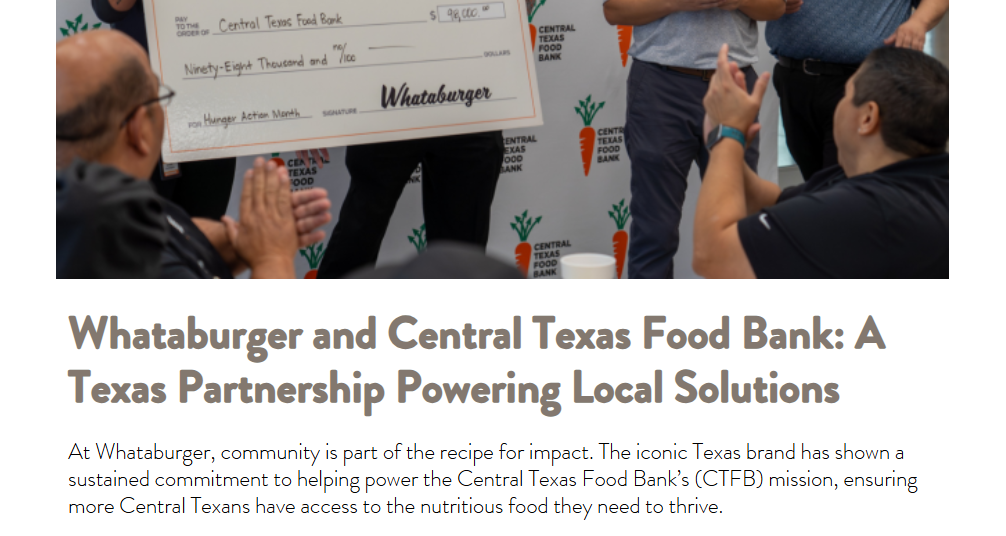
Companies are inherently risk-averse; they need to know that your organization is a safe harbor for their brand’s reputation. A “Proof of Concept” section moves your pitch from theoretical to proven by showcasing that other established entities have already done the due diligence for them. Be sure to spotlight previous corporate partners by integrating logos, team photos, and more.
This isn’t just about showing off. It’s about demonstrating that you have the internal infrastructure to manage, report on, and honor high-level corporate agreements.
The Anatomy of a High-Converting Corporate Sponsorship Page
You don’t need the budget of a multinational organization to have a sponsorship page that converts. You just need to speak the right language. Whether you run a small local charity or manage a growing regional nonprofit, your sponsorship pages must function as a high-level sales deck.
Here are the five essential building blocks to transform your page from a static information sheet into a dynamic lead-generation tool.
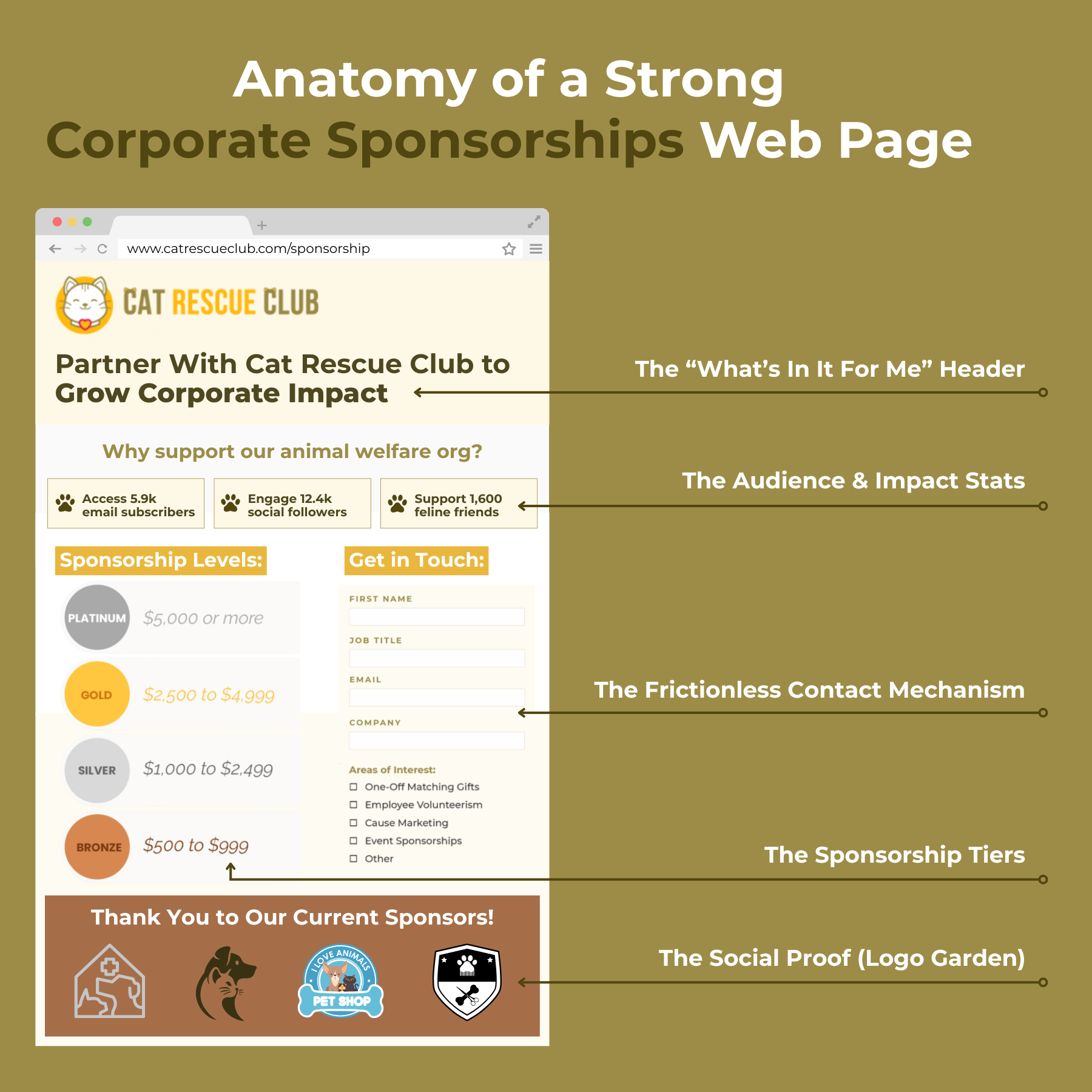
a) The “What’s In It For Me” Header
Corporate partners are not donating; they’re investing. Their primary internal question is: What’s in it for me? Therefore, your headline and opening copy must address this inquiry immediately. If your page starts with “We need your help,” you’ve already lost the marketing director.
Here are a few ideas:
- Shift from Supplication to Collaboration: Rather than “Support Our Annual Gala,” try “Connect Your Brand with 5,000 Local Professionals.”
- The Pro Move: Use a sub-headline that highlights a specific business outcome, such as “Enhance your corporate social responsibility footprint while gaining direct access to our highly engaged community.”
By framing the initial content around a brand’s primary objectives, you immediately signal that you understand the corporate mindset, making the prospect feel like a strategic partner from the very first sentence. This approach sets the stage for a B2B negotiation rather than a traditional plea for charity.
b) Compelling Audience & Impact Stats
Corporate leadership needs to be able to justify the sponsorship spend to their board, ideally using hard metrics. To assist your partners in doing so, create a dedicated section on your sponsorship page that highlights your reach and resonance.
Providing these granular details allows a corporate representative to copy and paste your stats directly into their internal pitch decks. This removes the bulk of the administrative burden from their plate, effectively doing half the work required for them to get the partnership approved by their superiors.
These metrics can include:
- Digital engagement: Showcase your monthly website hits, email subscriber list, extensive social media following, and more.
- Demographic breakdown: Tell prospective partners exactly who makes up your network. Are your supporters primarily high-net-worth individuals, parents and families, CEOs, or Gen Z activists?
- Event visibility: How many people attended your recent gala? Or participated in your annual walk-a-thon?
- Program impact: Communicate what the company’s support would actually accomplish for your mission. “Your sponsorship helps feed 500 families in need” is more compelling than “Will you give us $5,000?”
As you draft this content, keep the “scannability” rule in mind. Enlist bold infographics or large-number callouts to ensure busy executives can grasp the essential information at a glance.
c) Social Proof
Trust is the currency of corporate sponsorships. Before jumping in, companies want to know that you’ll be able to deliver on your promises.
A “social proof” or “logo garden” section on your web page uses psychological validation to prove you are a vetted, professional partner.
Here’s why it works:
- The competitor factor: Seeing a logo from a peer company or a competitor is a powerful motivator. It signals that your nonprofit is a recognized player in the community.
- Risk mitigation: When a brand sees that other established companies have successfully partnered with you, the perceived risk of a “bad fit” or a logistical nightmare evaporates. It transforms your organization from a question mark into a proven asset.
If you are a newer organization, you can also include a short testimonial (such as a video or a quote) from a previous sponsor that highlights the seamless nature of the partnership.
d) Clear Sponsorship Tiers or Customizable Menus
While many high-level partnerships prefer a layer of customization, providing a tangible sponsorship menu can serve as a crucial mental anchor. This helps a prospect self-qualify their budget before they ever pick up the phone.
Check out these ideas for establishing powerful sponsorship levels:
- The Visionary (Top Tier): Highlight exclusive “ownership” opportunities, like “Presented by [Company Name]” or a keynote speaking slot.
- The Advocate (Mid Tier): Focus on brand visibility, such as logo placement on marketing collateral and tailored social media shoutouts.
- The Friend (Entry Tier): Offer a low-barrier entry point for small businesses, including a website listing or a mention in the annual report.
Keep in mind that presenting these options does not mean your partnerships are locked into a rigid structure. Rather, it provides a starting point for negotiations. It shows that you have a clear understanding of the market value of your assets, while the inclusion of “à la carte” engagement options ensures you don’t cap the potential of a massive multi-year deal.
e) A Low-Friction Contact Mechanism
The goal of your corporate sponsorships page is to inspire a “warm” inquiry. If your contact information is buried or the process of reaching out is overly complex, you’ll likely miss out on interested leads. These are some of our best tips for ensuring that doesn’t happen:
- Embed a short contact form. Resist the urge to ask for a full partnership proposal at this stage. Limit your form to 4–5 essential fields: Name and Title, Company Name, Primary Goal (e.g., Brand Awareness, Employee Engagement), and an optional Budget Range.
- Direct prospects to a dedicated inbox. Use a professional alias such as sponsors@yournonprofit.org. Avoid using a generic admin@ address (which can feel like a black hole for inquiries) or a specific staff member’s contact information (which can result in broken or inefficient workflows).
A streamlined contact method ensures that the momentum built while reading your page isn’t lost to technical frustration. Plus, the information you gather allows your development team to enter the discovery call with a tailored strategy already in mind.
4 Real-World Examples of High-Performing Sponsorship Web Pages
To understand what makes a sponsorship strategy truly successful, it’s a good idea to examine similar organizations that are winning in the corporate arena. That’s why we’ve analyzed four diverse examples of corporate sponsorship web pages, ranging from enterprise-level health organizations to university alumni associations, to identify tactics you can replicate in your own efforts.
1. St. Jude Children’s Research Hospital
View the sponsorships page here: https://www.stjude.org/get-involved/other-ways/partner-with-st-jude.html
St. Jude is a powerhouse in corporate fundraising, and their web presence reflects that. Their “Partner with St. Jude” page is masterfully designed to cater to different types of corporate goals.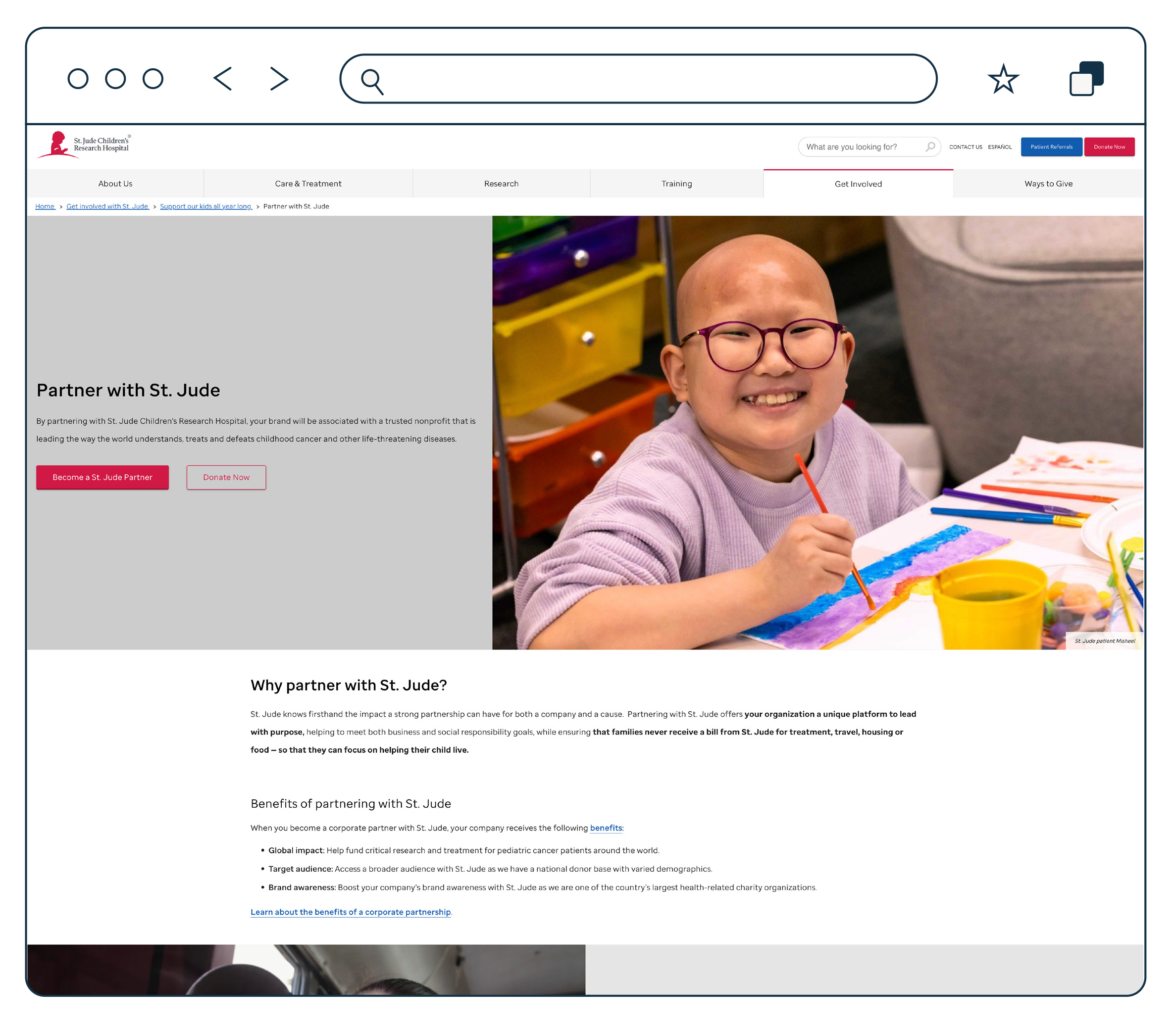
What this organization is doing right:
- Segmentation of Opportunities: St. Jude understands that not every company wants the same thing. They clearly categorize opportunities into “Employee Engagement,” “Cause Marketing,” and “Sponsorships.” This allows a Human Resources director to find employee giving info just as easily as a Marketing Director finds licensing info.
- Trust Signals: The page immediately highlights current partners like Best Buy and Domino’s. This social proof tells prospective partners, “Big brands trust us with their reputation, and you can too.”
- Emotional & Rational Balance: They balance the emotional hook (“Save children’s lives”) with rational business benefits (“Align your brand with a purpose”).
Key Takeaway: Don’t lump all corporate interactions into one bucket. Segment your sponsorship web pages to address the specific business goals of your partners, whether that focuses on marketing, brand association, or employee engagement.
2. The Salvation Army
View the sponsorships page here: https://www.salvationarmyusa.org/corporate-partnerships/
The Salvation Army operates on a massive scale, yet its sponsorship page is surprisingly direct and accessible. They focus heavily on the scope of their impact to attract partners looking for national reach.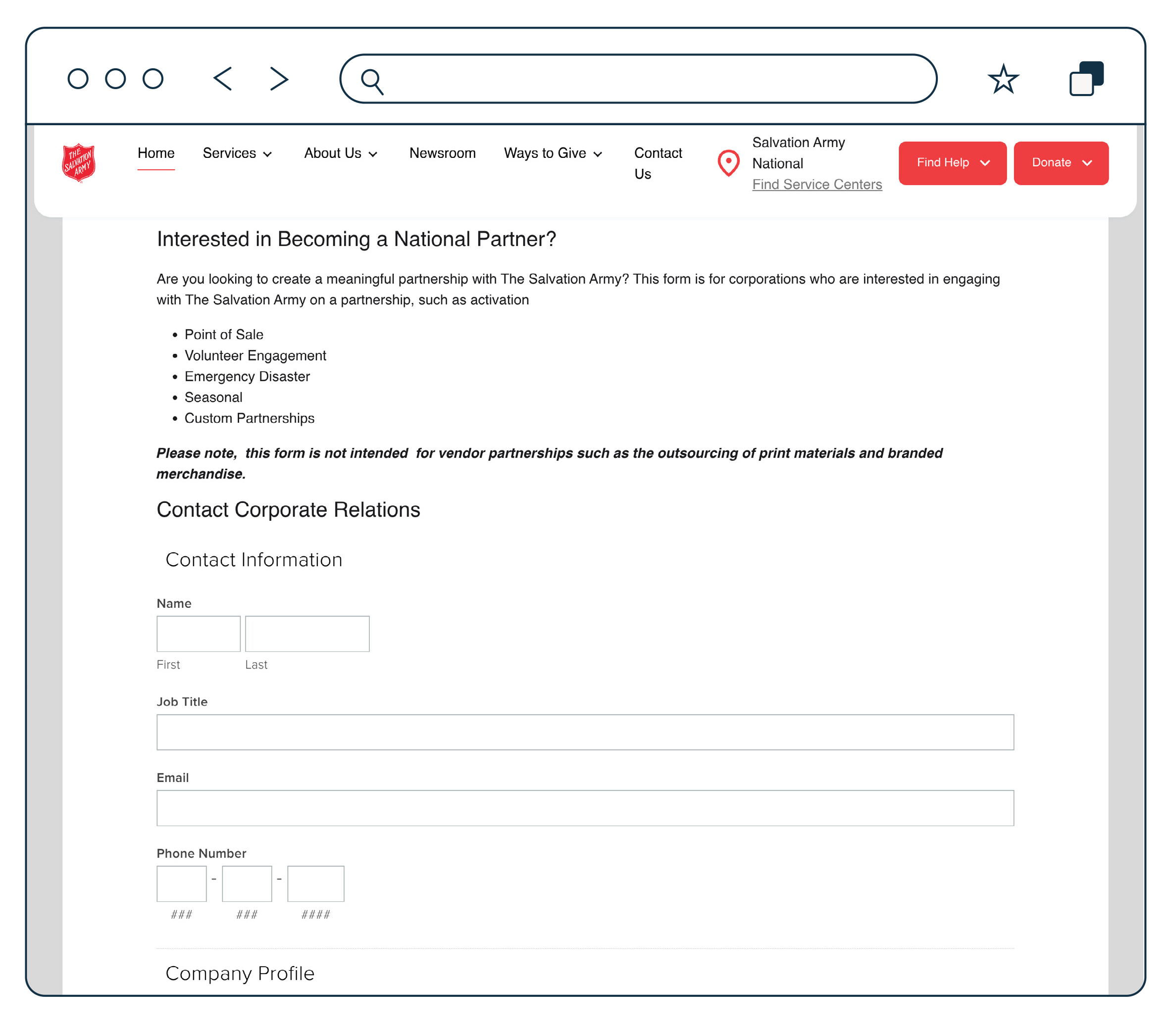
What this organization is doing right:
- Clear Value Proposition: They lead with their prevalence: “Doing the Most Good.” For a corporate partner, this signals that a partnership with the Salvation Army offers nationwide visibility.
- The Inquiry Form: Rather than featuring a generic email address for partnership inquiries, they utilize an integrated form that asks for the company name, contact title, and area of partnership interest. This pre-qualifies the lead and ensures the message is routed to the appropriate department.
- Focus on Customization: The text emphasizes that they build “customized” partnerships. This appeals to corporations that want to create a unique campaign rather than just buy a pre-built Gold/Silver/Bronze package.
Key Takeaway: If you have a wide geographic reach or a highly recognizable brand, lean into it. Then, be sure to use a structured form rather than an email link to gather data on your prospects at the point of engagement.
3. The YMCA
View the sponsorships page here: https://www.ymca.org/get-involved/partner
The YMCA is a community-based organization, and its sponsorship page reflects a deep commitment to shared values. They aren’t just selling logo placement; they’re selling corporate social responsibility.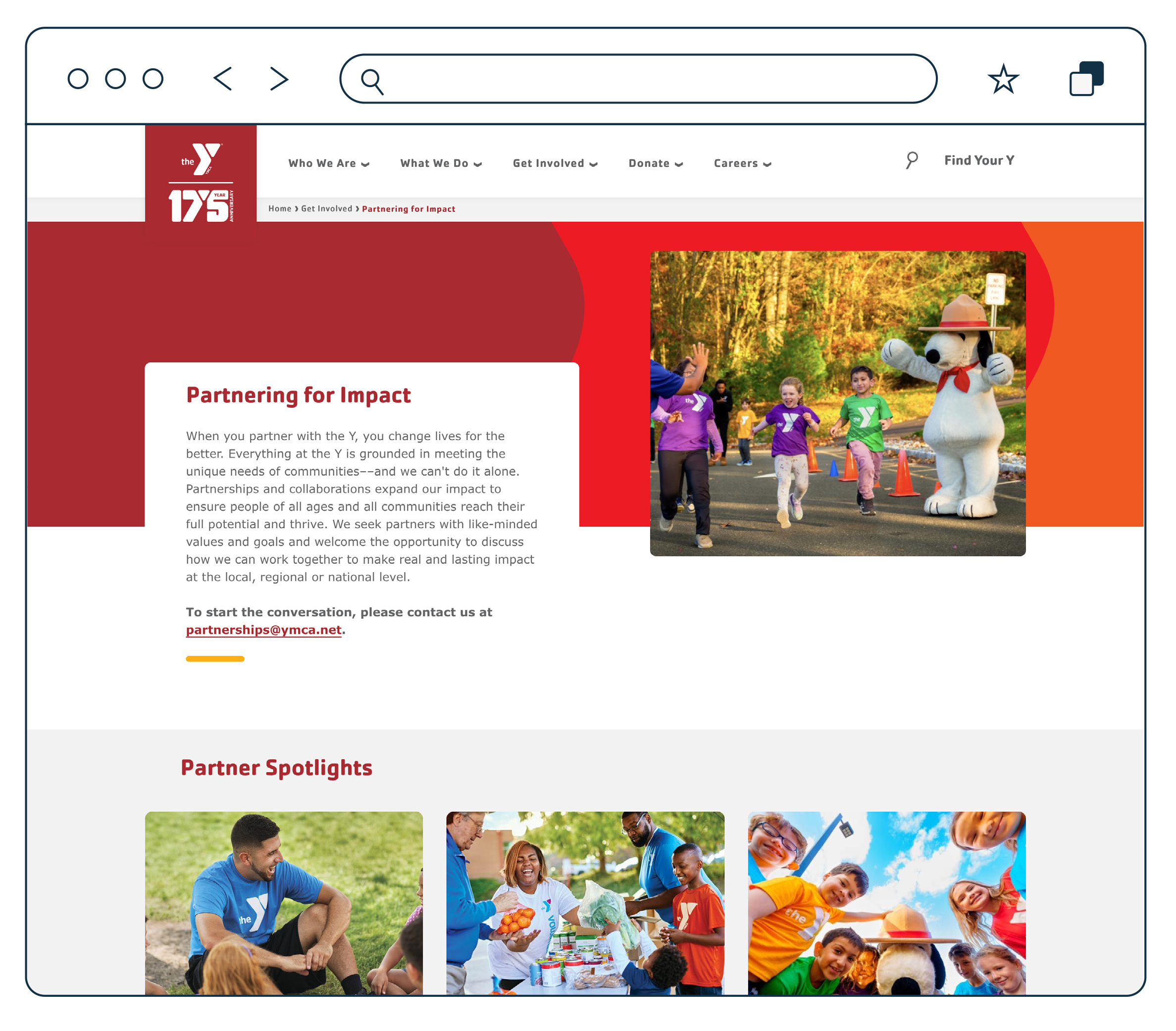
What this organization is doing right:
- Values-First Messaging: The headline isn’t “Sponsor Us,” it’s “Partnering for Impact.” The web page copy focuses on strengthening communities, enhancing youth development, and promoting healthy living. This attracts companies with specific philanthropic pillars they need to meet.
- Visual Diversity: The imagery used on the page reflects the diverse communities it serves. For corporations with Diversity, Equity, and Inclusion (DEI) goals, the YMCA presents itself as an ideal partner to help achieve those objectives.
- National vs. Local Opportunities: The web page provides a path to national partnerships while acknowledging its federated model and directing local businesses to engage with YMCAs in their communities.
Key Takeaway: Review your prospective sponsors’ CSR statements. If they value active lifestyles, make sure your sponsorship web pages explicitly use that language. Mirroring their core pillars makes the “yes” easy.
4. Florida State University Alumni Association
View the sponsorships page here: https://alumni.fsu.edu/sponsorship-opportunities
Educational institutions operate differently from typical charities, and the FSU Alumni Association example is a masterclass in selling access to an audience.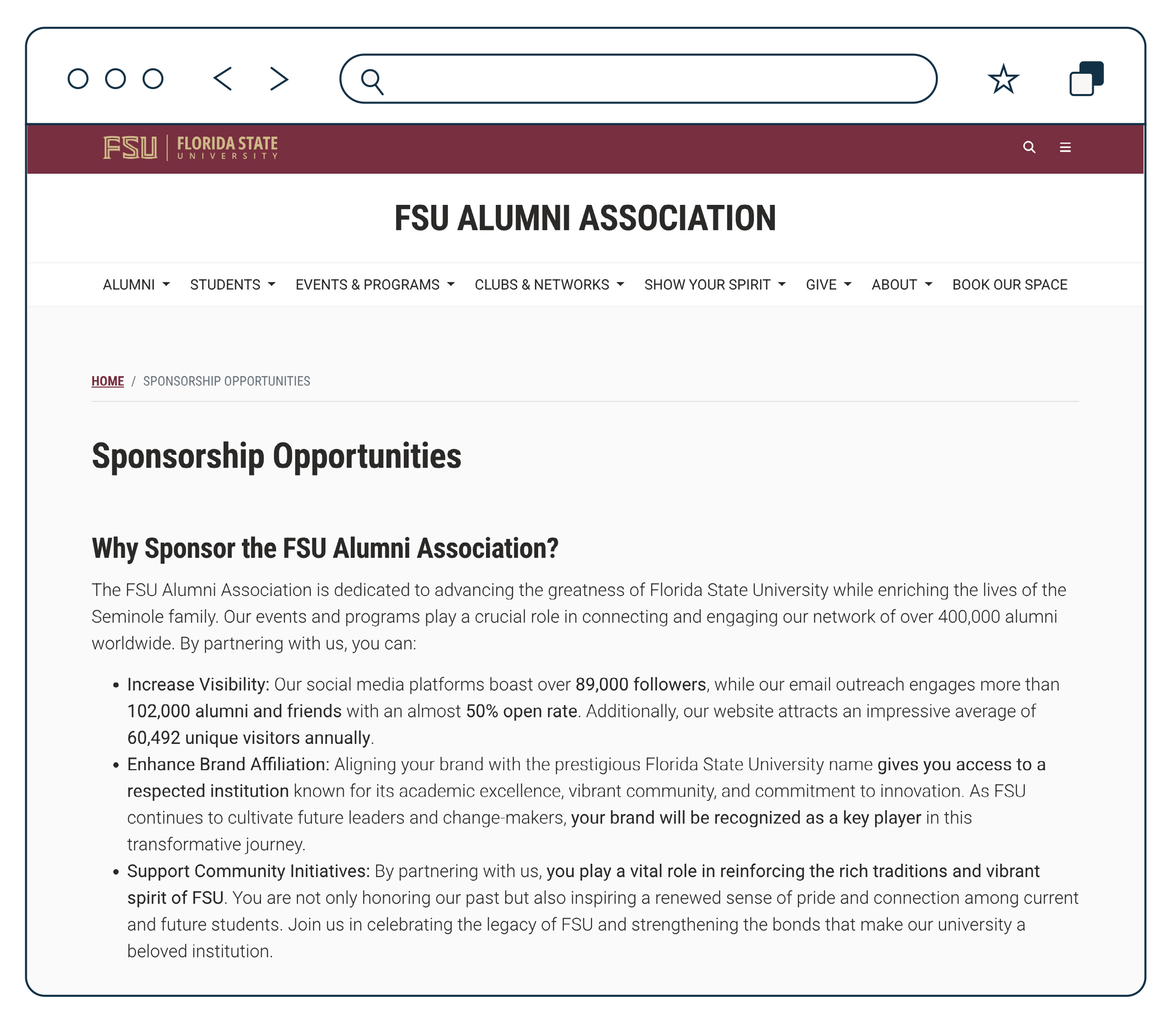
What this organization is doing right:
- Demographic Clarity: They implicitly (and explicitly) sell access to their alumni base: an educated, often affluent demographic. For sponsors such as insurance companies, banks, and travel agencies, this is a highly lucrative target market.
- Event Specificity: They list specific upcoming events (including Homecoming, Seminole Clubs, and more). This allows businesses to target their partnerships geographically or by interest group.
- Benefit Tiers: Unlike some organizations that are vague in terms of value-adds, alumni associations tend to be very clear about what you get: tables at events, newsletter mentions, and digital ads. For a potential sponsor, this represents a compelling, clear-cut marketing buy.
Key Takeaway: Don’t be afraid to sell your audience. If you have a newsletter with a high open rate or an event with high-net-worth attendees, state that clearly. Sponsors pay for access.
Impactful SEO Strategies for Leading Corporate Sponsorship Pages
If you want companies to find your organization when seeking potential sponsorship opportunities, you cannot rely on chance alone. Rather, Search Engine Optimization (or SEO) is the process of aligning your digital content with the specific vocabulary used by your target audience: corporate marketing directors and community engagement officers.
By optimizing your page with leading SEO strategies, you increase the likelihood that when a corporation searches for ways to invest its annual philanthropy budget, your nonprofit appears as a professional, prepared solution. These are some top tips to consider!
Target High-Intent Commercial Keywords.
While individual donors search for emotive phrases, corporate sponsors generally opt for “commercial intent” keywords, or terms that signal a desire for a formal business arrangement. To capture this traffic, your corporate sponsorship web pages must move beyond mission-based language and incorporate the technical terms used in corporate boardrooms.
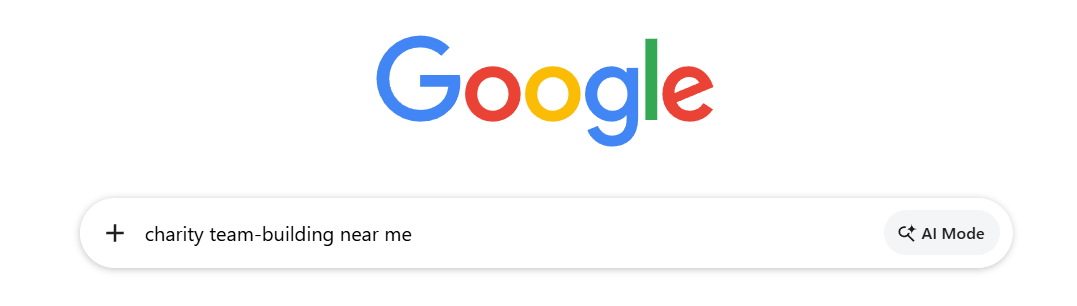
This could include:
- “Corporate partnership opportunities [City]”: This is a primary search term for CSR managers looking for new local alliances.
- “Sponsor a [Cause] event”: Targeting specific event types (e.g., “Sponsor a 5k run” or “Gala sponsorship”) helps you capture companies looking for immediate brand visibility.
- “CSR partners in [Region]”: Use this to appeal to companies with specific social responsibility mandates who need to fulfill year-end giving requirements.
- “Charity team building near me”: Many corporations look for partnerships that include an employee engagement or volunteer component.
By integrating these phrases throughout your title tags, subheaders, and body copy, you signal to search engines that your page is a business resource rather than a donation portal. This distinction attracts high-capacity decision-makers looking to spend marketing or community affairs budgets.
Leverage the Local SEO Landscape.
Most sponsorships are inherently community-centric. A regional Columbus tech firm is far more likely to partner with a Columbus-based STEM program than a national one. For this reason, a localized SEO approach ensures that your organization appears in Google’s “Map Pack” (or Local 3-Pack) and at the top of relevant search results.
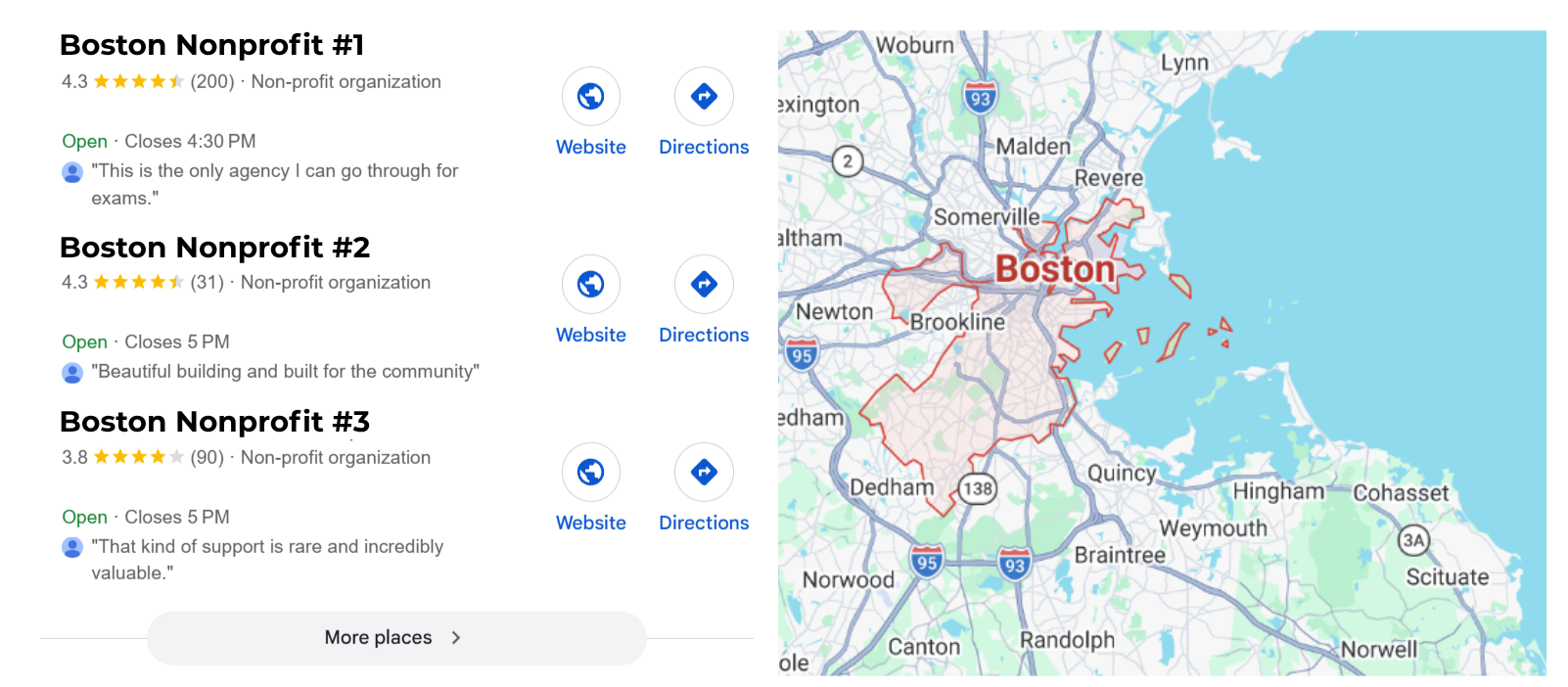
Here’s how you can do so:
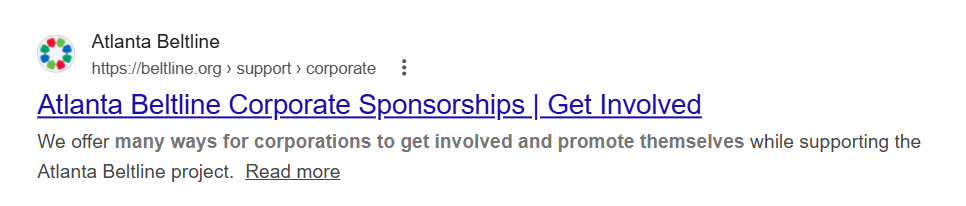
- Localized meta titles: Ensure your sponsorship page’s meta title (the blue link in search results) reads something like “Corporate Sponsorships in [City] | [Nonprofit Name].”
- Geographic body copy: Don’t just say “we serve the community.” Say “we serve the Greater Boston community.” Explicitly naming your city, county, and surrounding neighborhoods anchors your relevance to that specific area.
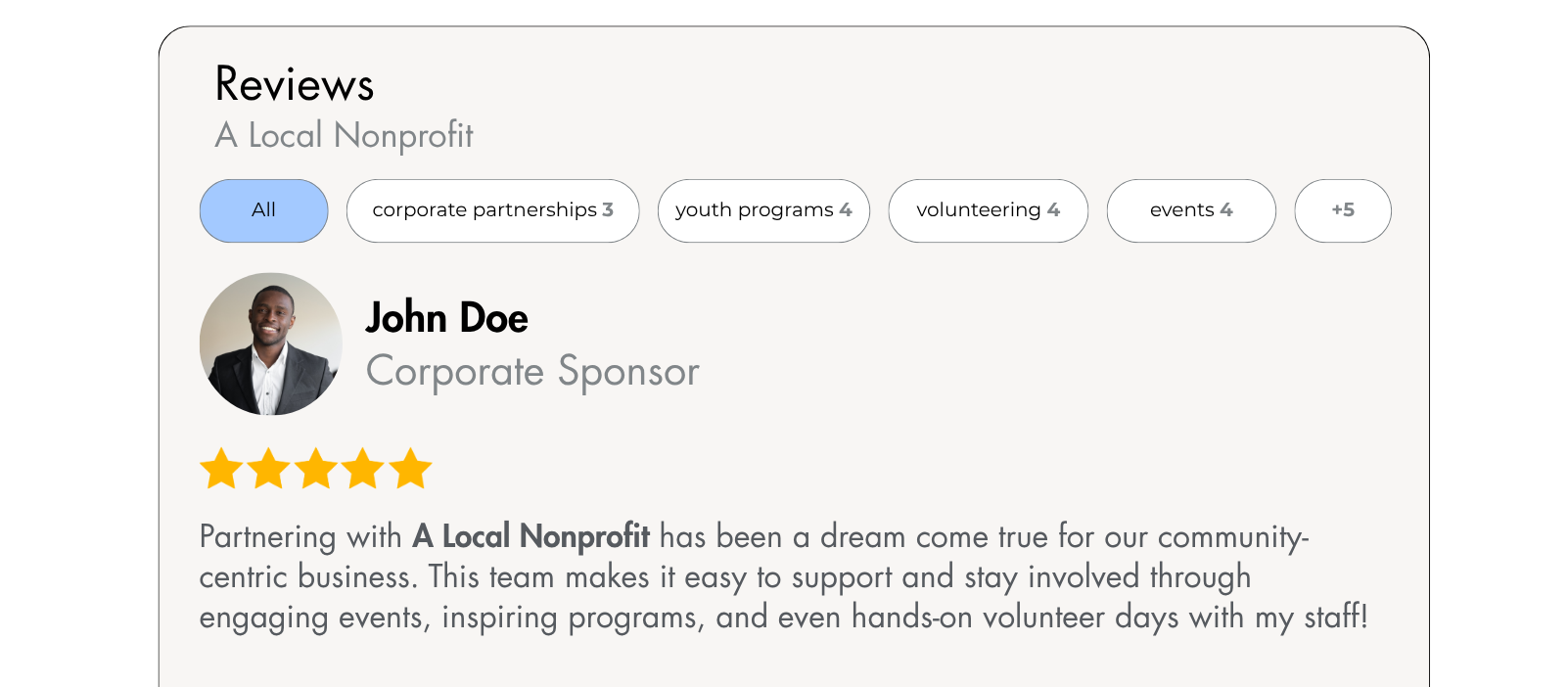
- Google Business Profile integration: Link your sponsorship page directly from your Google Business Profile and encourage current sponsors to mention the partnership in their Google reviews.
When you optimize for local SEO, you are essentially claiming your territory in the digital space. This strategy prevents your page from getting lost in a sea of national nonprofits and builds a sense of neighborhood pride and immediate relevance that broader-reaching organizations simply cannot replicate.
Create Downloadable Assets.
Many nonprofits treat their sponsorship deck as a secret document shared exclusively via email, but the truth is that this is a missed SEO opportunity. Search engines like Google index PDF files similarly to web pages. By hosting your “Partnership Packet” or “Media Kit” directly on the sponsorships web page, you create a secondary entry point for search traffic while providing immediate value to the user.
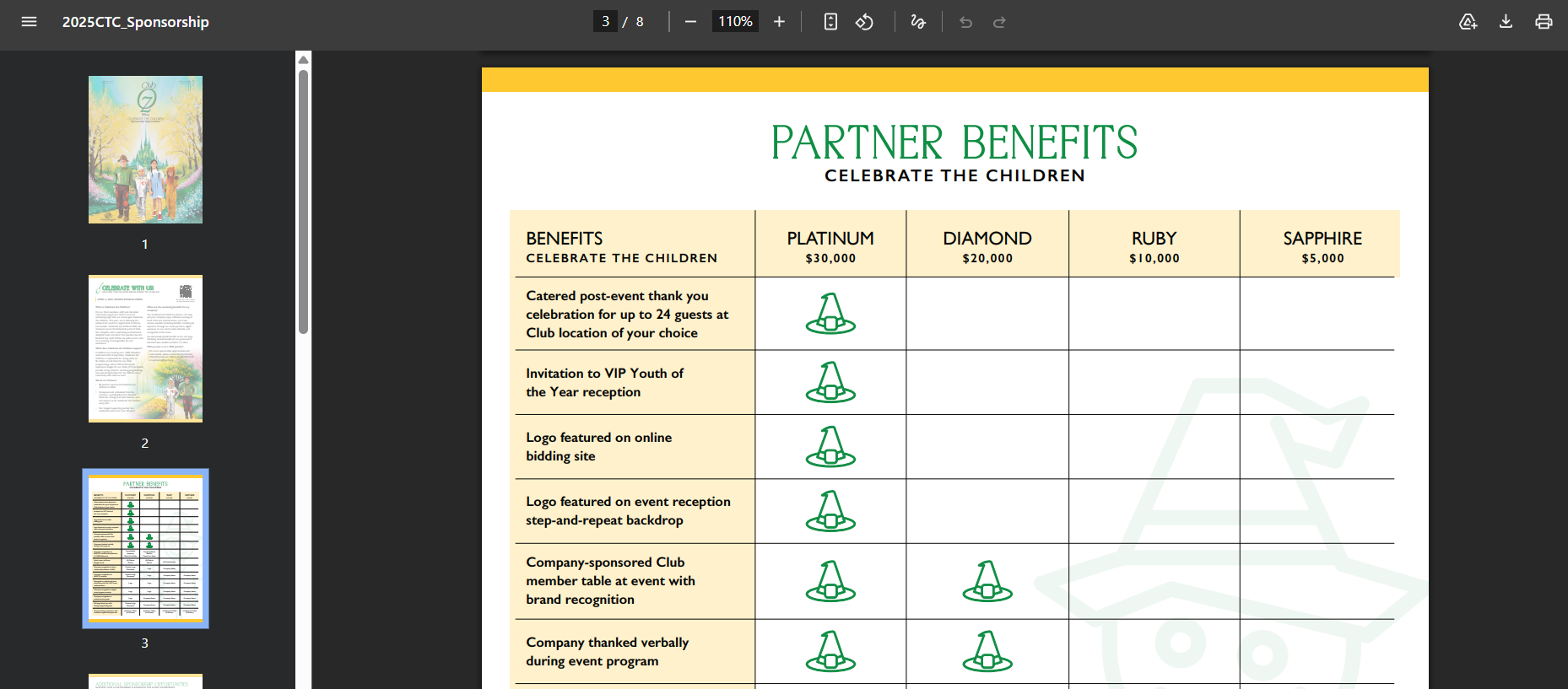
These tips can help drive results:
- Implement keyword-rich naming conventions. Instead of saving your file as Sponsorship_v2_final.pdf, use a descriptive, SEO-friendly name such as 2026-Austin-Environmental-Sponsorship-Opportunities.pdf.
- Strategically leverage internal linking. Use clear Call to Action (CTA) buttons that link to the downloadable resource, with narrative anchor text such as “Download our 2026 Corporate Media Kit.” Plus, you can link from the PDF back to the sponsorship interest form on your website!
- Optimize your metadata. Before uploading the file to your sponsorships page, open the PDF’s document properties and set the “File Name” and “Title” fields to include your primary SEO keywords.
In addition to the search results benefits, this approach provides a self-service experience for busy executives who want to vet your organization before committing to a meeting. It turns your administrative documents into actively available marketing assets that work for you 24/7.
Share Your Page Across Social Platforms.
A high-converting sponsorship page is only effective if your target audience actually sees it. While SEO handles passive discovery, a proactive social media approach ensures your partnership opportunities are placed directly in front of decision-makers.
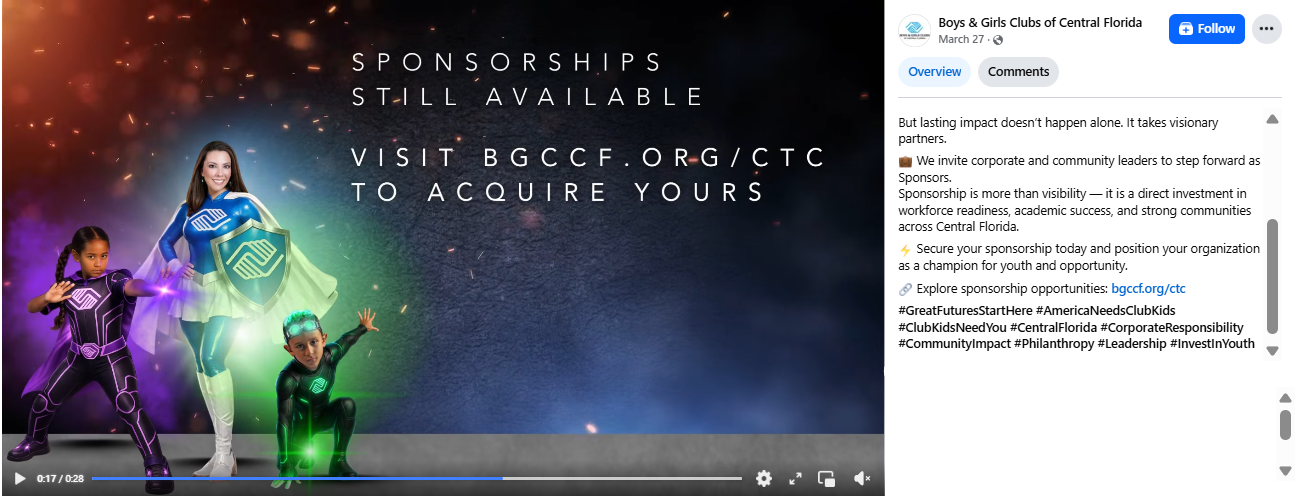
By ensuring your online sponsorships hub is social-ready, you transform a static URL into a shareable asset that your board, partners, and community advocates can circulate within their professional networks. This enables your sponsorship page to serve as a collaborative marketing tool that benefits both your mission and your sponsors’ reputations.
Best Practices for Corporate Sponsorship Web Page Maintenance
A stagnant sponsorship page can be a major red flag for businesses, indicating that your organization is no longer active. To ensure this asset remains an effective revenue generator, commit to a routine maintenance strategy that keeps your content fresh, accurate, and compelling.
Here’s what we recommend doing on the regular:
- Update Your Event Calendar. Nothing kills a potential partnership faster than a web page inviting companies to sponsor a 2019 gala in 2026. This tells the prospect that the page hasn’t been touched in years, which degrades your credibility. To avoid this scenario, ensure that the featured “Upcoming Events” have not yet occurred.
- Refresh Your Metrics. Sponsors view their contributions as investments and want to verify the potential ROI. In the nonprofit sector, this is often measured by audience reach and program impact. If your website lists data from five years ago, you’re likely underselling your value. A larger audience justifies a higher price point because it offers greater exposure for the sponsor’s brand.
- Verify Partner Logos. Your sponsorship page can serve as a powerful recognition wall, but this section requires careful management. If a partnership has ended and the sponsor has not renewed their engagement, remove their logo. Conversely, be diligent about adding new partners as soon as they sign on. Prompt recognition validates their decision to support you and demonstrates to other prospects that your program is active and popular within the community.
Finally, ensure the web page functions seamlessly. Consistently test your contact forms and media kit download buttons to ensure you never lose a lead to a technical error. Additionally, you’ll want to verify that your page is mobile-responsive, as corporate decision-makers may review your site on their phones between meetings.
How to Integrate Sponsorships with Other Forms of Corporate Giving
The most strategic nonprofits know that sponsorships don’t exist in a vacuum. Rather, they’re simply one form of corporate giving inside a holistic ecosystem. For that reason, your sponsorship web pages should cross-pollinate with other leading revenue streams to show partners and their employees how to maximize their impact.
The Matching Gift Connection
A company that sponsors your event is a prime candidate for a matching gift program. They already support you! And if their employees attend your gala and contribute to your cause, those gifts could be match-eligible.
To get the conversation started, include a quick blurb about matching gifts on your sponsorships page: “Does your company match employee donations? A sponsorship is just the beginning. Ask us how to engage your employees in matching gift programs to double your total impact.”
A tool like Double the Donation’s corporate giving database is essential here. When you use the search widget to determine whether a prospect has a generous matching gift program, you can easily find out if they’re culturally aligned with employee giving. If they don’t offer a traditional matching gift initiative, see if they’d be willing to implement a one-off program in support of your organization instead!
The Corporate Volunteer Opportunity
Many sponsors want to send teams of volunteers to your site for a “Day of Service.” This is a great photo op for them and a powerful team-building exercise. However, corporate volunteering can go even further.
- The Upsell: Remind sponsors that many companies offer volunteer grants (financial donations for the hours employees serve).
- The Strategy: “Sponsor our 5K Run, and bring a team of 20 volunteers to work the water stations. If your company offers volunteer grants, that service could generate an additional $2,000 for the cause!”
- The VTO Integration: Highlight that your events and activities are designed to fit perfectly within companies’ volunteer time off programs, allowing employees to use their allotted service hours to make a direct impact on your mission.
By weaving these narratives together on your sponsorships page, you can educate potential partners on how they can maximize their support. By transitioning from a one-time ask to a multifaceted engagement strategy that benefits their employees’ morale and their bottom line,
The In-Kind Donation Bridge
Corporate sponsorship doesn’t always have to be a cash transaction to provide massive value. In-kind (or non-financial) donations allow companies to contribute to your mission using their existing inventory or professional expertise. This widens the net for potential partners, and the impact can be just as massive!
To drive the best results, consider the product-to-sponsorship bridge: Offer tiered recognition for companies that provide essential event needs, such as catering, printing services, or venue space. For example, a local tech firm might not have $5,000 in cash, but may be willing to donate refurbished laptops in exchange for a “Gold Level” logo placement. By formalizing this process on your sponsorships page (i.e., stating that fair-market-value donations can be applied toward sponsorship levels), you show that you value their assets as much as their checkbooks.
The Payroll Giving Partnership
A sponsorship shouldn’t just be a transaction between a nonprofit and a CEO. It should be an opportunity to build a connection with every employee in the building. Payroll giving, a program where employees opt into recurring, automatic donations directly from their paychecks, is one of the most sustainable ways for a company to integrate your mission into its workplace culture.
By spotlighting your organization as a featured or “preferred” partner during an enrollment window or workplace giving kickoff, a corporation turns a one-time sponsorship into a legacy of year-round support. This gives their staff a meaningful way to give back, while the partnership fosters a deeper sense of pride among employees.
Wrapping Up & Next Steps
A high-converting sponsorship web page is the front door for corporate revenue. It bridges the gap between a company’s marketing goals and your mission’s financial needs. By analyzing successful examples from leading nonprofits and schools, we can see that clarity, segmentation, and value-driven messaging are the keys to success.
Don’t let your website be a passive brochure. Turn it into an active member of your development team.
Interested in learning more about scaling your organization’s impact through strategic corporate sponsorships? Check out these additional recommended resources:
- How to Unlock Corporate Sponsorships & Get More Support: Explore this comprehensive guide to mastering the art of the pitch and discovering untapped revenue streams within your existing corporate relationships.
- Free Templates for Requesting Corporate Sponsorships: Save time and boost your success rate with professionally drafted outreach templates designed to grab the attention of busy decision-makers.
- Double the Donation’s Nonprofit Corporate Engagement Report: Dive into the latest data-driven trends and benchmarks to understand how modern companies are prioritizing their social impact and partnership dollars.
Start treating your sponsorships like the business partnerships they are, and watch your corporate revenue grow. Request a personalized demo of Double the Donation to see how our comprehensive corporate giving solution can help supercharge your efforts!