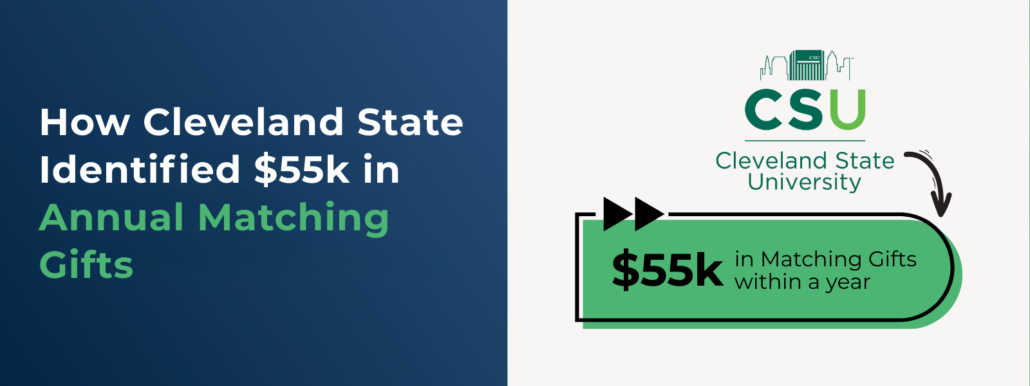
How Cleveland State Identified $55k in Annual Matching Gifts
Introduction: The “Engaged Learning” Mission
Cleveland State University is a public research institution located in the heart of downtown Cleveland, Ohio. With a student body of 16,000, CSU is committed to a philosophy of “Engaged Learning,” preparing students to succeed in their chosen careers and become active citizens in their communities. The university’s impact is significant, with over 140,000 alumni worldwide, 80% of whom choose to live and work in the Northeast Ohio area. This high retention rate means that CSU is a primary driver of the regional economy and workforce.
Supporting this mission requires a robust fundraising operation. CSU raises approximately $22 million annually to fund scholarships, research, and campus improvements. While this figure is impressive, the university recognized that there were still opportunities to grow, particularly in the realm of corporate matching gifts.
However, recognizing an opportunity and capturing it are two different things. CSU faced a common challenge in higher education fundraising: fragmentation. Without a centralized system to track matching gift eligibility and status, the development team was forced into manual processes that were time-consuming and prone to error. They lacked the data visibility needed to build a cohesive matching gift strategy.
By partnering with Double the Donation and integrating the solution with its existing fundraising platform, CSU transformed its operations. It moved from manual spreadsheets to automated dashboards, freeing up staff time and uncovering over $55,000 in matching gift opportunities in less than 12 months.
The Challenge: Operational Fragmentation
Before implementing their new strategy, Cleveland State University faced a significant operational hurdle. The case study notes that CSU “previously lacked a streamlined process to track or automate outreach.” Let’s take a closer look.
The Tracking Problem
Without a centralized system, tracking matching gifts is notoriously difficult.
- Data Silos: Information about a donor’s employer might live in one system, while their donation history lives in another.
- Manual Entry: Staff members often have to manually enter matching gift data, a process that is slow and vulnerable to human error.
- Lack of Visibility: The case study highlights that it was “difficult to develop an effective strategy” because the team couldn’t easily see the full picture. You cannot manage what you cannot measure. If the team didn’t know how many donors were eligible, they couldn’t set realistic goals or allocate resources effectively.
The Outreach Problem
The lack of automation meant that outreach was likely sporadic or reactive.
- Missed Opportunities: If a donor made a gift online, there was no automatic trigger to ask them for a match. The opportunity relied on a staff member noticing the gift and sending a personal email.
- Inefficiency: Manually sending reminders to hundreds of alumni is not a scalable use of a development officer’s time.
The team recognized that to grow, they needed to “track all information in one place.” They needed a solution that would integrate with their existing tools to create a unified view of their fundraising efforts.
The Solution: Seamless Integration
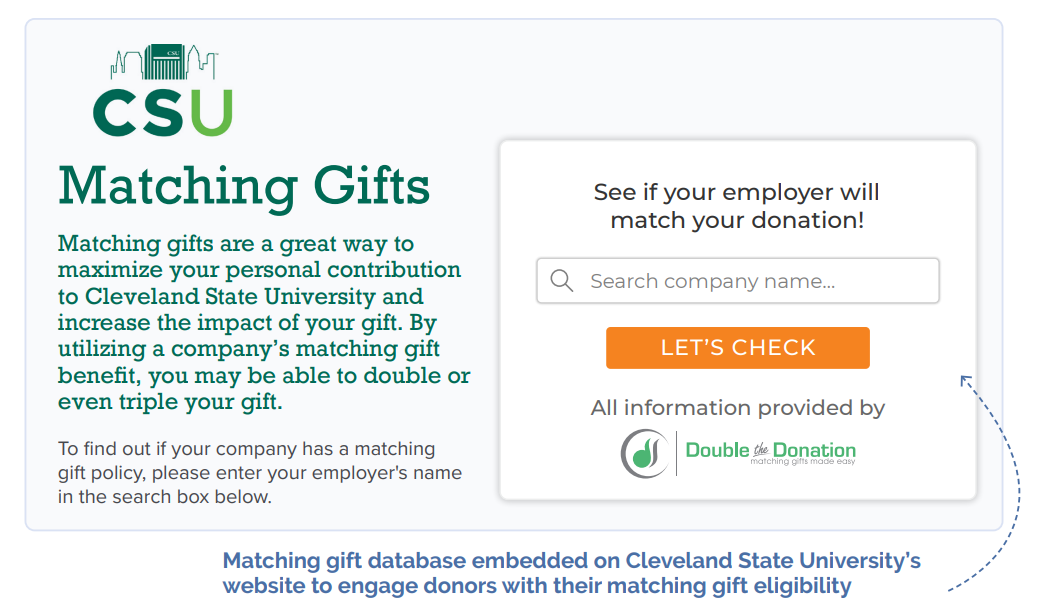
Cleveland State University solved its fragmentation problem through integration. The development team implemented Double the Donation’s matching gift tools and connected them directly to the school’s social fundraising platform.
This integration was the linchpin of their new matching gift strategy. It allowed CSU to combine the social, peer-to-peer energy of its social fundraising platform with the precision data of Double the Donation.
1. Consolidating Data
The integration allowed CSU to “track all matching gift information in one place.”
- Unified Dashboard: Instead of toggling between systems, the development team could view matching gift data alongside other donation metrics. This “significantly reducing operational time” was a key win for the staff.
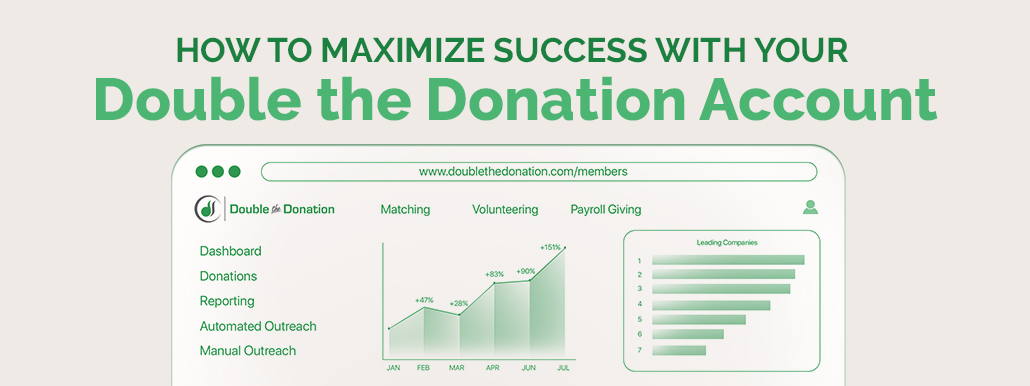
- Actionable Metrics: The system provided a “matching gift dashboard” that outlined clear, actionable metrics. The team could now see exactly how many donors were eligible, how many had submitted matches, and where the bottlenecks were.
2. Automating the Ask
With the data consolidated, CSU could turn on the automation engine. They implemented automated matching gift emails to handle the outreach.
- Timing and Relevance: These emails were triggered automatically after a donation, ensuring that the donor received the message while the gift was still fresh in their mind.
- Reducing Friction: The emails provided donors with the specific forms and links they needed for their employer, removing the research burden from the alumni.
3. Enhancing the Donor Experience
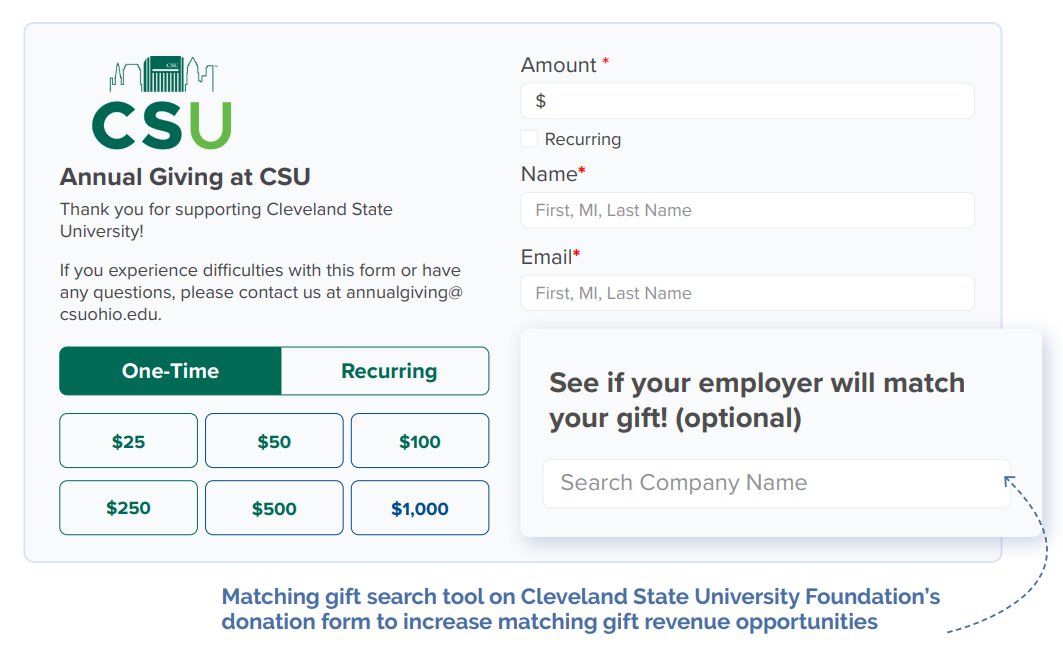
The solution also included a “streamlined search field on the donation form” and a “confirmation page plugin.”
- Seamlessness: These tools ensured that the matching gift experience was integrated into the donation flow. Donors didn’t have to leave the donation page to search for their employer; they could do it right there.
The Results: $55,000 and High Engagement
The impact of this integrated strategy was immediate. By removing the operational friction, CSU unlocked a new stream of revenue and saw a surge in donor engagement.
Financial Impact: $55,000 Identified
In less than one year, the new system identified over $55,000 in matches.
- Context: For a university raising $22 million, $55,000 might seem small, but it represents “low-hanging fruit” that was previously rotting on the vine. This is revenue that required no additional solicitation cost; it was unlocked from gifts that had already been made.
- ROI: This revenue was generated by “significantly reducing operational time.” The university raised more money while spending less staff time to get it. That is the definition of high ROI.
Email Engagement: 67% Open Rate
The most impressive statistic from the CSU case study is the email open rate. The automated emails achieved a 67% open rate.
- Tripling the Average: The case study notes that the industry average is around 20%. CSU’s open rate was more than triple that figure.
- Alumni Loyalty: This high open rate speaks to the strength of the CSU alumni network. It suggests that when the university communicates with its graduates about a specific, actionable opportunity, they listen.
Broad Engagement
The metrics also showed that 56% of donors showed moderate to high engagement with the matching gift tools.
- Adoption: More than half of the donors who interacted with the system found it useful enough to engage deeply. This validates the decision to integrate the search tool directly into the donation form; it proved to be a feature that donors actually wanted and used.
Strategic Deep Dive: The Social Fundraising Connection
The integration with the university’s broader fundraising toolkit is a crucial strategic element of this case study. More specifically, the school utilized a platform designed for “social fundraising,” which leverages the power of peer networks, gamification, and social sharing. By adding matching gifts to this mix, CSU created a powerful multiplier effect.
- Gamification: In a social fundraising campaign, donors are often motivated by leaderboards or challenges. A matching gift helps a donor climb the leaderboard faster or helps a specific cause (like a scholarship fund) reach its goal sooner.
- Peer Pressure (The Good Kind): When alumni see that their peers are getting their gifts matched, it creates a social norm. It encourages others to check their own eligibility so they don’t “leave money on the table” for their alma mater.
Client Perspective: Olivia Rohde’s Insight
Olivia Rohde, Assistant Director of Annual Giving at Cleveland State, highlighted the operational benefits of the partnership: “Integrating Double the Donation and [our broader fundraising tools] has allowed me to track all matching gift information in one place, significantly reducing operational time.”
This testimonial reveals the hidden value of the solution: sanity. For development professionals like Rohde, the ability to stop chasing spreadsheets and start looking at a unified dashboard is a game-changer. It allows the team to focus on strategy (how to engage more alumni and craft better appeals) rather than getting bogged down in data entry.
Conclusion: A Smarter Way to Fundraise
Cleveland State University’s experience demonstrates that you don’t need a massive team to run a sophisticated matching gift strategy. You just need the right integrations.
By connecting Double the Donation with the school’s existing fundraising software ecosystem, CSU solved its data fragmentation problem and automated its outreach. The results were clear:
- $55,000+ in identified revenue.
- 67% email open rate.
- Reduced operational time for staff.
For other universities, the lesson is simple: Look at your tech stack. Are your tools talking to each other? If not, you are likely leaving money (and staff hours) on the table. Integration is the key to unlocking efficiency and revenue in modern fundraising.
Download the full case study compilation here to uncover even more successful strategies.