The Future of Gift Processing: AI and Workplace Giving
The manual administration of corporate philanthropy has long been a bottleneck for charitable institutions worldwide. Gift advancement teams regularly spend hours cross-referencing employer information, updating CSR portals, verifying matching gift guidelines, and tracking workplace donations through the corporate lifecycle. This heavy administrative burden directly reduces the time fundraisers can spend executing donor stewardship strategies.
However, the intersection of advanced artificial intelligence and automated workplace giving technologies is fundamentally transforming this backend ecosystem.
By replacing resource-intensive, manual routines with real-time automated data pipelines, charitable organizations can significantly accelerate processing timelines. This enables development departments to operate at maximum efficiency while reallocating internal resources and allowing staff to move from clerical tasks to deep relationship-building.
As fundraising networks expand, establishing a standardized, highly scalable processing foundation becomes essential to capturing every available corporate dollar. This article provides a comprehensive blueprint for nonprofit leaders ready to leverage AI to optimize corporate fundraising operations.
- Artificial Intelligence in the Current Fundraising Landscape
- The Mechanics of Future-Forward Workplace Gift Processing
- How AI-Driven Workflows Take Things a Few Steps Further
- Overcoming the AI Efficiency Plateau in Workplace Fundraising
- Establishing Robust AI Governance and Readiness Systems
- Implementing a Five-Step AI Transformation Framework
- Measuring the Operational Impact of Artificial Intelligence
To successfully transition from scattered workflows to integrated institutional systems, organizations must understand the underlying foundation that currently separates basic tech adoption from true operational transformation. With 80% of nonprofits reporting difficulty building strong workplace giving strategies due to limited staff and resources, AI might just be the tool that changes the game.
AI in the Current Fundraising Landscape
Recent benchmarking data reveal a striking paradox in the philanthropic sector regarding the adoption of AI technology. According to industry research, the use of artificial intelligence has become nearly universal across the sector. This indicates that the industry has moved beyond the initial awareness phase and entered a period of widespread experimentation.
However, key findings highlight a significant gap between adoption and true organizational transformation. Let’s take a closer look at what the metrics are currently showing:
- 92% of surveyed nonprofits report using AI-enabled tools to some extent within their operations.
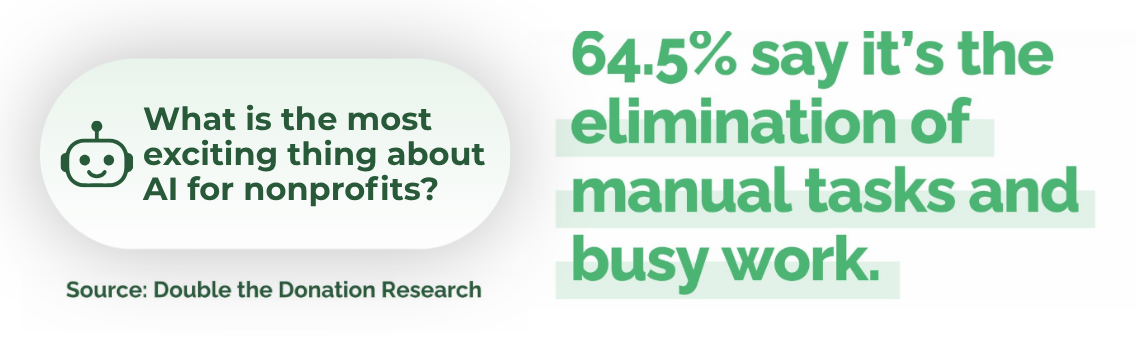
- 64% of respondents are most excited by the idea of eliminating manual tasks and busywork through the use of AI.
- 81% of organizations leverage artificial intelligence on an ad hoc basis with no documented workflows.
- 60% of fundraising organizations are currently using AI to draft donor communications.
- 47% of nonprofit professionals say they’ve experimented with basic AI tools for corporate fundraising.
- 57% of development staff indicate that they use AI for work, but realize they’re barely scratching the surface.
- 63% of nonprofit professionals say discovering which companies would be most likely to support their cause is the most interesting AI use case.
- 41% of small organizations have demonstrated moderate impact from AI, while only 34% of large organizations reported the same.
- 8.6% of nonprofits use AI specifically for data analysis.
- 7% of teams report major, sustainable improvements in their core ability to achieve their philanthropic mission.
This widespread discrepancy means that while individual staff members are finding personal shortcuts for basic efficiency tasks, institutions as a whole are failing to establish long-term, scalable operational capabilities.
Not to mention, when software tools are used in an isolated, ad hoc manner, the knowledge generated remains siloed within specific roles. If an employee leaves the institution, their optimized prompts, custom workflows, and learned techniques leave with them. For an organization aiming to scale its corporate philanthropy revenue, this fragmentation creates a fragile ecosystem that cannot reliably handle complex data validation.
Meanwhile, for teams that have not yet adopted AI workflows, the largest barriers are cited as a lack of training (48%) and a need for guidance (44%). And that’s where we hope this guide can be of use!
The Mechanics of Future-Forward Workplace Gift Processing
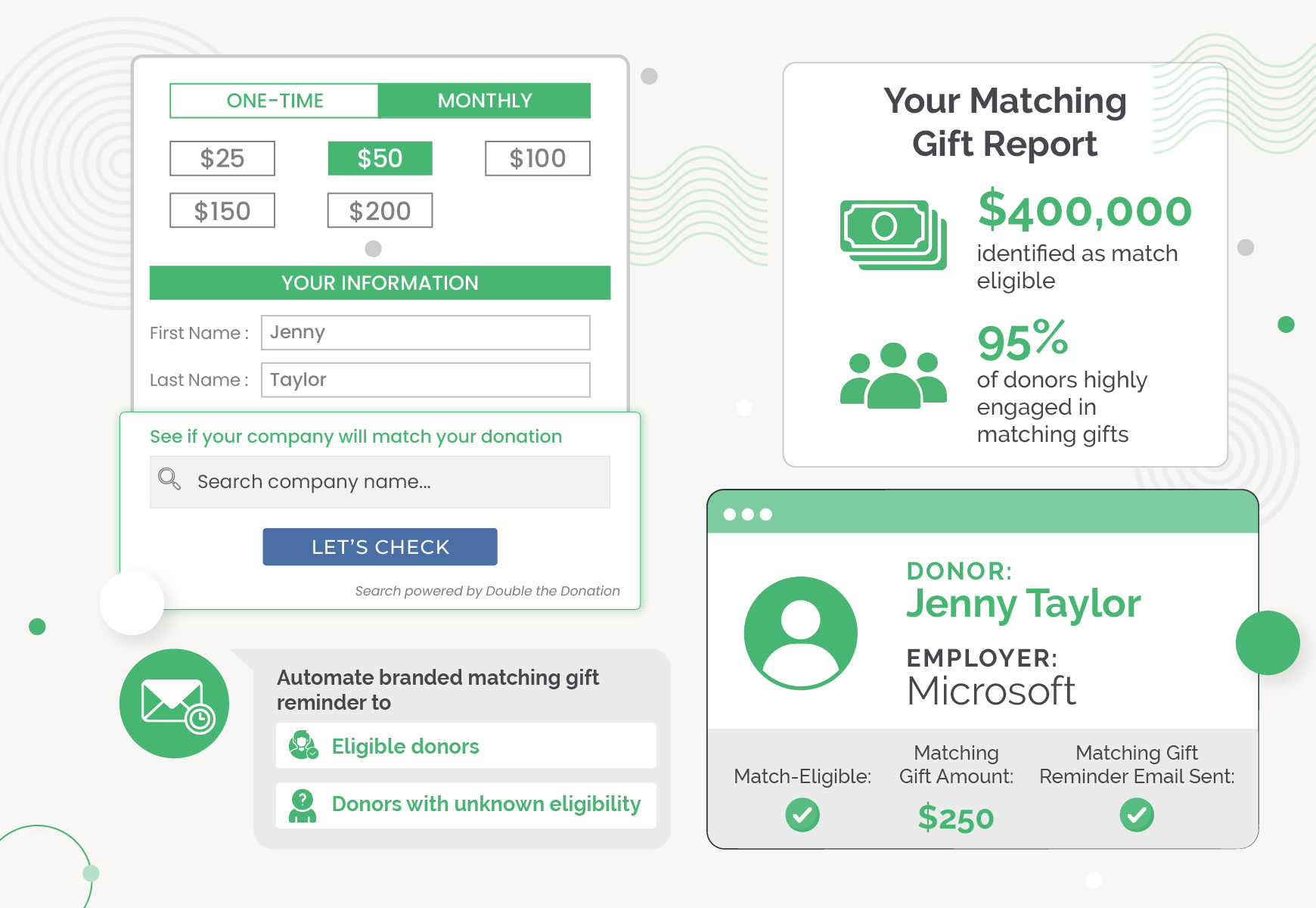
Transitioning to an advanced workplace gift processing pipeline requires replacing legacy data entry with an automated model. When an individual submits a donation through an online giving tool equipped with Double the Donation, for example, an automated identification system instantly captures the transaction data. Rather than requiring a gift processing officer to manually research the donor’s employer, integrated platforms utilize comprehensive workplace giving databases to execute immediate data enrichment. This automated process then tags the supporter profile with verified corporate data as soon as the record enters the system.
Once employer enrichment is established, the system automatically scans the transaction against thousands of corporate philanthropy profiles. If the transaction meets the established parameters, the system triggers real-time, personalized outreach to the individual. This follow-up outlines the exact next steps required to claim the corporate match, significantly reducing the friction that typically prevents requests from being completed.
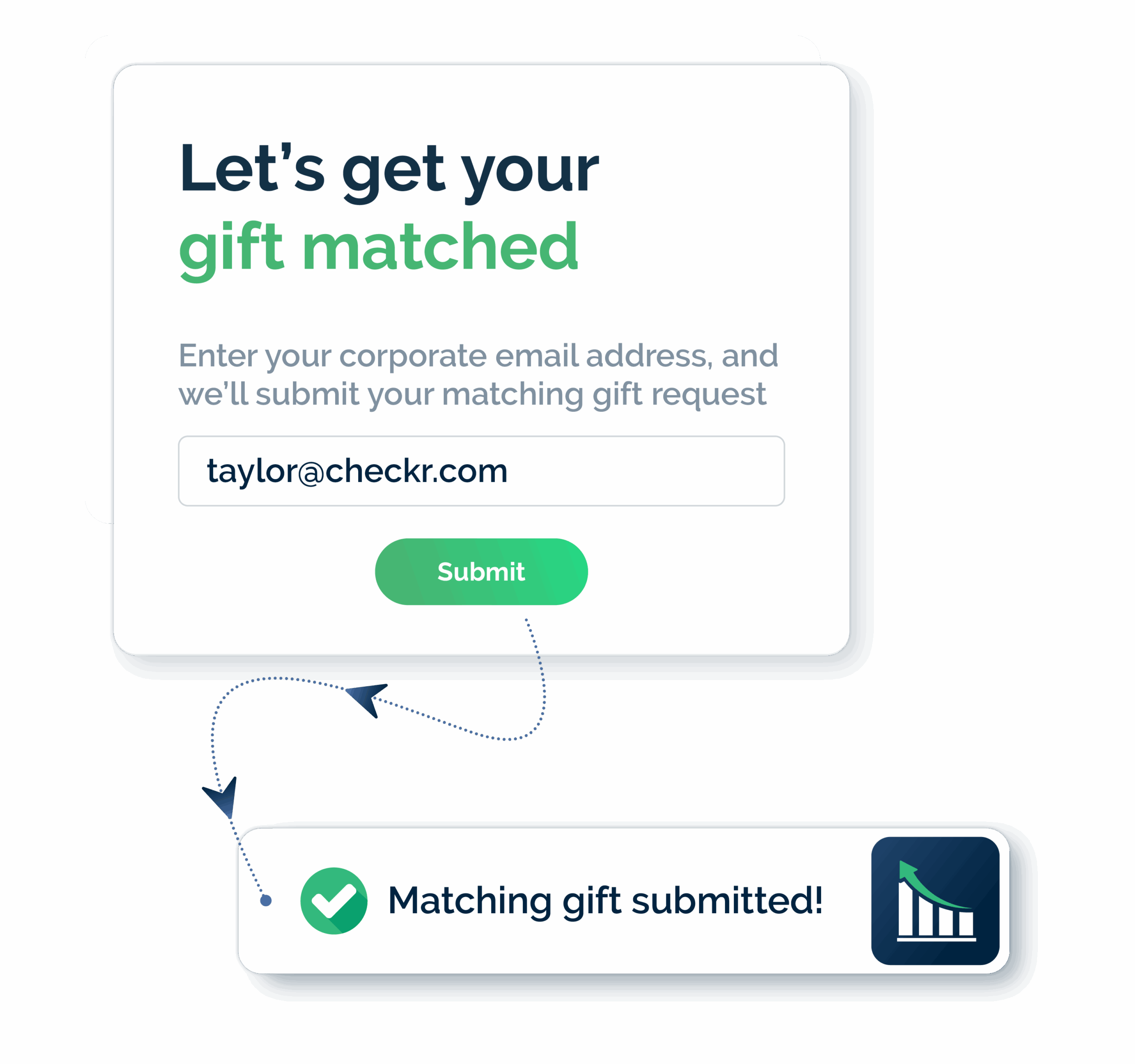
Plus, for select corporate employers, the integration goes even further by leveraging matching gift auto-submission functionality. This exclusive feature allows donors to authorize and complete their matching gift requests directly from nonprofits’ confirmation screens, eliminating the need to log in to external portals.
Because transaction data flows seamlessly among the donation tool, CRM, and CSR platform via secure API integrations, the advancement team requires no manual intervention.
How AI-Driven Workflows Take Things a Few Steps Further
When implemented effectively, artificial intelligence tools can supplement organizations’ existing workplace giving infrastructure, seamlessly scaling revenue and engagement. More and more, forward-thinking teams are treating these platforms as active extensions of their fundraising or administrative staff.
As Double the Donation Marketing Manager Mackenzie Burckbuchler explains: “I’ve tried to frame AI almost like a colleague that’s always there and just so happens to be an expert in any topic I could even dream of. For example, how can I use it to help me throw ideas around and enhance things that maybe I don’t feel as strong in myself?”
This approach empowers nonprofits to innovate at every stage of the processing lifecycle, strengthening areas that have traditionally led to administrative delays.
Streamlining CSR Portal Management
A big part of maximizing workplace giving is ensuring your organization is registered with and up to date on as many CSR portals as possible. Corporate entities often use such platforms to manage their matching gifts, volunteer grants, and payroll deduction programs, so becoming a verified institutional partner listed on these sites is a must.
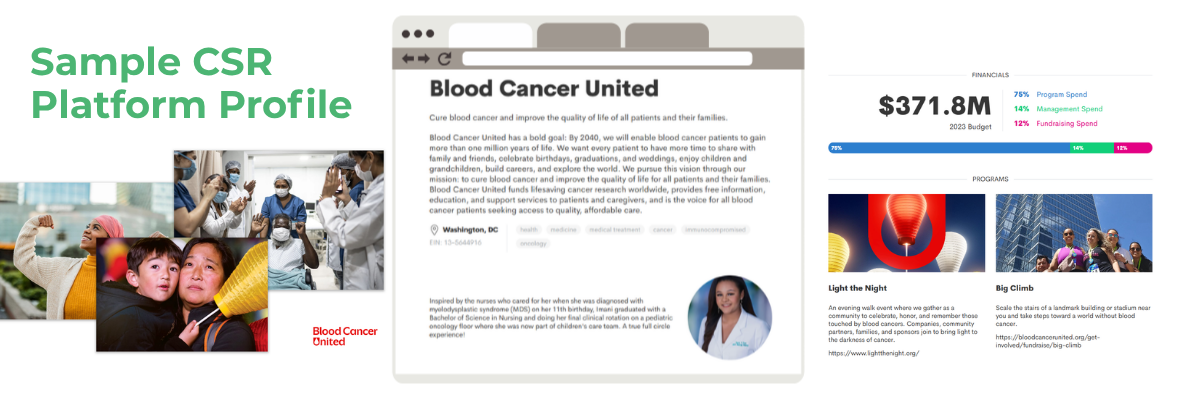
In a recent webinar on 5 Quick AI Wins to Boost Workplace Giving Revenue Today, Double the Donation’s Marketing Manager shared how LLMs can help:
“What you can do is feed AI different portal taxonomy [e.g., rules, character limits, etc.] and ask it to edit your programs and optimize your descriptions. This way, you can make sure you’re accurately mapped to these internal searches in a way that’s going to increase your discoverability.”
She also shared that this includes listing strong volunteer project opportunities within your portal accounts, particularly as corporate volunteerism continues to rise in popularity.
Cleaning Supporter Data
Maintaining a pristine database is foundational to accelerating gift processing and running successful workplace giving campaigns. While manual database audits are incredibly time-consuming and prone to human error, AI tools can continuously clean and refine your constituent records in seconds.
Here are a few use cases recommended by fundraising consultant Lisa Rau in a recent episode of The Nonprofit Boost:
- Automated verification of donor life statuses – Organizations can instruct AI to periodically check internal records against authoritative databases, such as the National Center for Health Statistics’ National Death Index or other alternatives. When a match is identified, it can automatically flag the deceased individual in your CRM.
- Detection of anomalous data points – AI tools can easily analyze thousands of historical gift records to identify statistical outliers, formatting discrepancies, duplicate profiles, and more. For a highly visual approach, you can even command the software to graph this information!
- Enhanced constituent segmentation – Intelligent platforms can process multi-layered donor and volunteer data to group supporters into distinct clusters based on shared attributes, behaviors, and affiliations. This allows teams to uncover hidden trends and patterns to establish targeted, hyper-personalized communications.
By incorporating these data hygiene practices, nonprofits can redefine their approach to workplace fundraising. Not only do these tactics protect database integrity, but enlisting AI to implement them also saves hours of manual spreadsheet screening. Plus, the cleaner your database is, the easier it is to reconcile incoming corporate funds with the individual supporters who requested them!
Automating Complex Gift Processing Systems
The core foundation of an optimized workplace giving strategy relies on highly integrated, automated tech ecosystems. Rather than manually auditing data fields, a synchronized, AI-enabled pipeline can manage individual transaction parameters, track workplace giving contributions, and populate real-time dashboards to keep administrative staff fully informed.
For example, rather than manually coding hundreds of employee contributions from a sprawling monthly payout file, fundraisers can implement intelligent import logic based on geographic identifiers such as ZIP codes and state-level data. This enables the system to automatically route that gift, along with any associated soft credits, to the correct branch without human intervention.
With this type of advanced data framework, organizations can easily assess payroll giving totals, monitor outstanding match statuses, and identify highly engaged companies within their networks. These insights allow leadership to spot high-value giving trends and pinpoint exactly where to deepen strategic partnerships.
Overcoming the AI Efficiency Plateau in Workplace Fundraising
Equipped with AI tools, approximately 79% of nonprofits and schools reported experiencing small-to-moderate efficiency gains, yet fail to achieve the deep operational shifts needed to expand overall fundraising capacity. This result is what industry experts call the efficiency plateau.
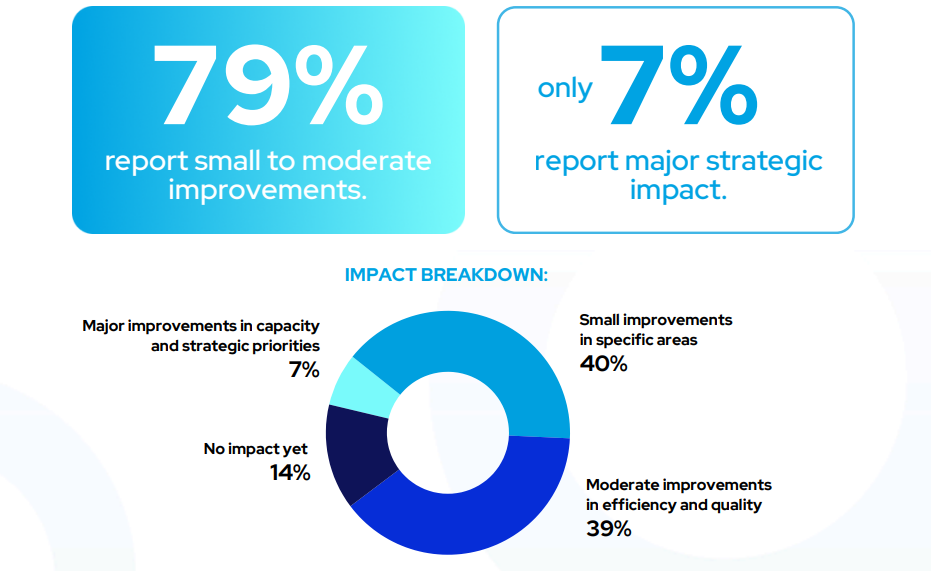
In other words, an office simply executes its existing workflows slightly faster rather than fundamentally upgrading what the advancement team can achieve.
To break through this stagnation, fundraising leaders must move away from treating advanced software as a basic productivity tool and start treating it as core organizational infrastructure.
“The old way of doing this might have meant spending 80% of your time drafting statements, creating different pages on your website, and trying to optimize the copy. And you know, only having 20% of your time to actually form relationships with workplace giving donors and their companies.
But AI directly flips that script for you, so that you can spend 80% of your time on the relationship, and only 20% on those more mundane things.” — Mackenzie Burckbuchler, Double the Donation Marketing Manager
When routine tasks are fully automated, development staff can shift their focus to strengthening relations with individual supporters and building comprehensive corporate partnerships. This means gift officers can proactively engage CSR leads, organize targeted workplace giving drives, and design custom corporate volunteer engagements. Such a structural shift moves the organization from reactive experimentation to high-impact capability.
Establishing Robust AI Governance + Readiness Systems
Before deploying any automated workflow or intelligent data synthesis system, an institution must address the widespread readiness gaps that threaten data integrity. Omitting a formal technology governance policy creates substantial operational risks, leaving staff members highly uncertain about what is permissible and exposing sensitive data to potential privacy infractions.
Among teams already utilizing these tools, 32% cite security concerns as a direct barrier to deeper operational expansion. Without a unified, enabling governance structure, an organization cannot confidently scale its technological workflows beyond isolated, personal workarounds.
Therefore, to safely scale automation with AI assistance, organizations must establish explicit policies that answer three essential questions:
- Which software interactions are actively encouraged?
- Which processes require formal administrative approval?
- Which data exposures are strictly prohibited?
For example, using intelligence tools to draft communications, summarize extensive research, or optimize program descriptions for CSR portals should be encouraged. Conversely, uploading raw donor records, sensitive financial ledgers, or medical histories must be strictly off-limits to preserve institutional trust.
Implementing a Five-Step AI Transformation Framework
To move an advancement office away from fragmented, ad hoc technology usage and toward a high-yield institutional capability, leadership can implement a structured five-step operational framework.
The table below provides a detailed breakdown of this transformational process:
| Step | Core Objective | Tactical Responsibilities | Key Deliverables |
|---|---|---|---|
| 01 | Assign Cross-Functional Team | Assemble stakeholders from fundraising, database operations, finance, and leadership roles. | A dedicated AI committee charter focused on maintaining alignment and mission priorities |
| 02 | Establish Governance Ownership | Define formal decision rights, assign system accountability, and establish technology review cadences. | A centralized administrative workflow for evaluating new automated software assets |
| 03 | Create Acceptable Use Policy | Establish clear boundaries regarding approved, evaluated, and prohibited data interactions. | A plain-language, single-page compliance document distributed to all internal team members |
| 04 | Document Successful Workflows | Capture, standardize, and centralize the top automated routines and prompt structures. | A shared, accessible institutional knowledge repository that prevents operational siloes |
| 05 | Pair Tools with Strategy | Select specialized, integrated workplace giving software platforms over generic, isolated apps. | A unified technical ecosystem connecting donation tools and workplace fundraising software directly to the central CRM |
When applying this framework to workplace giving, special emphasis should be placed on Step #5. Why? Pairing the right tools with effective strategy prevents fragmentation. Rather than forcing fundraisers to manually move between systems to verify employer data, select an automation platform that embeds this functionality directly into your website, donation forms, volunteer registrations, and follow-up sequences.
Doing so creates a friction-free supporter experience while automatically delivering clean, verified data to the backend processing team.
Measuring the Operational Impact of Artificial Intelligence
As you continue to streamline your gift-tracking operation with AI tools, it’s a good idea to replace anecdotal observations with rigorous empirical measurement. Currently, the vast majority of nonprofits rely entirely on unstructured, informal staff impressions to evaluate the effectiveness of their tools, leaving them unable to demonstrate a clear return on investment to organizational leadership.
To build a high-performing fundraising channel, advancement teams must consistently track specific key performance indicators. Depending on your core goals, these could include:
- Processing velocity, or the average time that elapses between an initial donation and the final verification of a corporate match request
- Match identification rate, or the percentage of total donations in which the system successfully captures verified employer data during checkout
- Match conversion rate, or the number of identified matching gift opportunities compared to the volume of completed corporate disbursements
- Staff hours reclaimed, or the exact reduction in manual data-entry time across the administrative team, for operational efficiency
From there, regularly reviewing these benchmarks allows development teams to quickly uncover points of friction, refine their outreach timing, and continually optimize corporate relationships.
Final Thoughts on the Future of Gift Processing
The modernization of back-office administration represents the next major milestone in the evolution of corporate philanthropy. For decades, fundraisers have accepted delayed validation routines, siloed employer records, and manual spreadsheet auditing as the baseline cost of managing workplace transactions. However, continuing to rely on these fractured systems keeps an organization stuck on the efficiency plateau, where staff are too buried in administrative tasks to focus on strategic development.
By establishing clear governance guidelines, documenting repeatable workflows, and adopting an integrated workplace giving system, nonprofit teams can completely transform their operations. Transitioning to an automated approach allows forward-thinking institutions to secure a highly predictable, scalable stream of corporate revenue to fuel their charitable missions for years to come.
Interested in learning even more about next-level workplace gift processing strategies? Check out these additional resources:
- A Nonprofit’s Guide to Effective Matching Gift Processing. This comprehensive resource breaks down how development departments can streamline back-office processes to quickly capture employer matching funds. Use these strategies to minimize submission friction and accelerate the verification pipeline!
- Unifying Donation & Workplace Giving Data: 3 Top Strategies. This tactical guide focuses on breaking down information siloes, detailing major frameworks that help fundraising teams automatically capture employer enrichment, track matching requests in real-time, and ensure data integrity across systems.
- Free eBook: Tips for Establishing a Modern Workplace Giving Plan. This downloadable resource offers a blueprint for nonprofit leaders aiming to build a high-performing workplace giving channel. It provides practical advice for aligning with corporate philanthropy programs, optimizing CSR portal usage, and tracking performance metrics to scale revenue.