Findings from the 2026 Nonprofit Corporate Engagement Report
Are you truly tapping into the full potential of nonprofit corporate engagement?
For many organizations, the answer is complicated. While corporate partnerships and workplace giving programs represent massive opportunities for sustainable funding, knowing exactly where to focus your limited resources can be a challenge. To help cut through the noise, Double the Donation went directly to the source to understand the current landscape of corporate philanthropy.
In Q4 of 2025, our team conducted extensive research for The Nonprofit Corporate Engagement Report, surveying 5,000+ nonprofit professionals from a wide variety of organizations across the United States. In this post, we’ll summarize the key findings. These include:
- The prioritization of corporate partnerships, matching gifts, and workplace giving education
- Matching gifts as an underutilized yet high-potential philanthropy program
- Workplace volunteerism on the rise, as central to fundraising and engagement
- Corporate sponsorships as a high-ROI opportunity
- Strategic and donor-centric workplace giving outreach practices
These findings provide more than just a snapshot of the industry; they offer a data-backed roadmap for closing the gap between potential revenue and actual receipts. Whether you are looking to launch a new corporate giving strategy or optimize an existing one, the following insights reveal exactly where the sector is heading, and where your organization might be leaving money on the table.
Interested in reading the full study? Access the complete fundraising report here.
Trend #1: Nonprofits are increasingly prioritizing corporate partnerships, matching gifts, and workplace giving education.
One of the most telling insights from our research is the gap between what nonprofits want to do and what they are currently equipped to do. The desire to tap into corporate wealth is nearly universal, but the roadmap is often unclear.
The Ambition vs. The Reality
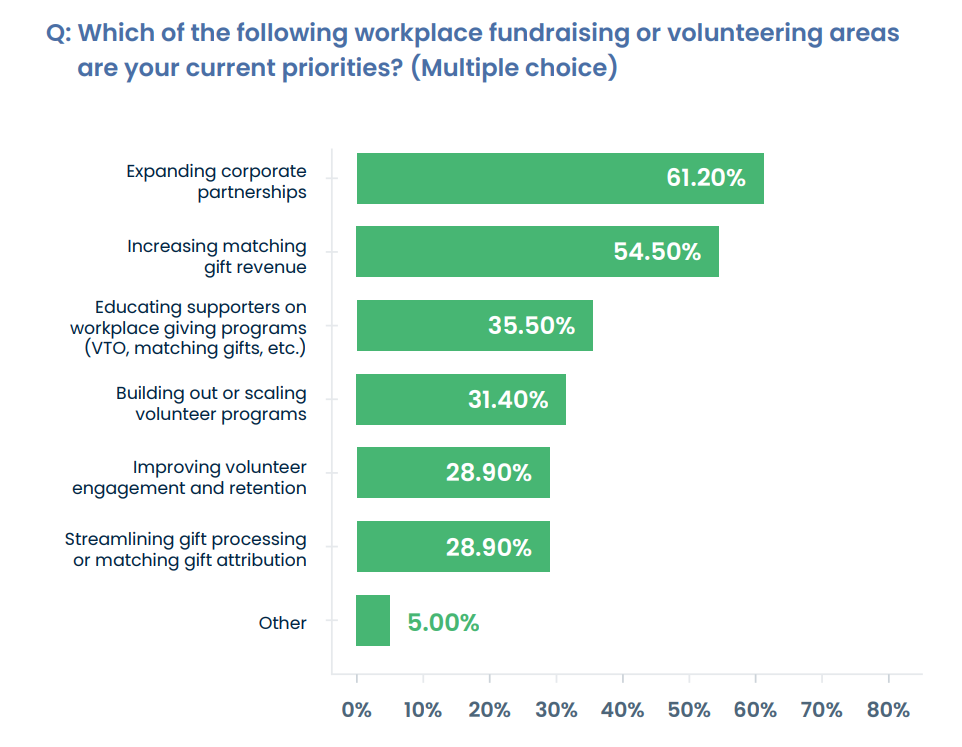
According to the report, expanding corporate partnerships, increasing matching gift revenue, and educating supporters on workplace giving programs are the top three priorities of nonprofits today. Organizations clearly understand that individual giving alone is no longer sufficient; they need the multiplier effect that corporate dollars provide to ensure sustainability.
However, execution is lagging behind ambition. Our data shows that over 37% of nonprofits are still in the process of building a formal strategy for workplace fundraising and volunteering. This suggests that while the intent is there, the infrastructure is still under construction for more than a third of the sector.
Even more concerning is the lack of dedicated resources. In fact, more than 50% of nonprofits lack a dedicated workplace giving team, and over 50% consider their workplace giving strategy informal or ad hoc. When a strategy is ad hoc, revenue becomes accidental rather than predictable. This lack of structure leads to a crisis of confidence among fundraising staff. As a result, we found that only 12% of nonprofit professionals are very confident in their knowledge of corporate giving opportunities.
When your team isn’t confident, they don’t ask donors for matches, they don’t pitch sponsorships effectively, and they miss cues in donor conversations that could lead to major corporate gifts.
The Barrier: Capacity and Awareness
So, what’s stopping organizations from formalizing these strategies? It usually comes down to a lack of bandwidth. Our findings report that close to 70% of nonprofits believe limited staff capacity and low donor awareness of program eligibility are the biggest barriers to encouraging corporate giving.
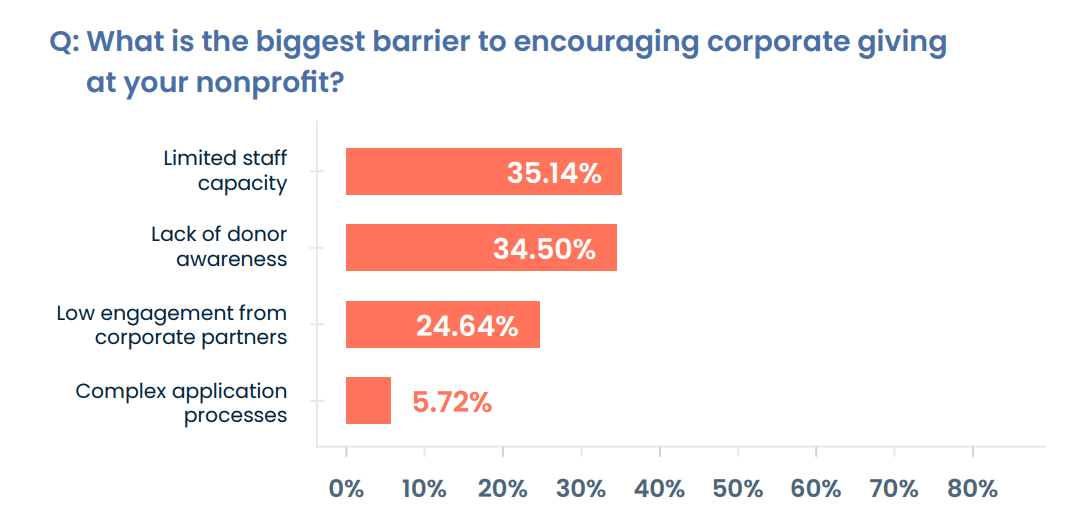
It is a vicious cycle: staff are too busy to educate donors about corporate programs, so donor awareness remains low. Low awareness leads to lower revenue, which prevents hiring additional staff to manage the programs.
The Solution: Cross-Departmental Collaboration
The data points to a clear solution: you cannot silo corporate giving. It’s not just the job of a single “Corporate Relations Manager” or a solitary grant writer. 81.8% of nonprofits believe that cross-departmental collaboration is critical or important to workplace giving success.
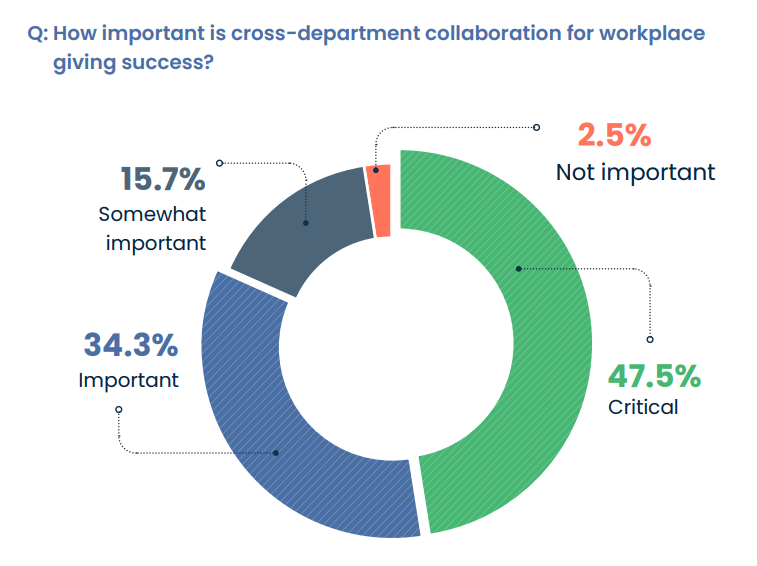
To bridge the gap between ambition and reality, organizations must democratize knowledge of corporate giving. The marketing team needs to understand matching gifts to include them in newsletters; the major gifts officer needs to understand volunteering grants to leverage them in donor conversations; and the data team needs to prioritize employer information. When the strategy moves from “ad hoc” to “integrated,” confidence rises, and revenue follows.
Trend #2: Despite its potential, matching gifts remain one of the most underutilized corporate giving programs.
If there is one area where the “free money” narrative rings truest, it is matching gifts. Despite being one of the most established forms of corporate philanthropy, it remains plagued by operational inefficiencies. The money is there (already allocated by corporations), but it is being left on the table due to inefficient processes.
The Follow-Up Failure
Our research indicates that matching gifts remain one of the most underutilized corporate giving programs; not because donors don’t work for eligible companies, but because nonprofits fail to close the loop.
Consider this alarming statistic: Over 44% of nonprofits rarely or never follow up with donors about their matching gift statuses.
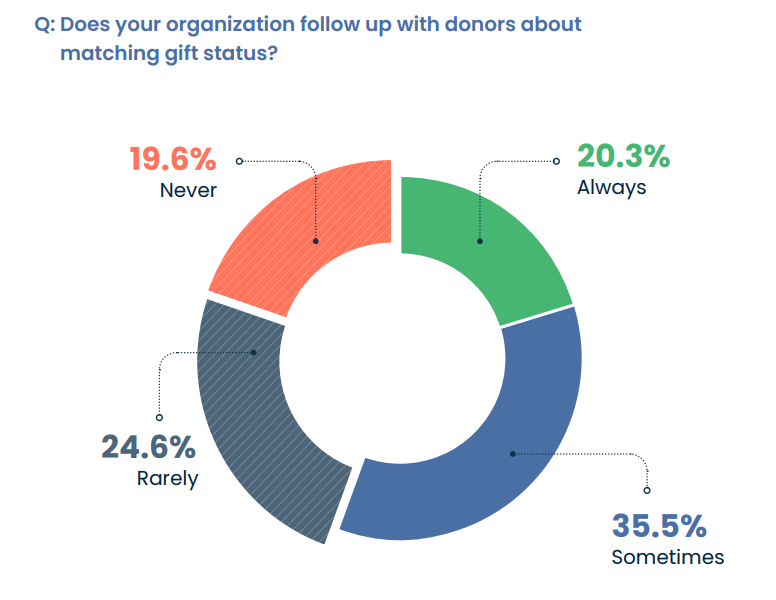
This represents a massive leak in the fundraising bucket. A donor makes a gift, perhaps even indicates they work for a matching company, and then… silence. Without a reminder or a simple “how-to” guide, the donor often forgets to submit the request to their employer. The donor assumes the nonprofit will handle it, or they simply get busy. Without a nudge, that potential revenue evaporates.
Furthermore, speed matters. In the digital age, donors expect instant gratification, yet 62% of nonprofits take more than a week to process matching gift requests. In a world where we can track a pizza delivery in real-time, a week-long delay in acknowledging a corporate match signals to the donor (and the company) that this revenue isn’t a priority.
Focusing on the Wrong Metrics?
Organizations need to ensure they are tracking the right data points to improve these programs. More than 50% of nonprofits view revenue generated as the key metric for assessing the effectiveness of matching gift programs. While revenue is obviously the end goal, focusing solely on the final dollar amount can be misleading.
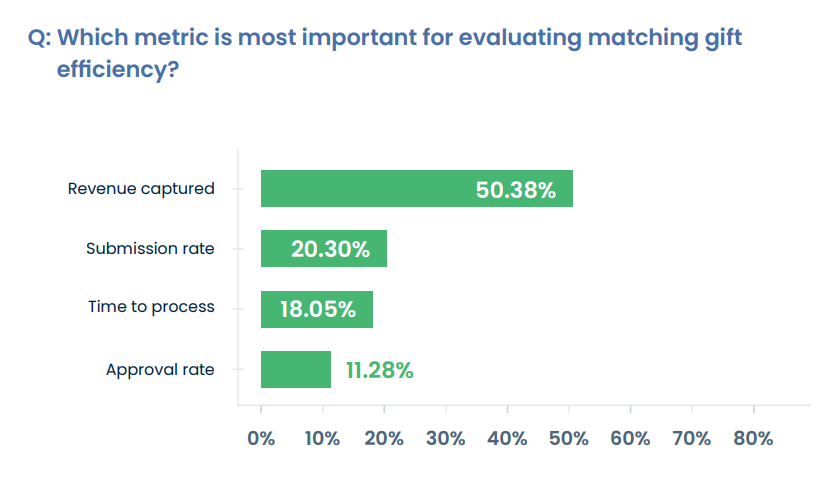
If you aren’t also tracking “match identification rate” (how many donors did we identify as eligible?) or “submission rate” (how many of those identified actually submitted?), you can’t identify where your process is broken. You might have high revenue but an incredibly low conversion rate, meaning you are still leaving millions on the table.
The Digital Opportunity
The report also highlights exactly where to focus your efforts for the quickest wins. Nearly 42% of nonprofits cited online campaigns as generating the highest matching gift conversions.
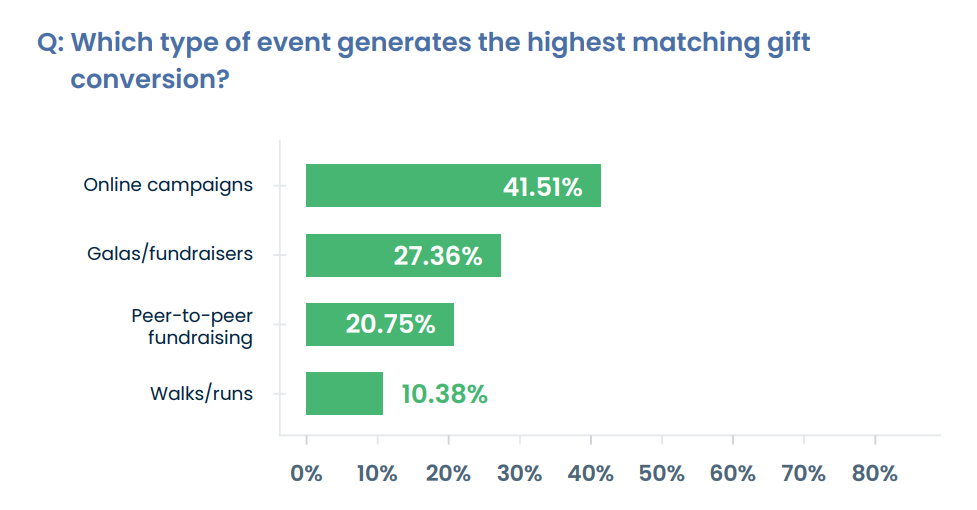
This makes sense. Digital donors are already at their keyboards or on their phones. It is the perfect moment to ask for employer information and provide a direct link to a matching gift form. If you rely on direct mail or year-end galas to drive matching gifts, you may be overlooking the most efficient channel: your donation page.
The urgency here is undeniable. To fix this, nonprofits must automate the follow-up process. You cannot rely on a busy staff member to manually email every donor who might be match-eligible. By integrating matching gift software into your donation forms and setting up automated email drips, you solve the “44% failure to follow up” problem overnight.
See it in Action: LaSalle University’s Donation Page
LaSalle University’s donation form, pictured below, highlights the critical “digital opportunity” for capturing matching gifts at the point of transaction. By integrating a simple employer search tool directly into the donation flow, the LaSalle team captures relevant employer data immediately.
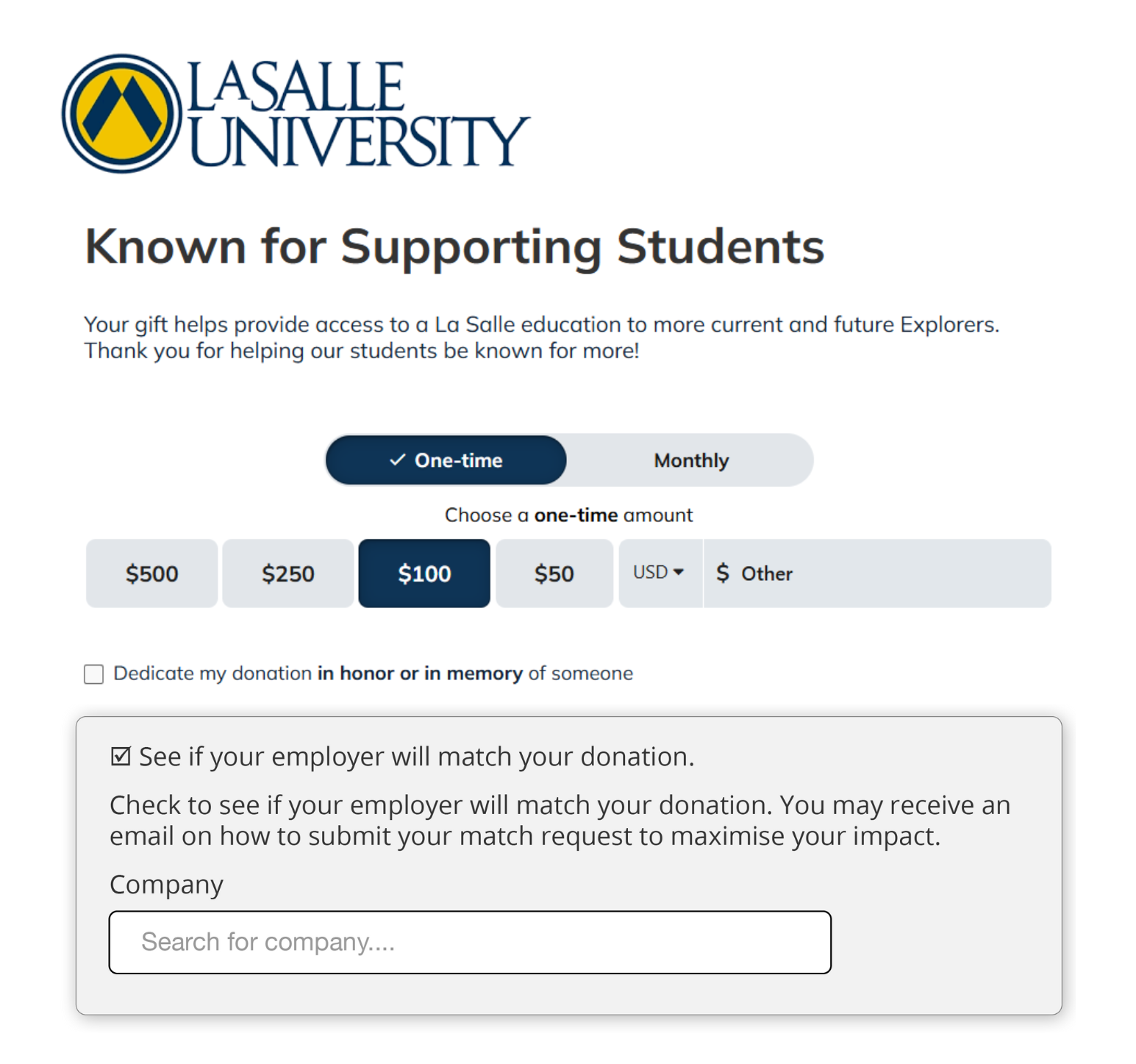
The prompt “See if your employer will match your donation” is a proactive step that ensures the “free money” from corporate matching programs is identified right when the donor is most engaged.
Trend #3: Workplace volunteering programs are also on the rise and have become integral to fundraising and engagement strategies.
Corporate giving is no longer just about writing checks; it’s about showing up. Workplace volunteering has exploded in popularity as companies seek ways to engage their employees in meaningful team-building activities that also serve the community.
For nonprofits, this presents a dual opportunity: labor support and donor pipeline development.
From Labor to Relationships
Our study found that workplace volunteering is no longer a side project. Over 74% of nonprofits believe that workplace volunteering is important for their overall fundraising strategy.
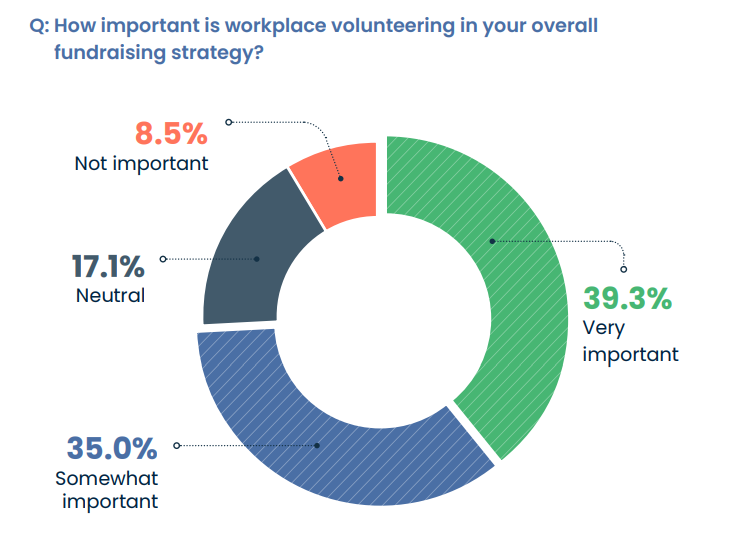
Why is this percentage so high? It isn’t just because nonprofits need help sorting cans or painting fences. It’s because building corporate relationships is the top goal for nonprofits when developing workplace volunteering programs.
Development directors know that the volunteer sorting inventory today is the corporate sponsorship lead of tomorrow. When employees have a positive, hands-on experience with your mission, they become internal champions at their companies. They advocate for grants, push for payroll deductions, and become individual donors themselves.
The Construction Phase
Despite the high value placed on volunteering, the infrastructure is still catching up to the interest. At the time of our survey, nearly 50% of nonprofits were still in the process of building a robust workplace volunteering program.
Many organizations are grappling with logistics: How do we handle groups of 50 employees? How do we track volunteer hours to qualify for “dollars for doers” grants? How do we convert those volunteers into recurring donors? If your organization falls into this category, you are not alone, but you must move quickly to formalize your program before corporate interest wanes.
Recognition as a Retention Strategy
One interesting finding is how nonprofits are choosing to steward these relationships. According to our findings, social media and website shout-outs remain the preferred choice of nonprofits to recognize corporate volunteers.
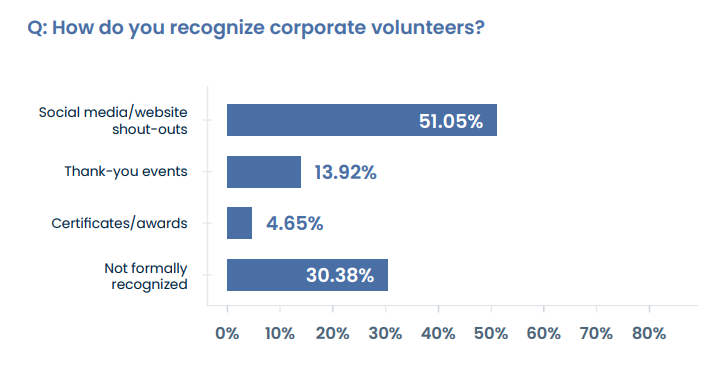
This is a smart, low-cost, high-impact strategy. Companies love public recognition. After all, it boosts their brand image and employee morale. By openly celebrating a corporate partner’s volunteer day on LinkedIn or your website, you aren’t just saying “thank you”; you are providing marketing value to that partner. This makes them significantly more likely to return (and donate) next year.
See it in Action: Farming with Friends’ Social Post
Farming with Friends takes to social media to perfectly illustrate the importance of public corporate volunteer recognition. By tagging Progressive and explicitly mentioning “VTO” (or Volunteer Time Off), the organization accomplishes two strategic goals at once: it validates the volunteers’ hard work and provides the company with valuable public relations assets.
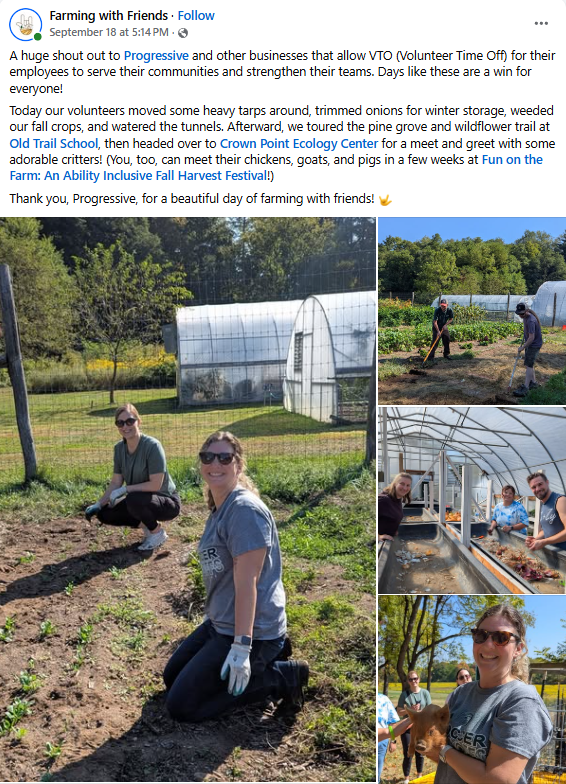
This type of appreciation reinforces the relationship and aligns with the idea that building corporate relationships is the top goal of volunteering programs. The visual assets depicting the team working together also serve as a testimonial to the partnership’s impact, making the company significantly more likely to return for future engagements.
Trend #4: Corporate sponsorships continue to yield the highest return on investment, yet untapped potential remains.
When we look at the pure financials, corporate sponsorships reign supreme. They involve larger checks, significant visibility, and often multi-year commitments. However, our report highlights a dangerous tendency among nonprofits to “set it and forget it.”
The ROI Champion
Over 62% of nonprofits reported that sponsorships yield the highest return on investment (or ROI) among corporate fundraising activities. This aligns with the finding that nonprofits’ primary goals in seeking corporate partnerships are securing donations and funding, as well as gaining support for events.
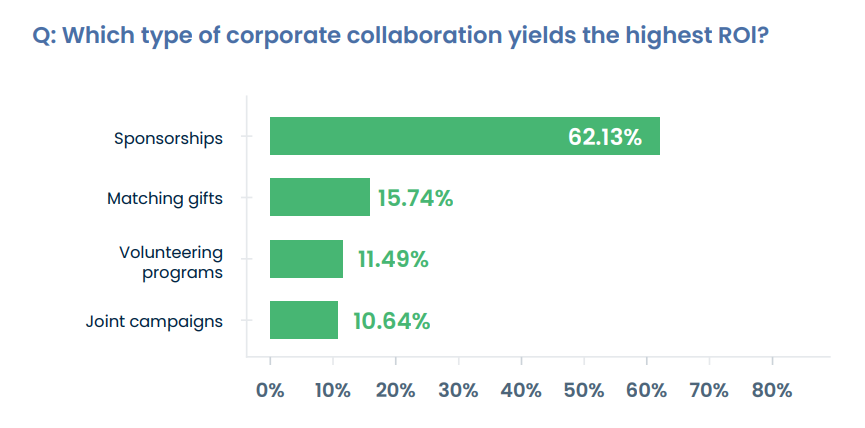
Sponsorships are the heavy lifters of the corporate revenue world. They provide the unrestricted operating capital and event underwriting that keeps the lights on. Because the dollar amounts are high and the cost of acquisition (once a relationship is established) is relatively low compared to acquiring thousands of small donors, the efficiency is unmatched.
The Engagement Void
Here lies the paradox: Sponsorships are the most valuable revenue source, yet they often receive the least consistent attention. We found that one-third (1/3) of nonprofits engage with their corporate partners less than once a quarter.
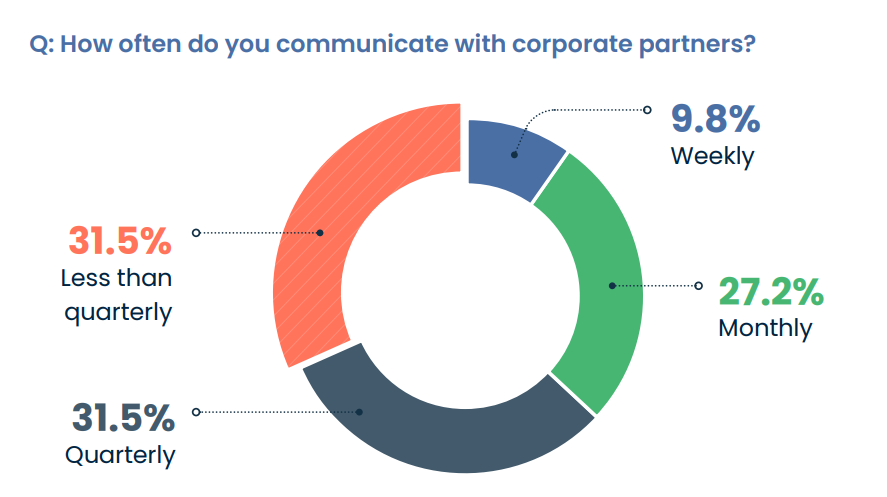
Imagine an investor giving a startup a significant sum of money and then not hearing from the founders for four months. That investor would likely take their money elsewhere the following year. Corporate sponsors are investors in your mission. If the only time they hear from you is when the contract is up for renewal, you are leaving the door open for them to churn.
This “untapped potential” isn’t about finding new sponsors; it’s largely about deepening the value of the ones you already have.
Continuous Cultivation
To protect this high ROI opportunity, nonprofits must increase the frequency of their touchpoints. This doesn’t mean asking for money every month. It means sending an impact report in Q1, a volunteer invitation in Q2, a “success story” update in Q3, and a renewal proposal in Q4.
Treating corporate sponsors at the same level as major individual donors in moves management is key to unlocking the full potential identified in our findings.
Trend #5: Donors are most responsive to workplace giving outreach that includes impact stories and easy-to-follow instructions.
Ultimately, workplace giving relies on individual donors taking action, whether that’s submitting a match request, signing up to volunteer, or advocating for a corporate sponsorship. But donors can’t take action if they don’t know the opportunity exists or don’t understand how it helps.
The Communication Gap
The statistics on communication are perhaps the most concerning in the entire report. Our findings? More than 57% of nonprofits rarely communicate corporate giving opportunities to donors.
This is the root cause of the “low donor awareness” barrier mentioned earlier. If you aren’t talking about it, they aren’t doing it. Many nonprofits assume that because they have a matching gift widget on their website, they have “communicated.” But passive placement is not active communication.
What Actually Works?
When nonprofits do communicate, what drives engagement? The answer is storytelling. More than 50% of nonprofits say stories about impact generate the most engagement in workplace giving communications.
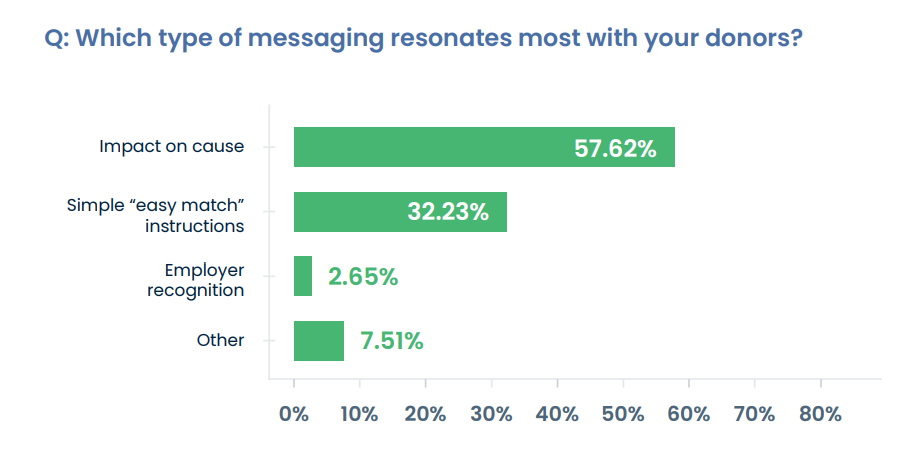
Donors are not inspired by technical explanations of matching gift ratios or volunteer grant thresholds. They are inspired by knowing that their match bought 50 extra meals for a shelter. Donors are most responsive to workplace giving outreach that includes impact stories and easy-to-follow instructions.
The combination is key: Inspiration (the story) + Clarity (the instruction). If you inspire them but make the process confusing, they drop off. If the process is easy but they aren’t inspired, they don’t bother.
The Data Struggle
To communicate effectively, you need good data. Almost 80% of nonprofits believe that the company name is the most valuable type of employer data. Knowing where a donor works is the golden key that unlocks matching gifts, volunteer grants, and sponsorship leads.
However, capturing and maintaining this data is a struggle. Only 3.3% of nonprofits are very confident in linking employer data to corporate giving insights, while 62% of nonprofits find it difficult to keep employer information up to date for corporate giving programs.
This data hygiene issue is a major roadblock. If you don’t know where your donors work, you can’t segment your emails to send specific matching gift instructions for their company.
The Path Forward
The solution is a mix of technology and transparency. Nonprofits need to incorporate employer data fields into every touchpoint (event registrations, donation forms, and volunteer sign-ups alike). But beyond just collecting the data, you must use it to tell stories.
Instead of a generic “Does your employer match?” checkbox, try a campaign that says: “Did you know your gift could feed twice as many families? Check if your employer will match your donation instantly.” Combining the impact story with actionable instructions is a surefire way to drive results.
See it in Action: Food for the Poor’s Email Follow-Up
This email example, courtesy of Food for the Poor, demonstrates the power of combining clear instructions with impactful storytelling: a strategy the report identifies as most effective for high levels of donor engagement. The email opens by connecting the donor’s gift to “essential resources for families in need,” grounding the communication in impact rather than just a transaction. Crucially, it then pivots to a simple, actionable instruction to kick off the submission process.
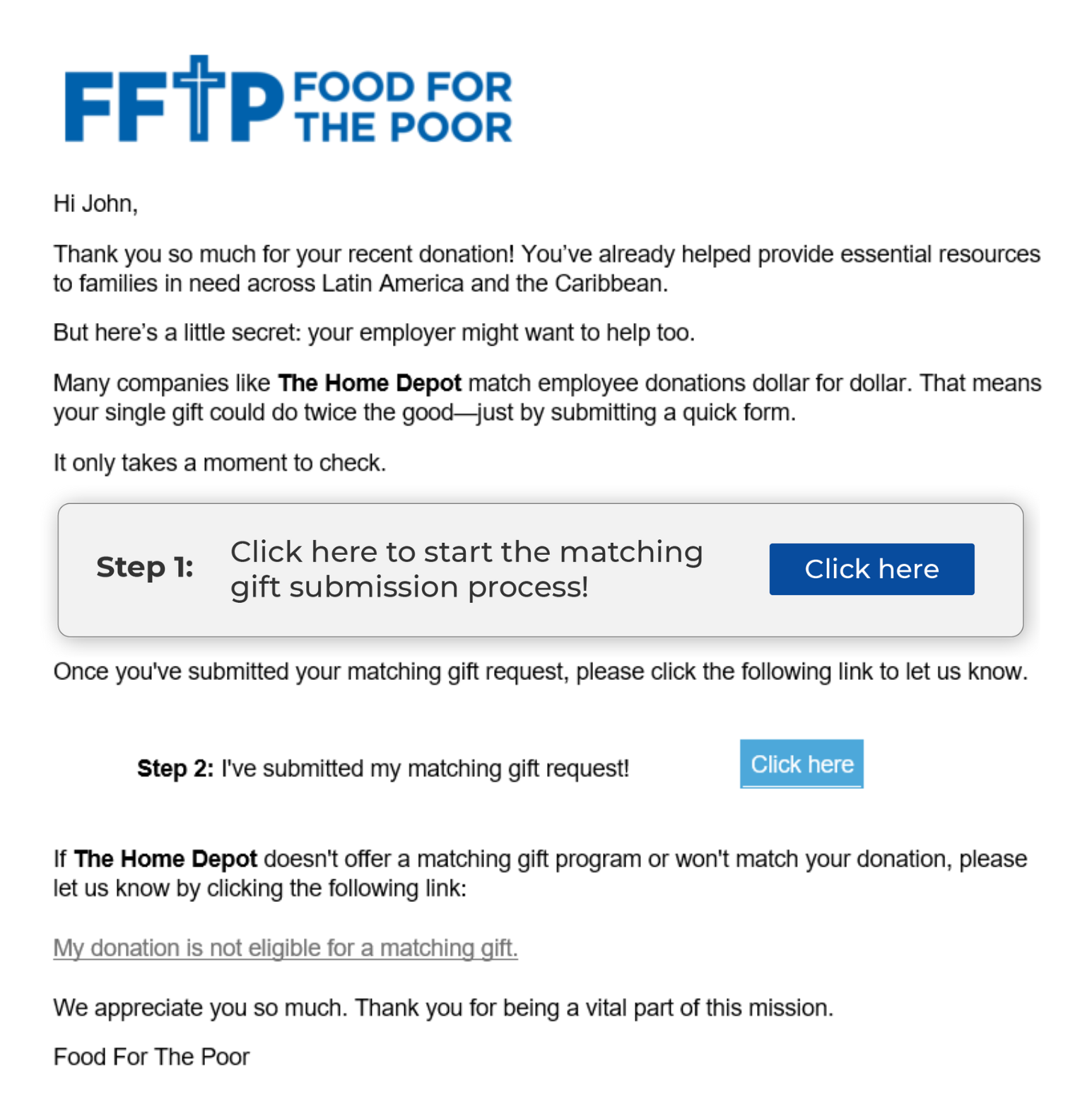
By removing friction and providing a direct link to the individual’s next steps, the organization addresses the “low donor awareness” barrier head-on, making it effortless for supporters to amplify their impact.
Bottom Line: Strategy is Key to Unlocking Corporate Revenue
The findings from Double the Donation’s Nonprofit Corporate Engagement Report paint a clear picture: corporate giving is no longer just a “nice-to-have” bonus. Instead, it’s a vital component of a healthy fundraising ecosystem. The provided data shows that while workplace giving engagement is on the rise, many organizations are still leaving money on the table.
To move forward, nonprofits like yours must shift from reactive to proactive. By streamlining internal processes, sharing compelling impact stories, and providing donors with simple, clear instructions on how to participate in workplace giving, your organization can bridge the gap between potential and actual revenue.