
Fundraising Intelligence: Capture + Leverage the Right Data
In the modern nonprofit landscape, data is more than just numbers on a spreadsheet. It is the compass that guides your strategy, the fuel that powers your outreach, and the key to unlocking sustainable growth. This concept is often referred to as fundraising intelligence, or the science of strategic, data-driven fundraising.
In this guide, we will explore:
- The definition of fundraising intelligence for nonprofits
- Why employer data is the MVP of fundraising intelligence
- Proactive fundraising intelligence data capture strategies
- How to fill the remaining gaps with data appends
- Turning fundraising intelligence into revenue
While many organizations focus heavily on demographic data or giving history when building their intelligence, a critical piece of the puzzle is often overlooked: employer data. But why does this matter? The truth is that understanding where your donors work is not just a piece of trivia. It is a direct link to corporate revenue streams that can significantly amplify individual contributions. When you know which companies employ your supporters, you unlock access to matching gifts, volunteer grants, and other corporate philanthropy initiatives.
By prioritizing employment information and other actionable insights within your fundraising intelligence strategy, you move from making educated guesses to making data-backed decisions that drive revenue.
What Is Fundraising Intelligence for Nonprofits?
At its core, fundraising intelligence is the process of combining internal donor data with external wealth and philanthropic indicators to build a complete, three-dimensional profile of your supporters. It moves beyond simple contact lists to answer the crucial “who, why, and how much” of fundraising.
In other words, fundraising intelligence is the practice of collecting, analyzing, and applying data to improve your organization’s fundraising outcomes. Historically, this has often been synonymous with prospect research focused on wealth indicators such as real estate holdings or stock ownership. While those factors remain important, the definition has continued to expand. True intelligence now encompasses a holistic view of the donor, including their professional affiliations and the corporate benefits they can access on your organization’s behalf.
By integrating the right data into your fundraising intelligence, you empower your team to work smarter. You stop leaving money on the table and start building a strategy that leverages the full potential of your existing donor base. This approach does not require a massive team of data scientists. It simply requires a strategic focus on capturing donor data and using innovative fundraising software to act on it.
While traditional donor management focuses on what happened (past gifts), fundraising intelligence focuses on what is possible (future potential). It transforms raw data into a roadmap for smart relationship building.
Why Employer Data Is the MVP of Fundraising Intelligence
For the average nonprofit, the most actionable and immediately profitable form of intelligence is employment data. Unlike complex wealth assets, which may take years to cultivate into a major gift, employment data offers immediate opportunities. It tells you exactly which corporate giving programs your donors are eligible for right now. This shifts the focus from asking the donor for more money to helping them secure funds from a third-party investor: their employer.
This means that employer data is the Most Valuable Player in your data strategy because it unlocks ample workplace giving revenue through corporate initiatives that support employees’ charitable activities. These programs are widespread, generous, and often underutilized simply because nonprofits lack insight into donor eligibility. Without employment data, you are essentially flying blind, hoping donors will navigate these complex programs on their own (but here’s a hint: they often don’t). When you know a donor works for a specific company, however, you can tailor your stewardship to acknowledge their dual impact as both a donor and an employee.
The most common form of this revenue is the matching gift. This is where a company matches its employees’ charitable contributions, typically at a dollar-for-dollar ratio. According to matching gift research, an estimated $4 to $7 billion in matching gift funds goes unclaimed every year. This massive gap exists largely because organizations lack the fundraising intelligence to identify eligible donors and guide them through the submission process.
Beyond matching gifts, employment data opens doors to other forms of support. For example, volunteer grants are programs in which companies donate to nonprofits where their employees volunteer regularly, while payroll giving initiatives empower team members to contribute directly through their paychecks on a regular basis. Additionally, knowing where your supporters work can help you identify prospects for corporate sponsorships, grants, and more.
Did You Know?
Matching gifts are not just for full-time employees. Many companies have expanded their programs to include part-time staff and retirees. By capturing comprehensive employment data, you can uncover eligibility for segments of your donor base that you might have previously ignored.
Ultimately, employer data transforms your donor database from a static list of names into a dynamic map of revenue opportunities. It allows you to segment your audience based on corporate affiliation, enabling targeted communication that resonates with their specific professional context. This level of personalization is the hallmark of effective modern fundraising.
Fundraising Intelligence Strategy 1: Capturing Data Proactively
The most direct way to build your fundraising intelligence is to simply ask for the data directly. Proactive data capture involves integrating employment questions into your existing touchpoints. This method is highly effective because the information comes directly from the source, ensuring high levels of accuracy. However, it requires a balance between gathering necessary information and keeping your forms and communications short enough to prevent donor drop-off.
Your online donation form is the primary vehicle for this strategy. When a donor is in the process of giving, they are already engaged and willing to share information. By adding an optional field for “Company Name” or even embedding a streamlined search tool, you can capture this data at the moment of the transaction without slowing down the giving experience. For example, using a fundraising tool like Double the Donation allows you to integrate a company search bar directly into the giving flow. As the donor types their employer’s name, the widget can instantly prompt them with matching gift eligibility information and actionable next steps.
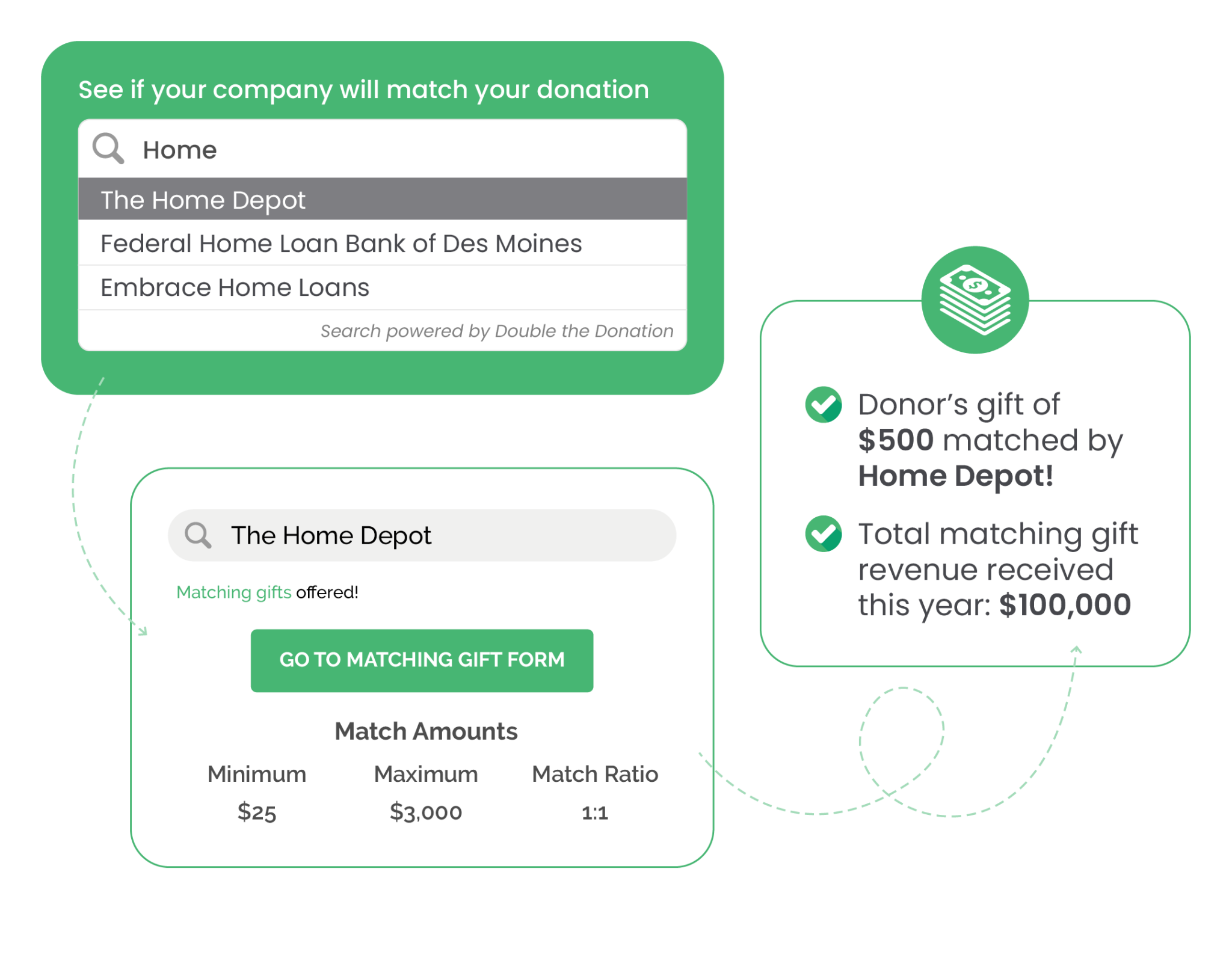
To increase adoption, it’s important to position this request as a benefit to the donor, not just your nonprofit. Frame the question around increasing their impact. For the best results, use language like “See if your employer will double your donation” rather than just “Employer Name.” This small shift in phrasing turns a data entry task into an exciting opportunity for the supporter to do more good without reaching back into their wallet.
Other Proactive Data Capture Strategies to Consider
In addition to your organization’s primary donation forms, consider these other integrated data capture opportunities as well:
- Volunteer Registration: When supporters sign up to volunteer, ask for their employer’s name. This is crucial for identifying volunteer time off (VTO) eligibility or volunteer grant potential.
- Event Registration: Ticket purchases and RSVP forms are other excellent sources of employment data, especially for galas or networking events where corporate presence is high. Make sure to collect employment data during registration to access the information you need to power your fundraising intelligence!
- Post-Transaction Surveys: If you want to keep your initial donation form short (or follow up with those who initially opted not to provide the information), include a link to a brief survey on the confirmation page or in the thank-you email that asks about their employment status.
Remember this: proactive data capture builds a strong foundation for your donor database. It ensures that new records entering your system are enriched with the employment data necessary to drive workplace giving strategies (as well as broader fundraising intelligence) immediately.
Fundraising Intelligence Strategy 2: Filling the Remaining Gaps with Data Appends
Even with the most proactive data capture strategies in hand, your database will likely have gaps. Donors may skip optional fields, or you may have legacy data from before you started asking for employment information. This is where employer append services come into play.
Data appending is the process of using third-party services to match your existing donor records against large external databases to fill in missing information. In this case, an employer append service takes your list of donors (typically requiring basic details such as names, emails, and mailing addresses) and returns current employer information for each donor for whom it is available. This process provides a powerful way to rapidly upgrade your fundraising intelligence without requiring any action from your donors. It even allows you to screen your entire database, or specific segments, to uncover hidden potential.
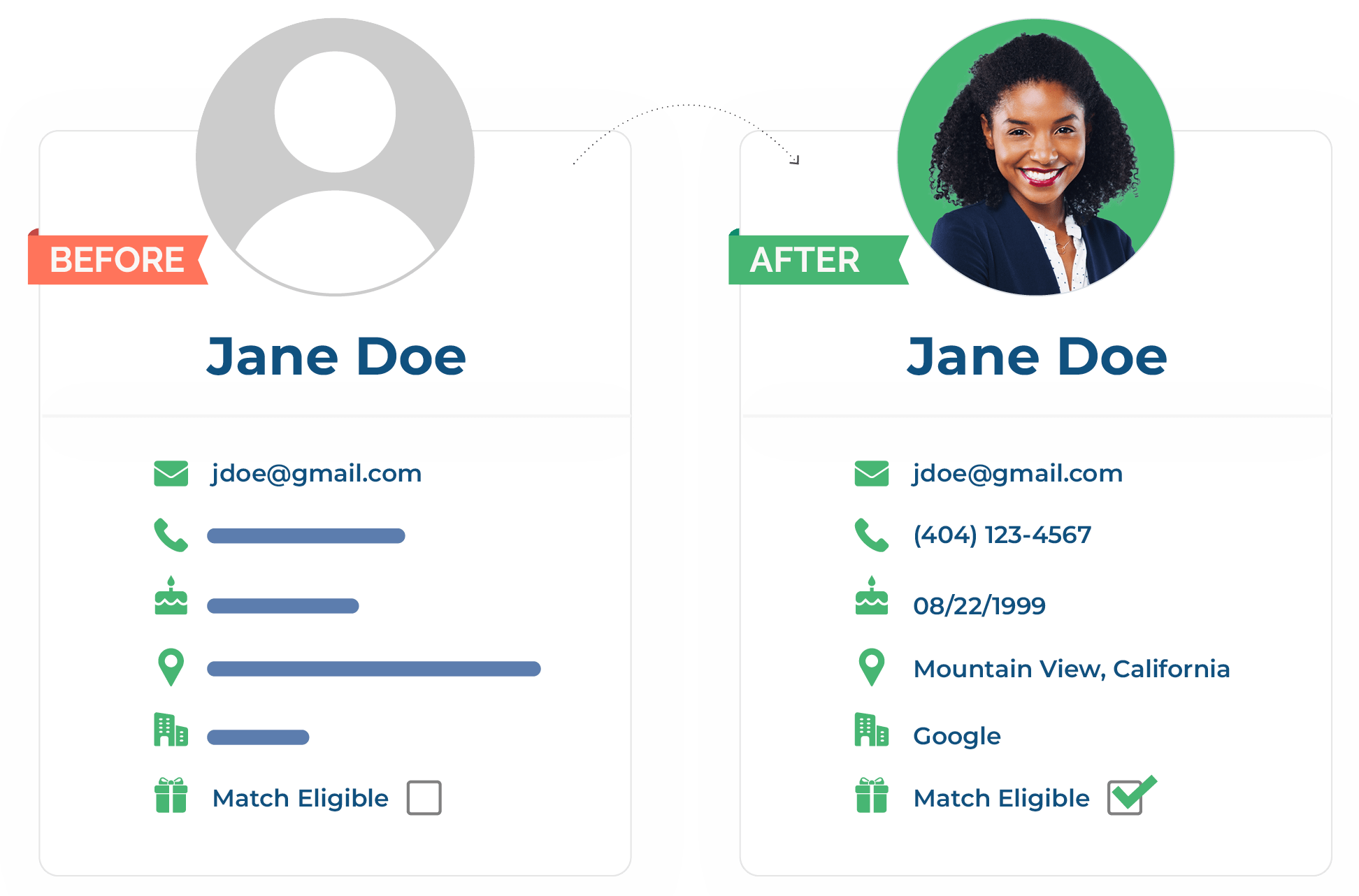
The value of appending lies in its ability to reveal opportunities you would otherwise miss. For example, you might discover that a long-time annual fund donor works for a company with a generous payroll giving program or a 2:1 matching gift ratio. With this new intelligence in your back pocket, you can transition that donor from a standard stewardship cadence to a targeted workplace giving campaign.
When considering an append service, look for a provider that specializes in philanthropic insights. General consumer data services may provide employer names, but a specialized fundraising tool will often provide the matching gift forms, guidelines, and ratios associated with that employer. This context is what turns raw data into actionable intelligence.
Quick Tip
Maintaining good data hygiene practices is crucial prior to running an append. For the best results, make sure your donor addresses and emails are up to date to maximize the match success rate. The cleaner your input data, the more accurate and valuable the appended employer data will be.
It is recommended to treat appending as a periodic maintenance task rather than a one-time fix. People change jobs frequently. Running an employer append once a year, or leading up to major campaigns, ensures your fundraising intelligence remains current and reliable.
Turning Fundraising Intelligence into Revenue
Gathering the data is only half of the equation; the other half is leveraging it effectively. Once you have captured employer data (whether through forms or appends), you must activate it to drive revenue for your cause. This involves segmenting your communications and providing donors with the specific tools they need to engage in corporate giving. The goal is to make it as easy as possible for the donor to take the next step.
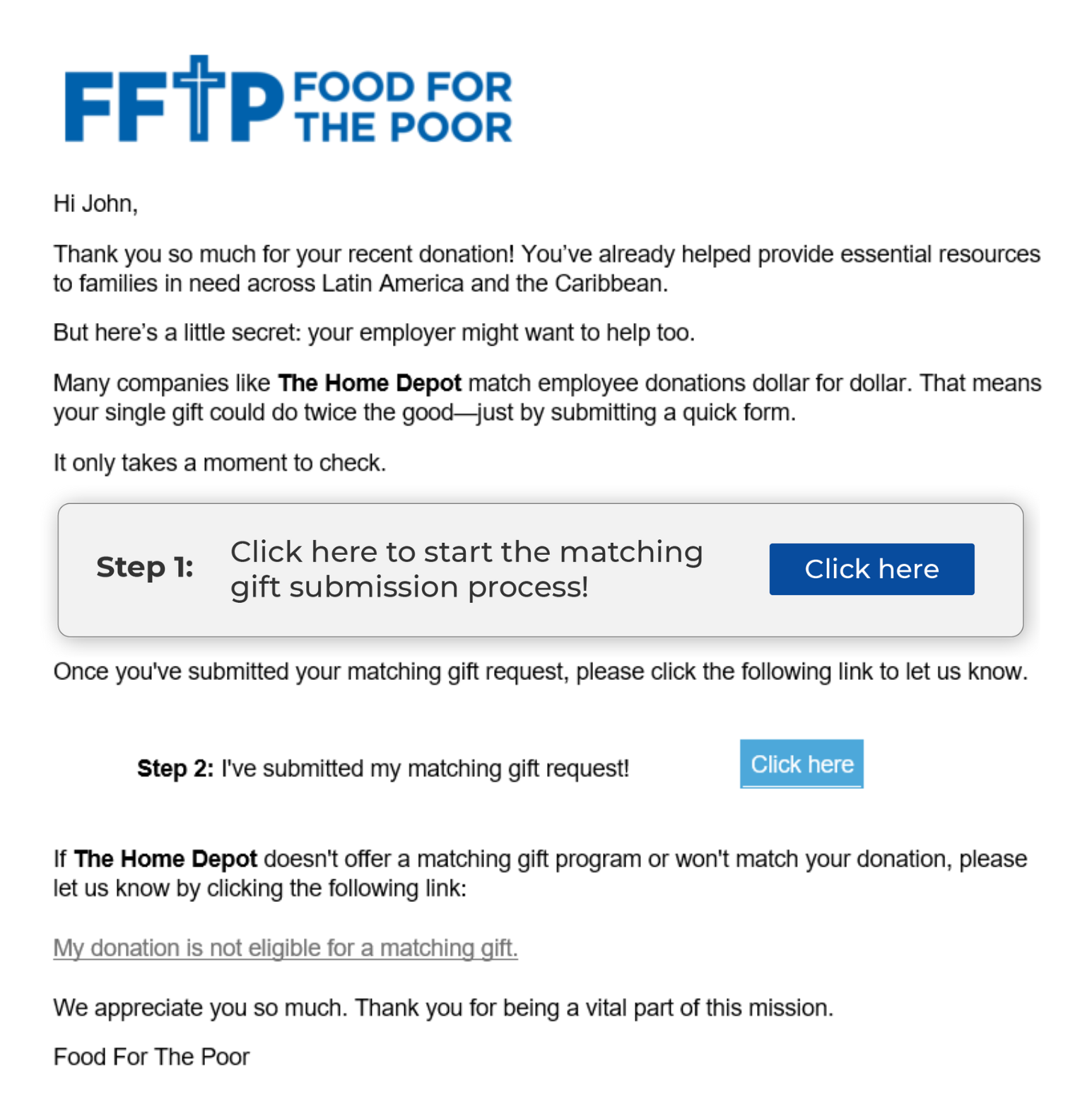
Start by segmenting your email lists based on matching gift eligibility. You can create a segment of donors who work for match-eligible companies but have not yet submitted a request. From there, send them a personalized email acknowledging their employer’s programming. For example, “Did you know that Home Depot will match your recent donation?” is far more compelling than a generic “Check if your company matches” subject line. This level of personalization significantly increases open and click-through rates alike.
For corporate volunteerism specifically, use your data to identify clusters of volunteers from the same company. If you notice you have 10 volunteers from a local bank, for instance, consider reaching out to organize a formal volunteer day. This can often unlock larger team volunteer grants and strengthen your relationship with the corporate partner.
Automation is your best friend here. Workplace giving automation tools can trigger these emails automatically based on the data entered during the donation process or updated in your CRM. This ensures that every eligible donor receives timely, relevant follow-up without burdening your staff with manual outreach.
Wrapping Up & Next Steps
Fundraising intelligence is about working smarter, not harder. By centering your strategy on employer information and other valuable data points, you unlock a hidden layer of revenue already within your donor base. Whether through matching gifts, volunteer grants, or payroll deductions, the potential for growth is immense.
Therefore, don’t let valuable corporate dollars go unclaimed simply because you lack the data. Start auditing your current forms today to ensure you are asking the right questions. Then review your existing database and consider whether an append could revitalize your strategy. With the right data in hand, you can build deeper relationships with your donors and the companies they work for.
Ready to upgrade your fundraising intelligence? Get started with Double the Donation’s workplace giving appends today and turn your donor data into actionable revenue for your cause.