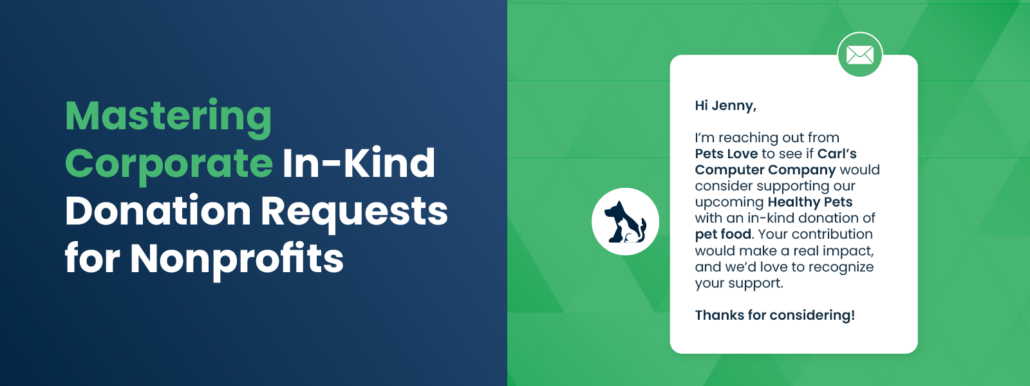
Mastering Corporate In-Kind Donation Requests for Nonprofits
Cash is king in the nonprofit world, but it isn’t the only currency that fuels mission-driven work. Imagine freeing up thousands of dollars in your operating budget by receiving donated laptops, professional legal services, or event space at no cost. This is the power of corporate in-kind donations: a vital but often underutilized resource that can dramatically expand your organization’s capacity without touching your bank account.
While many development directors are comfortable asking for monetary gifts, the Corporate In-Kind Donation Requests process can feel like uncharted territory. It requires a different approach to prospecting, valuation, and stewardship. Yet, when mastered, it transforms businesses from passive funders into active, hands-on partners. By understanding how to identify the right opportunities and navigate the specific workflows of corporate giving programs, you can unlock a treasure trove of goods and services that propel your mission forward.
In this guide, we’ll cover:
Ready to turn corporate generosity into tangible resources? Let’s dive into the step-by-step process of securing non-monetary support that makes a monetary difference.
The Strategic Value of In-Kind Giving
Before diving into how to get these donations, it is crucial to understand why they should be a pillar of your fundraising strategy. In-kind donations are non-monetary contributions of goods, services, or expertise. For a nonprofit, these gifts offer “budget relief,” as every dollar you don’t spend on office supplies, software, or consulting is a dollar you can allocate to direct program services.
Furthermore, in-kind giving is often the “foot in the door” for deeper corporate relationships. A local business that starts by donating auction items or catering for an event is far more likely to consider a cash sponsorship or employee volunteer day in the future. It allows companies to use their existing assets—excess inventory, specialized skills, or facilities—to do good, making it a lower-barrier ask than a direct cash grant.
Did You Know? In-kind services can be just as valuable as physical goods. “Intangible” donations like legal counsel, graphic design, or IT support utilize a company’s core competencies to solve complex nonprofit challenges that would otherwise require significant funding to address.
Step 1: Defining Needs and Creating an Acceptance Policy
The Corporate In-Kind Donation Requests process begins internally. Before you ask for a single item, you must know exactly what you need—and what you don’t need. Soliciting random items can turn your office into a storage unit for unusable goods, creating a logistical headache rather than a benefit.
Create a Targeted Wishlist
Work with your program staff to compile a specific list of goods and services that would immediately aid your operations. Be precise. Instead of asking for “office supplies,” ask for “20 reams of printer paper” or “5 standing desks.” This “wishlist” becomes a public-facing tool that guides donors to make useful contributions.
Establish a Gift Acceptance Policy
To protect your organization, you need a policy that defines what you will decline. This might include expired goods, damaged items, or property that comes with burdensome restrictions. A clear policy allows you to politely say “no” to donations that would cost you more to store or dispose of than they are worth.
Quick Tip: Publish your acceptance policy on your website. This transparency helps donors self-screen their contributions, ensuring you receive high-quality items while saving your team from having to reject gifts face-to-face.
Step 2: Prospecting and Identifying Corporate Partners
Once you know what you need, the next phase of the Corporate In-Kind Donation Requests process is finding the right partner to fulfill it.
Leverage Your Existing Network
Your best prospects are often hiding in plain sight. Screen your current donor database to see where your supporters work. An individual donor employed by a tech company might be your bridge to securing donated software or hardware. Using a corporate giving database can help you quickly identify which of these employers have established in-kind programs.
Target Local Businesses
Local businesses are frequently the most responsive to in-kind requests because they want to see a tangible impact in their immediate community. A local bakery might donate refreshments for a volunteer orientation, or a nearby print shop could offer pro bono printing for your annual report.
Research Major Corporations
For larger needs (such as airline tickets for a raffle or bulk product donations), look toward major corporations. Many national brands, including Google, Southwest Airlines, and the Home Depot, have formal application portals specifically for these types of requests.
Step 3: The Application and Proposal Workflow
With your targets identified, it is time to make the ask. This step in the Corporate In-Kind Donation Requests process varies depending on the size of the company.
Navigating Corporate Portals
Large corporations typically require you to submit a request through an online grant portal. You will need to provide your 501(c)(3) determination letter, a description of your mission, and specific details about the event or program the donation will support. These portals often have strict deadlines, so track these carefully.
Crafting a Proposal for Local Partners
For local businesses without a formal portal, a personalized proposal is key. Your pitch should clearly state what you need, how it will be used, and—crucially—what the company will receive in return. Unlike a simple donation, a corporate sponsorship request often implies a marketing exchange. Be specific about the benefits you can offer:
- Brand Visibility: Logo placement on event signage, t-shirts, or your website.
- Social Media Recognition: Dedicated posts thanking the sponsor to your followers.
- Community Engagement: Opportunities for their employees to volunteer at the event they are sponsoring.
Treat this as a partnership proposal, not just a plea for free stuff. Show them how donating aligns with their business goals, such as reaching a specific audience or demonstrating community commitment.
Did You Know? When it comes to corporate in-kind donation requests, the right timing matters. Retailers are often more likely to donate excess inventory at the end of a season or fiscal quarter when they are looking to clear stock. Aligning your request with their business cycle can increase your chances of a “yes”.
Step 4: Fulfillment, Valuation, and Stewardship
Congratulations, your request was approved! But the Corporate In-Kind Donation Requests process isn’t over yet. The final phase involves logistics, accounting, and relationship building.
Logistics and Intake
Have a plan for receiving the items. Will you need a truck to pick up furniture? Do you have the refrigerator space for donated food? Clarify delivery details immediately to avoid burdening the donor.
Valuation and Receipting
You must provide a written acknowledgment for any in-kind gift worth $250 or more. While the donor is responsible for determining the specific tax-deductible value of the item, your receipt should include a detailed description of the goods or services received. For your own internal records, estimate the “fair market value” (FMV) so you can track how much budget these gifts have saved you.
Stewardship and Reporting
Don’t just send a receipt; send a story. Report back to the company on the impact of their gift. If a company donated books, send a photo of children reading them. If a firm donated legal services, share how much money they saved you—money that went directly to your beneficiaries. This “impact reporting” is the secret sauce that turns a one-time donor into a recurring partner.
Top Companies with Generous In-Kind Programs
Looking for a place to start? These industry giants are known for their robust in-kind giving programs and often have open applications on their websites.
1. Google
Through Google for Nonprofits, the tech giant offers immense in-kind value, including $10,000 per month in free search advertising (Google Ad Grants) and free access to the Google Workspace suite of productivity tools.
2. Southwest Airlines
A favorite for charity auctions, Southwest Airlines donates round-trip tickets to eligible nonprofit organizations to help them fundraise. These are highly coveted items that can drive significant bidding at fundraising galas.
3. Home Depot
The Home Depot Foundation focuses on improving the homes and lives of U.S. veterans and their families. They offer product donations (often via gift cards for materials) to nonprofits that align with this mission, helping organizations fix up facilities or build housing.
4. Whole Foods Market
Local Whole Foods stores often have the autonomy to make in-kind donations of food and products to community nonprofits. This is an excellent source for event refreshments or items for community pantries.
5. Crayola
Perfect for education-focused nonprofits, Crayola provides in-kind product donations to organizations focusing on arts and education, ensuring schools and programs have the creative tools they need.
Wrapping Up & Next Steps
Mastering the Corporate In-Kind Donation Requests process is about seeing opportunity where others see obstacles. It transforms your fundraising strategy from a singular pursuit of cash into a diversified approach that leverages every available resource, from software and services to supplies and space. By defining your needs, professionally pitching corporate partners, and stewarding those gifts with care, you can build a sustainable pipeline of support that directly relieves your budget and amplifies your impact.
Don’t let valuable resources go unclaimed. Start by creating your wishlist today, then look at your donor list to find the corporate connections that can make it a reality.
Ready to find your next corporate partner?
- Audit your needs: What line items in your budget could be covered by an in-kind gift?
- Build your list: Use tools like Double the Donation to identify companies with established giving programs.
- Make the ask: Reach out to a local business partner this week with a specific, tangible request.
Start maximizing your mission’s potential by tapping into the full spectrum of corporate philanthropy today. You can even use Double the Donation’s corporate giving database to help supercharge your efforts!

![Why and How to Reach Out to Payroll Giving Donors [A Guide]](https://doublethedonation.com/wp-content/uploads/2025/06/DTD_Why-and-How-to-Reach-Out-to-Payroll-Giving-Donors-A-Guide_Feature.png "Why and How to Reach Out to Payroll Giving Donors [A Guide]")
![How to Find Grants for Nonprofits [Quickly & Easily!]](https://doublethedonation.com/wp-content/uploads/2025/01/DTD_How-to-Find-Grants-for-Nonprofits-Quickly-Easily_Feature.png "How to Find Grants for Nonprofits [Quickly & Easily!]")