Employer Appends Best Practices for Nonprofits to Know
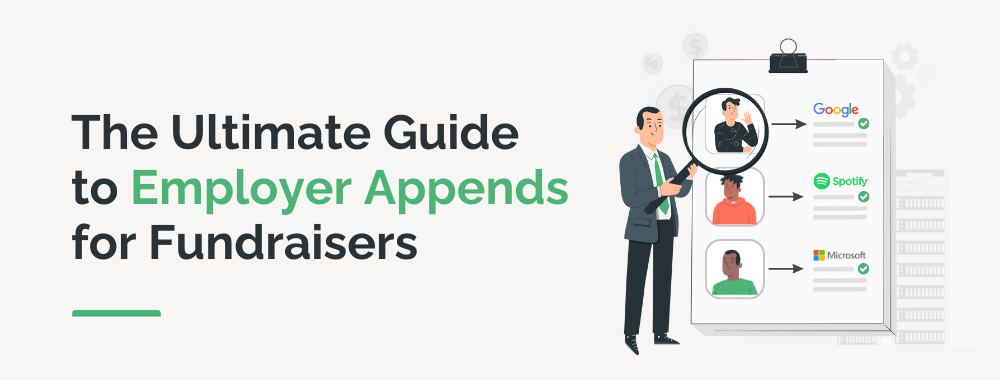
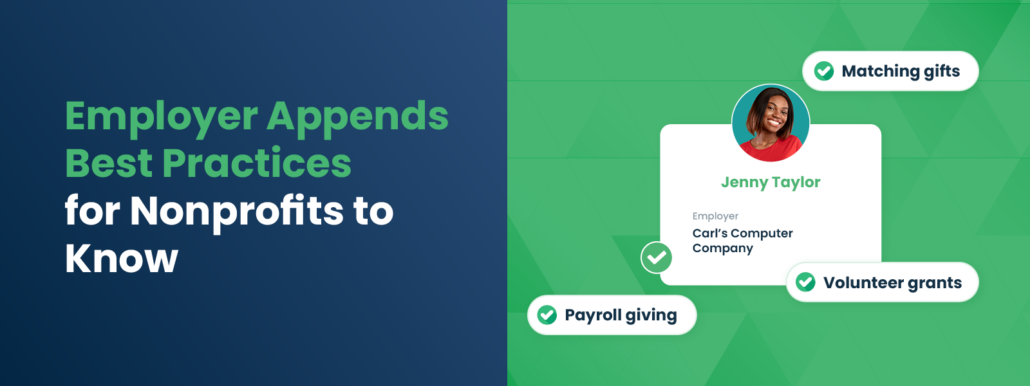
Data is the lifeblood of modern fundraising. It informs who you call, what you ask for, and how you sustain relationships. Yet for many nonprofits, a significant blind spot in their donor database remains: employment information. You likely know your donors’ names, giving history, and email addresses, but do you know where they spend the majority of their waking hours? If not, you are missing the key to unlocking corporate philanthropy. The solution lies in a process called employer appends, but simply buying data isn’t enough. To truly succeed, you must implement Employer Appends best practices that transform raw information into actionable fundraising intelligence.
The difference between a successful data enrichment strategy and a wasted investment often comes down to execution. It involves more than just a transaction with a data vendor; it requires a commitment to data hygiene, strategic vendor selection, and intelligent activation. When executed correctly, employer appends can reveal millions of dollars in untapped matching gifts, volunteer grants, and sponsorship opportunities hiding within your existing donor list.
In this guide, we’ll cover:
- Why data hygiene is the prerequisite for success
- Selecting a data provider with ample philanthropic context
- Maximizing your hit rate with complete donor profiles
- Strategies for segmenting and activating your new data
- The importance of regular maintenance and re-appends
- Ethical considerations and data privacy
- Recommended KPIs for tracking and measuring success
By adhering to these Employer Appends best practices, your nonprofit can stop guessing about your donors’ capacity and start building partnerships based on accurate, actionable insights.
Prioritize Data Hygiene to Build a Strong Foundation.
Before you spend a single dollar on data enrichment, you must look inward. The first and perhaps most critical of all Employer Appends best practices is ensuring your existing house file is clean and ready for enhancement. Data vendors use your existing contact points (such as names, addresses, emails, and phone numbers) to match your records against their databases. If your input data is flawed, the output will likely be useless.
Conduct a Pre-Append Audit
Start by auditing your current database for duplicates and inconsistencies. Duplicate records are a major drain on resources; if you have “John Smith” listed three times under slight variations, you might pay to append his employer three times. Merging these duplicates ensures you get a single, comprehensive view of the donor and maximizes your budget. Additionally, standardize your address formatting. Vendors typically rely on standard postal formats to verify identities. If your addresses are riddled with typos or non-standard abbreviations, the match rates—the percentage of donors for whom the vendor can find an employer—will plummet.
Standardize Contact Information
Beyond addresses, ensure your email and phone number fields are populated and formatted correctly. The more data points you can provide to the vendor, the higher the confidence score of the match. A vendor might find five people named “Sarah Jones” in Chicago, but only one who matches the specific email address and phone number you provide. Investing time in cleaning your data upfront is the most effective way to ensure a high return on investment (ROI) later.
Did You Know? An estimated $4 to $7 billion in matching gift funds goes unclaimed annually (source: Double the Donation’s Matching Gift Statistics). Much of this gap exists simply because nonprofits do not know their donors work for match-eligible companies. Clean data is the first step toward bridging that gap.
Select a Data Provider With Extensive Philanthropic Context.
Not all data is created equal. One of the most overlooked Employer Appends best practices is choosing a vendor that specializes in the nonprofit sector. General marketing data firms can tell you where a donor works, but that information alone is often insufficient for fundraising purposes. You need context.
Look for Workplace Giving Insights
Knowing that a donor works for “The Home Depot” is good. Knowing that “The Home Depot matches donations up to $3,000 at a 1:1 ratio” is actionable. When selecting a provider, prioritize those that map employer data directly to corporate giving guidelines. This allows you to skip the research phase and move straight to solicitation. Providers like Double the Donation specialize in this exact intersection, turning raw employment names into a roadmap for revenue.
Evaluate Match Rates and Accuracy
Ask potential vendors about their match rates and data sources. A reputable provider should be transparent about what percentage of your file they expect to match, typically ranging between 25% and 40% for nonprofit files. Be wary of providers promising 100% match rates, as this often indicates “fuzzy” matching logic that sacrifices accuracy for volume. In the world of fundraising, sending a matching gift appeal to a donor based on incorrect employment data can damage the relationship. Accuracy must always trump volume.
Assessing Integration Capabilities
Your data shouldn’t live in a silo. The best providers offer seamless integrations with your existing CRM or donation platforms. This ensures that once the data is appended, it flows directly into the donor profiles where your development officers and marketing teams live. Manual imports are prone to error and quickly become outdated. Automated integration ensures that your new insights are immediately available for segmentation and reporting.
Maximize Your Hit Rates With Complete Donor Profiles.
To get the best results from an employer append, it’s important for organizations to provide their selected data partners with as much information as possible about the records they’re looking to enrich. When you prepare your file for an employer enrichment project, don’t stop at just names and email addresses. Include every piece of clean data you have in your system.
More data points to work with mean a much higher hit rate for your organization.
For the best results, you should provide:
- The donor’s full name (including any preferred names or aliases you have on record)
- A unique ID number
- Their mailing address (home, business, or both)
- Region (state, city, and country)
- Email address(es)
- Phone number(s)
- Social media profile(s)
- College or university attended (along with class year and major/degree)
- Age or birthdate
- The date and amount of their most recent gift
- When the entry was last updated
Every extra detail you have can help your provider find the right match. Location or region fields narrow down people with the same name. University affiliation and undergraduate graduation year can provide valuable insights into a supporter’s estimated age and industry. Engagement history helps verify active records and add an extra layer of context.
Think of it this way: a common name like John Smith is hard to place. If all you know about a donor is their generic nomenclature, your data partner would likely have difficulty distinguishing between…
- John Smith, Elementary School teacher in Arkansas
- John Smith, IT Support Specialist for Apple Inc. in California
- John Smith, self-employed author in Canada
However, adding donor John Smith’s college graduation year or last known address helps the appends provider verify that they’ve identified the correct John Smith and lock in his current employer.
Unfortunately, we know it’s not likely that you have all of the above information on record for every single one of your supporters. Therefore, supply what you can, but strive to maintain comprehensive donor profiles whenever possible.
Put the New Data to Work Once You Receive It.
Collecting data is passive; fundraising is active. The core of these employer appends best practices involves having a concrete plan for how you will use the information once you have it. The value of an append is not in the spreadsheet itself, but in the campaigns it powers.
Segment for Targeted Outreach
Once your file is returned with employer names and matching gift statuses, segment your audience immediately. You should create distinct lists:
- Match-Eligible Donors: Donors who work for companies with known matching gift programs.
- Volunteer Grant Prospects: Donors who volunteer with you and work for companies that pay for volunteer hours.
- Corporate Sponsorship Leads: Donors with senior job titles at major corporations in your region.
This segmentation allows you to tailor your messaging. Instead of a generic “Check if your employer matches” email, you can send a specific message: “We see you work for Coca-Cola. Did you know they offer a 2:1 match on donations? Here is the link to their form”. This level of personalization significantly increases conversion rates.
The Retroactive Ask
One of the most profitable moves you can make is a retroactive matching gift campaign. Most companies allow employees to request matches for donations made in the last 6 to 12 months (sometimes up to the end of the calendar year or tax year). Use your new data to identify donors who gave recently and work for match-eligible companies. Send them a personalized email thanking them for their past gift and alerting them that they still have time to double it. This is “found money” that requires no new donation from the donor, just a few minutes of paperwork.
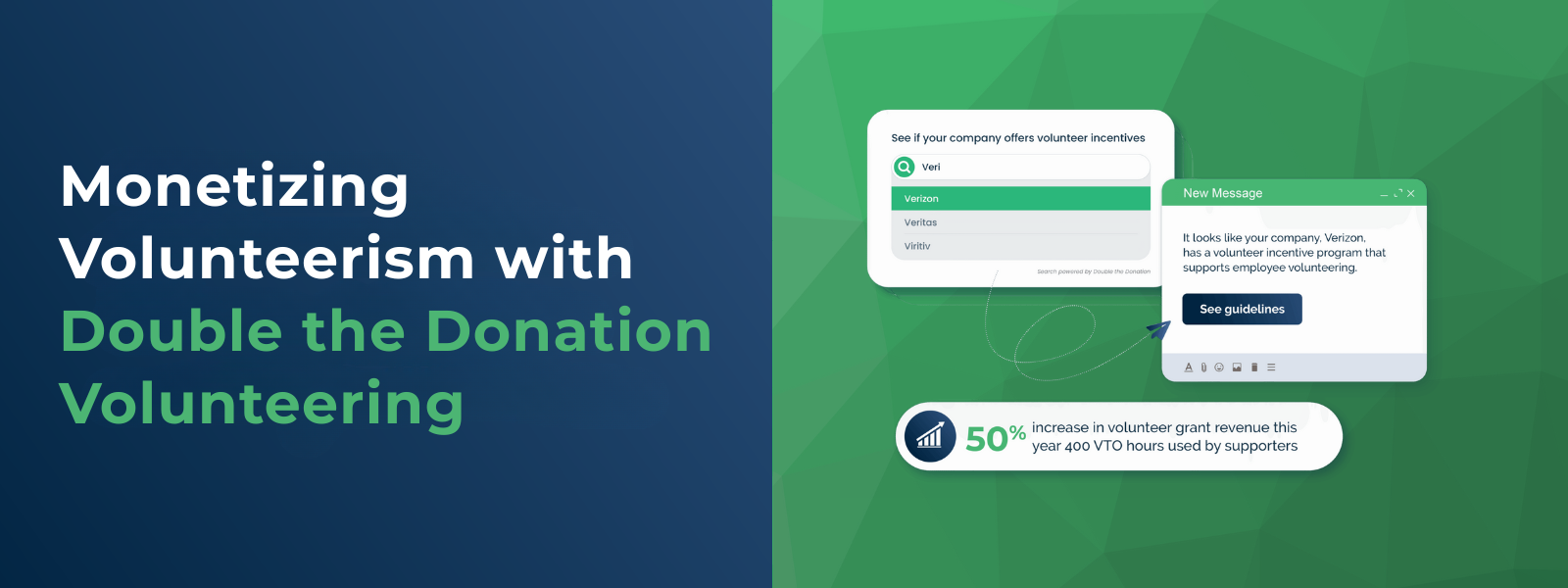
Quick Tip: Don’t forget about volunteers! Companies like Verizon and Allstate offer grants ranging from $500 to $1,000 for employees who volunteer. Use your appended data to identify volunteers who work for these companies and guide them through the grant submission process.
Maintain Clean, Regularly Updated Data Over Time.
Data decays. People change jobs, companies merge, and policies are updated. Treating an employer append as a one-time fix is a mistake. Sustainable success requires adhering to Employer Appends best practices regarding maintenance and ongoing data collection.
Schedule Regular Re-Appends
Depending on the size of your database and the turnover rate of your donors, aim to run a fresh employer append every 12 to 24 months. This ensures you capture donors who have changed careers or moved to new companies. It also helps you catch new donors who have entered your system since the last screening.
Build Data Collection into Intake
Stop the problem at the source by improving how you collect data moving forward. Add an optional “Employer” field to your online donation pages, event registration forms, and volunteer sign-ups. To ensure accuracy, use a search tool with an autocomplete function (like Double the Donation’s plugin) that standardizes the company name as the donor types it. This prevents variations like “IBM,” “I.B.M.,” and “International Business Machines” from clogging your database.
Create Feedback Loops
Use your communications to validate the data. In your annual donor survey or impact report, include a section asking supporters to update their employment information. Framing it as “Help us update our records to maximize your impact” encourages participation. If a donor replies that they have retired or changed jobs, update your CRM immediately. This continuous loop keeps your data fresh between major append projects.
Consider Ethics and Donor Data Privacy.
In an era of heightened data privacy awareness, handling donor data responsibly is non-negotiable. Employer Appends best practices also encompass the ethical sourcing and use of information.
Transparency and Security
Ensure your vendor complies with all relevant data privacy regulations (such as GDPR or CCPA, where applicable) and uses secure, encrypted methods for data transfer. You are entrusting them with your donors’ personal information; their security standards must be rigorous.
Respectful Communication
When reaching out to donors based on appended data, be helpful rather than creepy. You don’t need to explicitly state, “We used a third-party service to find out you work at Google.” Instead, focus on the opportunity: “Many companies, including Google, match donations. Since you are part of their community, you might be eligible.” This frames the outreach as a service to the donor, helping them maximize their impact, rather than an invasion of privacy.
Measure Your Success by Tracking the Right KPIs.
To justify the investment in employer appends, you need to track the results. It is not enough to simply count the number of records matched; you must measure the revenue impact.
Match Identification Rate
Track the percentage of your donor base that was successfully matched to an employer. If this rate is low, it might indicate that your base is largely retired or that you need a vendor with better coverage for small-to-mid-sized businesses.
Revenue Lift
This is the ultimate metric. Track the increase in matching gift revenue and volunteer grants in the 12 months following the append compared to the previous year. For example, the Central Texas Food Bank identified over $720,000 in match-eligible revenue in less than 12 months by prioritizing matching gift identification. While they used automation tools, the principle applies: knowing the employer drives revenue.
Conversion Rate
Measure how many of the identified match-eligible donors actually submitted a request after your outreach. A low conversion rate suggests that while your data is good, your communication strategy might need refinement. Perhaps the emails aren’t clear, or the instructions for the donor are too complex.
Wrapping Up & Next Steps
Implementing Employer Appends best practices is a transformative step for any nonprofit looking to graduate from reactive fundraising to proactive partnership building. It allows you to see your donors not just as individuals, but as gateways to the vast resources of the corporate world. By ensuring clean data input, selecting a vendor that offers philanthropic context, and aggressively activating the insights you gather, you can secure sustainable revenue streams that fuel your mission for years to come.
The corporate funds are there—billions of dollars in matching gifts and volunteer grants go unclaimed every year simply because no one asked for them. By mastering the employer appends process, you ensure your organization is the one doing the asking.
Ready to uncover the hidden potential in your donor list?
- Run a Data Audit: Check your current records for duplicates and address accuracy.
- Evaluate Your Forms: Add an employer field to your donation pages today.
- Explore Solutions: Look for partners like Double the Donation who can provide the actionable workplace giving data you need to succeed.
Take control of your data today, and watch your corporate giving revenue grow. Find out how Double the Donation’s employer appends services can help power your efforts!