Understanding the Payroll Giving Process: For Nonprofits
In the volatile world of nonprofit fundraising, stability is the ultimate prize. Organizations constantly seek ways to smooth out the peaks and valleys of donation cycles, aiming for a baseline of revenue that allows for confident future planning. Enter payroll giving: a powerful, underutilized revenue stream that transforms sporadic supporters into consistent, long-term donors. By understanding and optimizing the Payroll Giving process, your organization can tap into a method that benefits everyone involved—providing tax breaks for donors, Corporate Social Responsibility (CSR) wins for employers, and a steady flow of unrestricted funds for your mission.
While many development directors are familiar with the concept, few have mastered the mechanics of how these funds actually travel from an employee’s paycheck to the nonprofit’s bank account. It is not just about asking for donations; it is about guiding your supporters through a specific administrative workflow. When you demystify the Payroll Giving process for your donors, you lower the barrier to entry and unlock a gateway to predictable, recurring income and higher donor retention.
In this guide, we’ll cover:
- The strategic value of payroll giving for modern nonprofits
- A step-by-step breakdown of the donor’s experience
- How to register with the necessary portals to receive funds
- Marketing strategies to guide donors through the process
- How to layer matching gifts on top of payroll deductions
- Key metrics to measure program success
To truly capitalize on this opportunity, nonprofits must move beyond passive acceptance of these funds and take an active role in facilitating the transaction. This guide serves as your roadmap to understanding the technical steps, the platforms involved, and the communication strategies needed to turn a complex corporate benefit into a simple act of generosity.
What is Payroll Giving?
Payroll giving, often referred to as workplace giving, is a mechanism that allows employees to donate to charitable organizations directly from their salaries. Unlike credit card donations or check writing, these contributions are processed through the employer’s payroll system. This method is distinct because the donations are often deducted pre-tax, meaning the donor receives an immediate tax benefit, and a larger portion of their gross income goes directly to the cause.
For nonprofits, this is far more than just another donation channel. It acts as a gateway to deeper corporate partnerships and significantly higher donor retention rates. Because the donation happens automatically in the background of the donor’s life, “set it and forget it” becomes a reality, leading to donors who stay with your organization for years rather than months.
Did You Know? Payroll donors tend to have much higher retention rates than one-time or online givers. Because the deduction is automated and integrated into their financial routine, the likelihood of “churn” due to expired credit cards or decision fatigue is drastically reduced.
The 5-Step Payroll Giving Process
To effectively market this opportunity, you must understand exactly what the donor experiences. The Payroll Giving process generally follows a linear path, but friction can occur at any stage. By understanding these steps, you can create resources that help your supporters navigate them.
Step 1: Determining Eligibility
The process begins with the donor confirming that their employer offers a payroll giving scheme. Not every company has the infrastructure to support automatic charitable deductions. The employer must first partner with a payroll giving agency or a CSR platform to integrate these deductions into their payroll systems.
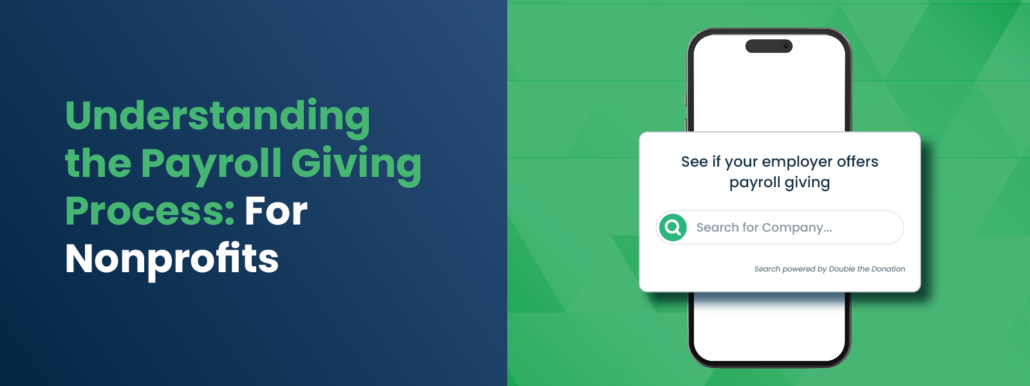
For the donor, this step involves checking their employee handbook, asking their HR lead, or leveraging a payroll giving search tool. If the program exists, the employee is eligible to participate immediately.
Step 2: Accessing the Employer Portal
Once eligibility is confirmed, the employee must access the specific system where elections are made. This is typically an internal HR portal, a dedicated link provided by a CSR platform (like Benevity or YourCause), or a digital enrollment form.
This is a critical juncture where donors often drop off if they cannot find the link. Nonprofits can assist here by providing instructions for major local employers or linking to general information about common CSR platforms on their own websites.
Step 3: Registration and Selection
Upon accessing the portal, the employee opts in voluntarily. They are then presented with a search tool to find their desired charity. This is where your organization’s visibility is paramount. The donor must be able to find you easily by name or tax ID.
During this stage, the donor selects your nonprofit and determines the structure of their gift. They choose the amount they wish to donate per paycheck and whether this will be a one-time gift or a recurring deduction. The recurring option is the gold standard for nonprofits, as it ensures steady cash flow.
Step 4: The Automatic Deduction
Once the selection is saved, the manual work for the donor is finished. The Payroll Giving process moves to the employer’s finance team. The selected donation amount is automatically deducted from the employee’s salary during each pay cycle.
Crucially, this often happens before tax is calculated. This structure lowers the employee’s taxable income, making the donation less “expensive” for the donor while the nonprofit receives the full face value of the contribution.
Step 5: Processing and Disbursement
Finally, the employer’s payroll team aggregates the deducted funds and sends them to the payroll giving agency or platform. This platform consolidates donations from various employees (and sometimes various companies) and forwards the funds to the chosen charities, typically on a monthly basis.
Quick Tip: Nonprofits often receive these funds as a lump sum wire transfer or check. It is essential to log into the vendor portal (like Benevity or CyberGrants) and download the detailed report that includes donor names and contact info. Without this data, you cannot properly thank and steward your payroll givers!
Setting the Foundation: Registration and Visibility
You cannot receive a direct deposit if the processing platform doesn’t know you exist. Before you ask donors to navigate the Payroll Giving process, you must ensure your nonprofit is visible and eligible to receive funds within these corporate systems.
Verify Your Standing
Most payroll giving platforms have strict vetting processes. They require your organization to be a registered charity in good standing, such as a 501(c)(3) in the U.S. Before expecting revenue, confirm your legal status is active and resolve any outstanding regulatory flags or tax issues.
Register with CSR Platforms
There isn’t one single “payroll giving” website; there are many. Employers contract with different vendors to manage these programs. To maximize your reach, you should register with the platforms most commonly used by employers in your region.
Common platforms include:
- Benevity
- Blackbaud
- CyberGrants
- YourCause
- America’s Charities
The registration process typically involves submitting your tax ID, proof of nonprofit status, mission statement, and banking details for direct deposit . Once approved, you will appear in the search results when employees at thousands of companies look for charities to support.
Marketing the Opportunity to Donors
Now that you understand the mechanics and have established your presence on the platforms, it is time to market the Payroll Giving process to your supporters. Most donors do not know this option exists, so education is your primary tool.
Build a Dedicated Landing Page
Create a specific page on your website dedicated to payroll or workplace giving. This serves as a central hub where you can explain what payroll giving is in simple, user-friendly terms.
On this page, include:
- A clear explanation of the benefits, such as tax efficiency and convenience.
- Step-by-step instructions on how to enroll via common employer portals.
- An employer search tool to help them verify their eligibility immediately.
- Impact stories illustrating how small, regular deductions accumulate into significant change.
Integrate into Email Communication
Email remains a highly effective channel for donor communication. You don’t need to send a dedicated “payroll giving” email every week; instead, weave it into your existing flows.
- Newsletters: Include a “Workplace Giving” section in your monthly update.
- Thank You Emails: In your donation receipts, include a P.S. that says, “Want to make your giving automatic? Ask your employer about payroll deductions!”
- Segmentation: Target donors who have given smaller amounts frequently. These individuals are prime candidates for converting to a payroll deduction model.
Normalize Giving on Social Media
Use your social channels to normalize the concept of giving through work. Share educational posts that explain the tax benefits or simple infographics showing the Payroll Giving process. Use hashtags like #GiveThroughWork or #PayrollGiving to join the broader conversation.
Quick Tip: Frame your marketing around “convenience.” Remind donors that payroll giving eliminates the need to enter credit card numbers or remember to write a check. It is the easiest, most budget-friendly way to support the cause they love.
The Power of Matching Gifts
You cannot talk about payroll giving without talking about matching gifts. The two are natural allies. Many companies that offer payroll deduction also offer to match those contributions, doubling the value of the employee’s gift.
When an employee sets up a recurring payroll deduction, they are often prompted right then and there to apply for a match. This makes the Payroll Giving process one of the most efficient ways to secure matching gift revenue because the donor doesn’t have to return later to submit a separate request.
Leveraging the Synergy
- Education: explicitly tell donors that their payroll contributions are often match-eligible. “Your $50 paycheck donation could become $100 for our mission automatically”.
- Search Tools: Provide a search tool (like Double the Donation) on your site where donors can check if their employer offers both payroll giving and matching gifts.
- Campaigns: Run a “Double Your Impact” campaign specifically targeting workplace givers, encouraging them to activate the matching component of their payroll deduction.
Measuring Success and KPIs
Implementing a strategy is only the first half of the battle; tracking it is the second. To optimize your Payroll Giving process and strategy, you must monitor specific metrics that indicate health and growth.
Essential KPIs to Track
- Total Revenue: Track the total dollar amount coming specifically from payroll giving sources to assess overall financial return.
- Active Payroll Donors: Monitor the number of individuals contributing via payroll. Growth in this number indicates successful marketing awareness.
- Donor Retention Rate: Compare the retention rate of payroll donors versus one-time donors. A high rate here signals strong program stickiness.
- Employer Participation: Identify which companies employ the most payroll donors. This data tells you where to focus your corporate partnership efforts.
Utilizing Reporting Tools
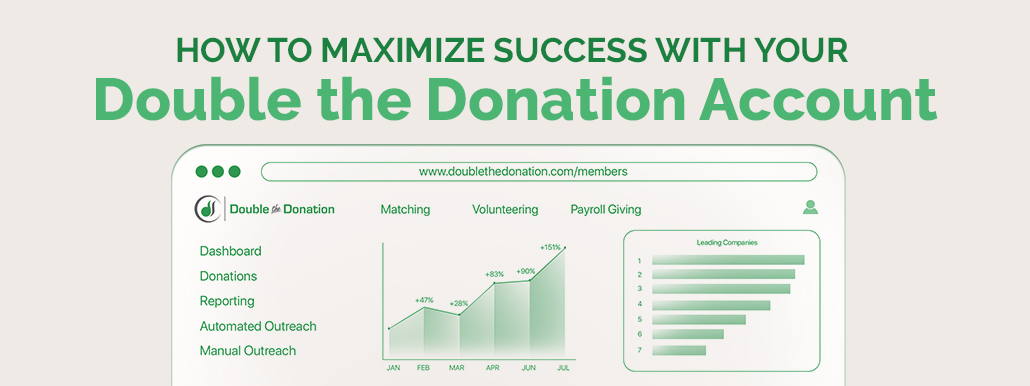
Don’t rely on guesswork. Use the analytics provided by the CSR platforms (like Benevity or YourCause) and your own CRM. Consolidate this data into a centralized dashboard to visualize trends over time. Regular reviews of this data—monthly or quarterly—will reveal if your messaging is working or if donors are dropping off at a specific point in the process.
Wrapping Up & Next Steps
The Payroll Giving process offers a unique opportunity for nonprofits to build a foundation of sustainable, recurring revenue. It transforms the act of giving from a transactional decision into a habitual part of a donor’s financial life. By lowering administrative overhead and increasing donor retention, payroll giving creates a win-win scenario for both the organization and the supporter.
However, these funds do not appear by magic. They require you to lay a strong foundation by registering with portals, actively marketing the opportunity, and guiding your donors through the steps of eligibility and registration. When you combine this with the power of matching gifts, you unlock a scalable revenue source that can fuel your mission for years to come.
Ready to get started?
- Audit your registrations: Ensure you are listed on major platforms like Benevity and YourCause.
- Build your hub: Create a dedicated workplace giving page on your website today.
- Leverage technology: Explore tools like Double the Donation to help donors easily identify their eligibility and employer programs.
Take the first step toward predictable revenue today by integrating payroll giving into your core fundraising strategy. See how Double the Donation’s payroll giving module can help!