
Tips For Retaining Volunteer Grant Supporters Over Time
Acquiring a new volunteer is exciting. Finding a volunteer who works for a company with a corporate giving program is a financial victory. But keeping that volunteer engaged, active, and consistently submitting grant requests year over year? That is the key to sustainable growth. Retaining volunteer grant supporters is one of the most effective ways to build a reliable pipeline of unrestricted revenue while simultaneously strengthening your community of advocates.
Many nonprofits view volunteer grants (also known as “Dollars for Doers”) as a one-off bonus. A volunteer logs their hours, the company cuts a check, and the transaction is viewed as complete. This transactional mindset leaves money on the table. When a supporter realizes that their time has a monetary value to your organization, they often feel a deeper sense of purpose and commitment. If you can nurture that feeling, you transform a casual volunteer into a recurring donor of both time and money.
The challenge lies in the mechanics. Supporters get busy, they forget to log hours, or they are unaware that their grant eligibility resets every year. Without a proactive retention strategy, you risk losing not just the volunteer’s labor, but the corporate funding attached to it.
In this guide, we’ll cover:
- The symbiotic relationship between volunteer retention and grant revenue
- How to communicate the “double impact” to keep supporters motivated
- Strategies for collecting employment data to personalize outreach
- The importance of the “double thank you” in donor stewardship
- Leveraging technology to automate reminders and prompts
- Building corporate communities to foster peer accountability
By implementing these strategies, you can move beyond one-time submissions and create a culture where volunteer grants are a standard, recurring expectation of service.
The Value of the Volunteer Grant Supporter
To understand why retention is so critical, you must first understand the financial weight these individuals carry. Volunteer grants are corporate philanthropy programs where companies provide monetary donations to nonprofits based on the number of hours their employees volunteer. These programs are more prevalent than many realize, with approximately 40% of Fortune 500 companies offering them.
The financial impact is significant. 80% of companies with these programs offer between $8 and $15 per hour volunteered. Some are even more generous; for example, Microsoft provides $25 per hour, and ExxonMobil offers $500 for every 20 hours served.
When you retain a volunteer eligible for these grants, you are essentially retaining a mid-level donor. Let’s say a volunteer commits 50 hours a year at a company offering $20/hour. In that case, they are worth $1,000 in revenue plus the value of their labor. If that volunteer churns after one year, you lose that revenue stream. But if you retain them for five years, that relationship is worth $5,000 in unrestricted funds.
Did You Know? The average employee participation level for volunteer grants sits at just 3% . This low number is rarely due to a lack of interest but rather a lack of awareness. By retaining and educating your existing volunteers, you can significantly outperform this average.
Volunteer Grants as a Retention Tool
Interestingly, the relationship between grants and retention works both ways. Not only does retaining volunteers lead to more grants, but promoting grants actually helps retain volunteers.
Volunteers stay when they feel their contribution matters. When you educate a supporter about their eligibility for a volunteer grant, you are showing them that their time is literally twice as valuable as they thought. This realization can be a powerful motivator. It validates their effort and gives them a concrete metric of their impact beyond the physical work they perform.
Furthermore, participating in corporate volunteerism builds a stronger connection between the employee, their company, and your nonprofit. 96% of employees who participate in corporate volunteerism report having a positive company culture . By facilitating this connection, you become a partner in their professional satisfaction, making them more likely to stick with your organization over others.
Strategy 1: The “Double Thank You” Approach
Stewardship is the cornerstone of volunteer retention. For volunteer grant supporters, standard acknowledgement is not enough. You need a strategy that recognizes both their labor and their leverage.
The Immediate Acknowledgement
When a volunteer completes a shift or project, they should receive a thank-you for their time. This is standard practice. However, for grant-eligible volunteers, this communication should include a subtle reminder of their unique status.
- Example: “Thank you for the 5 hours you spent with us today! We know your time is valuable, and thanks to [Employer Name], those hours are also worth $100 to our mission.”
The Grant Acknowledgement
When the check from the corporation actually arrives, you must thank the volunteer again. Do not just thank the company. The company only wrote the check because the employee did the work.
- Example: “We just received a $500 grant from [Employer Name] in recognition of your service! This was entirely due to your hard work. Thank you for being a champion for us both in the field and at your workplace.”
This “double thank you” reinforces the behavior you want to see. It closes the loop and confirms to the volunteer that their administrative effort in submitting the request resulted in real money for the cause.
Strategy 2: Data-Driven Outreach
You cannot retain what you do not track. To effectively retain volunteer grant supporters, you need to know who they are and where they work. One of the most critical steps is to collect employment information as supporters engage with you.
Capture Data at Registration: Include an optional “Employer” field on all volunteer sign-up forms. This allows you to screen for eligibility before the volunteer even arrives. If you know a volunteer who works for Verizon, you know they are eligible for a $750 grant after 50 hours. You can then tailor your retention plan for that individual to ensure they hit that 50-hour threshold.
Segment Your Lists: Do not send generic appeals to your high-value corporate volunteers. Create a segment in your CRM for “Grant-Eligible Volunteers.” Communications to this group should always reference their unique ability to generate funds.
- Generic email: “We need volunteers for our upcoming gala.”
- Targeted email: “As an employee of [Company], your volunteer hours at our gala could unlock a $500 grant. Join us and double your impact!”
Strategy 3: The “Annual Reset” Campaign
Most volunteer grant programs operate on a calendar year. Limits reset, and hours must be logged within specific timeframes. A major reason for donor attrition is simply forgetting to submit hours before the deadline or forgetting to restart the habit in the new year.
The Year-End Push
In November and December, run a campaign specifically targeting volunteers who have logged hours but haven’t hit their grant thresholds or haven’t submitted their requests. Remind them that “money is being left on the table” and provide a direct link to their company’s submission portal.
The New Year Kickoff
In January, send a “Welcome Back” message. Remind your supporters that their grant potential has reset.
- Message: “New Year, New Impact! Your 20 hours of VTO and volunteer grant eligibility have reset. Let’s make 2025 our best year yet.”
Quick Tip: Use deadlines to your advantage. Many companies have a submission deadline of January 31st or March 31st for the previous year’s hours. Send a countdown email (“Only 5 days left to claim your grant!”) to drive urgency and secure retention.
Strategy 4: Gamification and Milestones
Retaining volunteer grant supporters requires keeping them engaged over the long haul. Gamification—using milestones, badges, and progress bars—can be highly effective.
Track Progress Toward Grants
If you know a volunteer needs 20 hours to trigger a grant (like at ExxonMobil ), keep them informed of their progress.
- Here’s an example: “[Volunteer Name], you have volunteered 15 hours! Just 5 more hours, and you unlock a $500 grant from ExxonMobil. Sign up for a shift this week to cross the finish line.”
Celebrate Milestones
When a volunteer hits a milestone, celebrate it publicly (with their permission). Feature them in your newsletter or on social media as a “Corporate Champion.” Highlighting their dual contribution of time and money creates a sense of pride and encourages them to maintain that status.
Strategy 5: Leverage Group Dynamics
People are more likely to stay engaged if they feel part of a community. Group volunteer events are excellent for this, but they are also a goldmine for volunteer grants.
The Corporate Team Approach
Encourage your existing grant-eligible volunteers to bring colleagues. If you have one retained volunteer from Home Depot, ask them to organize a “Home Depot Day” at your nonprofit. This not only recruits new potential supporters but solidifies the original volunteer’s role as a leader and advocate.
Foster Healthy Competition
If you have clusters of volunteers from different major employers (e.g., a group from Deloitte and a group from Bank of America), create a friendly challenge. “Which corporate partner can log the most grant-funded hours this quarter?” This taps into company pride and keeps volunteers coming back to ensure their team wins.
Strategy 6: Simplify the Process with Technology
The number one enemy of retention is friction. If submitting a volunteer grant request is difficult, volunteers won’t do it, and they might stop volunteering altogether if they feel their time isn’t being maximized.
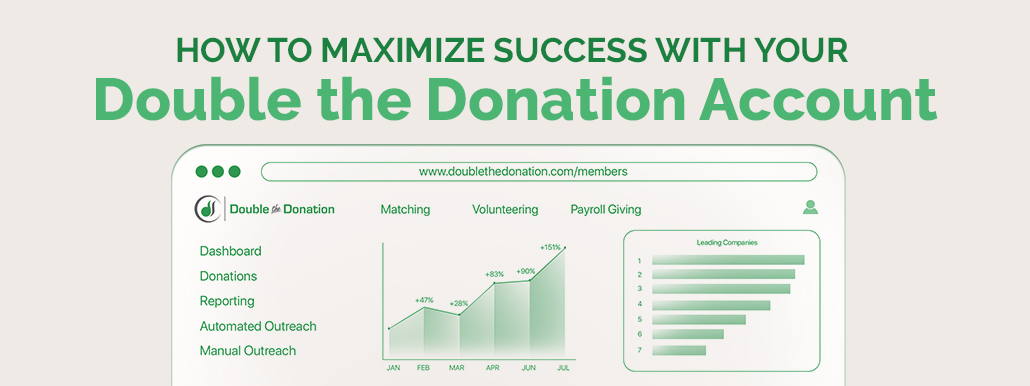
Automate the Discovery: Invest in workplace giving software. Tools like Double the Donation allow you to integrate employer search functionality directly into your forms. This empowers volunteers to discover their own eligibility instantly, without your team needing to do manual research .
Provide Direct Access: Don’t just tell them to “submit a request.” Make sure to share the direct URL to their company’s specific portal. You can even provide a “Cheat Sheet” of instructions for the top 10 employers in your donor base. By removing the administrative burden, you make it easy for them to say yes to supporting you again and again.
Trigger Email Reminders: Use automation to send the right message at the right time. If a volunteer checks in for their 20th hour, your system should automatically trigger an email: “Congratulations on 20 hours! You are now eligible for the [Company Name] grant. Here is the link to submit it.” This timeliness prevents opportunities from slipping through the cracks.
Strategy 7: Communicate Impact Continuously
Retention is ultimately about relationships, and relationships are built on shared value. You must continuously prove to your volunteers that their grant makes a difference.
Specific Impact Reporting
Don’t just put the money in the general fund and stay silent. Tell the volunteer exactly what their grant bought.
- Example: “The $500 grant from your volunteer hours purchased 50 new books for our literacy program.”
The “Insider” Feeling
Treat your volunteer grant supporters as insiders. Give them early access to event registration, exclusive updates from your Executive Director, or invites to special appreciation events. When they feel like an integral part of the team, they are far less likely to churn.
Did You Know? Supporters are more likely to get involved and continue their support over time when their time is compensated by their employer. By validating their financial contribution, you validate their personal time investment.
Wrapping Up & Next Steps
Retaining volunteer grant supporters is not a passive activity. It requires a deliberate strategy that combines data collection, personalized communication, and a culture of gratitude. By shifting your focus from simply filling volunteer slots to nurturing corporate advocates, you unlock a sustainable source of revenue that grows alongside your volunteer base.
Remember, every hour a grant-eligible volunteer gives you is an opportunity for double impact. Don’t let that opportunity walk out the door at the end of a shift. To get started, audit your current volunteer list. Identify who works for grant-making companies using a corporate giving database tool. Then, implement the “Double Thank You” strategy immediately for any new grants that come in.
Ready to take your corporate fundraising to the next level? Request a demo with Double the Donation Volunteering to see how our automation tools can help you identify, track, and retain your most valuable corporate supporters today.