Volunteer Grant Requests: The Ultimate Nonprofit Guide
Volunteers are the heartbeat of the nonprofit sector. From stuffing envelopes to mentoring youth and cleaning up local parks, these dedicated individuals provide the essential labor that powers your mission. But did you know that their contribution can go even further? There is a hidden revenue stream attached to those volunteer hours that often goes completely untapped: corporate volunteer grants. By mastering the art of Volunteer Grant Requests, your organization can turn the gift of time into essential unrestricted funding.
For many nonprofits, the focus remains heavily on individual cash donations or major gifts. However, overlooking the corporate philanthropy sector—specifically volunteer grants—means leaving significant money on the table. These programs, often called “Dollars for Doers,” allow companies to provide monetary donations to eligible nonprofits based on the number of hours their employees volunteer. It essentially converts volunteer zeal into financial support, increasing the ROI of your volunteer program without demanding more time from your supporters.
Despite the clear benefits, many organizations struggle to secure these funds. The barrier isn’t usually corporate unwillingness; it is a lack of awareness and process. Volunteers often don’t realize they are eligible, and nonprofits often lack the mechanisms to remind them to submit a request.
In this guide, we’ll cover:
- Defining the Volunteer Grant Request and its value
- The anatomy of a standard grant request form
- A step-by-step walkthrough of the submission lifecycle
- Top companies with generous volunteer grant programs
- Strategic marketing to drive more submissions
- Leveraging technology to automate the process
If you’re looking to monetize your volunteer hours and build stronger relationships with corporate partners, this guide will serve as your roadmap to mastering the Volunteer Grant Requests workflow.
What is a Volunteer Grant Request?
A volunteer grant request is the formal mechanism through which an eligible employee asks their company to make a charitable contribution to a nonprofit where they have volunteered. It is the bridge between the physical act of volunteering and the financial payout from the corporation.
These grants are a specific type of corporate giving program designed to encourage employee engagement in the community. When an employee logs a certain number of hours (note: thresholds vary by company), they become eligible to submit a request. Once approved, the company cuts a check to the nonprofit.
Why is this important? Because it represents “free money” for your organization. Unlike competitive grant applications that require hours of writing and reporting, volunteer grants are earned through work you are already doing: engaging volunteers. However, these funds do not appear automatically. They require the volunteer to initiate a Volunteer Grant Request, and that requires your guidance and encouragement.
Did You Know? The average employee participation level for volunteer grants sits at just 3%. This low number isn’t due to a lack of volunteering; it is due to a lack of awareness that the Volunteer Grant Requests process exists. Bridging this gap is your biggest opportunity for revenue growth.
The Anatomy of a Volunteer Grant Request
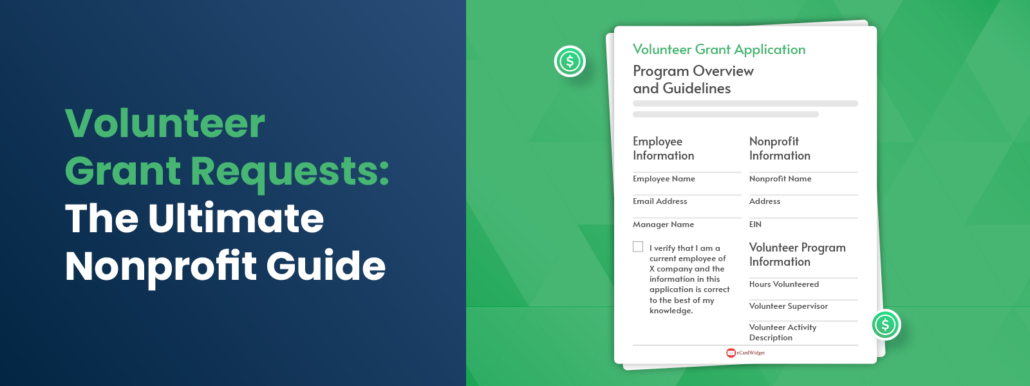
To help your supporters navigate the process, you must understand what they will be asked to provide. While every company uses a slightly different portal or form (such as Benevity, CyberGrants, or YourCause), the core data requirements remain consistent. A standard request typically requires information from three distinct categories:
1. Employee Information
The company needs to verify the identity of the requester to ensure they are a current, eligible employee.
- Employee Name and ID: Standard identification to link the request to the employee’s HR record.
- Department/Location: Some companies have specific budgets for different regional offices or departments.
- Contact Information: Work email and phone number for verification purposes.
2. Nonprofit Information
The company must verify that your organization is a valid 501(c)(3) or equivalent charitable entity eligible to receive funds.
- Organization Name: The legal name of your nonprofit.
- Tax ID / EIN: This is the most critical piece of data for processing payments.
- Mailing Address: Where the check should be sent.
- Contact Person: A verification contact at your nonprofit (usually a volunteer coordinator or development director) who can confirm the service took place.
3. Volunteer Activity Information
This section proves that the service occurred and met the program’s criteria.
- Dates of Service: When the volunteering took place.
- Total Hours Logged: The specific number of hours being claimed for the grant.
- Description of Service: A brief summary of what the volunteer did (e.g., “Food bank sorting,” “Event setup”).
Quick Tip: Make this easy for your volunteers! Create a “Volunteer Grant One-Pager” that lists your nonprofit’s EIN, correct mailing address, and a contact email for verification. Hand this out at every volunteer orientation or include it in your post-event thank-you emails.
The Volunteer Grant Request Process: Step-by-Step
Understanding the lifecycle of a request allows you to intervene at the right moments to ensure completion. The process typically follows five distinct stages .
Step 1: The Volunteer Act
The process begins with the individual volunteering with your nonprofit or school. Whether they are painting a classroom, walking dogs, or providing pro-bono legal advice, the clock starts ticking on their eligibility. It is vital that you have a system in place to log these hours accurately, as the volunteer will need this data later.
Step 2: Determining Eligibility
After volunteering, the individual must determine if their employer offers a grant program. Currently, 40% of Fortune 500 companies offer volunteer grant programs. However, the specific criteria vary.
- Minimum Hours: Does the company require 10 hours a year? 20 hours? Or do they pay per hour starting at hour one?.
- Employee Status: Is the program open to full-time employees, part-time staff, or retirees?.
- Organization Type: Does the company restrict grants to religious or political groups?.
If the volunteer doesn’t know the answers, they likely won’t proceed. This is where providing a search tool on your website becomes invaluable.
Step 3: Submitting the Request
Once eligibility is confirmed, the volunteer accesses their company’s CSR portal to submit the Volunteer Grant Request. They will input the data regarding their service hours and your organization’s details. This step must often be completed by a specific deadline, such as the end of the calendar year or a set number of months after the service date.
Step 4: Verification
After the employee hits “submit,” the request enters the verification phase . The company or its third-party administrator will reach out to your organization to confirm that the volunteer actually performed the hours claimed. Responsiveness is key here; if your team ignores the verification email, the grant may be denied.
Step 5: Fulfillment and Payout
Once verified, the company approves the request and disburses the funds. These payments are often bundled and sent on a quarterly or monthly basis.
Top Companies with Standout Volunteer Grant Programs
Knowing which companies offer these programs helps you target your outreach. If you see groups of volunteers from these corporations, you should immediately be thinking about Volunteer Grant Requests.
Microsoft
Microsoft has one of the most generous programs in the corporate world. They offer a grant of $25 for every hour an employee volunteers, with no minimum threshold. This means even a single hour of service can generate revenue for your cause.
Access the volunteer grant request form here.
ExxonMobil
ExxonMobil encourages sustained service. They provide a $500 grant for every 20 hours an employee volunteers. This structure incentivizes repeat volunteering, which is excellent for retention.
Access the volunteer grant request form here.
Verizon
Verizon offers a competitive program where employees can earn $750 for 50 hours of volunteer work. They focus heavily on rewarding employees who make a significant time commitment to a specific charity.
Access the volunteer grant request form here.
Allstate
Allstate provides grants generally ranging from $500 to $1,000, depending on the role and time commitment of the volunteer. They are a strong partner for community-based organizations.
Access the volunteer grant request form here.
Disney
Disney’s “Disney VoluntEARS” program allows employees to turn their hours into charitable contributions, offering grants of up to $2,000 per year for eligible nonprofits.
Access the volunteer grant request form here.
Did You Know? 80% of companies with volunteer grant programs provide between $8 and $15 per hour volunteered. While this might seem small per person, when applied to a group of 20 volunteers working a 4-hour shift, the revenue adds up instantly.
Marketing Strategies to Drive More Requests
The primary reason volunteers don’t submit requests is simply that they don’t know they can. A robust marketing strategy creates multiple touchpoints to educate your supporters about the Volunteer Grant Requests process.
Leverage Your Website
Your website is your digital headquarters. You should have a dedicated “Ways to Give” or “Volunteer” page that explicitly mentions volunteer grants.
- Embed a Search Tool: Allow volunteers to type in their employer’s name to instantly see if they are eligible for a grant.
- Provide Instructions: List the steps clearly. “Did you volunteer today? Check if your company will pay us for your time!
Optimize Your Email Communication
Email has the highest ROI of any marketing channel. Use it to remind volunteers of the value of their time.
- Post-Event Follow-Ups: After a volunteer shift, send a thank-you email that includes a P.S.: “Did you know your 4 hours today could be worth $100 to us? Click here to see if your employer offers volunteer grants”.
- Newsletters: Periodically highlight “Volunteer Heroes” who have successfully submitted grant requests, showing others how easy the process is .
Social Media Awareness
Social media is perfect for quick, educational bursts. Share graphics that explain the concept of “Dollars for Doers.”
- Tag Companies: If you have a group from a specific company (e.g., Home Depot) volunteering, tag the company in your photos and mention their volunteer grant program. This validates the employees and reminds them to submit their requests.
Catch Them During Registration
The best time to get data is when the volunteer is signing up. Add an optional field to your volunteer registration forms asking for their employer. If they indicate they work for a grant-eligible company, you can trigger an automated email with submission instructions the moment they complete their shift.
Leveraging Technology to Automate Requests
Manual tracking of volunteer employment data can be overwhelming. Fortunately, technology can automate the identification and reminder process, ensuring no Volunteer Grant Requests fall through the cracks.
The Power of a Corporate Giving Database
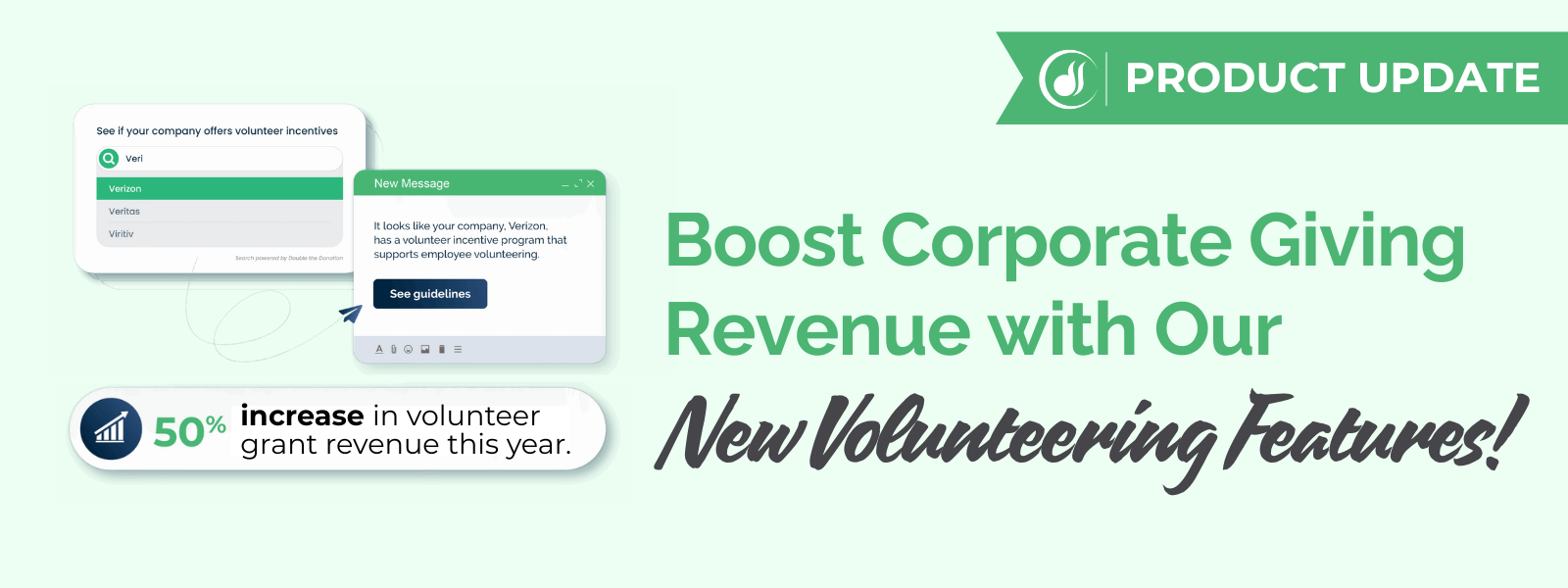
Tools like Double the Donation’s database provide comprehensive information on thousands of companies. When a volunteer enters their employer’s name into the search tool, they are instantly presented with:
- Minimum hour requirements.
- Grant amounts per hour.
- Links to the company’s electronic submission forms.
Seamless Integration
By integrating these tools into your volunteer management system or website, you create a frictionless experience. The volunteer doesn’t have to hunt for forms or ask HR; the information is served to them on a silver platter. This convenience significantly boosts the submission rate.
Furthermore, automated email streams can be set up to “nudge” volunteers who have reached a certain hour threshold. For example, if a volunteer hits 20 hours and you know they work for ExxonMobil, the system can automatically send an email congratulating them and providing the link to claim their $500 grant.
Wrapping Up & Next Steps
Volunteer Grant Requests offer a unique opportunity to double the impact of your supporters. They transform the time and energy already invested in your organization into unrestricted revenue to fund operations, programs, and growth. While the process relies on the volunteer to take the final step, the responsibility for education and encouragement lies with the nonprofit.
By understanding the anatomy of a request, identifying eligible donors through improved data collection, and leveraging automation to guide them through the submission process, you can unlock a sustainable revenue stream that grows alongside your volunteer base.
Ready to maximize your volunteer revenue?
- Audit your forms: Add an “Employer” field to your volunteer sign-up sheets today.
- Create a resource: Build a simple PDF guide with your nonprofit’s tax ID and contact info to hand out to volunteers.
- Check your tech: Explore how tools like Double the Donation can automate the eligibility search for your supporters.
Don’t let your volunteers’ hard work go unmonetized. Start driving more Volunteer Grant Requests today and give your mission the funding it deserves. Plus, find out how Double the Donation Volunteering can help!