Understanding Volunteer Grant Guidelines: A Helpful Guide
Corporate philanthropy is a vast landscape, often dominated by the headline-grabbing numbers of matching gift programs. But for nonprofits looking to diversify their revenue streams and maximize the value of their supporters, there is another avenue that is just as lucrative but frequently overlooked: volunteer grants. Also known as “Dollars for Doers,” these programs turn the time your volunteers dedicate to your cause into tangible financial support. However, unlocking this revenue requires navigating a specific set of rules known as volunteer grant guidelines.
Understanding these guidelines is the difference between leaving money on the table and building a robust, sustainable funding source. Every corporation that offers a volunteer grant program establishes its own unique set of criteria that determines who can participate, which nonprofits are eligible, and how much funding is available. For a nonprofit development team, mastering these nuances is essential for identifying opportunities and guiding volunteers toward a successful submission.
In this guide, we’ll cover:
- What Are Volunteer Grant Guidelines?
- Qualifying Employee Types: Who Can Participate?
- Nonprofit Eligibility: Which Organizations Qualify?
- Volunteer Grant Amounts and Calculation Methods
- Minimum Hour Thresholds and Service Criteria
- Submission Deadlines and the Application Lifecycle
- Maximizing Revenue Through Guideline Awareness
By familiarizing yourself with the standard parameters of these programs, you can proactively identify eligible supporters in your database and provide them with the exact information they need to secure funding for your mission.

What Are Volunteer Grant Guidelines?
Volunteer grant guidelines are the rules and regulations set by a company to manage their employee giving programs. Just as a grant foundation has a Request for Proposal (RFP) outlining their funding priorities, corporations have policies that dictate how their charitable dollars are distributed. These guidelines ensure that the company’s philanthropic efforts align with their corporate values, budget, and social responsibility goals.
For the donor (your volunteer), these guidelines appear as a policy document in their employee handbook or CSR portal. For the nonprofit, they represent the checklist you must satisfy to receive a check. While every company is different, the guidelines almost always fall into four primary categories: employee eligibility, nonprofit eligibility, grant amounts, and submission deadlines.
Did You Know? Approximately 40% of Fortune 500 companies offer volunteer grant programs. Despite this prevalence, the average employee participation rate is only about 3%. This gap is largely due to a lack of awareness about program guidelines—both on the part of the employee and the nonprofit.
Qualifying Employee Types: Who Can Participate?
The first hurdle in any volunteer grant process is determining if the individual volunteer is eligible to request funds. Companies use employment status to define the boundaries of their program.
Full-Time Employees
In almost every case, full-time employees are eligible for the company’s standard volunteer grant program. They typically have access to the highest grant maximums and the broadest range of eligible activities.
Part-Time Employees
Many inclusive companies extend their giving programs to part-time staff. However, the guidelines may differ slightly. For instance, the maximum grant amount for a part-time employee might be lower than that of a full-time counterpart (e.g., capped at $2,500 annually vs. $5,000).
Retirees
This is a massive, often untapped demographic for nonprofits. Retirees frequently have the most time to volunteer, and many legacy corporations (like General Electric and Chevron) continue to honor their service by matching their volunteer hours with grants, even after they have left the workforce. Guidelines for retirees often mirror those for current employees, though the annual caps may be adjusted.
Spouses and Families
Some generous programs go a step further, extending eligibility to the spouses or domestic partners of employees. While less common, these guidelines can effectively double the potential revenue from a single household.
Nonprofit Eligibility: Which Organizations Qualify?
Just because an employee is eligible doesn’t mean the nonprofit is. Corporate volunteer grant guidelines include strict definitions of which types of organizations can receive funds.
501(c)(3) Status
The universal standard for eligibility in the United States is 501(c)(3) tax-exempt status. If your organization is a registered public charity, a private operating foundation, or a school, you will meet the baseline requirement for 99% of programs.
Mission Categories
Companies often align their giving with their corporate identity. For example, a healthcare company might prioritize health-related nonprofits, while a tech company might focus on STEM education. While most volunteer grant programs are “open” (meaning they fund any eligible 501(c)(3)), some have guidelines that restrict funding to specific sectors.
Common Exclusions
Almost all guidelines include a list of ineligible organizations. These typically include:
- Political organizations or campaigns.
- Religious organizations (unless the program is non-sectarian and open to the community, like a food pantry or homeless shelter).
- Sports teams or clubs that are not registered charities.
Quick Tip: If you are a religious organization, don’t assume you’re ineligible! Many companies will fund specific community programs run by religious groups (e.g., a soup kitchen) as long as the funds are not used for proselytizing or religious worship. Check the specific “anti-discrimination” or “community service” sections of the guidelines.
Volunteer Grant Amounts and Calculation Methods
How much is a volunteer hour worth? The answer lies in the calculation method defined in the guidelines. Companies typically use one of two models to determine the payout.
The Hourly Rate Model
This is the most common structure. The company assigns a specific dollar value to every hour volunteered.
- Microsoft: Offers $25 per hour volunteered.
- CarMax: Offers $10 per hour volunteered.
- Apple: Offers $25 per hour volunteered.
In this model, the guidelines will specify an annual cap (e.g., up to $15,000 per year) but allow the employee to submit hours incrementally.
The Lump Sum (Threshold) Model
Some companies prefer to reward sustained commitment. In this model, the volunteer must hit a specific milestone of hours to unlock a flat grant amount.
- ExxonMobil: Provides a $500 grant once a volunteer logs 20 hours.
- Verizon: Provides a $750 grant once a volunteer logs 50 hours.
- Allstate: Offers grants ranging from $500 to $1,000 based on the role and time commitment.
Understanding which model applies to your volunteers is critical for your communication strategy. For hourly programs, every hour counts. For lump-sum programs, you need to encourage volunteers to reach that specific “20-hour” or “50-hour” finish line.
Minimum Hour Thresholds and Service Criteria
Guidelines almost always establish a “minimum hour threshold” to ensure administrative efficiency. Companies generally do not want to cut a check for a single hour of volunteering.
Low Thresholds: Some tech-forward companies like Microsoft have no minimum or a 1-hour minimum, encouraging micro-volunteering.
Standard Thresholds: A common guideline is a 10-hour or 20-hour minimum. This means an employee must accumulate these hours within a calendar year before they can submit a request.
Eligible Services
Guidelines also define what counts as volunteering.
- Direct Service: Serving food, tutoring, building homes (almost always eligible).
- Administrative Work: Serving on a Board of Directors (often eligible for higher grant amounts).
- Fundraising: Participating in a walkathon (sometimes ineligible if it is purely peer-to-peer fundraising, but eligible if it involves event setup/logistics).
Submission Deadlines and the Application Lifecycle
The final critical component of volunteer grant guidelines is the calendar. Corporate fiscal years drive these programs, and missing a deadline means losing the funds forever.
Standard Deadlines
Most companies operate on a calendar year (January 1 to December 31). The typical deadline for submitting a grant request is often a few months after the close of the year.
Example: A volunteer who served in 2024 might have until January 31, 2025, or March 31, 2025, to submit their request.
Rolling Deadlines
Some companies require requests to be submitted within 90 days of the service date. This is common for hourly programs where employees log time regularly.
The Verification Window
Once a volunteer submits a request, the guidelines shift the responsibility to the nonprofit. You will typically receive an automated email asking you to verify the hours. The guidelines usually dictate a window (e.g., 30 days) for you to respond before the request expires.
Maximizing Revenue Through Guideline Awareness
Knowledge of volunteer grant guidelines allows you to segment your communications and target the right volunteers with the right message. If you know a volunteer works for ExxonMobil, you shouldn’t ask them to submit a request after 5 hours; you should encourage them to hit 20 hours so they unlock the $500 grant. Conversely, if a volunteer works for Microsoft, you should remind them that even their 1-hour consulting call generated $25 for the organization.
Investing in a Database
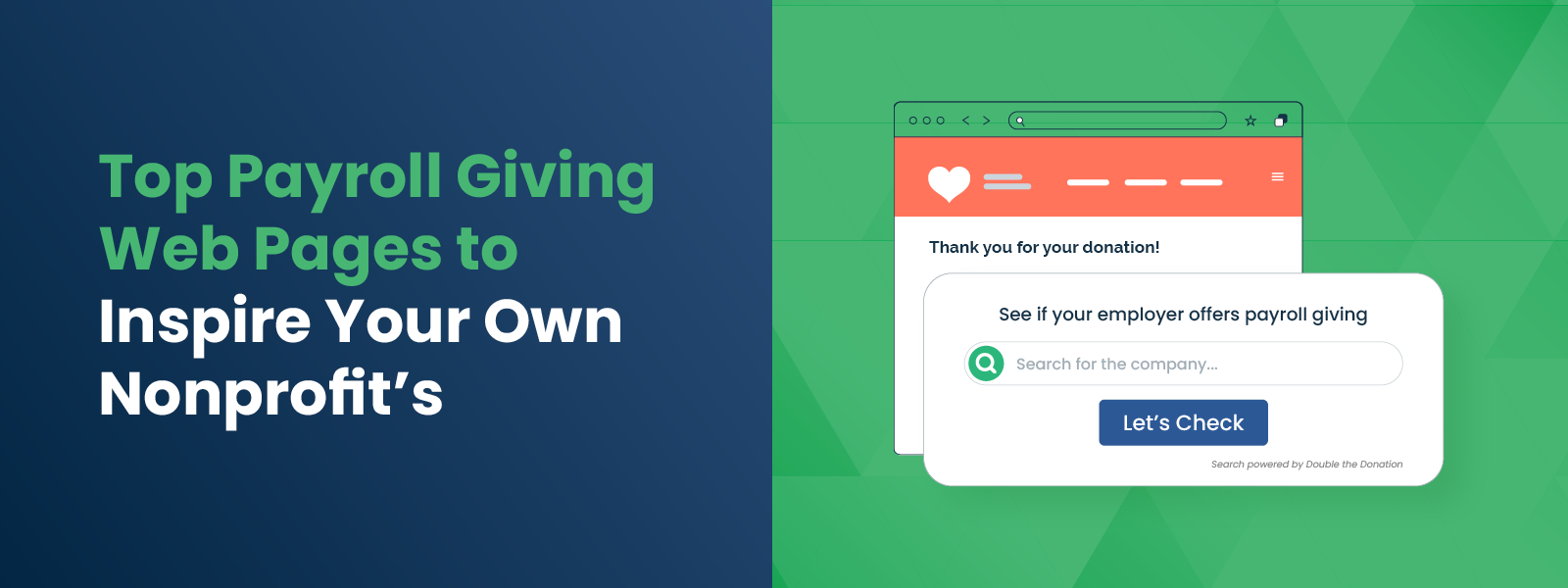
Trying to memorize the guidelines for thousands of companies is impossible. This is where a corporate giving database becomes invaluable. Tools like Double the Donation Volunteering aggregate these guidelines into a searchable widget. You can embed this on your “Ways to Give” or “Volunteer” page, allowing supporters to type in their employer’s name and instantly see:
- Minimum hours required.
- Hourly grant rates.
- Employee eligibility (FT/PT/Retiree).
- A direct link to the submission form.
Ultimately, leveraging specialized corporate volunteer software transforms a complex administrative burden into a seamless user experience. By putting this information directly at your supporters’ fingertips, you eliminate the confusion that often prevents submission, ensuring your organization captures every available dollar from their service hours.
Wrapping Up & Next Steps
Mastering volunteer grant guidelines is a strategic move that transforms your volunteer program from a cost center into a revenue generator. By understanding the criteria that corporations use to distribute funds—from employee status to hour thresholds—you can guide your supporters through the process with confidence.
These guidelines are not barriers; they are a roadmap. When you show a volunteer exactly how their time fits into their company’s philanthropic policy, you validate their effort and empower them to make a double impact.
Ready to turn hours into dollars?
- Audit your volunteer list: Identify the top employers represented among your supporters.
- Research the rules: Use a database or search tool to find the specific grant guidelines for those top companies.
- Educate your team: Ensure your volunteer coordinators know which companies require 20 hours vs. 1 hour so they can nudge volunteers effectively.
Start navigating the guidelines today and unlock the corporate funding your mission deserves. Plus, learn how Double the Donation Volunteering can help by requesting a personalized demo!