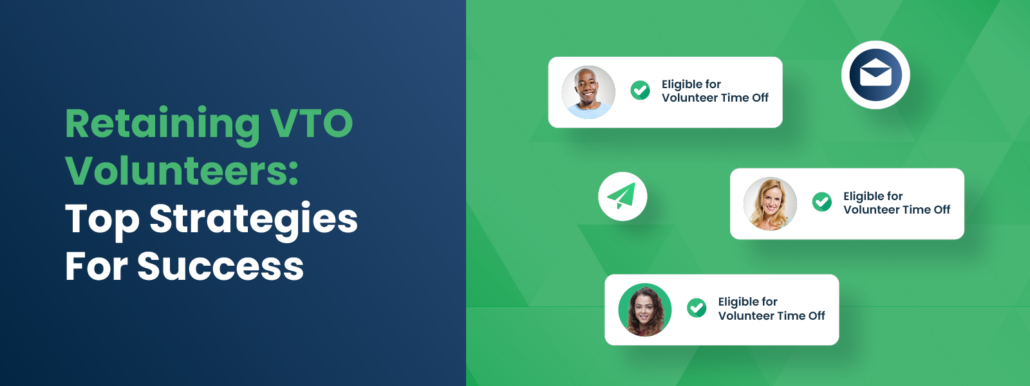
Retaining VTO Volunteers: Top Strategies For Ongoing Success
In the nonprofit sector, volunteer retention is often just as critical as donor retention. While evening and weekend shifts often fill up quickly with students and community members, the “9-to-5 gap” remains a persistent operational hurdle. Finding reliable, skilled support during standard business hours is a universal struggle—unless you have tapped into the power of Volunteer Time Off (VTO).
VTO is a corporate benefit where employers grant employees paid time off specifically to volunteer with nonprofit organizations. For the nonprofit, these volunteers are a goldmine: they are available during critical operational hours, they often possess specialized professional skills, and their service is fully supported by their employer. However, treating a VTO volunteer as a one-time visitor is a strategic error. Retaining VTO volunteers is one of the most effective ways to build a sustainable, high-impact workforce that operates when you need it most.
The challenge is that many VTO participants view their service as a “one-off” annual activity; a box to check for their HR department. To change this, nonprofits must shift their approach from transactional coordination to relational stewardship. By implementing specific retention strategies, you can transform a single day of service into a recurring partnership, ensuring that employees return to use their VTO hours with your organization year after year.
In this comprehensive guide, we’ll cover:
- The unique value proposition of VTO volunteers
- How VTO acts as a retention tool for both companies and nonprofits
- Strategies for capturing employment data to personalize the experience
- The “Use It or Lose It” communication strategy
- Leveraging the link between VTO and volunteer grants
- Building corporate communities to foster peer accountability
- Using technology to automate retention efforts
Success in retaining VTO volunteers requires understanding their motivations and removing the barriers to repeat service. By mastering these strategies, you can turn corporate benefits into community impact.
The Strategic Value of the VTO Volunteer
Before diving into retention tactics, it is essential to understand why these specific volunteers are worth the extra effort. A VTO volunteer is not just a set of hands; they represent a bridge between the corporate and nonprofit sectors.
Daytime Availability
The most obvious value is schedule compatibility. 49% of individuals state that work commitments are their biggest obstacle to volunteering. VTO eliminates this barrier. By retaining a VTO volunteer, you secure a reliable resource for Tuesday mornings or Thursday afternoons—times that are historically difficult to staff.
Professional Expertise
Corporate employees often bring professional expertise to the table, such as copywriting, graphic design, accounting, or legal services. When you retain a VTO volunteer, you are often retaining high-level consulting work at zero cost to your organization. A graphic designer using their VTO to help with your marketing materials is a relationship worth nurturing for the long haul.
The “Double Value” of Service
VTO volunteers are often precursors to financial support. Companies that offer paid time off for volunteering are statistically more likely to offer volunteer grants (monetary donations based on hours served) or matching gifts. By retaining the volunteer, you are also retaining a pipeline to unrestricted corporate revenue.
Did You Know? The number of companies offering VTO has increased by 2 in 3 over the last decade. This is a growing demographic of supporters that is actively looking for places to spend their paid hours.
VTO as a Mutual Retention Tool
One of the most compelling arguments for prioritizing VTO volunteers is that the retention mechanism works both ways. Promoting VTO helps you keep volunteers, and using VTO helps companies keep employees.
Solving Volunteer Burnout
Burnout is a primary cause of volunteer attrition. Supporters want to help, but balancing a full-time job, family, and service can become overwhelming. VTO solves this by integrating service into their work life rather than their personal time. When you remind a volunteer that they can use VTO, you are offering them a way to stay involved without sacrificing their weekends. This prevents burnout and increases the longevity of their relationship with your cause.
Aligning with Corporate Goals
Companies use VTO to attract and retain talent, particularly among Gen Z and millennial employees who prioritize social impact. When you provide a stellar volunteer experience, the employee reports back positively to their employer. 96% of employees who participate in corporate volunteerism report having a positive company culture . By helping the employee feel good about their job, you become a valued partner to the corporation, which encourages the company to send that employee (and others) back to you repeatedly.
Strategy 1: The “Use It or Lose It” Campaign
Most corporate VTO policies operate on a calendar year. Employees are given a bank of hours—averaging 20 hours per year—that do not roll over. This creates a natural urgency that you can leverage for retention.
The Q4 Reminder
In October and November, run a specific campaign targeting volunteers who identified their employers during registration. Remind them that their VTO hours likely expire on December 31st.
Sample Messaging: “Don’t let your benefits expire! You likely have paid volunteer hours left to use before the year ends. Spend a day with us this holiday season and make a difference on company time.”
The Q1 “Fresh Start”
In January, send a “Welcome Back” message reminding supporters that their VTO bank has replenished.
Sample Messaging: “New Year, New Impact! Your 20 hours of VTO have reset. Sign up for your spring shift now and get your year started right.”
By aligning your outreach with their benefit cycle, you stay top-of-mind and provide a helpful reminder to use a benefit they might otherwise forget.
Strategy 2: Data-Driven Personalization
You cannot retain VTO volunteers if you do not know who they are. One of the most common mistakes nonprofits make is failing to capture employment data until after a relationship is established. To drive retention, you must identify VTO eligibility from day one.
Capture Data at Registration
Include an optional “Employer” or “Company” field on all volunteer sign-up forms. Advanced tools can even integrate search widgets that identify VTO eligibility in real-time. If you know a volunteer who works for Patagonia, you know they have up to 18 paid volunteer hours available. You can then tailor your retention plan to ensure they use all 18 of those hours with you.
Segment Your Communications
Do not send generic appeals to your corporate volunteers. Create a segment in your CRM for “VTO-Eligible Volunteers.” Communications to this group should specifically reference the convenience of weekday volunteering.
- Generic email: “We need help next week.”
- Targeted email: “Looking to use your VTO? We have shifts open next Tuesday that fit perfectly into a workday schedule.”
Quick Tip: Look for local businesses. Professional services, information technology, and financial services companies are the most likely to offer paid VTO programs . Targeting employees from these sectors in your database can yield high retention rates.
Strategy 3: The Corporate “Champion” Model
People are more likely to return if they feel part of a community. One of the best ways to retain a VTO volunteer is to encourage them to bring their colleagues.
Identify Internal Advocates
If you have a volunteer who consistently uses VTO, ask them to be a “Corporate Champion.” Their role is to recruit colleagues to join them for a service day. This shifts the dynamic from an individual activity to a team-building event.
Facilitate Group Days
Create specific “Corporate Service Days” during the week. If a volunteer knows they can bring their team on a Wednesday, they are more likely to organize the event. Once the team has a positive experience, you can set up a recurring annual or quarterly service day, effectively automating the retention of that entire group.
Foster Healthy Competition
If you have volunteers from competing firms (e.g., two local banks or tech firms), create a friendly challenge. “Which company can log the most VTO hours this quarter?” This taps into company pride and keeps volunteers returning to ensure their team wins.
Strategy 4: Streamlined Verification
Nothing kills retention faster than administrative friction. Employees utilizing VTO often need to provide proof of service to their HR department to get paid. If your organization is slow or disorganized in providing this verification, the volunteer is unlikely to return.
Proactive Verification
Don’t wait for the volunteer to ask. At the end of a shift, proactively offer a signed letter or digital verification of hours. “Here is the documentation you need for your HR department to process your VTO.”
Designated Point of Contact
Assign a specific staff member to handle corporate verification requests. Give VTO volunteers this person’s direct email. Knowing there is a responsive human on the other side gives volunteers confidence that their time off will be approved and paid without hassle.
Strategy 5: Linking VTO to Volunteer Grants
Retention is about maximizing value. Many companies that offer VTO also offer volunteer grants (money donated for hours served). By helping a volunteer access both, you deepen their impact and their emotional investment in your organization.
The “Double Impact” Pitch
When a volunteer uses VTO, follow up with information about volunteer grants.
Message: “Thank you for spending your VTO day with us! Did you know your company might also donate $20 for every hour you served? Check here to see if you can double your impact.”
Celebrating the Full Contribution
When you recognize these volunteers, celebrate the total value they provided: the labor, the VTO utilization, and the grant money. “Thanks to Sarah using her VTO and submitting a grant request, she provided 20 hours of service AND funded supplies for our summer camp.” This recognition reinforces the behavior and encourages repeat performance.
Did You Know? 80% of companies with volunteer grant programs offer between $8 and $15 per hour volunteered . Retaining a volunteer who uses VTO and submits grants is financially equivalent to retaining a mid-level donor.
Strategy 6: Meaningful Stewardship
Corporate volunteers often fear that their “day of service” is just busy work. To retain them, you must prove that their time during business hours had a measurable impact on your mission.
Impact Reporting
Send a follow-up email specifically detailing what was accomplished during their shift. “Because you spent your Tuesday morning with us, 50 families received food boxes.” Connect their absence from work directly to the presence of resources for your beneficiaries.
Executive Acknowledgement
For volunteers from major corporate partners, consider a brief thank-you note from your Executive Director or Board Chair sent to the volunteer and their manager (with permission). This validates the employee’s use of VTO to their boss, making it easier for them to request the time off again in the future.
Exclusive Opportunities
Offer retained VTO volunteers “first dibs” on popular shifts or skills-based projects. If they feel like insiders who get to do the most interesting work, they will prioritize your organization over others when allocating their limited VTO hours.
Strategy 7: Leverage Technology
Managing VTO retention manually is difficult. Luckily, leveraging the right technology allows you to scale your efforts without burning out your volunteer coordinator (or your volunteers themselves!). Here are a few key steps we recommend:
Implement Automated Reminders
Use volunteer management software to trigger automated emails based on time since last service. “It’s been 3 months since you used your VTO with us—we miss you!”
Integrate Your VMS with a Corporate Database
Tools like Double the Donation Volunteering can be integrated into your volunteer forms to automatically identify VTO eligibility. This allows you to instantly prompt volunteers with company-specific guidelines and forms, removing the guesswork and making it easy for them to say “yes” to returning.
Wrapping Up & Next Steps
Retaining VTO volunteers is a strategic investment that pays dividends in both operational capacity and financial sustainability. By shifting your focus from simply filling shifts to nurturing corporate relationships, you unlock a reliable, skilled, and daytime-available workforce.
The key is to treat VTO not as a perk for the volunteer, but as a partnership between the volunteer, their employer, and your nonprofit. When you make it easy for them to use their benefits, validate their impact, and help them look good to their employer, you create a loyalty loop that lasts for years.
To get started, audit your current volunteer roster. Identify those who work for VTO-friendly companies using a corporate giving database. Then, launch a simple email campaign reminding them of their unused hours before the year ends.
Are you ready to take your corporate fundraising to the next level? Request a demo with Double the Donation Volunteering to see how our automation tools can help you identify eligible volunteers, promote VTO and volunteer grants, and maximize your impact with minimal effort.