

How Universities Can Secure In-Kind Donations
Universities play a pivotal role in shaping the future through education, research, and community engagement. To support these missions, many institutions rely not only on financial contributions but also on in-kind donations. These non-cash gifts can significantly enhance a university’s resources, enabling it to provide better facilities, equipment, and services to students and faculty alike.
By leveraging in-kind donations effectively, universities can stretch their budgets further, build stronger community ties, and create enriching environments that foster learning and discovery. This article explores how universities can identify, request, and maximize in-kind donations to support their goals.
Table of Contents
- What Are In-Kind Donations for Universities?
- Types of In-Kind Donations for Universities
- Where Universities Should Look for In-Kind Support
- How Universities Should Make the In-Kind Donation Ask
- Tools and Resources to Help Universities Get Started
- Example: University of Western States’ In-Kind Donation Strategy
What Are In-Kind Donations for Universities?
In-kind donations refer to non-monetary gifts provided to nonprofits and schools, including goods, services, or expertise, rather than cash. Unlike traditional cash gifts, which offer financial flexibility, in-kind donations supply tangible resources that directly support an organization’s operations or programs. These can range from office supplies and equipment to professional services and event support.
For universities, in-kind donations are especially valuable because they often involve specialized items or services that align closely with academic and research needs. For example, donations of lab equipment or medical devices can enhance scientific research capabilities, while computers and tablets support digital learning initiatives. These gifts help universities reduce operational costs and allocate funds to other critical areas.
Moreover, in-kind donations can foster partnerships between universities and corporations or community organizations, creating opportunities for collaboration and innovation. By accepting and utilizing these gifts strategically, universities can amplify their impact and better serve their students, faculty, and broader communities.
Types of In-Kind Donations for Universities
Colleges and universities can benefit from a wide variety of in-kind donations that support their diverse needs. Below are some specific examples of valuable in-kind gifts, as well as a brief description of why they matter:
Computers, Laptops, and Tablets
Technology donations are critical for universities to maintain modern classrooms and research labs. Providing students and faculty with up-to-date devices enhances learning, supports remote education, and facilitates research activities. These gifts also help bridge the digital divide for students who may lack access to personal technology.
Lab Equipment
Scientific research and practical learning depend heavily on specialized lab equipment. Donations of microscopes, spectrometers, and other instruments enable universities to expand their research capabilities and offer hands-on experiences to students in STEM fields.
Medical Devices
For universities with health sciences programs, medical devices such as diagnostic tools, simulators, and patient care equipment are invaluable. These donations support clinical training, research, and community health initiatives, enhancing the quality of education and service delivery.
Office Furniture
Functional and ergonomic office furniture improves the work environment for faculty and staff. Donations of desks, chairs, and storage solutions can reduce overhead costs and create more productive administrative spaces.
Textbooks and Educational Materials
Access to current textbooks and learning resources is essential for academic success. Donations of textbooks help reduce costs for students and ensure that faculty have the materials needed to deliver high-quality instruction.
Food Products for Events
Universities frequently host events such as conferences, fundraisers, and student activities. Donations of food products can support these gatherings, fostering community engagement and enhancing the campus experience.
Professional Services
Beyond physical goods, universities benefit from donated services such as legal advice, marketing support, IT consulting, and transportation. These services help build capacity and improve operational efficiency without additional expense.
Where Universities Should Look for In-Kind Support
Identifying potential sources of in-kind donations requires strategic research and relationship-building. Universities should begin by exploring companies with corporate social responsibility (CSR) programs that align with their educational and community missions. Many corporations prioritize partnerships that support workforce development, innovation, and community well-being, or areas where universities excel.
Additionally, universities should explore partnerships with industry-relevant retailers, manufacturers, and service providers who can supply specialized equipment or expertise.
Pfizer
Pfizer frequently donates medical devices and health-related equipment to educational institutions, particularly those with health sciences programs. Their support aligns with universities focused on advancing medical research and training future healthcare professionals. Pfizer’s commitment to community health makes them a strong partner for universities seeking in-kind donations in the medical field.
Amgen
Amgen offers donations of lab equipment and scientific supplies that support biotechnology and life sciences education. Their contributions help universities enhance research capabilities and provide students with hands-on learning opportunities. Amgen’s focus on innovation and education aligns well with university missions in STEM disciplines.
Microsoft
Microsoft is known for donating computers, software licenses, and technology services to educational institutions. Their in-kind gifts support digital learning environments, remote education, and campus technology infrastructure. Microsoft’s emphasis on empowering education through technology makes it an ideal partner for universities.
Cisco
Cisco provides networking equipment, collaboration tools, and IT services that help universities build robust digital campuses. Their donations support both academic programs and administrative operations, enhancing connectivity and communication. Cisco’s commitment to education and innovation aligns with the university’s goals for technology advancement.
How Universities Should Make the In-Kind Donation Ask
Making a successful in-kind donation request requires a thoughtful and strategic approach. Building long-term relationships with corporate partners is essential, as is aligning the university’s needs with the company’s mission and giving priorities. A clear, compelling ask increases the likelihood of securing meaningful support.
Personalizing the Request
Research the company’s CSR initiatives and tailor your message to highlight shared goals. For example, if a company focuses on STEM education, emphasize how their donation of lab equipment will support student learning and innovation.
Clearly Defining Needs and Impact
Be specific about the items or services requested and explain how they will be used to advance the university’s mission. Concrete examples help potential donors understand the tangible value of their contributions.
Highlighting Benefits to Donors
Communicate how the donation will enhance the company’s reputation, engage employees, or provide significant tax advantages. These key benefits help motivate companies to participate.
Making the Process Easy
Allow donors to choose from various ways to contribute, making it easier for them to say yes and support the university in a manner that fits their resources. Include all necessary details such as wish lists, shipping addresses, deadlines, and contact information to facilitate a smooth donation experience.
Tools and Resources to Help Universities Get Started
Securing in-kind donations can be complex, but dedicated tools can simplify the process. After all, many companies offer in-kind donation programs with specific application procedures, eligibility criteria, and guidelines. However, these opportunities are often scattered across multiple platforms and websites, making manual research time-consuming.
Using specialized tools helps universities uncover company donation programs that align with their mission quickly and efficiently. These platforms provide centralized access to application links, program details, and eligibility requirements, saving valuable time for development teams.
Additionally, such resources enable universities to track and organize outreach efforts, ensuring consistent follow-up and relationship management. Expanding the network of potential in-kind partners becomes easier when nonprofits have access to comprehensive databases of corporate giving programs.
Our Recommendation: Double the Donation offers a leading corporate giving program database that includes thousands of verified programs, covering in-kind donations, grants, and workplace giving opportunities. This resource empowers university fundraising professionals to identify and secure in-kind gifts more effectively, helping them build stronger partnerships and maximize impact.
Example: University of Western States’ In-Kind Donation Strategy
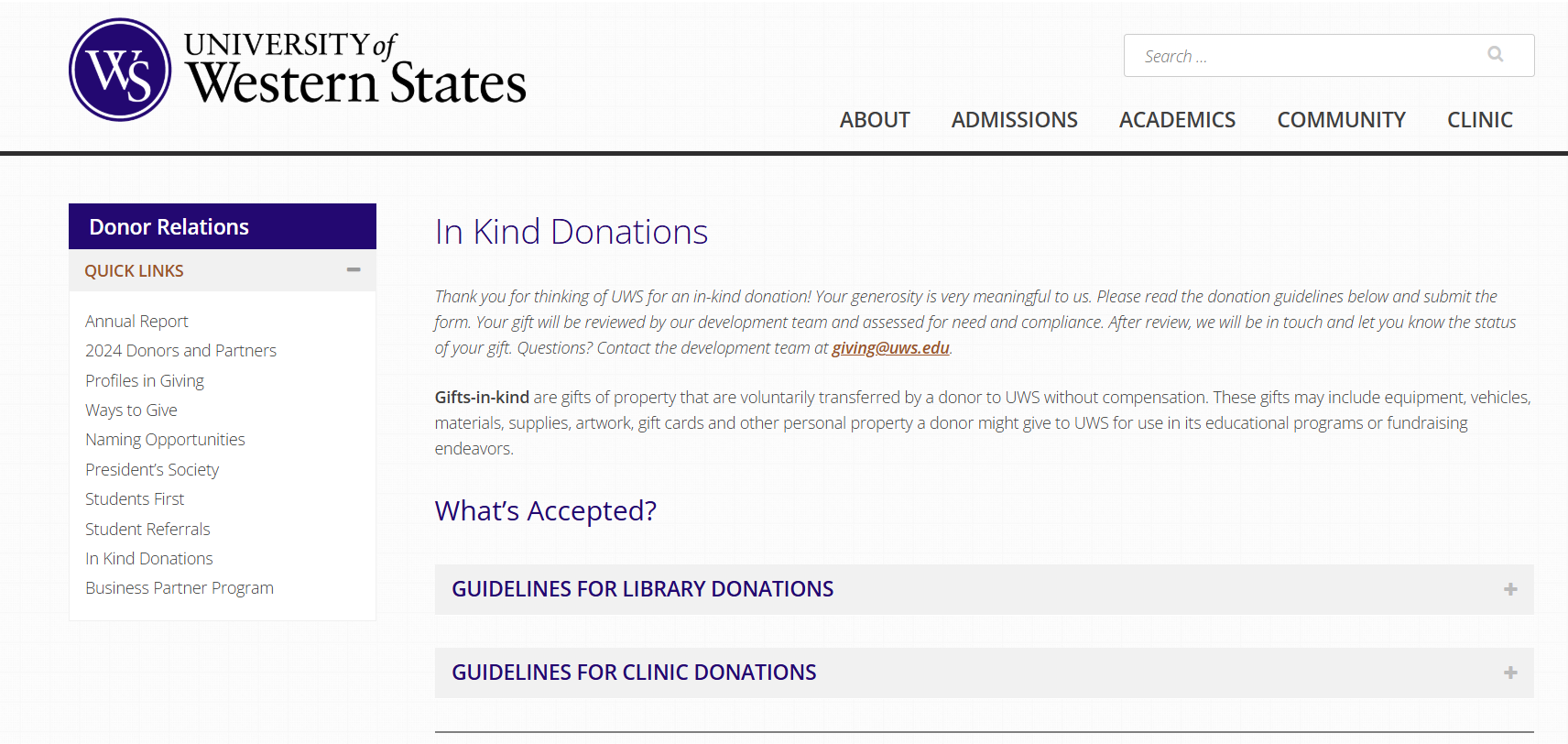
The University of Western States (UWS) provides a sophisticated model for how higher education institutions can strategically solicit and manage non-monetary gifts to enhance their academic and clinical programs. By maintaining a dedicated “In-Kind Donations” portal within their Donor Relations ecosystem, the university ensures that voluntary transfers of property, from clinical equipment to library materials, are integrated into their broader development strategy.
View the web page here: https://www.uws.edu/in-kind-donations/
Implementing a Policy-Driven Intake Process
The UWS digital strategy focuses on maintaining high institutional standards by providing clear guidelines and a mandatory reporting structure for all in-kind gifts. This professionalized approach is essential for universities that must ensure all contributions align with educational programs and fundraising endeavors while remaining compliant with internal policies.
Key elements of their structured intake process include:
- Digital Donation Request Form: The university utilizes a comprehensive online form to capture essential donor data, including primary contact information and company details.
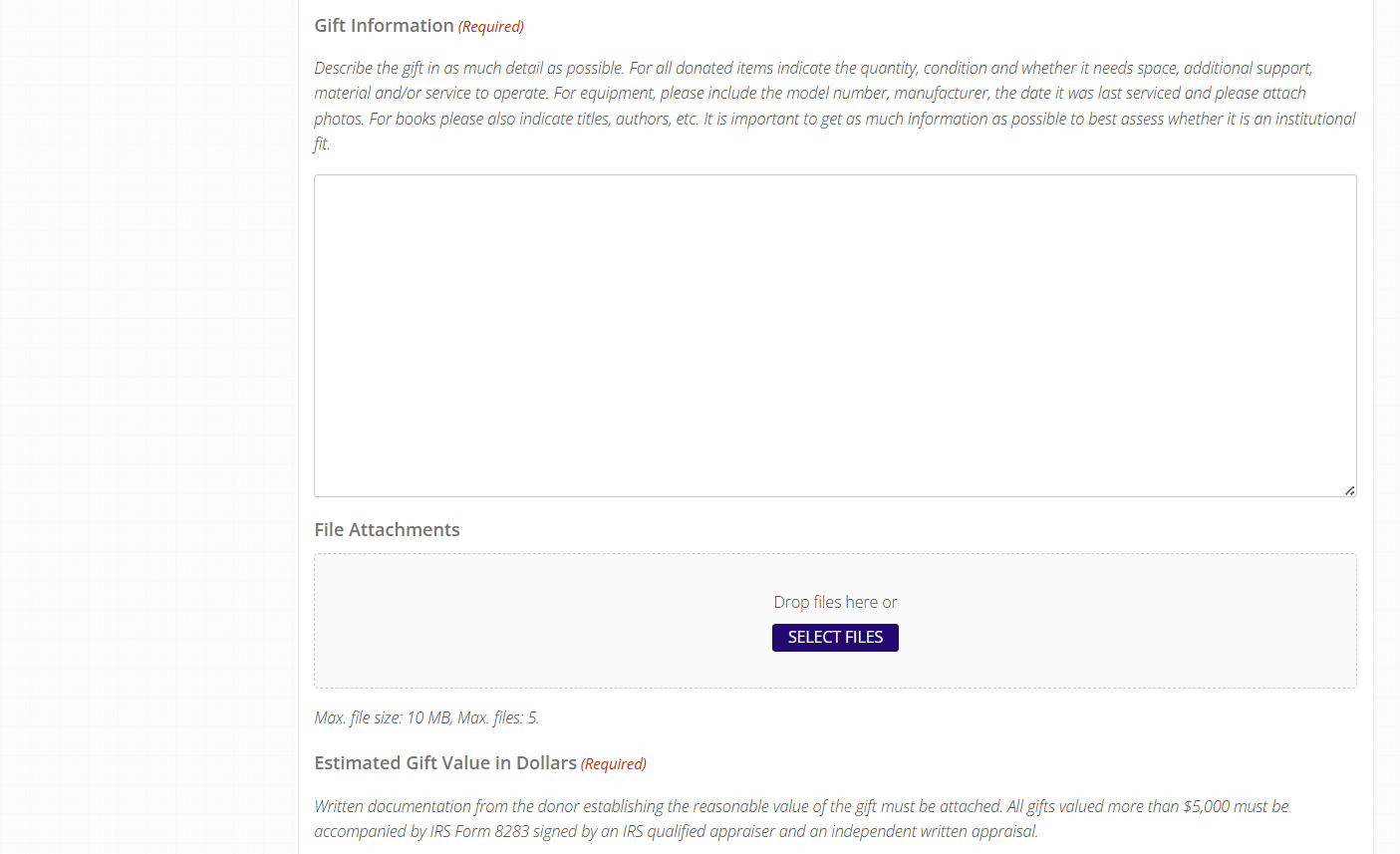
- Detailed Item Documentation: Donors are required to describe their gift with as much detail as possible, including quantity, condition, and specific requirements like necessary space or additional support for equipment.
- Institutional Fit Assessment: For specialized items such as books or equipment, the school requests titles, authors, model numbers, and manufacturer data to determine whether the gift is an appropriate fit for the institution.
Standardizing Gift Valuation and Compliance
To protect both the donor and the institution, UWS implements strict documentation requirements for the estimated value of in-kind gifts. By providing clear instructions on tax-related forms directly on the donation page, the university acts as a concierge for supporters navigating the complexities of non-monetary giving.
The university’s compliance framework features:
- Mandatory Documentation: Supporters must attach written documentation establishing the reasonable value of their gift directly to the digital submission.
- IRS Regulatory Guidance: The portal explicitly informs donors that any gift valued over $5,000 must be accompanied by IRS Form 8283, signed by a qualified appraiser.
- Specialized Guidelines: To simplify the process, the university provides distinct accordion sections for common contribution types, such as “Guidelines for Library Donations” and “Guidelines for Clinic Donations”.
By making these requirements transparent and accessible, the University of Western States ensures that every in-kind contribution is processed with the same level of professional rigor as a financial gift.
Wrapping Up & Additional Resources
Securing in-kind donations is a powerful strategy for universities to enhance their resources and advance their missions. By identifying specific needs, researching aligned corporate partners, and making thoughtful, personalized asks, universities can unlock valuable support beyond traditional cash gifts.
Utilizing tools like Double the Donation streamlines the process, helping fundraising teams find and manage in-kind donation opportunities more efficiently. With the right approach and resources, universities can build lasting partnerships that fuel innovation, improve student experiences, and strengthen community impact.
Taking the first steps (such as creating a detailed wish list, researching potential donors, and leveraging technology) sets the foundation for a successful in-kind donation program tailored to the unique needs of higher education institutions.
Empower Your University Fundraising with Double the Donation
Corporate sponsorships and in-kind donations are critical to the success of nonprofit events and programs, but sourcing the right partners can be time-consuming and overwhelming. Luckily, you can raise more with corporate grants and in-kind gifts by utilizing Double the Donation’s complete corporate giving solution. Our industry-leading database streamlines the entire process, helping your team find, secure, and manage corporate support with ease.