The Corporate Sponsorship Research Playbook for Nonprofits
According to recent corporate sponsorship research, global brands invest an estimated $97 billion in strategic partnerships each year, with the figure expected to reach $189.5 billion by 2030. The result? Nonprofits are increasingly turning to sponsorships as an anchor for mission-driven growth.
Still, securing high-value partnerships effectively involves a robust research infrastructure and modern technology. In this complete playbook, we’ll dive deep into the strategies your team needs for next-level corporate sponsorship research.
We’ll cover:
- The Foundation: Why Smart Research is 90% of the Battle
- High-Tech Prospecting: Advanced Tools and Sponsorship Databases
- Your Internal Goldmine: Leveraging Supporter Employer Data
- Competitive Sponsorship Analysis: Learning from Nonprofit Peers
- Vetting for Alignment: The “Risk vs. Reward” Filter
- Organizing Your Research With a Prospecting Scorecard
- From Research to Outreach: Initiating the First Touch
As the corporate giving landscape continues to evolve, the era of “spray and pray” sponsorship requests (or submitting as many applications as possible and simply hoping for the best) is officially over.
Today’s corporate sponsors aren’t just looking for their logo on a banner. They’re seeking deep cause alignment, data-driven impact, and ongoing opportunities for employee engagement. Let’s get started!
The Foundation: Why Smart Research is 90% of the Battle
In the high-stakes world of nonprofit fundraising, the difference between a “yes” and a “no” from a corporate executive rarely comes down to the quality of your sponsorship brochure. Rather, it hinges on the intelligence of your approach.
For a nonprofit, the research phase isn’t just a preliminary step. It’s the bedrock upon which every successful, multi-year partnership is built. When we say research is 90% of the battle, we mean the strategic alignment that can only be uncovered through due diligence. Without it, you’re essentially sending generic proposals to companies that may have zero interest in your cause area.
This doesn’t just waste your staff’s limited time; it can actually damage your reputation by signaling that you haven’t done your homework.
Here’s why corporate sponsorship research is nonnegotiable:
1. Shifting from Transactional to Transformational
Intelligent research allows you to move away from “asking for a donation” and toward “offering a partnership.” Today’s companies are looking for Social Impact ROI. They have specific Environmental, Social, and Governance targets they must hit to satisfy their shareholders.
If your research reveals that a local tech giant is struggling with diversity in its talent pipeline, and your nonprofit runs a STEM mentorship program for underrepresented youth, you aren’t asking for a handout; you’re offering a solution to a business problem. That shift in power dynamics is only possible when you have the data to back it up.
2. Maximizing Efficiency
Nonprofit resources are notoriously lean. You cannot afford to chase 100 leads to get one “yes.” Luckily, strategic research allows you to prioritize companies where a warm connection already exists.
When you discover that a sizable portion of your donor base works for a specific regional bank, you’ve just identified a corporate sponsorship prospect with a built-in affinity for your mission. You are no longer cold-calling; you’re calling a partner whose employees have already validated your work.
3. Protecting Your Brand Integrity
Research also serves as a vital defensive shield. In an era of radical transparency, who you partner with matters as much as the work you do. Vetting a corporation’s past actions, public statements, and internal culture during the research phase helps ensure that a sponsorship check today won’t lead to a PR crisis tomorrow.
By the time you sit down at the negotiating table, your research should have already confirmed that this partnership is a win for your mission, their brand, and the community at large.
High-Tech Prospecting: Advanced Tools and Sponsorship Databases
In the modern fundraising landscape, manual research can only take you so far. To truly scale your corporate partnerships, you need to move beyond spreadsheets and Google searches. High-performing development teams often leverage specialized databases to uncover hidden connections, verify philanthropic budgets, and identify the decision-makers who hold the keys to corporate social responsibility funding.
Here are some top digital tools that can help build out nonprofits’ prospecting toolkits.
#1: Double the Donation’s Corporate Sponsorships Database
When it comes to identifying high-potential corporate partners, Double the Donation serves as the gold standard for nonprofits. While historically known as the leader in matching gifts, Double the Donation’s comprehensive database is a powerhouse for corporate sponsorship research. The platform allows nonprofits to look under the hood of thousands of companies to see exactly how they engage with the social sector.
What makes this tool the top recommendation for nonprofits is its ability to provide actionable intelligence on a company’s giving. Instead of just seeing a business name, you can view its matching gift ratios, volunteer grant programs, and available corporate sponsorships (complete with relevant contact information and application links). Plus, you can filter by sector or programming area to ensure mission alignment!
Furthermore, Double the Donation’s utility is amplified by its massive integration ecosystem. The database integrates seamlessly with dozens of the industry’s leading fundraising and event management platforms. This means that as you are building out your gala, 5K, or auction within your existing software, you can pull in sponsorship data directly. This approach allows your team to locate potential sponsors, verify their giving criteria, and initiate outreach without ever leaving your primary workflow.
Learn more and get started with the corporate sponsorship research tool here.
#2: Candid’s Funder Search
Candid (formerly Foundation Center and GuideStar) offers a powerful Foundation Directory and Funder Search tool, which are essential for identifying corporate foundations and their giving opportunities. While some companies contribute to nonprofits directly from their marketing or CSR budgets, others funnel their philanthropy through private foundations.
Candid allows you to search these 990-PF filings to see exactly who a company has funded in the past, their average gift sizes, and specific areas of interest.
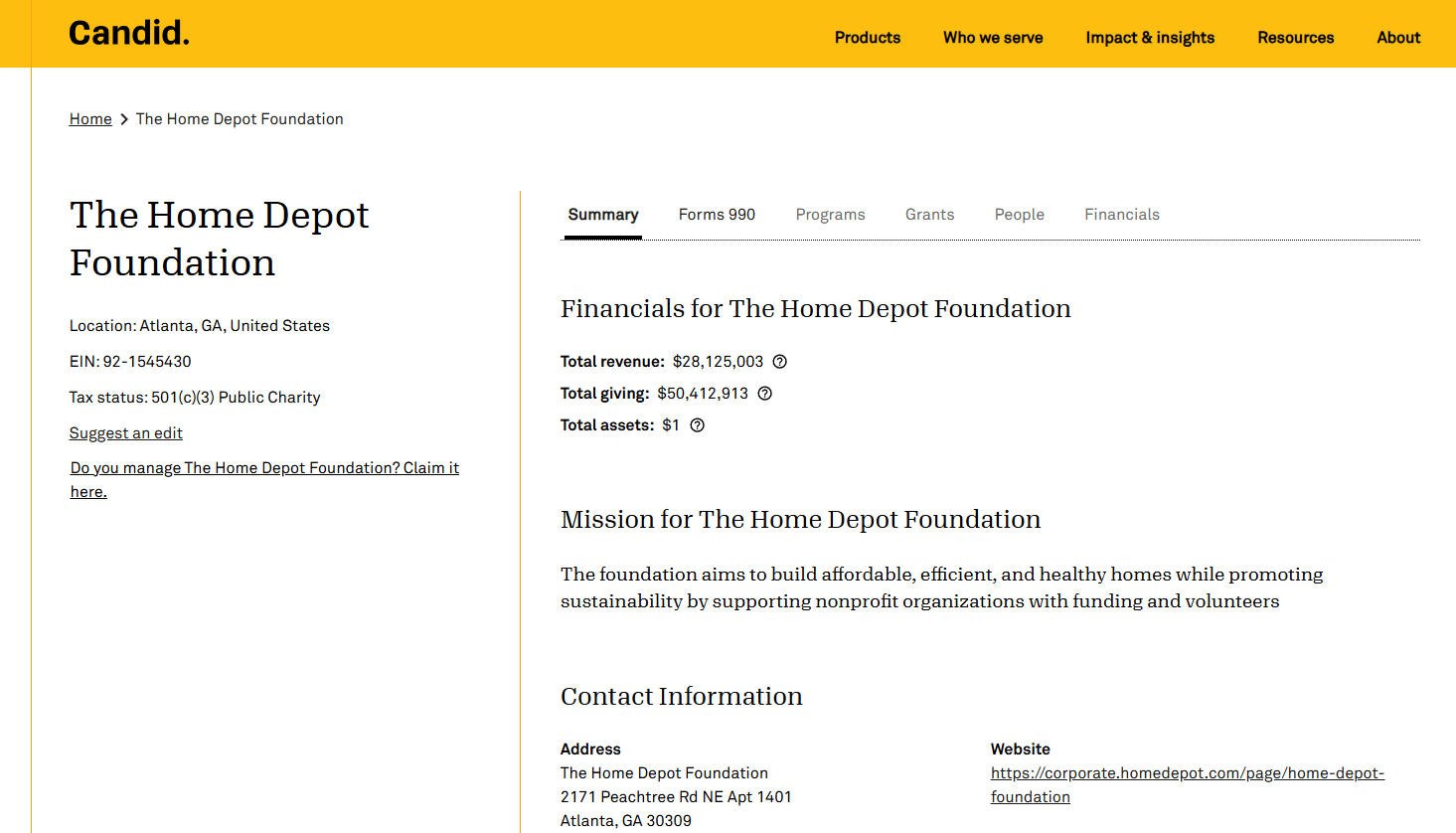
If you want to know whether a major bank prefers funding capital campaigns to operational support, Candid is the place to find this historical data.
Learn more and get started with the corporate sponsorship research tool here.
#3: SponsorPitch’s Pitch Board Marketplace
While not exclusively designed for the nonprofit sector, SponsorPitch is an invaluable resource for organizations looking to understand the broader sponsorship market. It functions as a real-time marketplace where brands and properties (ranging from music festivals to sports teams) list available sponsorship opportunities.
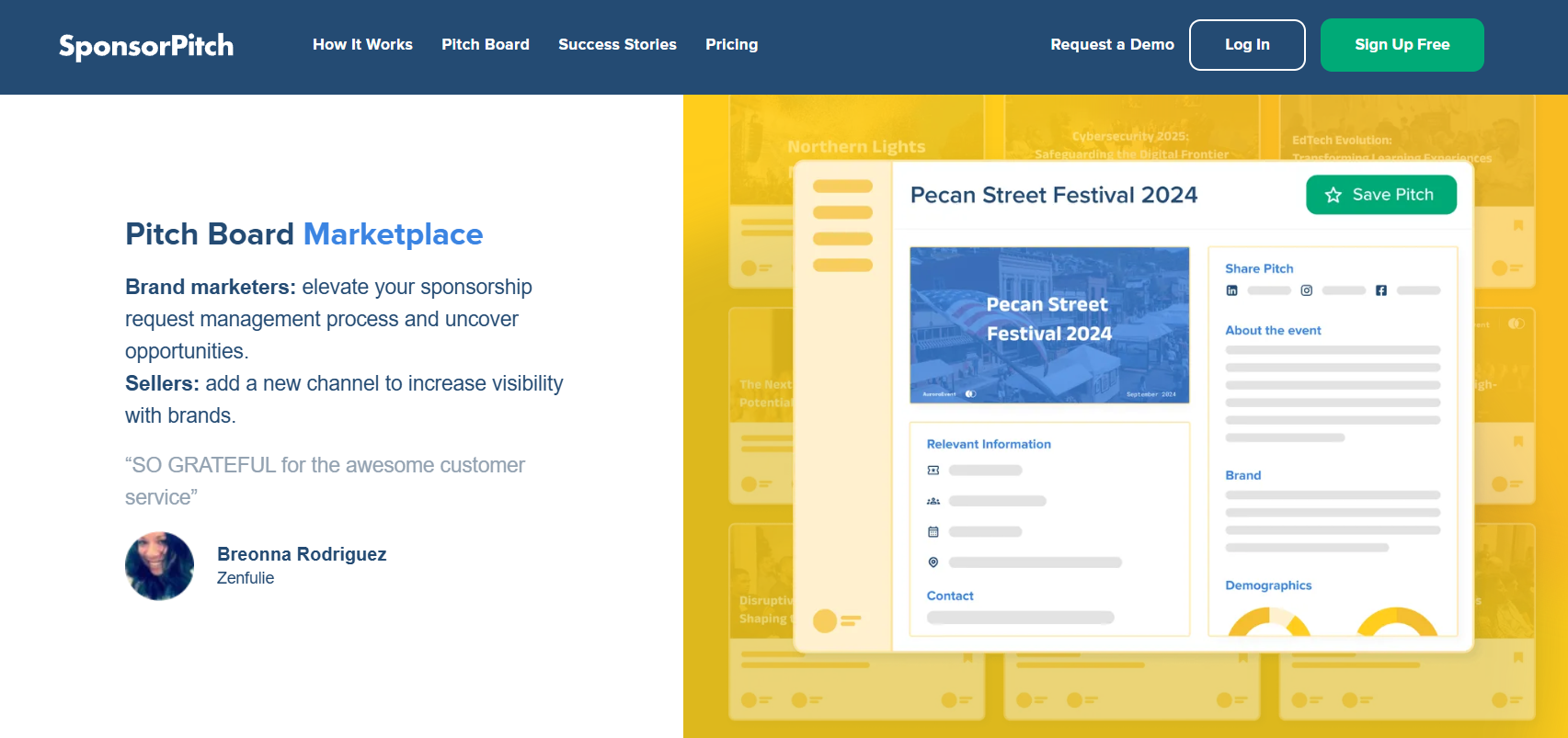
For a nonprofit, the “Pitch Board” is a window displaying which brands are active in the buying phase. By examining businesses currently sponsoring major commercial events, you can identify companies actively seeking brand lift and community alignment, then pivot your pitch to show how a charitable partnership delivers a higher purpose-driven ROI.
Learn more and get started with the corporate sponsorship research tool here.
#4: FiscalSponsorDirectory’s Sponsorship Directory
For organizations seeking a structured, user-friendly entry point into corporate partnerships, FiscalSponsorDirectory.org offers a surprisingly robust listing. While the site is a cornerstone for those navigating fiscal sponsorship models, its directory functions as a comprehensive, searchable catalog of corporate sponsor profiles that any nonprofit can utilize for prospecting.
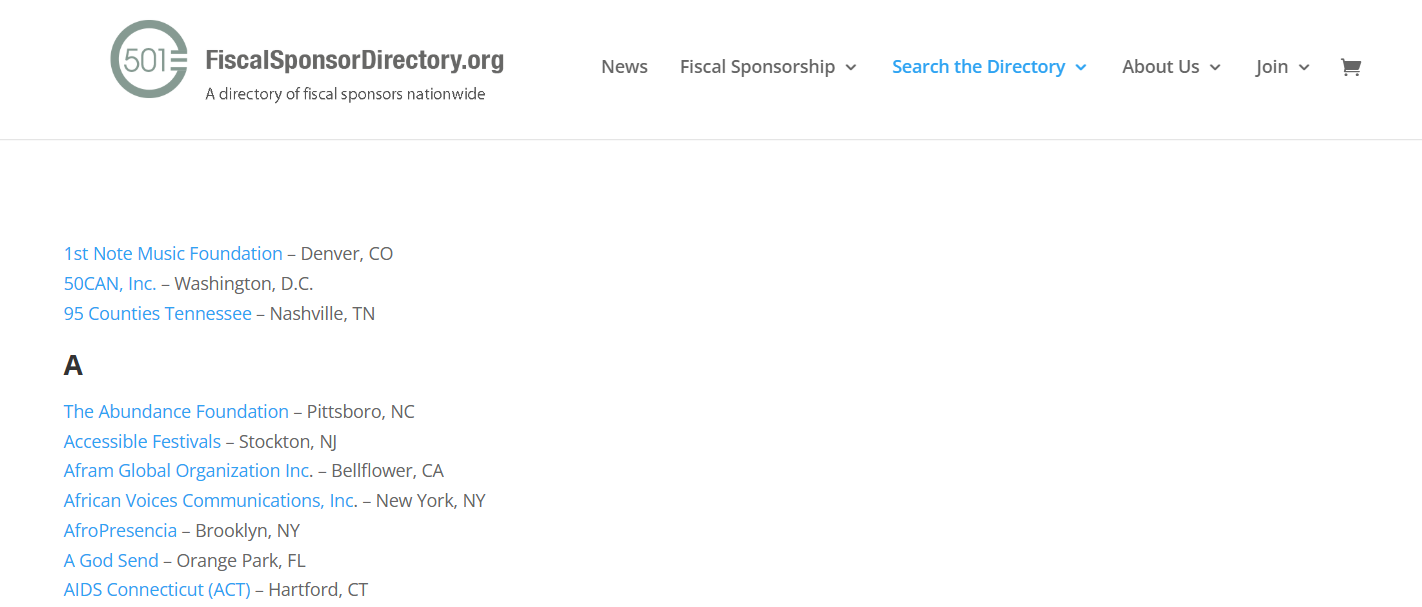
The directory is designed for maximum ease of use, allowing fundraisers to filter by geographic region or service category, or simply browse in alphabetical order. Each sponsor name represents a clickable link that opens a detailed dossier on the opportunity, often providing direct contact information, specific eligibility criteria (to ensure your mission fits their mandate), relevant fee structures, and more.
Learn more and get started with the corporate sponsorship research tool here.
#5: LinkedIn’s Sales Navigator
While LinkedIn is largely a social networking website in itself, its Sales Navigator platform transforms it into a surgical prospecting tool. This functionality allows nonprofit staff to set up “lead lists” for target corporations, tracking when a CSR manager at a Fortune 500 company changes roles or when a business mentions a specific keyword (such as “Sustainability” or “Education”) in its corporate updates.
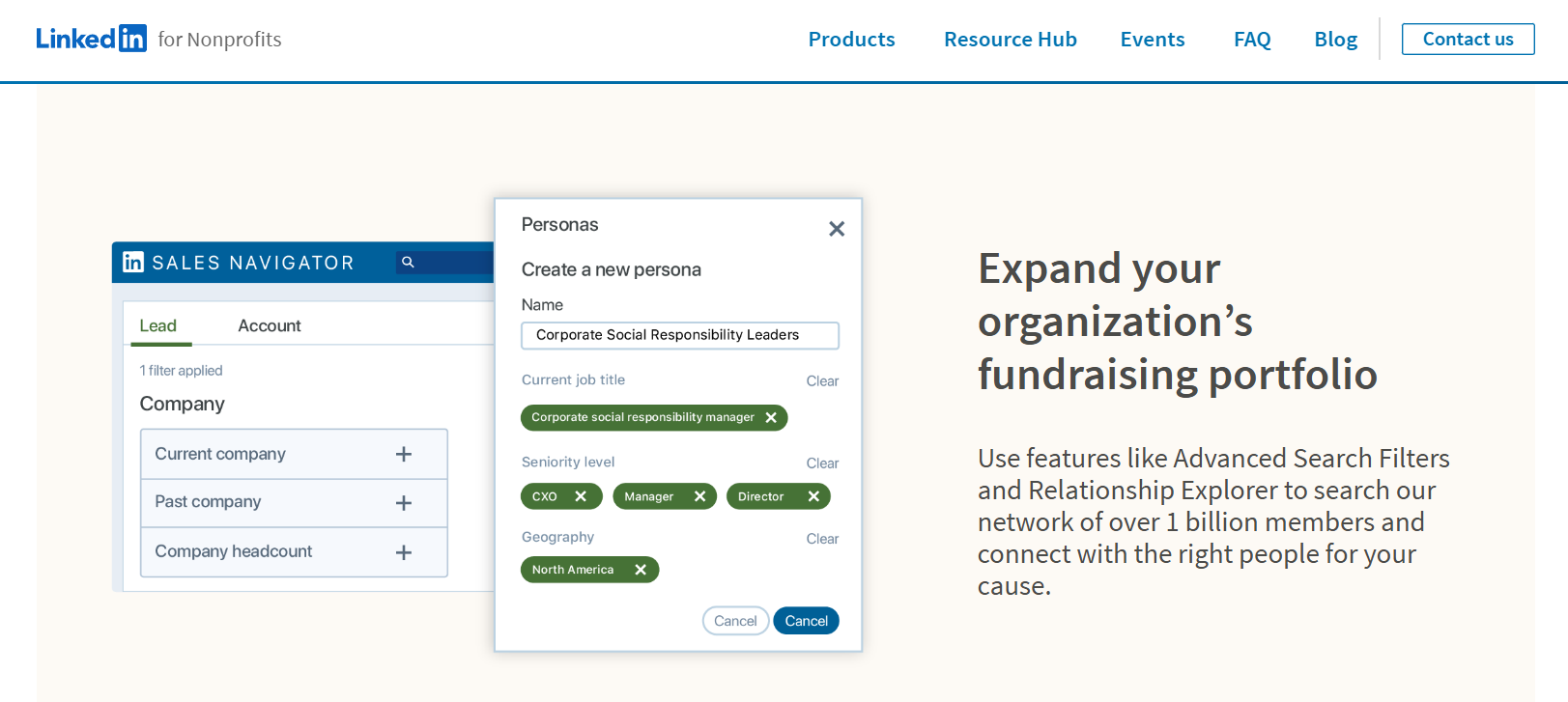
Plus, LinkedIn offers eligible nonprofits up to 50% off on its products, making Sales Navigator a more affordable option for charitable causes.
Learn more and get started with the corporate sponsorship research tool here.
Your Internal Goldmine: Leveraging Supporter Employer Data
The most common mistake nonprofits make in corporate sponsorship research is looking “out” before they look “in.” While it is tempting to spend hours scrolling through Fortune 500 lists, your most valuable prospecting data is likely already sitting in your CRM.
Your existing donors, volunteers, and board members represent a “human map” of the corporate landscape in your community. In today’s sponsorship climate, the warmest lead isn’t a company with a big budget; it’s a company that already has a seat at your table through its employees.
The Power of Existing Connections
Corporate social responsibility (or CSR) is increasingly driven by employee engagement. When a company sees that thirty of its staff are recurring donors to your literacy program, ten volunteers have secured “Dollars for Doers” on your behalf, or that a Senior VP sits on your board, the risk of the partnership largely vanishes. The company knows that the mission has been vetted and that its internal culture already aligns with your work.
By identifying these employment clusters, you can transform a cold pitch into a warm conversation. Instead of saying, “We’d like you to sponsor us,” you can say, “Your team is already supporting us; let’s make it official.”
Capturing Data with Double the Donation
To tap into this goldmine, you need a system for capturing employer data at every touchpoint. This is where Double the Donation’s tools become indispensable. By integrating an autocomplete employer search widget directly into your donation forms and volunteer registration pages, you capture real-time employment data without adding friction to the user experience.
This data flows into a comprehensive, in-depth analysis that does the heavy lifting for your research team. Key reports to analyze include:
- Top Companies Selected by Donors: This report identifies the corporations with the highest financial buy-in among your supporters.
- Top Companies Selected by Volunteers: This highlights businesses that already have a hands-on connection to your mission, which is perfect for event-based sponsorships.
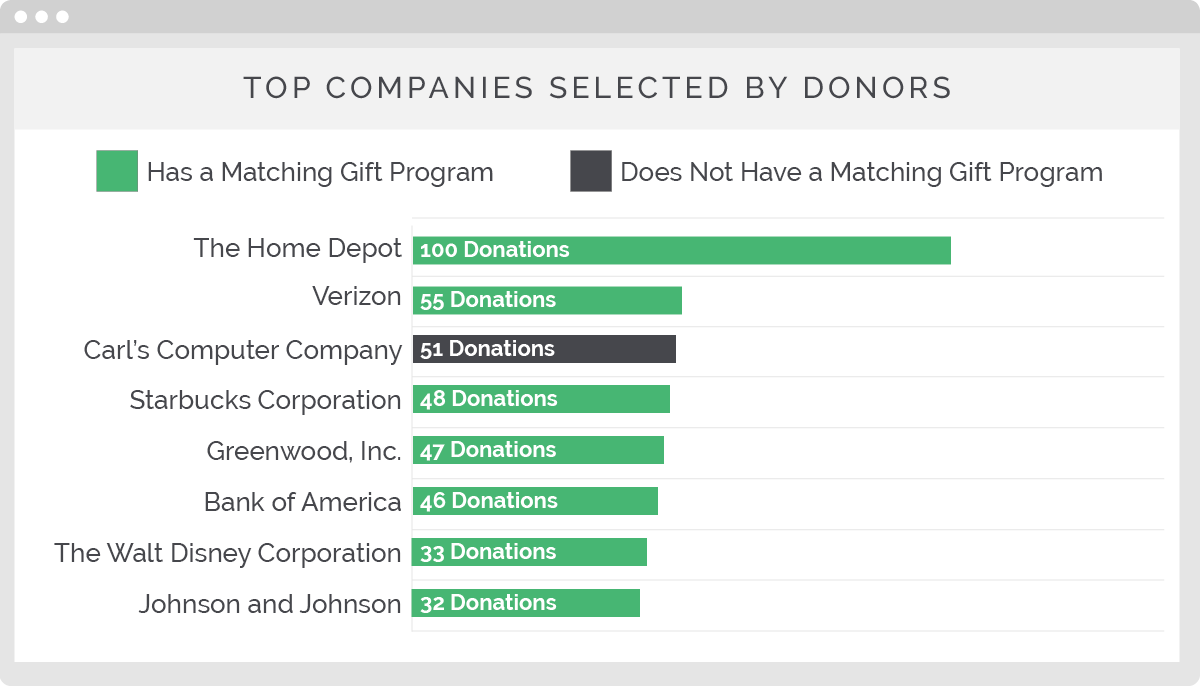
Once you’ve identified your top companies, use this intelligence to prioritize your outreach. If a local tech firm appears at the top of your list, don’t just send a generic pitch deck. Reach out to the donors within that company directly. For example: “We noticed a huge surge of support from your colleagues at [Company]. Would you be willing to introduce us to your community relations lead?”
Using internal data ensures your sponsorship strategy is built on a foundation of existing trust. It turns your database from a list of names into a strategic roadmap for high-value corporate growth.
Competitive Sponsorship Analysis: Learning from Nonprofit Peers
In the strategic world of corporate sponsorship research, you don’t always need to reinvent the wheel. Often, the most effective roadmap is already being used by your peers. Competitive sponsorship analysis, or the process of auditing the corporate partnerships of organizations with similar missions or geographic footprints, is one of the most efficient ways to identify leading industries and pinpoint specific companies with a propensity to support your cause.
Leveraging “Proof of Concept”
When a corporation sponsors a nonprofit cause, it is publicly declaring its philanthropic priorities. If you run a local animal shelter, seeing a peer organization secure a title sponsorship from a specialized business provides an immediate “proof of concept.”
This visual evidence tells you two critical things:
- Industry Affinity: The industry in your region is currently investing in community events.
- Specific Interest: This particular sponsor values high-engagement, event-based activations.
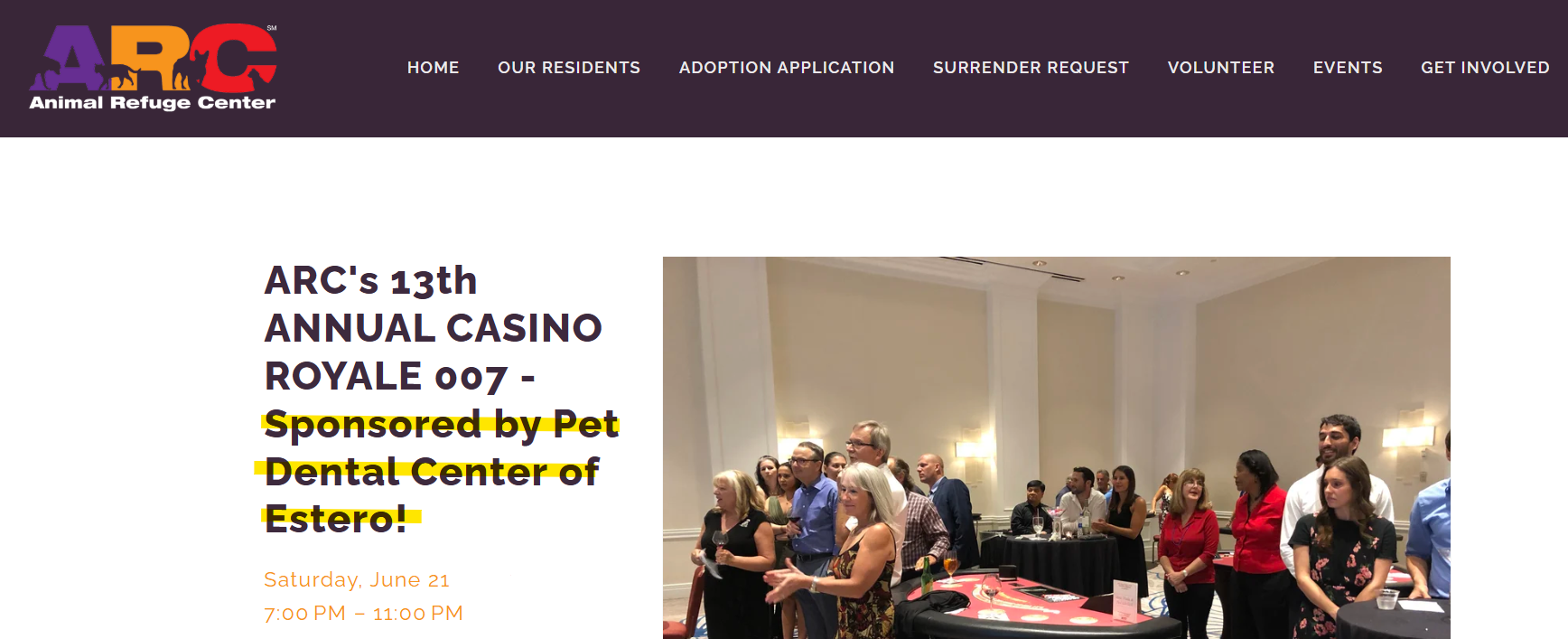
For a similar organization, this isn’t just news; it’s actionable intelligence. You can either reach out to that specific sponsor to discuss a non-competing partnership (perhaps for a different season or an alternatively-focused program) or research similar businesses in your area that might be looking for a similar brand lift to stay competitive with their peers.
How to Conduct a Peer Audit
To turn this into a repeatable process, your development team should conduct a quarterly peer audit. Here’s how it can work:
- The Annual Report Deep Dive: Collect the annual reports of 5–10 organizations that serve a similar demographic. Skip to the “Sponsors” page and categorize their partners by industry. Do you see a pattern? If every local youth sports league is sponsored by a different regional law firm, it’s time to add “Local Law Firms” to the top of your list.
- Social Media Monitoring: Follow your peers on LinkedIn and Instagram. When they post a “Thank You” to a corporate partner after a gala or 5K, take a screenshot. These real-time updates often reveal “new” sponsors who may not yet appear in older reports.
- Event Reconnaissance: Visit the event landing pages of nonprofits in neighboring cities. A company that sponsors an animal rescue event 50 miles away may be looking to expand its footprint into your city.
It’s important to view these organizations not just as competitors for a limited pool of funds, but as indicators of market demand. If a peer nonprofit has successfully integrated a corporate partner into its mission, they have already done the hard work of educating that company on why your cause is a valuable investment. Your goal is to take that inspiration and find the unique angle that makes a partnership with your organization the next logical step.
Vetting for Alignment: The “Risk vs. Reward” Filter
In the rush to secure a major corporate check, it may be tempting to view any interested business as a “good” prospect. However, in the modern philanthropic landscape, a sponsorship is far more than a financial transaction; it is a public merger of two brands. When constituents are more socially conscious than ever, the “Risk vs. Reward” filter is a mandatory step in your research process.
The Corporate Sponsor Values Stress Test
The first step in vetting is conducting a Values Stress Test. This involves looking beyond a company’s marketing materials and into its actual business practices.
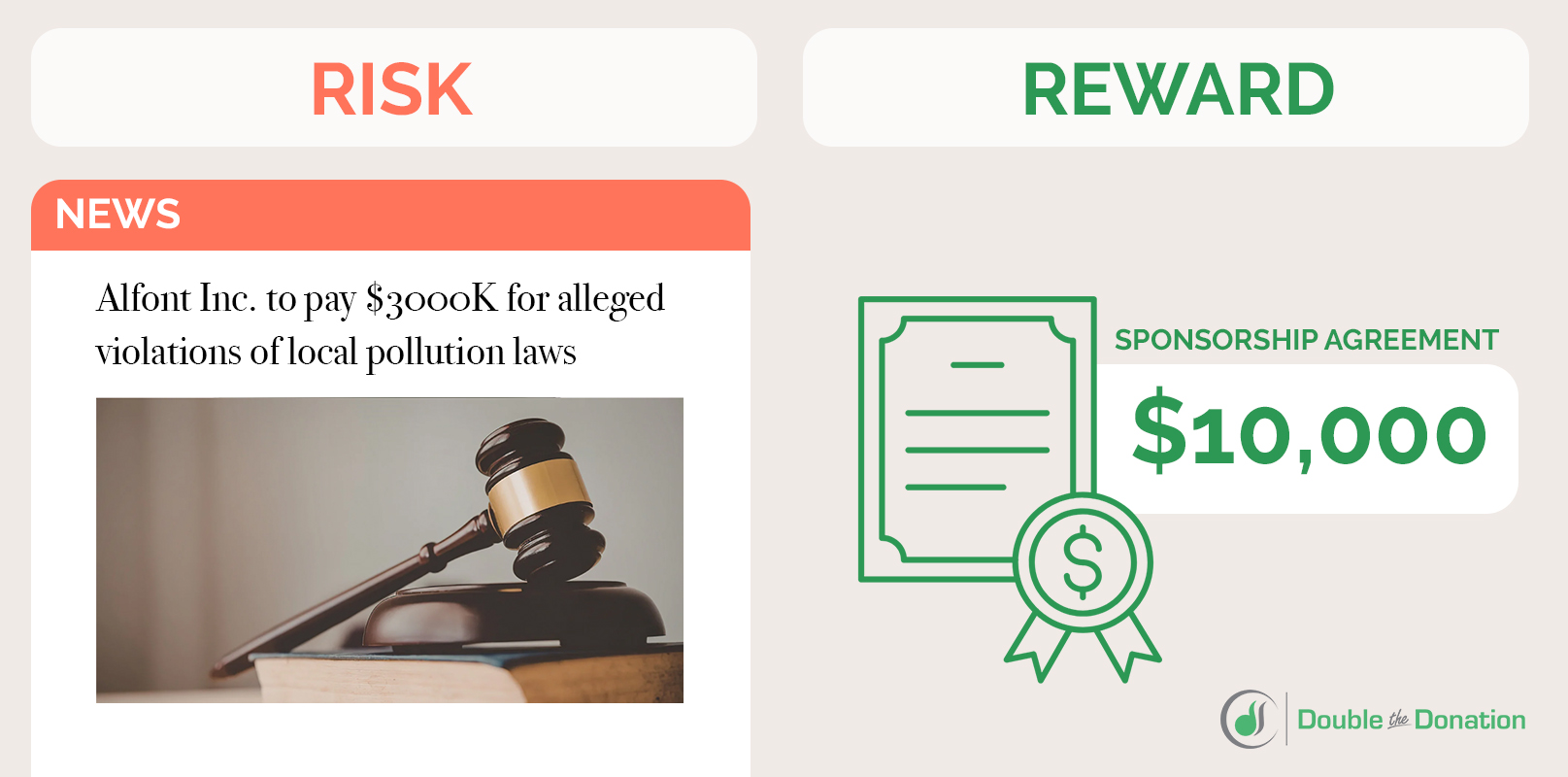
In other words, you must ask: Does this company’s core business model align with or contradict our foundational mission? For example, an environmental advocacy group partnering with a company currently facing massive fines for industrial pollution creates an immediate authenticity gap. Even if the company’s CSR department is well-intentioned, the public will view the partnership as “greenwashing,” and your nonprofit will be seen as the enabler.
The “S” in ESG: Social and Internal Culture
Beyond industry alignment, it’s important to research the “social” component of a company’s ESG (Environmental, Social, and Governance) score as well. Use platforms like Glassdoor, LinkedIn, and even local news outlets to gauge employee sentiment.
If a corporation has a history of labor disputes, discriminatory hiring practices, or a toxic workplace environment, your association with them can alienate your own staff and volunteer base. On the other hand, a strong internal culture could serve as a powerful catalyst for long-term engagement, turning corporate employees into passionate brand ambassadors.
Assessing the “Reputational Tax”
Every partnership comes with a reputational tax. To calculate the risk vs. reward value, consider the following:
- Donor Perception: Will your core individual donors feel betrayed by this association?
- Political Neutrality: Does the company’s lobbying history or political action committee spending align with (or undermine) your advocacy goals?
- Exit Strategy: If the company faces a scandal mid-partnership, does your agreement include a “morals clause” that allows you to terminate the relationship without financial ruin?
By applying this rigorous filter during the research phase, you ensure that every corporate partner you bring on board isn’t just a source of revenue, but a champion of your cause. A truly aligned partner will amplify your message; a misaligned one will muffle it.
Key takeaway: Failing to vet a partner’s alignment can result in mission drift, donor attrition, or even a full-scale PR crisis that costs far more than the potential sponsorship is worth. Be sure to conduct thorough sponsorship research to mitigate these risks!
Organizing Your Research With a Prospecting Scorecard
Even the most diligent research can become a liability if it isn’t organized. For this reason, high-growth nonprofits tend to move from raw data to actionable strategy by using a Prospecting Scorecard. This corporate sponsorship research tool allows you to objectively quantify a partner’s potential, ensuring that your limited time and energy are spent on leads with the highest probability of success.
Building Your Scorecard
The key to an effective scorecard is selecting the right metrics. We recommend a simple 1–5 scale for each category you select. A prospect that scores a 20+ can be considered a “High Priority” lead, while anything under 10 may not be worth a personalized proposal at this time.
Below is a sample scorecard that integrates the various research methods we’ve discussed.
| Criteria | 1 Point (Low) | 3 Points (Medium) | 5 Points (High) |
|---|---|---|---|
| Mission Alignment | No clear connection to our cause. | General interest in our sector (e.g., “Education”). | Direct alignment with our specific programs. |
| Supporter Density | 0–5 employees are donors/volunteers. | 6–20 employees are active in our network. | 20+ employees or a Board-level connection. |
| Giving History | No known history of corporate giving. | Matches gifts but no formal sponsorships. | Robust matching, volunteer grants, and sponsorships. |
| Brand Reputation | Recent negative PR or “values gap.” | Neutral brand standing in the community. | High ESG score; known as a “Best Place to Work.” |
| Geographic Fit | National brand with no local office. | Regional presence with some local staff. | Headquartered in our primary service area. |

Utilizing Scorecard Insights
Once your corporate sponsorship research is scored, you can tier your outreach appropriately. For “Tier 1” sponsor prospects (those earning scores between 20 and 25, for example), you’ll want to establish a highly customized, multi-channel approach that includes a warm intro from a board member and a tailored impact deck. For “Tier 3” prospects (those scoring 5–10), a standardized sponsorship application or an invitation to an open house event is more appropriate.
From Research to Outreach: Initiating the First Touch
The final step in the sponsorship research playbook is making the actual pitch. After hours of sleuthing through Double the Donation data, mapping LinkedIn connections, and scoring your prospects, your first communication should reflect that depth of knowledge.
Here’s what we recommend:
Identifying the Right Stakeholder
One of the most common reasons high-quality sponsorship outreach fails to convert is that it lands in the wrong inbox. Large corporations have fragmented departments, and sponsorships may fall under different jurisdictions depending on the company’s internal structure.
Before hitting send on your proposal, use your research strategies to determine who to contact for corporate sponsorship opportunities at a particular business. Top “doors” to knock on might include:
- The CSR or Social Impact Manager: Best for companies with established foundations or public-facing ESG goals. They care about long-term impact metrics and community standing and likely have philanthropic programming in place already.
- The Marketing or Brand Director: Best for event-based sponsorships where the company wants high visibility, logo placement, and brand alignment with a specific demographic. They care about gaining marketing exposure and typically respond well to hard metrics regarding your organization’s reach.
- The HR or People Officer: Best for partnerships that focus heavily on employee engagement, workplace volunteerism, and “Best Place to Work” initiatives. They care about initiatives that directly involve their staff and may be interested in an employee-matching component of a sponsorship pitch.
- The Regional General Manager: For local branches of national chains (such as banks or grocery stores), the local manager often has a discretionary community budget separate from corporate headquarters. They care about regional engagement and love partnering with causes that serve the areas where they operate.
By aligning your sponsorship request with the preferred KPIs of the right division, whether that is brand reach, employee retention, or social impact metrics, you transform your request into a strategic solution for their specific business (and departmental) needs.
Implementing a Data-First Email Strategy
Once you’ve determined who you’re pitching, use the specific data points uncovered during your research to guide the conversation. If your efforts showed a high density of employee donors, mention that finding. If you saw that a company recently pivoted its CSR goals toward sustainability, highlight your own green initiatives.
Here’s a sample email template you can use to get started:
Subject: Connecting [Company]’s [CSR Pillar] goals with [Nonprofit]
“Dear [CSR Manager’s Name],
I’ve been following [Company]’s recent commitment to [Specific Goal, e.g., closing the literacy gap in the Southeast]. It’s an inspiring mission, and clearly one that resonates with your team. We currently have [Number] of your employees actively supporting our programs as donors and volunteers!
Given this existing ‘human investment’ and our shared focus on [Area], I’d love to discuss how a formal partnership could amplify [Company]’s impact while providing meaningful engagement opportunities for your staff. Are you open to a brief 15-minute conversation on [Day] to explore a potential sponsorship alignment?”
Best wishes,
[Name]
[Nonprofit]
Highlighting specific insights, as demonstrated above, ensures your proposal isn’t just another email in their inbox. Rather, it’s a relevant solution waiting to be explored.
Streamline your outreach with even more corporate sponsorship request templates!
Diversifying Through Multi-Channel Outreach
Sponsorship communications don’t stop at the inbox. A sophisticated engagement strategy is multi-layered, informed by data, and fueled by personal connection. Once you’ve identified a target company, try executing a synchronized “surround sound” approach:
- The Peer Introduction: If your scorecard showed a board-level connection, don’t lead with a cold email. Rather, ask your board member to facilitate a LinkedIn “Warm Intro” or send a personal text message.
- The Professional Social Touch: Engage with the target contact online before emailing. Like their recent LinkedIn post about corporate culture, or comment insightfully on a company milestone. This ensures your name is familiar when your email ultimately arrives.
- The Strategic Phone Call: In a world overflowing with email, the telephone remains one of the most effective tools for cutting through the noise. Once your research has identified the correct stakeholder, a brief, professional phone call can humanize your organization and validate your data.
By integrating these channels, you move beyond the limitations of a single, easily ignored email and instead create a cohesive presence. This demonstrates that you aren’t just a generic solicitor, but a well-connected, professional organization that has already done the legwork to understand their ecosystem. This level of intentionality proves to a potential sponsor that you will be just as diligent in managing the partnership as you were in researching it.
Final Thoughts on Corporate Sponsorship Research
Corporate sponsorship research is no longer a side quest; it’s a data-driven discipline. By combining internal supporter data with social mapping and competitive analysis, you can build a pipeline of partners who provide more than just a check. They supply long-term stability and shared impact.
For more information, check out these additional corporate sponsorship resources:
- Corporate Sponsors: 65+ Leading Companies That Donate to Nonprofits. Get familiar with these standout corporate sponsorship programs! See if any of these standout opportunities are the right fit for your organization.
- How to Identify Corporate Partnerships [With Double the Donation]. Learn how Double the Donation’s platform (and in-depth reporting tools) can help your team find the right corporate sponsorship opportunities.
- Free Download: The 2026 Nonprofit Corporate Engagement Report. Explore the current state of corporate sponsorships and broader workplace giving with the fresh insights in this free downloadable resource.
Best of luck!