Navigating the Corporate Grant Process: A Nonprofit Guide
Corporate grants for nonprofits represent a powerhouse of potential funding, yet they often remain an untapped resource due to the perceived complexity of identifying prospects and securing approvals. Unlike individual donations that may rely heavily on emotional appeals or personal connections, corporate grants are strategic investments made by businesses. These organizations are looking to align their financial resources with their philanthropic goals, community values, and business objectives. Mastering the corporate grant process can unlock significant, often unrestricted, funding that empowers your nonprofit to scale its impact and sustainability in ways that individual giving alone cannot support.
For many development teams, the path from identifying a prospect to cashing the check feels opaque and intimidating. It requires a fundamental shift in mindset from “asking for help” to “proposing a partnership.” When you understand the specific steps corporations take to award funds—and what they need to see in return regarding impact and data—you can position your organization not just as a beneficiary, but as a vital partner in achieving their business and social goals.
In this comprehensive guide, we will explore:
- The strategic value of corporate grants
- Different types of corporate support available
- A detailed roadmap of the grant application lifecycle
- Top companies with generous programs
- Best practices for writing winning proposals
Ready to diversify your revenue streams? Let’s demystify the process of securing corporate funding and set your organization up for long-term success.
The Strategic Value of Corporate Grants
Corporate grants differ significantly from government grants or individual major gifts, both in how they are acquired and the benefits they offer. These funds are disbursed by a corporation (either directly through a marketing or community affairs budget or through a separate corporate foundation) to non-profit organizations. While the immediate benefit is obvious (cash in the bank), the strategic value goes much deeper.
First, corporate grants validate your organization’s work. Receiving funding from a recognized national or local brand serves as a “seal of approval.” This external validation can boost your credibility, making it easier to attract other donors, board members, and media attention. When a major bank or retailer invests in your mission, it signals to the rest of the community that your nonprofit is a safe, reliable, and impactful investment.
Second, these grants are mutually beneficial tools for corporate social responsibility (CSR). Corporations are under increasing pressure from consumers and employees to be good corporate citizens. By funding your nonprofit, they meet their CSR goals, improve their public image, and create stories they can share with their stakeholders. This alignment creates a partnership dynamic rather than a simple transactional donor-recipient relationship.
Finally, corporate grants offer flexibility. While federal or state grants often come with rigorous, time-consuming reporting requirements and strict restrictions on how funds can be used, corporate grants can be more accessible. Many offer general operating support—the “holy grail” of nonprofit funding—which allows you to keep the lights on, pay staff, and invest in infrastructure.
Did You Know? Corporate philanthropy is on the rise! In recent years, corporate giving has outpaced inflation, signaling a robust environment for nonprofits ready to tap into the Corporate Grant process. Companies are actively seeking partners who can help them deploy capital into communities effectively.
Understanding the Spectrum of Corporate Support
Before diving into the application process, it is crucial to understand that “corporate grants” are just one bucket within the broader landscape of corporate giving. Companies often have multiple avenues for supporting nonprofits, and understanding the nuances can help you approach the right department with the right ask.
Direct Cash Grants
These are monetary donations given to a nonprofit to support specific programs, capital campaigns, or general operations. They are typically awarded through a competitive application process managed by a corporate foundation or a community relations department.
Corporate Sponsorships
Unlike grants, which are charitable in nature, corporate sponsorships are often marketing transactions. A company provides funding in exchange for advertising, logo placement, and brand visibility at an event or within a program. The budget for sponsorships usually comes from the marketing department rather than the philanthropic foundation, meaning the “pitch” needs to focus on audience reach and brand alignment rather than just social impact.
In-Kind Donations
Not all support is financial. In-kind donations for nonprofits involve the transfer of goods or services rather than cash. This could include technology hardware, consulting services, pro bono legal work, or product donations (e.g., food for a food bank, lumber for a housing project). These donations can be incredibly valuable for offsetting budget line items.
Employee-Driven Giving
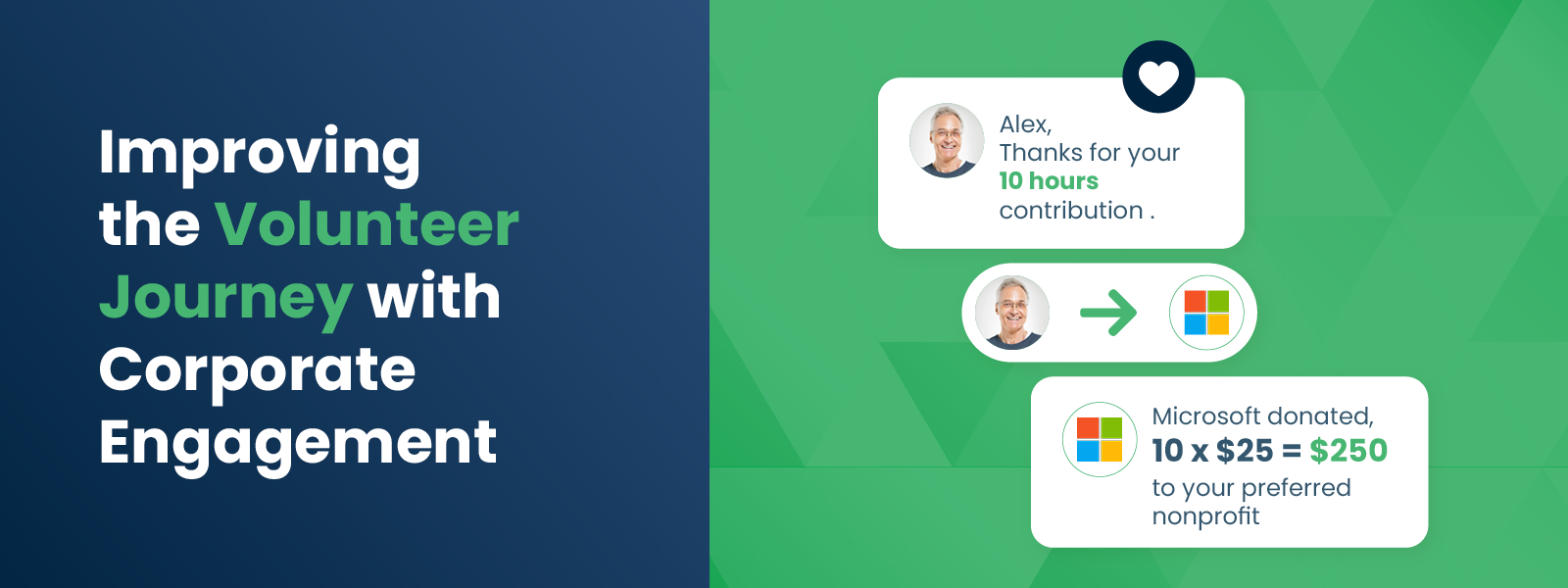
Some corporate funds are unlocked directly by the actions of employees. Volunteer grants (also known as Dollars for Doers) are programs where companies donate money to nonprofits based on the number of hours their employees volunteer. Similarly, matching gifts occur when a company matches a donation made by an employee, effectively doubling the donor’s impact.
The 4-Step Corporate Grant Lifecycle
Navigating the Corporate Grant process requires a structured, disciplined approach. While every company has its own timeline and quirks, the general lifecycle follows four distinct stages. Understanding these will help you manage your team’s time and expectations effectively, ensuring you don’t miss deadlines or waste resources on poor-fit prospects.
Step 1: Prospecting and Research (Pre-Award)
The process begins long before you write a single word of a proposal. This phase involves identifying companies whose philanthropic priorities align with your mission. This is the most critical step; a well-written proposal sent to the wrong company will always be rejected.
- Alignment is Key: Companies typically fund specific “pillars” such as STEM education, environmental sustainability, workforce development, or hunger relief. Review their CSR reports to see exactly what they funded last year.
- Geography Matters: Many corporations prefer (or are mandated) to fund organizations in communities where they have a physical footprint—offices, factories, distribution centers, or retail stores. If a company has no employees in your state, your chances of funding drop significantly.
- Due Diligence: You must verify eligibility requirements. Does the company require 501(c)(3) status? Do they exclude religious or political organizations? Are their grants invitation-only, or is there an open application window? Thorough research here prevents wasted effort later.
Step 2: The Application and Proposal
Once you’ve identified a prospect, you enter the active application phase. This usually involves submitting a Letter of Inquiry (LOI) or a full grant proposal. Large corporations often utilize online portals like CyberGrants, SmartSimple, or Blackbaud.
- The Narrative: Your proposal must tell a compelling story backed by data. You need to clearly define the problem (the community need), your solution (the program), and the specific outcomes you expect. Avoid jargon and focus on clarity.
- The Budget: A transparent, realistic budget is crucial. It shows you have a plan for every dollar requested. Differentiate between direct costs (supplies, staff time) and indirect costs (overhead).
- Adhering to Constraints: Corporate portals often have strict character limits (e.g., “Describe your mission in 500 characters”). Drafting your answers in a separate document first allows you to edit for brevity and impact before pasting them into the form.
Step 3: Review and Decision
After submission, the “waiting game” begins. Unlike individual donors who might write a check immediately, corporations have bureaucratic processes.
- Internal Review: Program officers or employee committees review applications against a scoring rubric. They assess mission alignment, financial health (often reviewing your Form 990), and potential for impact.
- Timeline: This can take anywhere from a few weeks to several months. Some companies review grants on a quarterly basis, while others have rolling deadlines. Patience is required, but a polite follow-up after a reasonable period is acceptable.
Step 4: Award and Stewardship (Post-Award)
If approved, you’ll receive a notification and potentially a grant agreement outlining terms. This isn’t the end of the road; it’s the beginning of a partnership.
- Fulfillment: Funds are disbursed, often via electronic transfer or check. Ensure your finance team knows how to allocate these funds according to the grant agreement.
- Reporting: Most corporate grants require a post-grant report detailing how the money was spent and the impact achieved. Did you meet your goals? If not, why? Timely and honest reporting is essential for securing future funding.
- Recognition: Unless the donor requests anonymity, publicly thank them. Use social media, your newsletter, and press releases to highlight their generosity. This positive PR is often part of the ROI the company is seeking.
Top Companies with Standout Grant Programs
Knowing where to look is half the battle. While there are thousands of corporate foundations, some stand out due to the size of their giving and the clarity of their application processes. Here are a few major corporations with well-established grant programs that might align with your mission:
- Google.org: Known for its focus on technology and innovation, Google.org offers grants to nonprofits that use technology to solve complex challenges. Beyond cash, they provide the Google Ad Grants program, offering up to $10,000/month in in-kind advertising to help nonprofits raise awareness and recruit volunteers.
- The Walmart Foundation: This foundation focuses heavily on creating opportunity, advancing sustainability, and strengthening community. They offer local community grants ranging from $250 to $5,000. Because these decisions are often made at the local facility level, they can be easier for smaller local nonprofits to secure compared to national grants.
- Bank of America Charitable Foundation: Their grants focus on economic mobility, including workforce development, community development, and basic needs like hunger and housing. They are a significant target for human services organizations and typically have specific application windows for different causes throughout the year.
- The Home Depot Foundation: A prime example of niche funding, they strongly focus on veteran housing and disaster response. If your mission touches these areas, they are a high-priority prospect. They also engage their employees heavily in volunteer projects alongside the funding.
- Wells Fargo Foundation: They prioritize financial health, housing affordability, and small business growth. They often look for programs that can demonstrate measurable outcomes in these specific economic areas and prefer to fund innovative solutions to systemic problems.
Quick Tip: Don’t ignore the “average” grant! While multi-million dollar grants make headlines, the average corporate grant size is often around $5,000 to $10,000. These smaller grants are typically less competitive and can build a track record of success that leads to larger funding later.
Best Practices for Winning Corporate Grants
Success in the Corporate Grant process isn’t just about luck; it’s about strategy, preparation, and positioning. Here are detailed best practices to increase your win rate and build lasting corporate relationships.
1. Tailor Your Proposal to the Funder
Never copy-paste a generic proposal. Corporate program officers can spot a “form letter” application from a mile away. Use the corporation’s own language—found in their CSR reports or website—to describe your impact. If they talk about “workforce readiness,” don’t just say “job training”; use their terminology to show alignment. Mirroring their language subconsciously reinforces that you are on the same team aiming for the same goals.
2. Leverage Employee Connections
A “warm introduction” can fast-track your application. Use your donor database to see if any of your supporters work at the target company. Employees can often advocate for your cause or submit a nomination on your behalf, which is sometimes a requirement for specific grants. Even if an employee cannot submit the grant, their insight into the company culture and current priorities can be invaluable during the drafting phase.
3. Focus on Measurable Impact
Corporations are results-oriented entities driven by ROI. Your proposal should clearly state exactly what the funds will achieve. Avoid vague statements like “we will help people.” Instead, use concrete metrics: “This $5,000 grant will provide 2,000 nutritious meals to families in [City Name], reducing local food insecurity by X%.” Clear metrics give corporate officers the data they need to justify the expense to their stakeholders and shareholders.
4. Visualize Your Data
Whenever possible, use charts, infographics, or bulleted lists to convey complex data. Grant reviewers often skim applications due to volume. Breaking up dense text with clear data points ensures your key impact statistics are seen and remembered. If the portal allows for attachments, include a one-pager that visually summarizes your program’s success.
5. Be Persistent but Polite
Rejection is part of the process. If your grant is denied, politely ask for feedback. Was it the timing? The budget? The program fit? Many corporations are willing to provide brief feedback that can help you succeed in the next cycle. Furthermore, a “no” today is often a “not right now.” Maintaining a professional relationship keeps the door open for future opportunities.
How to Find Corporate Grant Opportunities
Identifying the right opportunities is the first hurdle in the Corporate Grant process. Instead of manually scouring the web, utilize specialized tools and databases to streamline your search and focus your energy on high-probability prospects.
Grant Databases
Tools like GrantStation, Candid’s Foundation Directory, or GrantWatch allow you to filter thousands of grantmakers by geographic focus, cause, and funding amount. These platforms often provide detailed profiles on funders, including their average grant size, board members, and past grantees, saving you hours of research.
Corporate Giving Software
Platforms like Double the Donation are invaluable for the broader corporate giving landscape. While primarily known for matching gifts, these databases can help you identify companies with robust CSR programs. Often, a company with a matching gift program also has a grantmaking arm. Identifying these dual-threat companies allows you to double-dip: securing a corporate grant and mobilizing employee matching gifts simultaneously.
Local Business Journals
Don’t overlook local businesses! Your local business journal’s “Book of Lists” often ranks top corporate philanthropists in your city, providing a localized prospect list. These local branches of national companies or large regional businesses often have more autonomy and less competition than national headquarters.
Competitor Analysis
Look at the annual reports of other nonprofits in your sector. Who is funding them? If a bank is funding a literacy program at a nearby library, they have demonstrated an interest in education and community development. This “peer research” can uncover prospects you might have missed.
Common Mistakes to Avoid in Grant Writing
Even excellent programs can miss out on funding due to avoidable errors in the application process. Steer clear of these common pitfalls to keep your application in the “yes” pile.
- Ignoring Guidelines: If the grant asks for a 2-page narrative, do not send 5 pages. If they say they do not fund capital projects, do not ask for building renovations. ignoring guidelines shows a lack of respect for the funder’s process.
- Waiting Until the Last Minute: Corporate grant portals can crash, internet connections can fail, and questions can arise at the 11th hour. Aim to submit your proposal at least 48 hours before the deadline to avoid technical catastrophes.
- Focusing on Needs Instead of Solutions: While it is important to establish the problem, the bulk of your proposal should focus on your solution and your organization’s capability to deliver it. Funders want to back winners, not just “needy” organizations.
- Forgetting the Sustainability Plan: Corporations rarely want to fund a program indefinitely. They want to know how the program will continue after their grant runs out. Include a section on your long-term funding strategy to show you are thinking ahead.
Wrapping Up & Next Steps
The Corporate Grant process is a journey of relationship building, strategic alignment, and persistent execution. By treating corporations as partners rather than just checkbooks, you open the door to sustainable funding that can weather economic shifts. The effort required to research, draft, and steward these grants is significant, but the payoff—in terms of funding, credibility, and awareness—is well worth the investment.
Start by auditing your current programs to see which align with the focus areas of major corporate funders. Then, use tools to identify prospects where you already have a donor footprint. A small investment of time in research today can lead to a transformative partnership tomorrow.
Ready to uncover more revenue? While you pursue corporate grants, don’t leave money on the table from the donors you already have. Double the Donation helps you identify matching gift opportunities from the same companies you might be targeting for grants.
Request a demo of Double the Donation today to see how a comprehensive corporate giving strategy can supercharge your fundraising.