Employer Append Statistics for Fundraisers [Updated 2026]
Explore key employer append statistics to enhance your donor records.
See how enhancement works alongside the data you already have to ensure high-value results.

Explore key employer append statistics to enhance your donor records.
See how enhancement works alongside the data you already have to ensure high-value results.
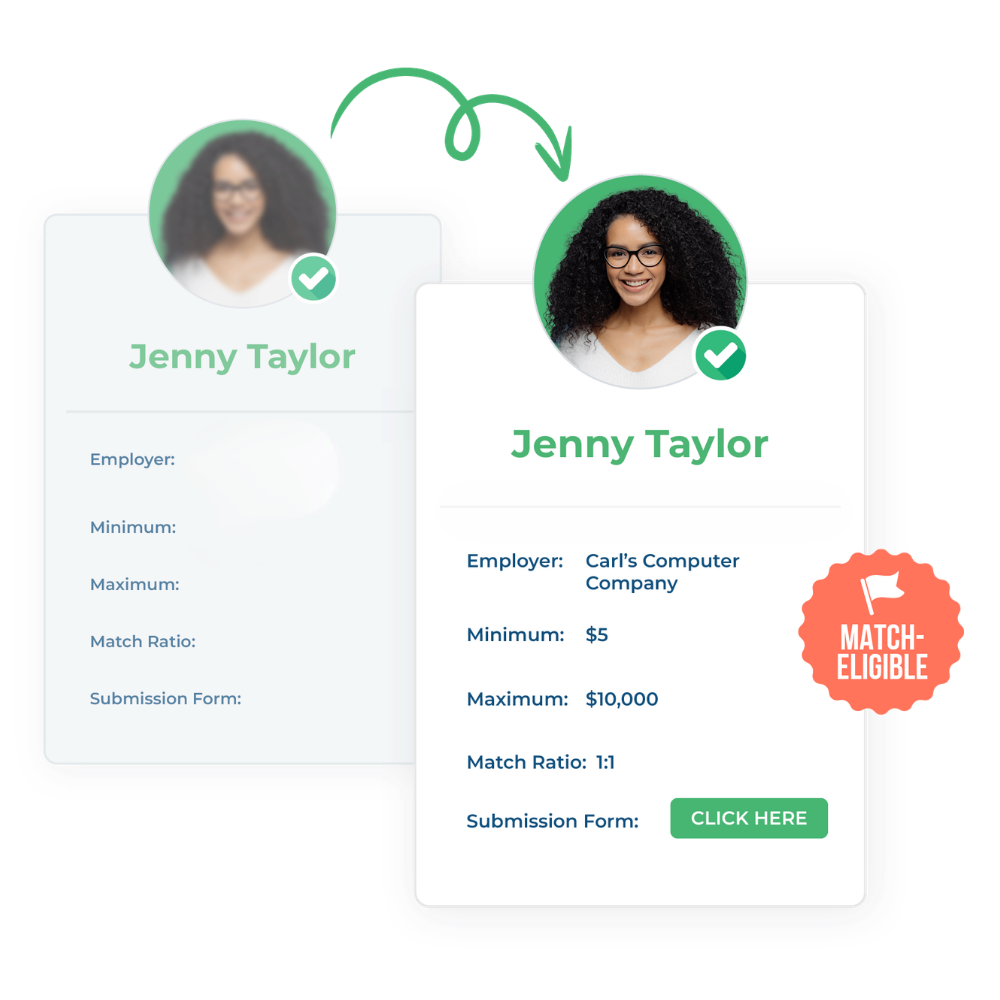
An employer append, or employment data enrichment project, is a data cleaning process that nonprofits and schools may implement in their donor databases. During this process, an organization shares its existing supporter records (which generally contain basic contact information such as names, email addresses, phone numbers, and more) with a dedicated data enrichment partner.
The data partner then cross-references those records against a massive database of corporate profiles, matching individuals to their workplaces based on unique contact points. Once the lookup is finished, the partner returns your file with the verified company names appended to each profile.
✅ Identifying Workplace Giving Potential: When you know where supporters work, you can flag their companies’ giving programs such as matching gifts, volunteer grants, and payroll deductions.
✅ Leveraging Corporate Sponsorship Connections: Identifying individuals (or clusters) who work at potential corporate partners provides an excellent entry point for CSR leads. With these connections, you can encourage internal advocacy for event sponsorships, corporate grants, in-kind donations, and more.
✅ Saving Staff Time and Resources: Rather than spending 20+ hours each month on manual research, an enrichment provider cleans your database and supplements fresh, actionable insights without adding to your team’s workload.
✅ Estimating Wealth Levels and Giving Capacity: Employment information provides your major gifts team with a clearer view of supporters’ financial capacity. Corporate job titles and company data help you stop guessing and start making data-driven asks.

Employer data is a powerful tool for nonprofits and schools. Check out these fast facts from Double the Donation’s NEW 2026 industry research that illustrate the value of collecting workplace information on your supporters to benefit individual fundraising and corporate philanthropy alike.
of nonprofit teams indicate that they collect employer information inconsistently.
of nonprofits occasionally use the employer information they collect for manual follow-ups or research.
of nonprofits’ biggest bottleneck in matching gift fulfillment is the lack of donor employer data.
of nonprofits indicate that employer data collection is the area of their workplace giving strategy that needs the most improvement.
of nonprofits say they do not track their supporters’ employer information at all.
of nonprofits find that keeping their donor employment information up to date takes ‘a lot’ of work.
of nonprofits report being confronted with missing data when reconciling gifts more often than not.
of nonprofits say the primary driver of their matching gift growth was better donor data and tracking.
of nonprofits say better data collection will be their top priority for the next 90 days.
of nonprofits never ask supporters for employer information during event registration.
of nonprofits always use employment data to strengthen their partnership proposals.
of nonprofits have begun using Artificial Intelligence specifically for donor data analysis.
Unfortunately, not all donor databases are created equal. Supporter networks across organizations tend to vary by career path, geographic region, age profile, and more. Because some industries and demographics update professional networking profiles more frequently than others, your expected employer match rate may differ.
Review the following matrix to see where your nonprofit or school fits in. From there, you can better understand your expected benchmark data and determine why your audience behaves the way it does. →
If your organization falls into a category with an expected benchmark of 15% to 25%, achieving a 25% hit rate is actually an excellent result.
A lower hit rate typically means that a sizable portion of your donors and volunteers work for small local businesses or serve in public-sector roles that do not offer workplace giving programs.
Regardless of your hit rate, knowing the employer names for even a quarter of your supporter file allows your team to target high-value matching gifts, volunteer grants, and payroll deductions that you would have otherwise overlooked.
| Organization Type | Expected Hit Rate | Core Demographics | Data Matching Dynamics |
|---|---|---|---|
| Pre-Professional Universities (e.g., Business, Tech, Engineering programs) | 35% to 45% | Active corporate professionals, tech workers, and corporate management | Regular profile updates on LinkedIn, extensive workplace tracking, and high matching gift program availability |
| Liberal Arts & Education Universities (e.g., K-12 Teachers, Social Work programs) | 20% to 30% | Government employees, public school teachers, and civic workers | High likelihood of public sector jobs, online profiles updated less frequently, and lower workplace giving programs availability |
| Large National Nonprofits (Metro / Urban Areas) | 30% to 40% | Corporate office employees, urban professionals, and younger donors | High density of enterprise companies with strong digital tracking and corporate philanthropy initiatives |
| Local Tech Village Nonprofits (Silicon Valley, Austin, Seattle hubs) | 35% to 45% | Software engineers, tech startup employees, and corporate executives | Near-instantaneous LinkedIn updates, high levels of digital connectivity, and massive workplace giving potential |
| Rural & Local Community Nonprofits (Small Town / Rural regions) | 15% to 25% | Agriculture workers, small business owners, local tradespeople, and retirees | May offer workplace giving programs that are rarely tracked in corporate giving registries; lower social media professional usage |
| K-12 Private Academies & Schools | 25% to 35% | Mid-career parents, local professionals, and established families | Stable mid-career employment makes records easier to match, but lists are smaller than university databases |
| Organization Type | Expected Hit Rate | Core Demographics | Data Matching Dynamics |
|---|---|---|---|
| Pre-Professional Universities (e.g., Business, Tech, Engineering programs) | 35% to 45% | Active corporate professionals, tech workers, and corporate management | Regular profile updates on LinkedIn, extensive workplace tracking, and high matching gift program availability |
| Liberal Arts & Education Universities (e.g., K-12 Teachers, Social Work programs) | 20% to 30% | Government employees, public school teachers, and civic workers | High likelihood of public sector jobs, online profiles updated less frequently, and lower workplace giving programs availability |
| Large National Nonprofits (Metro / Urban Areas) | 30% to 40% | Corporate office employees, urban professionals, and younger donors | High density of enterprise companies with strong digital tracking and corporate philanthropy initiatives |
| Local Tech Village Nonprofits (Silicon Valley, Austin, Seattle hubs) | 35% to 45% | Software engineers, tech startup employees, and corporate executives | Near-instantaneous LinkedIn updates, high levels of digital connectivity, and massive workplace giving potential |
| Rural & Local Community Nonprofits (Small Town / Rural regions) | 15% to 25% | Agriculture workers, small business owners, local tradespeople, and retirees | May offer workplace giving programs that are rarely tracked in corporate giving registries; lower social media professional usage |
| K-12 Private Academies & Schools | 25% to 35% | Mid-career parents, local professionals, and established families | Stable mid-career employment makes records easier to match, but lists are smaller than university databases |
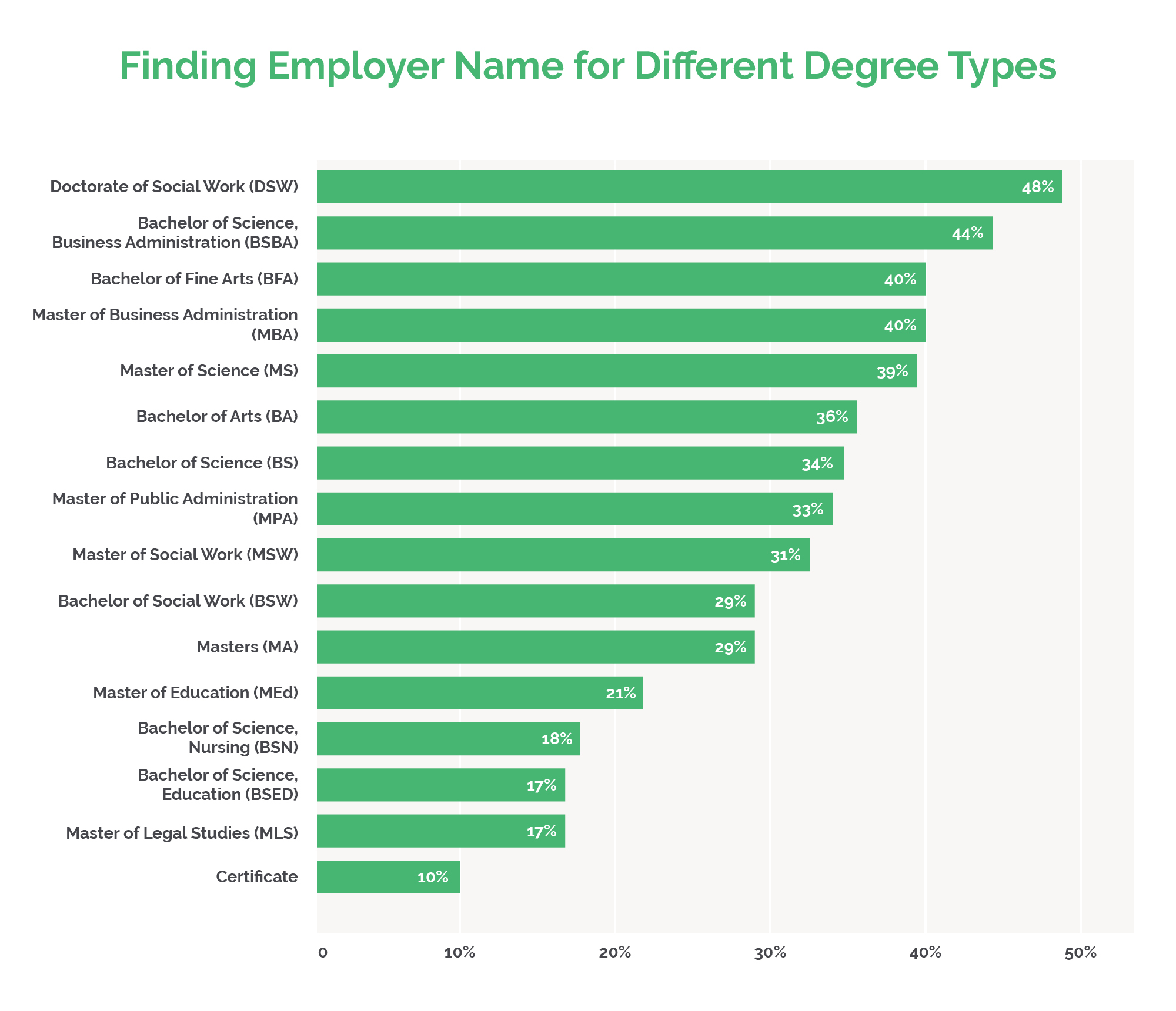
This graph breaks down Double the Donation’s average hit rates for employer names by the degree earned by a donor, volunteer, or alumnus.
An individual’s degree program can serve as a key factor in matching donor records with the correct employers. Plus, it can aid your efforts in using employer information effectively once you receive it!
Gathering employment data for supporters of all ages and stages can help organizations inform their workplace giving strategy, project giving capacity, and beyond. However, it’s important to note the expected differences according to individuals’ ages or graduation years.
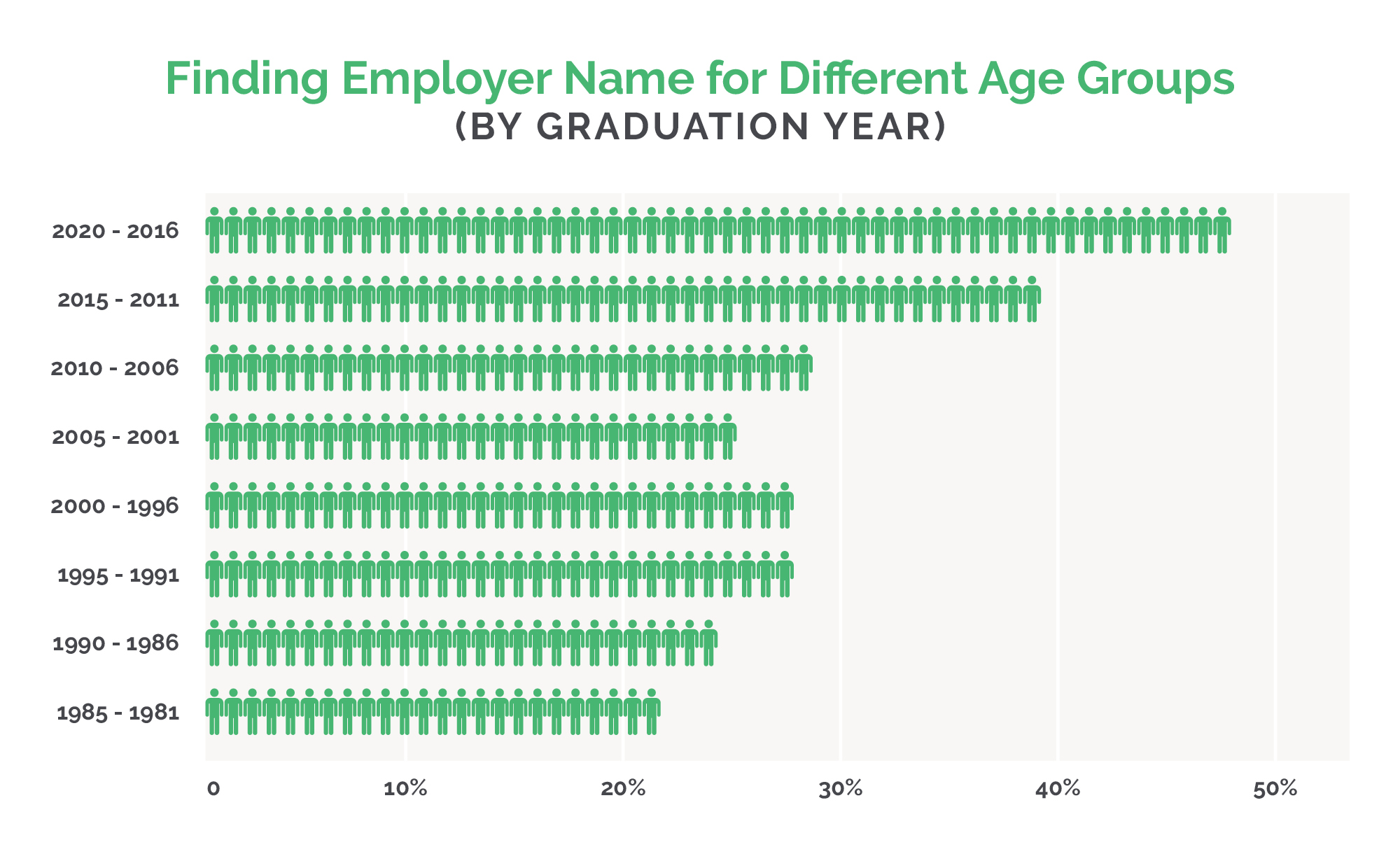
This graph depicts the percentage of records in a single list we may find an employer name for based on their college or university graduation date.
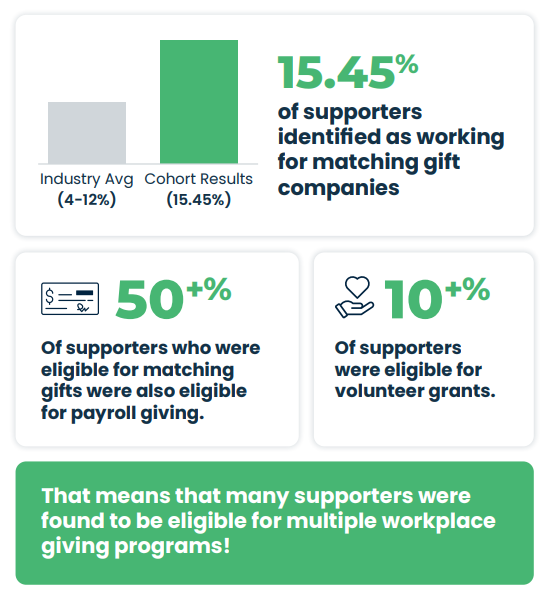
Uncovering workplace giving potential relies heavily on the depth and validation of supporter data. A recent anonymized cohort study from Double the Donation evaluated how large public universities and national nonprofits performed when leveraging employer data enrichment.
The real-world findings demonstrate that most standard fundraising databases contain a goldmine of hidden opportunities. These include:
These employer append statistics highlight the immediate value of running a data enrichment project. When you know where donors and volunteers work, you can easily map their profiles to invaluable corporate giving programs.
Rather than treating workplace philanthropy as a guessing game, these benchmarks provide an accurate roadmap for capturing the millions of dollars left on the table.
When considering receiving an employer append, make sure you understand the why of your append request and understand possible uses for the data you receive. The best kind of data is the data you can use to further your goals and foster deeper relationships with your donors and alumni.
Whether you’re collecting employer names to explore mentorship outreach, stay up to date on giving capacity, or pursue matching gift opportunities, use the insights above to help your team make the most of your append.
Ready to boost your corporate philanthropy efforts with an employer append? Contact our team to schedule a consultation today!
Interested in learning more about how employer data enrichment can grow your workplace giving revenue? Check out these recommended resources to continue growing your knowledge:

This comprehensive resource explains the basic mechanics of supplementing your donor database with workplace information.
Fundraisers will learn how to transition from incomplete supporter records to automated corporate philanthropy initiatives.

This strategic guide includes actionable tips for increasing your organization’s data hit rate during your next employer data screening project.
It helps your team optimize its database files upfront, plus helpful strategies for putting the new information you receive into action.

Download our free eBook to discover how verified employer insights unlock major fundraising opportunities across your database.
You’ll learn how to leverage fresh employment insights to scale your matching gifts, corporate volunteer programs, and payroll deductions.