
A Smart Nonprofit’s Guide to the Volunteer Grant Process
The lifeblood of any nonprofit organization is the dedication of its volunteers. From preparing food boxes to mentoring youth, the hours given freely by passionate supporters are invaluable. But what if those hours could be converted into hard cash, providing a secondary revenue stream with no extra time commitment from your supporters? This is the power of the volunteer grant process, a key component of corporate philanthropy that most nonprofits overlook. It’s a goldmine of unclaimed funding, often sitting right under your nose, waiting for a simple, proactive nudge.
For nonprofits operating with lean teams and tight budgets, securing every possible dollar matters. Volunteer grant programs, sometimes called “Dollars for Doers,” offer a remarkable opportunity to increase the financial return on volunteer time, essentially giving your organization “free money”. However, tapping into this potential requires a clear understanding of the process and a proactive strategy to guide your supporters through it. With thousands of companies offering these programs, learning how to leverage the Volunteer Grant Process can dramatically boost your volunteer program’s return on investment (ROI).
In this guide, we’ll cover:
- Why the Volunteer Grant Process Matters for Your Nonprofit
- Step 1: The Volunteer Shift and Employer Data Collection
- Step 2: Determining Volunteer Grant Eligibility
- Step 3: The Volunteer Grant Request and Submission
- Step 4: Securing the Corporate Grant Funding
- Marketing Strategies to Promote the Volunteer Grant Process
- Measuring Success and Optimizing Your Volunteer Grant Strategy
The misconception that corporate giving is reserved only for major organizations or requires too much administrative work often prevents mid-sized and smaller nonprofits from exploring the lucrative avenue of volunteer grants. Yet, technology solutions now exist to streamline the identification, outreach, and submission steps, removing the heavy manual lifting for your development team. By integrating simple, automated tools into your existing volunteer and fundraising processes, your nonprofit can systematically convert volunteer hours into much-needed revenue, fueling your mission on a whole new level.
Why the Volunteer Grant Process Matters for Your Nonprofit
Volunteer grants represent a crucial but often unrealized funding source in the philanthropic landscape. These programs are designed by companies to provide monetary donations to organizations where their employees dedicate their time. This means that the valuable time your volunteers invest is multiplied by a financial contribution from their employer, substantially increasing the overall impact of their service.
For every hour an employee volunteers, their company may offer a grant, with many programs ranging from $8 to $15 per hour of service. This “free money” drastically increases the ROI of your entire volunteer program, making this an essential piece of corporate giving strategy. Despite this immense potential, a significant portion of volunteer grant funding goes unclaimed because both nonprofits and volunteers often lack awareness about the programs or the detailed steps required to secure the funds. Implementing a clear strategy focused on the Volunteer Grant Process is the key to unlocking this overlooked revenue.
Step 1: The Volunteer Shift and Employer Data Collection
The Volunteer Grant Process officially begins the moment a supporter decides to dedicate their time to your cause. At this initial stage, the two most critical actions for your nonprofit are ensuring the volunteer completes their shift and, more importantly, capturing their employment information.
Completing the Volunteer Shift
For any volunteer grant to be approved, the volunteer must complete a qualifying period of service. This time commitment varies widely from company to company; while some require as little as 10 hours, others may require 20 or more. As a nonprofit, your job is to provide meaningful volunteer opportunities and a reliable system for logging the time contributed.
Collecting Employer Data
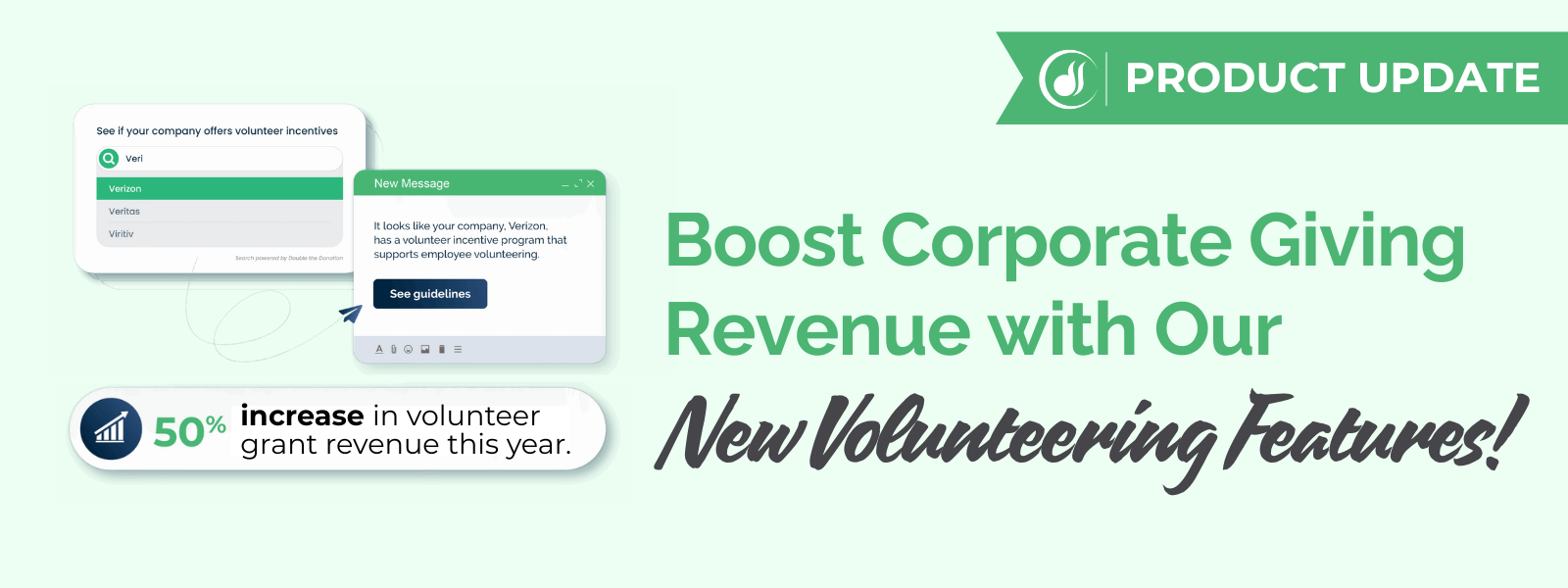
The most common reason for unclaimed volunteer grant funding is the lack of information on where your volunteers work. If you don’t know the employer, you can’t tell the volunteer they’re eligible. To solve this, you must proactively integrate an employer search tool directly into your volunteer registration form. This straightforward step allows the volunteer to instantly check if their company offers a volunteer incentive program right as they sign up.
Essential Data Collection Points:
- Online Volunteer Registration Forms (Most immediate and proactive)
- Post-Shift Thank-You/Follow-up Emails (For those who didn’t submit initially)
- Dedicated Volunteer Grants Webpage (For general inquiries and research)
By collecting this data upfront, your organization creates a foundation for an automated, proactive outreach strategy that eliminates manual guesswork. This automated tool turns employment data into actionable insights for next steps.
Quick Tip: Companies often simplify the criteria for their volunteer grant programs to encourage employee participation. For instance, ExxonMobil grants $500 for every 20 hours an employee volunteers, while Microsoft offers $25 per hour volunteered. Highlighting these easy-to-reach benchmarks can motivate fence-sitters to sign up for more shifts.
Step 2: Determining Volunteer Grant Eligibility
Once a volunteer has logged their hours and provided their employer’s name, the next phase of the Volunteer Grant Process involves quickly determining their eligibility. This step is critical for sending personalized, targeted follow-up communication.
Utilizing a Volunteer Grant Database
Manually researching the thousands of companies that offer volunteer grant programs is time-prohibitive for any nonprofit team. This is where a dedicated, centralized volunteer grant database becomes indispensable. By cross-referencing the collected employer data against the database, your team can instantaneously pull up company-specific program parameters, including:
- Minimum Volunteer Hours: The minimum number of hours required before a grant can be requested (e.g., 10 hours, 20 hours).
- Grant Amount: The monetary value of the grant, which can be a flat fee or an amount per hour volunteered (e.g., $500 flat, or $25/hour).
- Employee Eligibility: Whether the program is open to full-time staff, part-time staff, retirees, or board members.
- Mission Restrictions: If the company has any limitations on the type of organization they will fund (e.g., typically excluding strictly political or religious organizations).
Segmenting Your Volunteer Base
With eligibility criteria determined, you can segment your volunteers into targeted groups for outreach:
- Confirmed Eligible Volunteers: These volunteers work for a company with a known program and have logged the minimum hours. They are ready for the submission instructions.
- Potential Eligible Volunteers: These volunteers work for a matching company but have not yet logged the minimum hours. They require messaging that encourages them to sign up for more shifts.
- Unknown/Ineligible Volunteers: These volunteers either have an unknown employer or work for a company without a known program. They still deserve recognition but require broader messaging that encourages them to investigate internally or inform their HR team.
This streamlined segmentation, often automated by dedicated software, ensures that every follow-up email is highly relevant and actionable, directly addressing the next step the volunteer needs to take.
Step 3: The Volunteer Grant Request and Submission
This is the make-or-break point in the Volunteer Grant Process. The responsibility for completing the official grant request lies entirely with the volunteer. Your role as a nonprofit is to eliminate all barriers by providing clear, direct access to the required submission forms and guidelines.
Delivering Company-Specific Next Steps
The most effective way to drive submissions is through automated, personalized outreach immediately following the donation or volunteer shift. This typically involves:
- Confirmation Page Plugin: Right on the volunteer sign-up or thank-you screen, a plugin appears with the identified program details and a clear call-to-action button linking directly to the company’s internal request form.
- Automated Email Stream: Within minutes of completing their shift, the volunteer receives a personalized email that names their employer, confirms their eligibility, and provides the direct link or instructions needed for submission.
This immediacy capitalizes on the volunteer’s high engagement level immediately after interacting with your organization, maximizing the chances of follow-through.
The Volunteer’s Task
The volunteer typically needs to:
- Access the employer’s online portal or complete a paper form.
- Provide basic information about their service, including the dates, total hours volunteered, and sometimes a description of the activity.
- Identify your nonprofit as the grant recipient.
- Submit the request to their employer’s HR or CSR department for approval.
Your targeted outreach must clearly communicate these steps, alleviating any confusion and reducing the perceived administrative burden on the volunteer.
Did You Know? Volunteerism and financial giving are strongly correlated. Approximately 79% of people who volunteer also donate money to the organization they serve. Actively promoting the Volunteer Grant Process leverages this existing commitment, increasing your overall revenue and engagement from a single supporter base.
Step 4: Securing the Corporate Grant Funding
After the volunteer submits the request, the process shifts to the corporate side for review and disbursement.
Corporate Review and Approval
The employer’s corporate social responsibility (CSR) or human resources department will review the submission. This review confirms the employee’s status, verifies the volunteer hours logged with your organization, and checks that your nonprofit meets all eligibility criteria. If all conditions are met, the request is approved.
Grant Disbursement and Tracking
Once approved, the company issues the grant funding to your nonprofit. This payment, whether electronic or by check, completes the Volunteer Grant Process and is categorized as corporate revenue.
- Tracking and Reporting: Using dedicated software allows you to view the status of identified, pending, and received grants. This capability is vital for forecasting revenue, acknowledging the corporation, and, most importantly, thanking the individual volunteer.
- Stewardship and Recognition: Upon receiving the grant, send a final thank-you to the volunteer. This acknowledgment reinforces their dual impact (time and financial support) and deepens their loyalty, setting the stage for future engagement.
Marketing Strategies to Promote the Volunteer Grant Process
Maximizing revenue from volunteer grants depends heavily on successfully marketing the opportunity to your entire supporter base. A multi-channel strategy ensures you reach every eligible person.
Promote on Your Website
Your website is the single most important tool for promoting the Volunteer Grant Process. It should include:
- Dedicated Page: Create a highly visible “Volunteer Grants” page that explains what the programs are, why they matter, and includes an embedded search tool where visitors can check their eligibility.
- Volunteer Forms: As mentioned in Step 1, embed the employer search tool directly into your volunteer registration forms to capture data proactively.
- Confirmation Screens: Utilize the post-sign-up confirmation page to showcase immediate eligibility results, linking directly to the next steps.
Utilize Email and Social Media
Email and social media are perfect for personalized and broad outreach. Here’s what you should know:
- Personalized Email: Automated, personalized emails for confirmed eligible volunteers drive the highest conversion rates.
- Broad Campaigns: Send general emails and post regularly on social media to raise overall awareness, linking back to your dedicated webpage. Use compelling visuals that illustrate how time turns into money (e.g., volunteer hours → cash donation).
Engage Local Business Partners
Don’t just wait for national companies. Target local businesses and professional service firms (e.g., law, accounting) in your area. Research their VTO policies and pitch group volunteer events, which are often covered by their employee incentive programs.
Measuring Success and Optimizing Your Volunteer Grant Strategy
To ensure your investment in promoting the Volunteer Grant Process is worthwhile, rigorous tracking and analysis are necessary.
Key Performance Indicators (KPIs)
Focus on these key metrics to gauge performance:
- Total Volunteer Grant Revenue: The total dollar amount received from corporate volunteer grants.
- Number of Grants Received: The count of corporate grants secured.
- Volunteer Hours Logged: Total hours volunteered by employees eligible for grants.
- Grant Submission Rate: The percentage of eligible volunteers who submit their grant request forms to their employers.
- Volunteer ROI: Revenue generated from grants compared to the cost (staff time, software) of running the program.
Continuous Optimization
Use your data to continually refine your strategy. If the “Grant Submission Rate” is low, focus on improving the clarity and timing of your follow-up emails. If “Volunteer Hours Logged” is low, promote more flexible or team-based volunteer opportunities that align with corporate VTO programs. Investing in dedicated software is the most efficient way to track these KPIs, automate outreach, and continually increase revenue without overtaxing your team.
Wrapping Up & Next Steps
The Volunteer Grant Process is a powerful mechanism for nonprofits to double the value of their volunteers’ time, converting dedication into a reliable revenue stream. While the process hinges on the volunteer submitting the final form to their employer, the nonprofit’s role in proactive promotion and streamlined execution is essential. By seamlessly integrating employer data collection into the volunteer sign-up flow, leveraging automated tools to check eligibility and deliver customized instructions, and actively marketing the opportunity across all channels, your nonprofit can unlock hundreds, and potentially thousands, of dollars in annual funding.
If your nonprofit is ready to stop leaving money on the table and fully monetize your volunteers’ generosity, explore technology solutions that automate the entire Volunteer Grant Process. Get started with Double the Donation Volunteering!