Engaging Corporate Volunteers On Giving Tuesday-Top Tips

Engaging Corporate Volunteers On Giving Tuesday: Top Tips
Giving Tuesday has become a global phenomenon, synonymous with a massive influx of charitable donations. However, savvy nonprofits know that this day of generosity offers more than just a financial boost; it is a prime opportunity for engaging corporate volunteers on Giving Tuesday. While individual donors are opening their wallets, many corporate employees are looking for meaningful ways to donate their time and skills. Tapping into this resource can unlock a “double impact” for your organization: the immediate value of volunteer labor, plus the potential for financial rewards through corporate philanthropy programs such as volunteer grants and Volunteer Time Off (VTO).

Despite the clear benefits, many organizations overlook the potential of corporate volunteering during the year-end rush. They focus heavily on fundraising appeals, leaving valuable volunteer hours—and the corporate dollars attached to them—on the table. By shifting your strategy to include a robust corporate engagement plan, you can diversify your Giving Tuesday success. This involves not only creating appealing volunteer opportunities but also actively educating these supporters about the corporate benefits available to them.

In this guide, we’ll cover:

By integrating these strategies, you can transform Giving Tuesday from a one-day fundraising blitz into a catalyst for long-term corporate partnerships and sustainable support.

The Strategic Value of Corporate Volunteering

Before diving into tactics, it is essential to understand why engaging corporate volunteers on Giving Tuesday is a game-changer. Corporate philanthropy has evolved, and businesses are increasingly motivated to support the causes their employees care about. This aligns perfectly with the spirit of Giving Tuesday, creating a unique synergy between your needs and corporate CSR goals.

The “Double Impact” of Volunteer Grants

Volunteer grants, often called “Dollars for Doers”, are corporate giving programs where companies provide monetary donations to nonprofits based on the number of hours their employees volunteer. For example, a company might donate $25 for every hour an employee volunteers. This means that a corporate volunteer doesn’t just give their time; they essentially bring a check with them. On a high-volume day like Giving Tuesday, these grants can add up to thousands of dollars in unrestricted revenue.

Unlocking Volunteer Time Off (VTO)

Volunteer Time Off (VTO) is a policy where employers grant employees paid time off to volunteer. This removes a significant barrier to participation: the conflict between work and service. By targeting employees with VTO benefits, you can fill volunteer shifts during the workday—times that are typically hard to staff. Promoting VTO turns Giving Tuesday into a “day on” rather than a “day off” for professionals, bringing skilled labor directly to your mission.

Building Long-Term Partnerships

Giving Tuesday is an excellent entry point for new corporate partners. A successful volunteer event can serve as a “audition” for a deeper relationship. When employees have a positive experience, they are more likely to advocate for your nonprofit internally, leading to sponsorships, matching gift programs, and recurring volunteer events throughout the year.

Did You Know? Corporate engagement on Giving Tuesday has seen remarkable growth, with workplace giving programs reporting substantial increases in both employee participation and volunteer hours.

Strategies for Engaging Corporate Volunteers

To successfully attract corporate volunteers, you need to offer opportunities that fit their schedules and interests. A generic call for help might get lost in the noise; a targeted invitation stands out.

Create Group-Friendly Opportunities

Corporations love team-building activities. Design Giving Tuesday volunteer opportunities that accommodate groups. This could be a “kit-packing” event where teams assemble hygiene kits or school supply backpacks. These activities are scalable, social, and offer a tangible sense of accomplishment that corporate teams crave.

Offer Virtual and Skills-Based Options

Not every company can send a team in person. Offer virtual volunteering options, such as a “Wikipedia edit-a-thon” relevant to your cause or a remote mentorship session. Skills-based volunteering—like a marketing team auditing your social media or accountants helping with year-end financials—allows employees to use their professional expertise for good, which is highly valued by both the individual and their employer.

Sync with Corporate Calendars

Giving Tuesday falls at a busy time of year. Reach out to corporate partners early—ideally in September or October—to get on their holiday calendar. Many companies look for year-end service projects to boost morale. Position your Giving Tuesday event as the perfect solution for their holiday team-building needs.

Encouraging Volunteer Grant Participation

Getting volunteers in the door is step one. Step two is ensuring they submit their volunteer grant requests. This requires a proactive communication strategy that educates volunteers about their eligibility.

Pre-Event Education

Don’t wait until the event is over. Include a field in your volunteer registration form asking, “Does your employer offer volunteer grants?” Include a brief blurb explaining that many companies match volunteer hours with cash. This plants the seed before they even arrive.

On-Site Reminders

Make volunteer grants visible during your Giving Tuesday event. Place signage at the check-in table with a QR code linking to a “Check Your Eligibility” page. Make a verbal announcement during the orientation or wrap-up to remind everyone to log their hours and check their corporate portal. A simple reminder like, “Did you know your time today could be worth $100 to us?” can drive immediate action.

The “Double Thank You” Follow-Up

In your post-event thank you email, include a specific call to action for volunteer grants.

The Ask: “Thank you for your hard work! Please take 5 minutes to log your hours in your company’s giving portal. This simple step could double the value of your time.” Providing a direct link to a database or search tool that lets them find their company’s specific forms reduces friction and increases submission rates.

Promoting Volunteer Time Off (VTO)

Many employees have VTO hours they need to “use or lose” before the end of the year. Giving Tuesday is the perfect hook to encourage them to use those hours with you.

Targeted Outreach

If you have employment data on your current supporters, segment your email list. Send a targeted email to employees of companies known to offer VTO (like Salesforce, Deloitte, or Patagonia), reminding them to use their remaining hours.

The Message: “Don’t let your VTO hours expire! Spend Giving Tuesday with us and make a difference on company time.”.

“Lunch and Learn” Sessions

Offer to host a brief virtual or in-person “Lunch and Learn” for corporate partners in November. Use this time to explain your Giving Tuesday plans and explicitly highlight how employees can use VTO to participate. This direct connection with employees can bypass the inbox clutter.

Social Media Spotlights

Use LinkedIn to target professionals. Share posts highlighting the benefits of VTO and tagging companies with generous policies.

Post Idea: “Does your company offer Volunteer Time Off? 🕒 Spend your day making an impact! We have open shifts for #GivingTuesday. Tag your coworkers and sign up today!”

Quick Tip: Create a dedicated “Corporate Volunteering” page on your website. List upcoming opportunities and include a search tool where visitors can instantly check their VTO and volunteer grant eligibility. This serves as a central hub for all your corporate engagement efforts.

Customizable Volunteer Communication Templates for Giving Tuesday

To help you execute these strategies, here are ready-to-use templates for your Giving Tuesday campaign.

Email Template: The “Invite”

Subject: Join us for Giving Tuesday (and double your impact!)

Body: Dear [Name], This Giving Tuesday, we aren’t just asking for donations—we’re asking for you. We are hosting a special volunteer event to [briefly describe activity], and we’d love to see you there. Did you know your employer might pay you to join us? Many companies offer Volunteer Time Off (VTO), allowing you to volunteer during the workday without using vacation time. Plus, after you volunteer, your company might offer a volunteer grant—a monetary donation for every hour you serve!

  • Check your eligibility here: [Link to search tool or your website].
  • Sign up for a shift: [Link to registration].

Let’s make this Giving Tuesday our biggest yet!

Social Media Post: The “VTO Reminder”

“Don’t leave your benefits on the table! 📉 Many companies offer Volunteer Time Off (VTO) that expires on Dec 31. Use your hours to support [Nonprofit Name] this #GivingTuesday! It’s a great way to give back without spending a dime. 🤝 Sign up now: [Link].”

Post-Event Thank You: The “Grant Nudge”

Subject: You were amazing! One last thing…

Body: Hi [Name], Thank you so much for volunteering on Giving Tuesday! Your hard work helped us [mention specific impact]. Want to make your time go even further? Please check if your employer offers volunteer grants. It takes just a few minutes to log your hours, and it could result in a generous donation to our cause at no cost to you. Find your company’s form here: [Link] Thank you for being a champion for our mission!


Wrapping Up & Next Steps

Engaging corporate volunteers on Giving Tuesday is a powerful way to amplify your impact. By looking beyond simple cash donations and tapping into the vast resources of corporate philanthropy (specifically volunteer grants and VTO), you can secure vital funding and build a community of dedicated supporters.

To get started, review your volunteer registration forms to ensure you are capturing employment data. Then, draft your communication plan using the templates above, ensuring you mention VTO and grants in every email and social post. With a proactive approach, you can turn this Giving Tuesday into a milestone for corporate engagement.

Ready to streamline your corporate fundraising? Request a demo with Double the Donation Volunteering to see how our powerful tools can help you identify eligible volunteers, promote workplace volunteering, and maximize your revenue with minimal effort. It’s perfect for Giving Tuesday and beyond!

Retaining VTO Volunteers-Top Strategies For Success

Retaining VTO Volunteers: Top Strategies For Ongoing Success
In the nonprofit sector, volunteer retention is often just as critical as donor retention. While evening and weekend shifts often fill up quickly with students and community members, the “9-to-5 gap” remains a persistent operational hurdle. Finding reliable, skilled support during standard business hours is a universal struggle—unless you have tapped into the power of Volunteer Time Off (VTO).

VTO is a corporate benefit where employers grant employees paid time off specifically to volunteer with nonprofit organizations. For the nonprofit, these volunteers are a goldmine: they are available during critical operational hours, they often possess specialized professional skills, and their service is fully supported by their employer. However, treating a VTO volunteer as a one-time visitor is a strategic error. Retaining VTO volunteers is one of the most effective ways to build a sustainable, high-impact workforce that operates when you need it most.

The challenge is that many VTO participants view their service as a “one-off” annual activity; a box to check for their HR department. To change this, nonprofits must shift their approach from transactional coordination to relational stewardship. By implementing specific retention strategies, you can transform a single day of service into a recurring partnership, ensuring that employees return to use their VTO hours with your organization year after year.

In this comprehensive guide, we’ll cover:

Success in retaining VTO volunteers requires understanding their motivations and removing the barriers to repeat service. By mastering these strategies, you can turn corporate benefits into community impact.

The Strategic Value of the VTO Volunteer

Before diving into retention tactics, it is essential to understand why these specific volunteers are worth the extra effort. A VTO volunteer is not just a set of hands; they represent a bridge between the corporate and nonprofit sectors.

Daytime Availability

The most obvious value is schedule compatibility. 49% of individuals state that work commitments are their biggest obstacle to volunteering. VTO eliminates this barrier. By retaining a VTO volunteer, you secure a reliable resource for Tuesday mornings or Thursday afternoons—times that are historically difficult to staff.

Professional Expertise

Corporate employees often bring professional expertise to the table, such as copywriting, graphic design, accounting, or legal services. When you retain a VTO volunteer, you are often retaining high-level consulting work at zero cost to your organization. A graphic designer using their VTO to help with your marketing materials is a relationship worth nurturing for the long haul.

The “Double Value” of Service

VTO volunteers are often precursors to financial support. Companies that offer paid time off for volunteering are statistically more likely to offer volunteer grants (monetary donations based on hours served) or matching gifts. By retaining the volunteer, you are also retaining a pipeline to unrestricted corporate revenue.

Did You Know? The number of companies offering VTO has increased by 2 in 3 over the last decade. This is a growing demographic of supporters that is actively looking for places to spend their paid hours.

VTO as a Mutual Retention Tool

One of the most compelling arguments for prioritizing VTO volunteers is that the retention mechanism works both ways. Promoting VTO helps you keep volunteers, and using VTO helps companies keep employees.

Solving Volunteer Burnout

Burnout is a primary cause of volunteer attrition. Supporters want to help, but balancing a full-time job, family, and service can become overwhelming. VTO solves this by integrating service into their work life rather than their personal time. When you remind a volunteer that they can use VTO, you are offering them a way to stay involved without sacrificing their weekends. This prevents burnout and increases the longevity of their relationship with your cause.

Aligning with Corporate Goals

Companies use VTO to attract and retain talent, particularly among Gen Z and millennial employees who prioritize social impact. When you provide a stellar volunteer experience, the employee reports back positively to their employer. 96% of employees who participate in corporate volunteerism report having a positive company culture . By helping the employee feel good about their job, you become a valued partner to the corporation, which encourages the company to send that employee (and others) back to you repeatedly.

Strategy 1: The “Use It or Lose It” Campaign

Most corporate VTO policies operate on a calendar year. Employees are given a bank of hours—averaging 20 hours per year—that do not roll over. This creates a natural urgency that you can leverage for retention.

The Q4 Reminder

In October and November, run a specific campaign targeting volunteers who identified their employers during registration. Remind them that their VTO hours likely expire on December 31st.

Sample Messaging: “Don’t let your benefits expire! You likely have paid volunteer hours left to use before the year ends. Spend a day with us this holiday season and make a difference on company time.”

The Q1 “Fresh Start”

In January, send a “Welcome Back” message reminding supporters that their VTO bank has replenished.

Sample Messaging: “New Year, New Impact! Your 20 hours of VTO have reset. Sign up for your spring shift now and get your year started right.”

By aligning your outreach with their benefit cycle, you stay top-of-mind and provide a helpful reminder to use a benefit they might otherwise forget.

Strategy 2: Data-Driven Personalization

You cannot retain VTO volunteers if you do not know who they are. One of the most common mistakes nonprofits make is failing to capture employment data until after a relationship is established. To drive retention, you must identify VTO eligibility from day one.

Capture Data at Registration

Include an optional “Employer” or “Company” field on all volunteer sign-up forms. Advanced tools can even integrate search widgets that identify VTO eligibility in real-time. If you know a volunteer who works for Patagonia, you know they have up to 18 paid volunteer hours available. You can then tailor your retention plan to ensure they use all 18 of those hours with you.

Segment Your Communications

Do not send generic appeals to your corporate volunteers. Create a segment in your CRM for “VTO-Eligible Volunteers.” Communications to this group should specifically reference the convenience of weekday volunteering.

  • Generic email: “We need help next week.”
  • Targeted email: “Looking to use your VTO? We have shifts open next Tuesday that fit perfectly into a workday schedule.”

Quick Tip: Look for local businesses. Professional services, information technology, and financial services companies are the most likely to offer paid VTO programs . Targeting employees from these sectors in your database can yield high retention rates.

Strategy 3: The Corporate “Champion” Model

People are more likely to return if they feel part of a community. One of the best ways to retain a VTO volunteer is to encourage them to bring their colleagues.

Identify Internal Advocates

If you have a volunteer who consistently uses VTO, ask them to be a “Corporate Champion.” Their role is to recruit colleagues to join them for a service day. This shifts the dynamic from an individual activity to a team-building event.

Facilitate Group Days

Create specific “Corporate Service Days” during the week. If a volunteer knows they can bring their team on a Wednesday, they are more likely to organize the event. Once the team has a positive experience, you can set up a recurring annual or quarterly service day, effectively automating the retention of that entire group.

Foster Healthy Competition

If you have volunteers from competing firms (e.g., two local banks or tech firms), create a friendly challenge. “Which company can log the most VTO hours this quarter?” This taps into company pride and keeps volunteers returning to ensure their team wins.

Strategy 4: Streamlined Verification

Nothing kills retention faster than administrative friction. Employees utilizing VTO often need to provide proof of service to their HR department to get paid. If your organization is slow or disorganized in providing this verification, the volunteer is unlikely to return.

Proactive Verification

Don’t wait for the volunteer to ask. At the end of a shift, proactively offer a signed letter or digital verification of hours. “Here is the documentation you need for your HR department to process your VTO.”

Designated Point of Contact

Assign a specific staff member to handle corporate verification requests. Give VTO volunteers this person’s direct email. Knowing there is a responsive human on the other side gives volunteers confidence that their time off will be approved and paid without hassle.

Strategy 5: Linking VTO to Volunteer Grants

Retention is about maximizing value. Many companies that offer VTO also offer volunteer grants (money donated for hours served). By helping a volunteer access both, you deepen their impact and their emotional investment in your organization.

The “Double Impact” Pitch

When a volunteer uses VTO, follow up with information about volunteer grants.

Message: “Thank you for spending your VTO day with us! Did you know your company might also donate $20 for every hour you served? Check here to see if you can double your impact.”

Celebrating the Full Contribution

When you recognize these volunteers, celebrate the total value they provided: the labor, the VTO utilization, and the grant money. “Thanks to Sarah using her VTO and submitting a grant request, she provided 20 hours of service AND funded supplies for our summer camp.” This recognition reinforces the behavior and encourages repeat performance.

Did You Know? 80% of companies with volunteer grant programs offer between $8 and $15 per hour volunteered . Retaining a volunteer who uses VTO and submits grants is financially equivalent to retaining a mid-level donor.

Strategy 6: Meaningful Stewardship

Corporate volunteers often fear that their “day of service” is just busy work. To retain them, you must prove that their time during business hours had a measurable impact on your mission.

Impact Reporting

Send a follow-up email specifically detailing what was accomplished during their shift. “Because you spent your Tuesday morning with us, 50 families received food boxes.” Connect their absence from work directly to the presence of resources for your beneficiaries.

Executive Acknowledgement

For volunteers from major corporate partners, consider a brief thank-you note from your Executive Director or Board Chair sent to the volunteer and their manager (with permission). This validates the employee’s use of VTO to their boss, making it easier for them to request the time off again in the future.

Exclusive Opportunities

Offer retained VTO volunteers “first dibs” on popular shifts or skills-based projects. If they feel like insiders who get to do the most interesting work, they will prioritize your organization over others when allocating their limited VTO hours.

Strategy 7: Leverage Technology

Managing VTO retention manually is difficult. Luckily, leveraging the right technology allows you to scale your efforts without burning out your volunteer coordinator (or your volunteers themselves!). Here are a few key steps we recommend:

Implement Automated Reminders

Use volunteer management software to trigger automated emails based on time since last service. “It’s been 3 months since you used your VTO with us—we miss you!”

Integrate Your VMS with a Corporate Database

Tools like Double the Donation Volunteering can be integrated into your volunteer forms to automatically identify VTO eligibility. This allows you to instantly prompt volunteers with company-specific guidelines and forms, removing the guesswork and making it easy for them to say “yes” to returning.


Wrapping Up & Next Steps

Retaining VTO volunteers is a strategic investment that pays dividends in both operational capacity and financial sustainability. By shifting your focus from simply filling shifts to nurturing corporate relationships, you unlock a reliable, skilled, and daytime-available workforce.

The key is to treat VTO not as a perk for the volunteer, but as a partnership between the volunteer, their employer, and your nonprofit. When you make it easy for them to use their benefits, validate their impact, and help them look good to their employer, you create a loyalty loop that lasts for years.

To get started, audit your current volunteer roster. Identify those who work for VTO-friendly companies using a corporate giving database. Then, launch a simple email campaign reminding them of their unused hours before the year ends.

Are you ready to take your corporate fundraising to the next level? Request a demo with Double the Donation Volunteering to see how our automation tools can help you identify eligible volunteers, promote VTO and volunteer grants, and maximize your impact with minimal effort.

Helpful Volunteer Time Off Blurbs to Increase Participation
Helpful Volunteer Time Off Blurbs to Increase Participation

One of the most persistent challenges for volunteer coordinators is the “9-to-5 gap.” You have passionate supporters who want to help, but their professional obligations keep them tied to their desks during your most critical operational hours. Whether you need help sorting donations on a Tuesday morning or staffing a front desk on a Thursday afternoon, finding coverage during the business day can feel impossible. But there is a solution hiding in plain sight: Volunteer Time Off (VTO).

VTO is a corporate benefit where employers grant employees paid time off specifically to volunteer with nonprofit organizations. It is a win-win-win: companies boost employee engagement, individuals get to support causes they love without using their vacation days, and nonprofits get reliable, skilled help during business hours. Despite the growth of these programs—66% of employers now provide some form of paid time off for volunteering—many supporters simply don’t know they have this benefit.

The key to unlocking this resource is communication. You need to actively market VTO opportunities to your supporter base, educating them on the existence of these programs and encouraging them to use their hours with you. To help you get started, we’ve compiled a comprehensive list of volunteer time off blurbs. These ready-to-use templates for your website, emails, and social media channels will help you bridge the awareness gap and fill your weekday shifts with dedicated corporate volunteers.

In this guide, we’ll cover:

By weaving these messages into your communications, you can transform your volunteer program from a weekend-only operation into a robust, week-round community asset.

The Strategic Value of Volunteer Time Off

Before you start pasting these blurbs into your marketing materials, it is important to understand the landscape. VTO is not just a nice perk; it is a significant bank of hours waiting to be tapped. Companies with paid VTO programs offer an average of 20 hours per employee per year . That is 2.5 full workdays that every eligible employee could be spending with your organization.

Furthermore, the desire is there. Studies show that 49% of individuals state that work commitments are their biggest obstacle to volunteering, yet 62% report that the ability to volunteer during business hours would be the top factor for a positive experience . By promoting VTO, you are directly solving your volunteers’ biggest problem: lack of time.

Did You Know? The number of companies offering VTO has increased by 2 in 3 over the last decade. Major employers like Patagonia, Microsoft, and Deloitte all offer generous programs, meaning many of your current supporters likely have hours they haven’t used.

Website Blurbs: Your Education Hub

Your website is the first place potential volunteers go to learn how they can help. It is essential to plant the seed of VTO right where they are looking for shifts.

The “Volunteer Opportunities” Page

This is your primary recruitment tool. Add a section here that explicitly mentions VTO to catch professionals browsing for opportunities.

Template 1: The “Civic Time Off” Hook

Header: Volunteer During Your Workday

Body: Did you know many companies offer paid Volunteer Time Off (VTO)? It allows you to volunteer with us during regular business hours without dipping into your vacation time. If your employer offers this benefit, we have plenty of weekday shifts that need your help! Call to Action: Check your eligibility and sign up for a daytime shift today.

Template 2: The Corporate Partner Appeal

Header: Put Your Corporate Benefits to Good Use

Body: Don’t let your VTO hours go to waste! Companies like [List Local Employers] offer paid time off for employees to volunteer. Use your benefit to support [Nonprofit Name] and make a difference while you work. Call to Action: Search for your company to see if you have VTO hours available.

The Shift Registration/Calendar Page

When a volunteer is looking at a specific Tuesday morning shift, they might hesitate because of work. Use a blurb here to overcome that objection.

Template 3: The Nudge

Header: Stuck at work? Body: You might not have to be! 66% of employers offer paid time off for volunteering. Check with your HR department to see if you can use VTO to join us for this shift. Call to Action: Learn more about VTO.

Quick Tip: Embed a corporate giving database widget on your volunteer page. This allows supporters to type in their employer’s name and instantly see if they have a VTO program, the number of hours offered, and links to the necessary forms.

Email Blurbs: Direct and Personal

Email allows you to target specific segments of your audience. Whether you are sending a general newsletter or a specific plea for shift coverage, these blurbs can drive action.

The Newsletter Feature

Include a “Did You Know?” section in your monthly volunteer newsletter. Since VTO policies often renew annually, regular reminders keep it top-of-mind.

Template 4: The General Education Blurb

Subject: A way to volunteer without using PTO

Header: Unlock Your Paid Volunteer Time Off Body: Dear [Volunteer Name], We know it’s hard to find time to volunteer between work and life commitments. But did you know your employer might pay you to join us? Paid Volunteer Time Off (VTO) is a growing corporate benefit that grants employees paid days to volunteer. It’s separate from your vacation or sick time! Action: Check your employee handbook or ask your HR rep if you have VTO hours to use before the year ends. We’d love to see you during the week!

The “Hard-to-Fill Shift” Recruitment

Use this blurb when you have critical daytime needs that are going unfilled.

Template 5: The Specific Ask

Subject: Need a break from the office? Join us this Tuesday!

Body: Hi [Volunteer Name], We have a critical need for volunteers this Tuesday from 10 AM to 2 PM. We know this is during work hours, but many of our supporters use their company’s Volunteer Time Off (VTO) benefit to cover these shifts. If you work for a company like Thomson Reuters or GM Financial, you likely have paid hours available just for this purpose. Come spend a few hours making a difference! Action: Sign up for the Tuesday shift here.

The Corporate Partner Email

If you collect employment data (which you should!), send targeted emails to employees of companies known to have VTO programs.

Template 6: The Targeted Reminder

Subject: Use your [Company Name] VTO hours with us!

Body: Dear [Volunteer Name], Because you work at [Company Name], you have access to a fantastic benefit: paid Volunteer Time Off. We’ve noticed you haven’t used your hours with us yet this year. We have several upcoming opportunities that fit perfectly with your VTO program. Why not take a day to support [Nonprofit Name] and get paid for it? Action: View our weekday volunteer schedule.

Social Media Blurbs: Visible & Shareable

Social media is ideal for raising general awareness and reaching professionals where they network. Use these platforms to normalize the idea of volunteering during the workday.

LinkedIn

This is the most effective channel for VTO content, as your audience is already in a “work” mindset.

Template 7: The Professional Development Angle

“Looking for a way to give back without sacrificing your weekends? 🏢🤝 Many companies now offer Paid Volunteer Time Off (VTO) as part of their benefits package. It’s a great way to build skills, bond with colleagues, and support [Nonprofit Name]—all on company time! Check with your HR team today. #CorporateSocialResponsibility #VTO #Volunteer”

Template 8: The “Use It or Lose It” Reminder

“Don’t leave your benefits on the table! 📉 If your company offers Volunteer Time Off, those hours likely expire at the end of the year. Take a break from the screen and spend a day with us at [Nonprofit Name]. Your community needs you (and your inbox can wait!). 📧🚫 #VTO #EmployeeEngagement #NonprofitLife”

Instagram & Facebook

Use these interactive social media platforms to show the “fun” side of taking a VTO day.

Template 9: The Visual Story (Photo of a volunteer smiling during a daytime shift)

“Meet Sarah! 👋 She’s an accountant at [Company Name], but today she’s a hunger hero. Thanks to her company’s Volunteer Time Off (VTO) program, she spent her Tuesday morning packing meals instead of spreadsheets. 📦✨ Does your job offer VTO? Come join us! [Link in Bio]”

Template 10: The Short & Sweet

“Work 9-to-5? You can still volunteer! 🕒 Many employers offer paid time off for service. Ask your boss about VTO and come spend a day with us! #VolunteerTimeOff #DayOfService”

Registration and Intake Blurbs

The best time to capture VTO potential is when a volunteer first registers with your organization. Adding a small blurb to your intake form can prompt immediate action.

The Registration Field

Template 11: The Intake Prompt

“Many companies offer Volunteer Time Off (VTO) or Volunteer Grants. Please enter your employer’s name so we can help you maximize your impact!”

Best Practices for VTO Marketing

Writing the copy is step one. To truly fill those daytime shifts, you need to be strategic about how you deploy these blurbs.

1. Collect Employment Data: You cannot target VTO opportunities if you don’t know who is eligible. Make “Employer” a standard field on all volunteer interest forms. This allows you to segment your email lists and send specific appeals to employees of VTO-friendly companies like Microsoft or Sentinel Group.

2. Focus on “Civic Time Off:” Some companies refer to VTO as “Civic Time Off” or “Community Service Leave.” Use these terms interchangeably in your blurbs to ensure you are catching everyone’s attention.

3. Highlight the “Win-Win:” Always frame VTO as a benefit to the volunteer. It prevents burnout, offers a change of pace from the office, and allows them to be a “hero” for your organization during its most critical hours.

4. Leverage Group Events: Encourage volunteers to use VTO for team-building. A blurb like, “Bring your whole team for a VTO day!” can fill 10-20 slots in a single booking. This is especially effective for companies looking to boost morale and retention.


Wrapping Up & Next Steps

Integrating volunteer time off blurbs into your communications strategy is a low-effort, high-reward way to solve your daytime staffing challenges. By educating your supporters about the benefits sitting in their employee handbooks, you unlock a new pool of availability that was previously inaccessible. Whether through a LinkedIn post, a newsletter segment, or a simple question on a registration form, every mention helps normalize the concept of daytime volunteering.

Start by auditing your current volunteer touchpoints. Are you asking about employment? Do you have a dedicated webpage explaining VTO? Once you identify these gaps, paste in the templates above to start the conversation.

Ready to take your corporate engagement to the next level? Request a demo with Double the Donation Volunteering to see how our fundraising automation tools can help you identify eligible volunteers, promote VTO and volunteer grants, and maximize your impact with minimal effort.

Top Volunteer Time Off Best Practices-Tips & Tricks

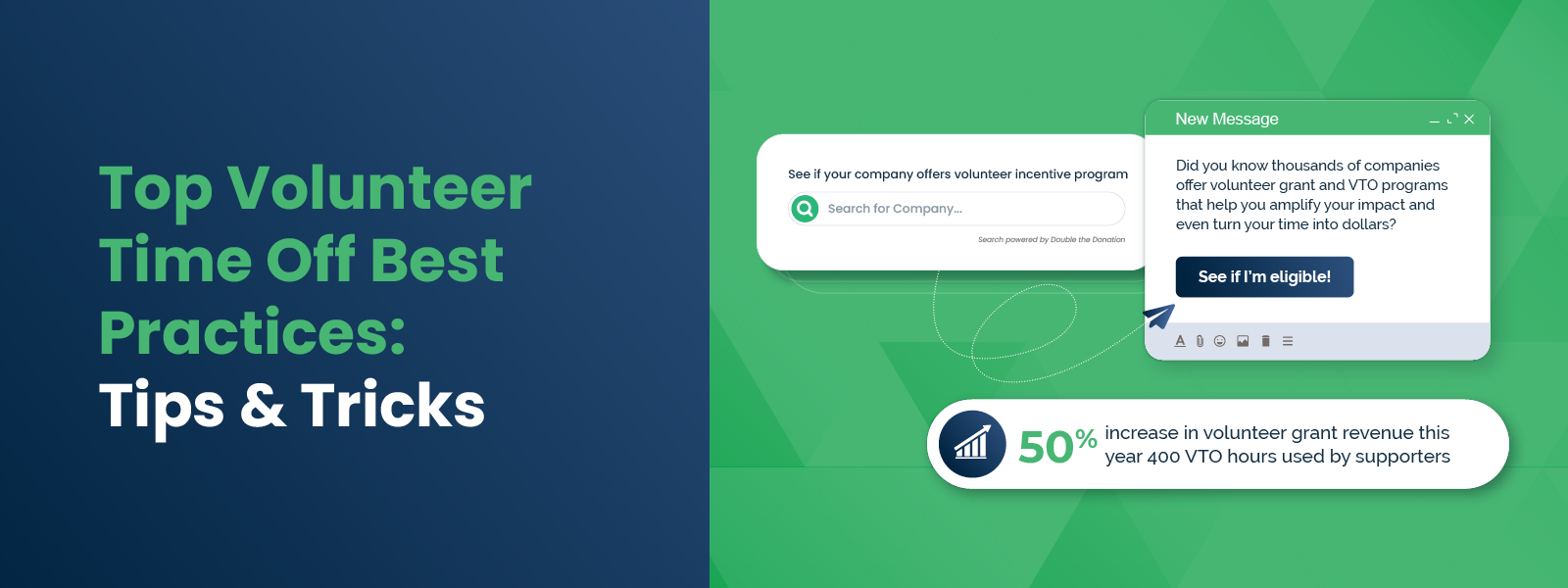
Top Volunteer Time Off Best Practices: Tips & Tricks
In the dynamic landscape of nonprofit management, securing reliable volunteer support is often just as challenging as securing funding. Organizations frequently struggle to fill shift rosters, particularly during standard business hours when most potential supporters are tied up at work. However, a growing trend in corporate social responsibility is changing this dynamic. Volunteer Time Off (VTO), a corporate benefit where employees receive paid time off to volunteer, is bridging the gap between professional obligations and community service. For nonprofits, advocating for and leveraging these programs is not just a nice-to-have strategy; it is a critical operational tool that can revolutionize how you staff your programs.

Despite the immense potential of VTO, many organizations fail to fully capitalize on it because they treat it as a passive benefit rather than an active recruitment tool. By implementing specific volunteer time off best practices, you can transform your volunteer management strategy. This involves shifting from simply accepting help to actively identifying eligible employees, tailoring your outreach to fill your hardest-to-staff hours, and communicating the unique value of these corporate partnerships.

In this comprehensive guide, we’ll cover:

By mastering these practices, you can turn the standard 9-to-5 barrier into a new avenue for engagement, ensuring your mission is supported by a steady stream of dedicated, corporate-backed volunteers.

Understanding Volunteer Time Off (VTO)

Before executing a strategy, it is essential to understand exactly what you are leveraging. Paid volunteer time off is a mechanism through which employees partake in volunteer activities during work hours for regular pay. It is a specific type of employee benefit where team members receive a set number of hours designated for volunteerism above and beyond their existing paid time off (PTO).

The prevalence of these programs is growing rapidly. Currently, 66% of employers provide some sort of paid time off program for volunteering. Among companies that offer paid VTO, the average benefit is 20 hours per employee per year, which equals about 2.5 working days. This represents a massive pool of untapped hours that nonprofits can access.

Did You Know? The number of companies offering VTO has increased by 2 in 3 over the last decade. This surge reflects a shift in corporate culture where businesses are actively seeking ways to engage employees and support local communities simultaneously.

For the volunteer, VTO removes the primary barrier to service. Statistics show that 49% of individuals state work commitments are their biggest obstacle to volunteering. Furthermore, 62% of individuals report that the ability to volunteer during business hours would be the top factor for a positive experience. By targeting VTO, you are directly addressing the needs of your supporters while solving your own staffing challenges. Here are some best practices for doing so!

Best Practice 1: Collect Employment Info at Registration

The most critical step in leveraging VTO happens before a volunteer ever sets foot in your facility. You cannot promote relevant VTO opportunities if you do not know where your supporters work. Therefore, one of the most effective volunteer time off best practices is to integrate employment data collection directly into your registration and signup processes.

Here’s how you can do so:

Capture Data Upfront: When a supporter signs up for a shift or registers as a volunteer, include a field for “Employer” or “Company”. This should not be an afterthought; it should be a key part of your intake form. By knowing their employer immediately, you can determine if they have access to VTO benefits before they even attend the event.

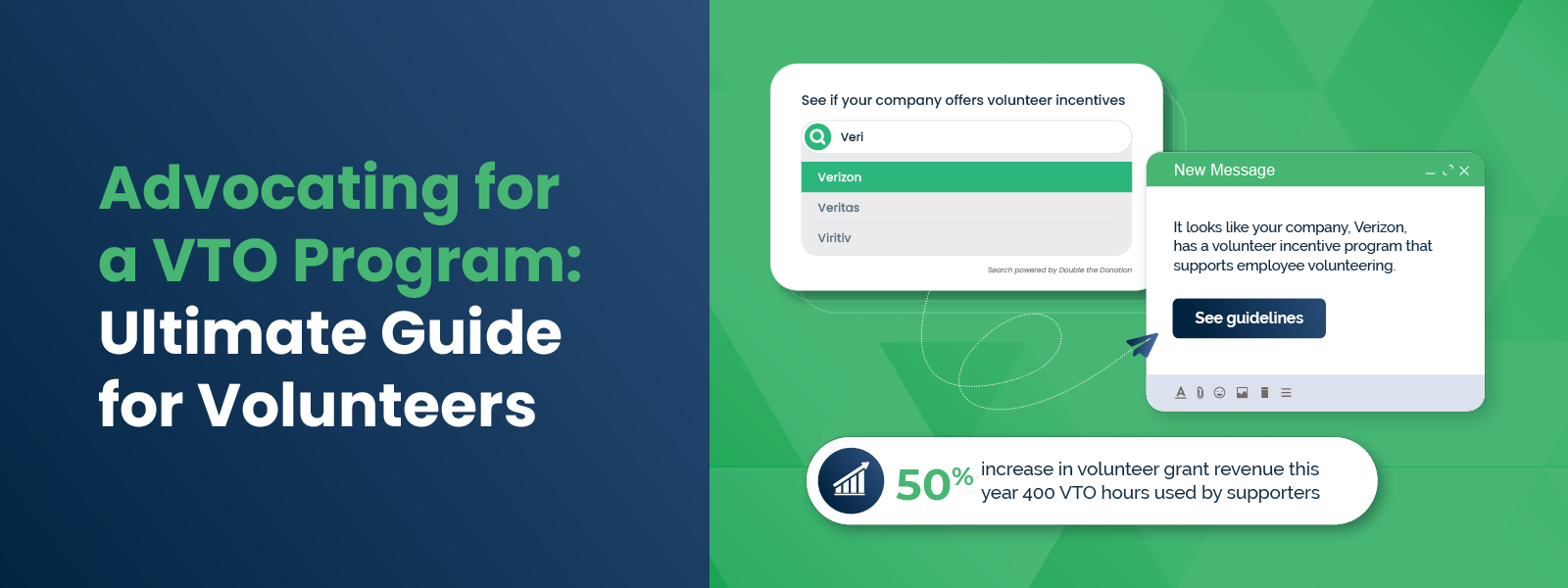
Automate the Discovery: Advanced volunteer management integrations can streamline this process. For example, as a volunteer enters their information, a seamless integration can prompt them to search for their employer. If they select a company like Disney or Verizon, the system can instantly identify if that company offers a volunteer incentive program.

Incorporate Pre-Event Promotion: Once you have this data, you can tailor your pre-event communications. Instead of a generic confirmation email, you can send a personalized message: “We see you work for [Company Name]. Did you know they offer paid time off for volunteering? You might be able to use your VTO hours for this upcoming shift!” This proactive approach educates volunteers who may be unaware of their own benefits and encourages them to utilize them for your cause.

Best Practice 2: Fill Hard-to-Fill Volunteer Slots

One of the most significant operational headaches for nonprofits is finding coverage during the workday. Most volunteers work 9-to-5 jobs, leaving them available only on evenings and weekends. VTO is the perfect solution to this problem because it is specifically designed for volunteering during work hours.

Targeted Scheduling: Use your employment data to identify volunteers who work for companies with VTO programs. When you have gaps in your Tuesday morning or Thursday afternoon schedules, target these specific segments with your outreach. Frame the request around their benefit: “Take a break from the office and use your VTO hours to support us this Wednesday.”

Pitching “Civic Time Off:” Some VTO programs are categorized as “Civic Time Off”. This framing is particularly useful for administrative or skills-based volunteering that must happen during business hours. If you need a graphic designer or an accountant, pitch the opportunity to professionals at VTO-eligible firms as a way to use their work hours for social good.

Host Group Events During the Week: Encourage existing volunteers to organize group events with their colleagues during the workday. If a volunteer works at a VTO company, they can rally their team for a Wednesday afternoon service project. This fills multiple slots at once and creates a reliable pipeline of daytime support.

Best Practice 3: Communicate the Impact

To encourage utilization, you must articulate why using VTO matters. It isn’t just about the volunteer getting a paid day off; it is about the tangible value they bring to your organization. Volunteerism provides nonprofits with operational support without added costs.

Monetizing the Hour: When discussing VTO, quantify the value. Explain that by using VTO, volunteers are essentially donating their professional time to your cause. This support allows you to redirect funds that would have been spent on staffing or contractors toward direct mission delivery.

Enhancing Retention: Supporters are more likely to get involved and continue their support over time when their time is compensated by their employer. By encouraging VTO use, you are actually helping to build a more sustainable and loyal volunteer base. Communicate this to your supporters: “Using your VTO helps you stay consistent with your volunteering without burning out your personal free time.”

Highlighting Skill-Based Contributions: Corporate employees often bring professional expertise to the table, such as copywriting, graphic design, accounting, or legal services. When asking for VTO, highlight how these specialized volunteer skills provide affordable access to knowledge that accelerates your mission.

Best Practice 4: Promote VTO on Digital Channels

Awareness is the biggest hurdle. You need to make sure your supporters know that VTO exists and that you welcome it. A multi-channel marketing approach is essential for driving participation.

Create a Dedicated Web Page: Establish a dedicated “Volunteers” or “Corporate Engagement” page on your website. This page should serve as a centralized hub for resources, explaining what VTO is and listing top employers with programs. Explicitly state: “Check out our Volunteer Time Off page to see if your company offers a program”.

Incorporate Social Media Advocacy: Market volunteer time off programs on your social media channels. Share graphics that ask, “Does your company pay you to volunteer?” Include engaging visuals and testimonials from volunteers who have used VTO. Tag local businesses known for their programs to increase visibility.

Implement Smart Email Marketing: Incorporate VTO messaging into your regular newsletters. Use snippets like, “Monetize your volunteerism with employee volunteer grants or VTO”. Segment your lists to send specific VTO reminders to subscribers who have identified their employers in previous surveys or forms.

Quick Tip: Use a database tool on your website to allow volunteers to search for their eligibility. A simple search widget can instantly tell a user if their company offers VTO, minimum hours required, and links to forms .

Best Practice 5: Follow Up After the Event

The engagement loop isn’t closed until you’ve followed up. Even if a volunteer didn’t use VTO for a specific event, a post-event follow-up can plant the seed for next time or prompt a retroactive request if the company allows it.

Automated Thank-Yous: Set up automated email streams that trigger after a volunteer completes a shift. In the thank-you email, include a section on VTO: “Thank you for volunteering! Did you know your company might pay you for the time you just spent with us? Check your eligibility here.”

Encourage Future Sign-Ups: Use the follow-up to push for future daytime shifts. “Enjoyed having you! Since you work for [Company], you likely have 20 hours of VTO available. We’d love to see you at our next weekday event!” This personalized touch shows you value their time and understand their benefits.

Verify and Validate: If a volunteer does use VTO, be prompt in verifying their hours. Corporate programs often require digital or paper verification. Designating a staff member to handle these requests quickly ensures the volunteer gets their paid time and the company records the impact, increasing the likelihood of future support.

Best Practice 6: Get Familiar with Standout VTO Programs

Knowing which companies offer these benefits allows you to target your recruitment efforts. Here are a few notable examples:

  • Patagonia: Offers up to 18 paid volunteer hours per year and additional paid two-month internships for environmental activism .
  • Thomson Reuters: Provides two paid days (16 hours) of volunteer time each year.
  • GM Financial: Offers 8 hours of VTO per quarter for full-time staff and 4 hours for part-time staff .
  • Microsoft: Includes 30 hours of pro bono services each year and focuses on accessible legal knowledge.
  • Deloitte: This company is recognized for generous volunteer time off programs that encourage employee engagement.

Do any of your existing volunteers or other supporters work for these companies? Make sure you’re collecting employment data throughout the volunteer journey so that you can check!


Wrapping Up & Next Steps

Implementing these volunteer time off best practices can fundamentally change how your nonprofit staffs its operations. By moving the conversation from “can you spare some time?” to “use your work benefits to support us,” you unlock a new category of availability that is vital for daytime operations. VTO transforms volunteerism from a personal sacrifice into a professional benefit, creating a sustainable model for community engagement.

To get started, audit your registration forms to ensure you are collecting employment data. Build a dedicated section on your website for VTO resources, and begin targeting your daytime shift recruitment toward employees at VTO-friendly companies. With the right data and a proactive strategy, you can fill your schedule and deepen your corporate partnerships simultaneously.

Ready to streamline your corporate fundraising? Request a demo with Double the Donation to see how our industry-leading tools can help you identify, track, and secure more volunteer grants and matching gifts today.

Advocating for a VTO Program-Ultimate Guide for Volunteers

Advocating for a VTO Program: Ultimate Guide for Volunteers
Volunteers are the lifeblood of any nonprofit organization. They dedicate their time, energy, and skills to help you achieve your mission, often balancing their service with full-time jobs and personal responsibilities. But what if those full-time jobs actually paid them to volunteer with you? This isn’t a fantasy; it is the reality of Volunteer Time Off (VTO). While many forward-thinking companies have already adopted these programs, thousands more have yet to formalize their corporate volunteering policies. This presents a massive, untapped opportunity for your organization: empowering your supporters to champion the cause from the inside out.

Advocating for a VTO program is a strategic initiative that turns your most dedicated volunteers into corporate ambassadors. When an employee approaches their leadership with a proposal for paid volunteer time, they offer a solution to modern business challenges such as employee burnout, retention, and engagement. As a nonprofit leader, your role is to equip these supporters with the research, data, and narrative they need to make a compelling pitch. By doing so, you not only secure more daytime volunteer hours for your own organization but also help foster a culture of philanthropy in the wider business community.

In this guide, we’ll cover:

By the end of this article, you will be equipped to help your volunteers unlock thousands of hours of paid service, transforming sporadic weekend warriors into reliable, weekday partners.

What is Volunteer Time Off (VTO)?

Before you can ask a volunteer to advocate for a policy, everyone involved needs a clear understanding of what is being requested. Volunteer Time Off (VTO) is a corporate benefit in which employers grant employees paid time off to volunteer with nonprofit organizations. This is distinct from standard Paid Time Off (PTO) because it does not eat into an employee’s vacation or sick days. Instead, it is a separate bank of hours—typically ranging from 8 to 40 hours per year—designated solely for community service.

For the nonprofit, VTO is a game-changer. It unlocks the “9-to-5” window, allowing skilled professionals to volunteer during your operating hours without financial penalty. For the employee, it signals that their company values their personal passions and community involvement. For the company, it is a powerful branding and retention tool. Despite these benefits, many companies simply haven’t implemented a program because they aren’t aware of the structure or fear productivity losses. This is where your advocacy strategy comes into play.

Why Companies Should Care: The Business Case

When a volunteer walks into their HR director’s office to discuss advocating for a VTO program, they cannot lead with your nonprofit’s needs. The pitch must be centered on the company’s benefits. Corporate leadership thinks in terms of ROI, retention, and recruitment. You need to arm your volunteers with the data that proves VTO is an investment, not an expense.

Employee Retention and Recruitment

The modern workforce, particularly Millennials and Gen Z, demands more than just a paycheck. They want purpose. Studies consistently show that employees are more likely to stay with a company that supports their philanthropic interests. A VTO program is a low-cost, high-impact benefit that differentiates a company in a competitive hiring market. It tells prospective hires that the company cares about work-life balance and community impact.

Combatting Burnout

Burnout is a significant cost to businesses, leading to lower productivity and higher turnover. Volunteering has been proven to reduce stress and increase feelings of well-being. By offering VTO, companies are essentially providing a wellness benefit that recharges their workforce. An employee who spends a Friday afternoon planting trees or mentoring students returns to work on Monday feeling refreshed and connected, rather than drained.

Corporate Social Responsibility (CSR) Visibility

Consumers prefer to buy from companies that do good. A formal VTO program gives a company authentic stories to tell. Instead of just writing a check, they can showcase photos of their team making a tangible difference in the community. This builds brand loyalty and strengthens community relations, which is invaluable for local businesses.

Did You Know? According to recent corporate giving statistics,  more than 66% of companies now offer some form of paid-release time for volunteering. If your volunteer’s employer doesn’t offer VTO, they are falling behind the industry standard. This fear of missing out (FOMO) can be a powerful motivator for corporate leadership to modernize its benefits package.

Step 1: Preparing Your Volunteers for Advocacy

The most effective advocate for a VTO program is an internal champion—an employee who loves their job and loves your mission. However, you shouldn’t send them into the boardroom unprepared. The first step in advocating for a VTO program is research.

Analyze the Current Benefits Landscape. Ask your volunteer to look at their current employee handbook. Does the company already have a matching gift program? Do they sponsor local events? If there is existing philanthropic activity, a VTO program is a natural next step. If there is nothing, the “ask” might need to start smaller, perhaps with a single day of service.

Research Competitor Offerings. Nothing spurs action like competition. Help your volunteer find out if their company’s direct competitors offer VTO. If “Company A” offers 16 hours of VTO and “Company B” offers none, Company B is at a disadvantage for recruiting talent. Providing this competitive intelligence allows the employee to frame the request as a necessary step to stay competitive in the market.

Gather Internal Support. Advocacy is stronger in numbers. Encourage your volunteer to talk to their colleagues. Are there other employees who volunteer? Would they use VTO if it were available? Walking into a meeting with a petition or a list of interested employees shows that this is a company-wide desire, not just a personal request.

Step 2: Identifying the Decision Makers

Knowing who to pitch is just as important as the pitch itself. In a massive global corporation, this decision might sit with a dedicated CSR team. However, in small to mid-sized businesses where new VTO programs are most likely to be launched, the decision-maker is often closer to home.

Human Resources (HR). For most companies, VTO is categorized as an employee benefit. The HR Director is often the best entry point because they are directly responsible for recruitment, retention, and morale. They are the ones analyzing exit interviews and looking for ways to keep staff happy. A VTO program is a tool in their arsenal.

The CEO or Business Owner. In smaller organizations, the owner makes every financial decision. If your volunteer has a direct relationship with the leadership, a casual conversation can be the spark. Owners often want to give back but fear the loss of productivity. A direct assurance from a high-performing employee can alleviate those fears.

Marketing Leadership. If the company is struggling with brand identity or local visibility, the Marketing Director might be the internal champion you need. They will see the VTO program as a source of content and positive PR. They can argue for the program from a branding perspective, adding weight to the HR arguments.

Step 3: Structuring the VTO Proposal

Once the groundwork is laid, it is time to make the formal request. While the conversation should be organic, having a structured proposal helps. You can even provide your volunteers with a template or a “one-pager” that they can customize to fit their own needs.

For the best results, the VTO proposal should address the “What,” the “Why,” and the “How” of the intended program:

The Introduction: Start with gratitude for the company’s current culture and a statement of the employee’s dedication. Then, pivot to the need.

  • Example: “I am proud to work for a company that values its people. In talking with my colleagues, many of us are passionate about giving back to our community but struggle to find the time during the traditional work week.”

The Proposal: Clearly define what VTO is. Avoid vague language.

  • Example: “I propose we pilot a Volunteer Time Off (VTO) program. This would provide each full-time employee with 8 hours of paid time annually to volunteer with a 501(c)(3) nonprofit of their choice. This is a standard benefit offered by 66% of companies today.”

The Benefits: Reiterate the business case.

  • Example: “Implementing this program would boost our team’s morale, provide excellent content for our social media channels, and help us attract socially conscious talent. It aligns perfectly with our company value of ‘Community First’.”

The Guardrails: Address productivity concerns immediately.

  • Example: “The program would require manager approval for all time off to ensure business needs are met. We can restrict eligibility to employees in good standing and require verification from the nonprofit to ensure the time is used appropriately.”

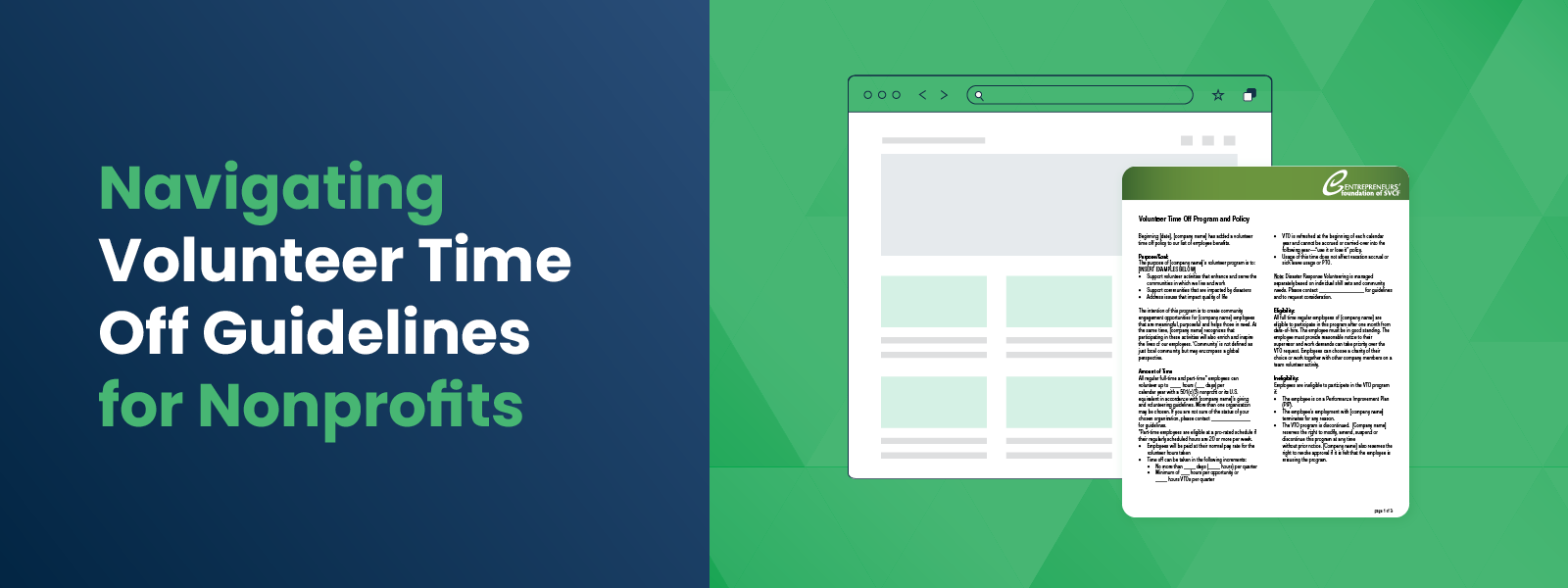
Ready to get started with a compelling VTO proposal? Jump ahead to our free, customizable template that can help your supporters advocate for VTO programming with ease.

Step 4: Proposing a Pilot Program

Change can be scary for corporate leadership. If the answer to a full VTO program is “no” or “not right now,” encourage your volunteer to pivot to a pilot program. A pilot is a low-risk way for a company to test the waters without committing to a permanent policy change.

The “Day of Service” Pilot: Suggest a single, company-wide Day of Service. The company closes for a half-day or allows a specific department to take an afternoon off to volunteer together. This allows leadership to see the team-building benefits firsthand with minimal disruption.

The Departmental Pilot: Recommend that one department (e.g., Marketing or Sales) trials the VTO policy for six months. If productivity remains stable and employee satisfaction rises, the program can be rolled out to the rest of the company.

The “Dollars for Doers” Alternative: If paid time off is strictly off the table due to hourly billing or coverage issues, suggest a Volunteer Grant program instead. In this model, the employee volunteers on their own time (evenings/weekends), and the company makes a monetary donation to the nonprofit. This achieves the CSR goals without affecting work hours.

Quick Tip:When advocating for a VTO program, remind the company that they can cap the number of hours. Starting with 8 hours (one day) per year is a very manageable risk. It equates to less than 0.5% of an employee’s total working hours, yet the perceived value to the employee is massive.

Bonus: Free Template to Advocate for a VTO Program

To ensure your supporters feel confident approaching their leadership, provide them with a pre-written email template they can adapt as needed. This kind of “copy-paste” resource removes the anxiety of drafting a proposal from scratch and ensures the pitch clearly highlights the benefits of volunteer time off , such as improved employee retention and strengthened corporate social responsibility.

Take a look:

Subject: Proposal: Boosting Employee Engagement through a Volunteer Time Off Pilot

Dear [Name of Manager/HR Director],

I am writing to you because I am proud to work for a company that values [insert company value, e.g., community, leadership, or innovation]. My experience working here has been incredibly rewarding, and I wanted to share an idea that could help us further strengthen our team culture.

As you may know, I actively volunteer with [Nonprofit]. Dedicating my time to this cause helps me build leadership skills and stay energized, which I strive to bring back to my work every day. However, finding time to volunteer during standard business hours can be a challenge.

The Proposal
I would love to see [Company] consider launching a pilot Volunteer Time Off (VTO) program. This is a standard benefit where the company grants employees a small bank of paid hours (e.g., 8 hours per year) specifically to volunteer with a 501(c)(3) nonprofit.

Why It Matters for Us

  • Retention & Recruitment: Studies show that employees are more likely to stay with companies that support their philanthropic passions.
  • Wellness: Volunteering is a proven way to reduce burnout and increase workplace satisfaction.
  • Community Visibility: It creates authentic stories about our team’s impact that we can share with clients and on social media.

The Ask
I am not asking for a permanent policy change today. I would simply like to request a brief 15-minute meeting to discuss what a “Day of Service” or a departmental pilot program might look like. I have some data on how we can structure this to ensure it doesn’t impact productivity.

Thank you for your time and for continuing to make [Company] a great place to work.

Best regards,

[Your Name]
[Your Job Title]

As you share this template, remind your volunteers that this resource is simply a starting point. They should feel empowered to customize each section to reflect their specific company culture, whether that means focusing on employee engagement metrics or highlighting specific community partnerships.

The Nonprofit’s Role: Supporting the Advocate

You cannot simply ask your volunteer to “go get us a VTO program” and walk away. You must be an active partner in their advocacy. Your organization needs to provide the resources that make them look professional and prepared.

Create a VTO One-Pager: Design a branded PDF that explains the benefits of VTO from a nonprofit perspective. Include statistics on how volunteer hours translate into community impact. This document gives your volunteer something physical to hand to their boss.

Offer to Host the First Event: Make the “Yes” easy. Tell your volunteer, “If your company agrees to a pilot, we will host the first team-building day. We will organize the activity, provide lunch, and take photos for your company newsletter.” Removing the logistical burden from the company makes the proposal much more attractive.

Be Responsive: If a company reaches out to verify hours or ask questions, answer immediately. Corporate partners move fast. If your administrative process is slow, they may decide the program is too much hassle.

Overcoming Common Objections

When advocating for a VTO program, your volunteers will likely face resistance. Equip them with responses to the most common objections.

  • Objection: “We can’t afford to pay people not to work.”
    • Response: VTO is cheaper than turnover. The cost of one day of salary is significantly less than the thousands of dollars it costs to recruit and train a new employee. VTO builds loyalty that saves money in the long run.
  • Objection: “Employees will abuse it to take vacations.”
    • Response: The policy will require verification. The employee must provide a signature or letter from the 501(c)(3) nonprofit confirming the hours were served. Without proof, the time is deducted from their standard vacation bank.
  • Objection: “It’s a scheduling nightmare.”
    • Response: VTO is treated exactly like PTO or a doctor’s appointment. It requires manager approval and advance notice. Business needs always come first; if it’s a busy week, the request can be denied.

When your dedicated supporters are well-prepared with recommended solutions to their employers’ concerns, you increase the likelihood that a VTO program will ultimately be born.


Conclusion: Wrapping Up & Next Steps

Advocating for a VTO program is a long-term investment. It transforms the relationship between your nonprofit and your volunteers from a simple transaction of time into a strategic partnership. By empowering your supporters to champion this cause, you are helping them create a better workplace while securing vital resources for your mission.

When a company adopts a VTO program, it unlocks a floodgate of potential. Suddenly, their entire workforce becomes a pool of potential daytime volunteers. The ripple effects—financial grants, sponsorships, board members—can last for years.

Ready to mobilize your advocates?

  • Segment your list: Run a report to find consistent volunteers who work for small to mid-sized local businesses.
  • Make the ask: Reach out to your top 10 candidates. Invite them for coffee and pitch the idea of them becoming a VTO advocate.
  • Equip them: Send them the data and templates they need to succeed.

Your volunteers are already giving you their hearts and hands. With your help, they can give you the gift of time, paid for by their employers.

Ready to supercharge your efforts with the right technology? See how Double the Donation Volunteering can help power your organization’s corporate volunteer engagement. Request a personalized demo today!

Navigating Volunteer Time Off Guidelines for Nonprofits
Navigating Volunteer Time Off Guidelines for Nonprofits

The scarcest resource for any nonprofit is not always funding; often, it is time. You have the mission and the vision, but you need the hands-on support to execute it. Conversely, for your supporters, the desire to help is frequently overruled by the demands of the 9-to-5 workday. This friction between the need for help and the lack of time is exactly what Corporate Volunteer Time Off (VTO) is designed to eliminate. However, simply knowing that VTO exists isn’t enough. To truly capitalize on this corporate benefit, your organization must understand the specific rules of the road: volunteer time off guidelines.

Corporate VTO programs are governed by strict policies that dictate who can volunteer, when they can do it, and for which organizations. These guidelines serve as the gatekeepers to thousands of hours of skilled, energetic, and cost-free labor. When a nonprofit development team takes the time to understand these parameters, they stop viewing VTO as a vague concept and start seeing it as a predictable resource. You can design shifts that fit perfectly into corporate “time blocks,” target employees who have the most hours to burn, and provide the exact verification documentation companies require.

In this guide, we’ll cover:

By mastering the nuances of these guidelines, you can position your nonprofit as the “easiest place to volunteer,” encouraging professionals to spend their paid leave advancing your mission rather than leaving those hours unused at the end of the year.

What Are Volunteer Time Off Guidelines?

Volunteer Time Off guidelines are the internal policies that corporations use to manage their employee volunteer programs. While the concept of VTO is simple (paying employees to volunteer during work hours), the execution can be complex. Companies must balance their philanthropic goals with business continuity. They cannot have their entire sales team vanish on the last day of the quarter, nor can they support organizations that conflict with their corporate values.

These guidelines function as a contract between the employer and the employee. They outline the rights, responsibilities, and limitations of the benefit. For the nonprofit, these guidelines are the “rules of engagement.” If you understand them, you can help your volunteers navigate them. If you ignore them, you risk scheduling events that no corporate partner can attend.

Did You Know? The adoption of VTO is accelerating rapidly. Approximately 66% of companies now offer some form of paid-release time for volunteering. However, utilization rates often lag because employees are unsure of the guidelines or fear asking their managers for time off. Nonprofits play a crucial role in validating this benefit.

Employee Eligibility: Who Gets the Time Off?

The first section of any VTO policy document defines who has access to the benefit. Unlike matching gift programs, which often extend to retirees and spouses, VTO is strictly an employee benefit, and usually a restrictive one. Understanding these distinctions helps you target your volunteer recruitment efforts effectively.

Full-Time vs. Part-Time Status

Standard guidelines typically reserve VTO for full-time, salaried employees. These individuals are often given a set bank of hours (e.g., 16 hours) to use annually. Part-time or hourly workers may have reduced benefits or may be excluded entirely to avoid complications with overtime pay and shift coverage. When recruiting, it is safer to assume that your corporate contacts in management or administrative roles have access to VTO, while hourly retail staff may not.

Probationary Periods

Most companies institute a waiting period for new hires. Guidelines often state that an employee becomes eligible for VTO only after completing 90 days or 6 months of employment. This is important for nonprofits to remember when engaging with new corporate partners. Don’t ask the newest hires to take a day off in their first week.

Performance Standing

VTO is a perk, not a right. Many guidelines include a clause stating that employees must be in “good standing” to request time off. If an employee is on a performance improvement plan or has attendance issues, their VTO request will likely be denied. This underscores the importance of VTO as a reward for high performers—the exact type of motivated, capable people you want volunteering at your organization.

Nonprofit Qualification: Does Your Mission Fit?

Just as with grants, companies put strict boundaries around where their employees can spend their time. They want to ensure their brand is associated with reputable, non-controversial organizations.

501(c)(3) Status

The baseline requirement in almost all volunteer time off guidelines is that the beneficiary organization must be a registered 501(c)(3) nonprofit. If you are a fiscally sponsored project or a community group without official status, employees may not be able to use VTO to support you.

Mission Alignment and Exclusions

While VTO policies are generally more permissive than cash grant policies, exclusions still apply. Common exclusions in VTO guidelines include:

  • Political Activities: Employees cannot use VTO to campaign for candidates or work at polling places.
  • Religious Worship: While volunteering at a church-run soup kitchen is usually permitted, using VTO to teach Sunday School or participate in religious services is typically banned.
  • Discriminatory Groups: Companies will not approve VTO for organizations whose policies conflict with their internal non-discrimination standards.

“Personal Interest” vs. Community Service

Guidelines often distinguish between hobbies and service. For example, coaching a child’s soccer team might be considered a personal interest activity that requires vacation time, whereas coaching a team for an at-risk youth program would qualify for VTO. Understanding this nuance helps you frame your volunteer opportunities correctly. You aren’t just offering “fun activities”; you are offering “community service opportunities.”

Quick Tip: If you are a religious organization, emphasize your secular community services (like food pantries or shelter operations) when pitching to corporate volunteers. Make it clear that the volunteer activity serves the general public and is not religious in nature to satisfy corporate compliance officers.

Understanding Hour Allocations and Caps

How much time can a volunteer actually give you? This is determined by the “allocation” section of the guidelines. This data is critical for planning your volunteer shifts. If you know a local company offers 8 hours of VTO, scheduling a 10-hour event creates a logistical problem for their employees.

The “Hours per Year” Model

Most companies allocate a specific bank of hours that resets annually.

  • 8 Hours (1 Day): Common for smaller companies or those new to VTO.
  • 16-20 Hours (2-2.5 Days): A standard benchmark for major corporations.
  • 40+ Hours (1 Week): Offered by leaders in CSR like Salesforce or Deloitte.

Incremental Usage

Guidelines also dictate how these hours can be used. Can an employee take 1 hour off every Friday to mentor a student? Or must they take full-day or half-day blocks?

  • Minimum Increments: Many policies require VTO to be taken in minimum increments of 2 or 4 hours to minimize disruption to the workday.
  • Shift Implications: If your volunteer shifts are only 1 hour long, it might be harder for employees with “4-hour minimum” policies to participate. Offering “half-day” shifts (e.g., 9 AM to 1 PM) is often the sweet spot that aligns with the majority of corporate guidelines.

Use It or Lose It

VTO hours almost never roll over to the next year. This creates a “use it or lose it” dynamic. This guideline creates a massive opportunity for nonprofits in Q4 (October, November, December). Employees realize they have 8 or 16 hours of unused VTO that will vanish on December 31st. Positioning your holiday opportunities as a way to “maximize your benefits” can drive a surge in year-end support.

The Request and Approval Workflow

Unlike showing up on a Saturday, VTO requires a formal approval chain. Understanding this workflow helps you set realistic timelines for recruitment. You cannot expect a corporate group to show up tomorrow; they need time to navigate their internal red tape.

The Advance Notice Requirement

Guidelines typically require employees to submit VTO requests at least 1 to 2 weeks in advance. For large groups, the lead time might be a month. This allows managers to ensure shift coverage.

Nonprofit Strategy: Market your VTO opportunities well in advance. “Plan your VTO day for next month” is a more effective call to action than “Help us tomorrow.”

Manager Discretion

The approval process almost always hinges on “business needs.” Even if an employee has hours available, their manager can deny the request if the team is busy.

Nonprofit Strategy: Provide volunteers with ammunition to pitch their managers. Give them a one-pager describing the skills they will build or the team-bonding aspects of the event. If the manager sees it as professional development, they are more likely to approve the time off.

The Tracking Portal

Employees usually have to log their request in an HR portal (like Workday, Benevity, or CyberGrants). They will need your organization’s details—address, Tax ID, and contact person—to complete the request. Providing this info upfront removes friction.

Verification Requirements and Compliance

Corporate generosity comes with a need for accountability. Companies need proof that their employees were actually volunteering and not just taking a day off to go to the beach. Volunteer time off guidelines spell out the verification process.

Proof of Service

After the event, employees are often required to submit some form of proof. This might be:

  • A signed letter from the nonprofit on letterhead.
  • An email confirmation from a volunteer coordinator.
  • A digital signature within the giving platform.

Compliance for Nonprofits

If you fail to verify these hours, the employee might get in trouble, or they might not get paid for that day. This damages your relationship with the donor.

Best Practice: Be proactive. Have a “VTO Verification Station” at your event where volunteers can get their forms signed before they leave. Alternatively, send an automated email immediately after the shift with a digital verification letter attached.

Did You Know? VTO verification is often the trigger for Volunteer Grants. Many platforms (like Benevity) treat the VTO verification as a logged hour for grant purposes. By verifying the time off swiftly, you may also be unlocking a check for $20 per hour served.

Leveraging Guidelines to Recruit Volunteers

Knowledge is only useful if it is applied. Once you understand the general structure of volunteer time off guidelines, you can use this information to revolutionize your recruitment strategy.

Targeted Shift Design

Stop designing volunteer shifts in a vacuum. Look at the guidelines of the top employers in your city. If the largest employer offers 4-hour blocks of VTO, ensure you have 4-hour shifts available on Tuesdays and Wednesdays (mid-week is often easier for VTO than Mondays or Fridays).

The “Benefit Reminder” Campaign

In your newsletters, don’t just ask for time. Remind donors of their own guidelines.

  • Subject Line: “You might have a paid day off waiting for you.”
  • Body: “Did you know that many local companies, including [Company A] and [Company B], offer 16 hours of paid Volunteer Time Off? Check your employee handbook guidelines—you might be able to join us for a shift without using vacation time!”

Empowering Employee Champions

Find the “super volunteer” within a specific company and arm them with knowledge about their own guidelines. Often, employees don’t read the handbook. If you can tell a volunteer, “Actually, your company guidelines allow you to bring a team of 10 people for a paid service day,” that volunteer becomes an internal advocate who recruits their colleagues for you.


Wrapping Up & Next Steps

Navigating volunteer time off guidelines allows your nonprofit to speak the language of the corporate world. It shows you respect your volunteers’ professional lives and understand the constraints they work under. By aligning your opportunities with these corporate policies—matching your shifts to their hour allocations, providing the necessary data for their approval workflows, and validating their service for compliance—you remove the friction from volunteering.

The result is a volunteer base that is more reliable, more skilled, and available during the critical business hours when you need help the most.

Ready to maximize your VTO potential?

  • Research: Identify the top 5 employers in your donor database and search for their specific VTO guidelines online (or ask a friendly donor to send you the policy).
  • Adjust: Review your volunteer calendar. Do you have “corporate-friendly” shifts that fit into 4 or 8-hour blocks?
  • Equip: Create a “VTO FAQ” for your website that lists your Tax ID and contact info so volunteers can easily fill out their request forms.

Start leveraging these guidelines today, and turn corporate policy into nonprofit power. Plus, see how Double the Donation Volunteering can help! Request a personalized demo today to get started.

Marketing Volunteer Time Off Internally to Boost Support

Marketing Volunteer Time Off Internally to Boost Support

Volunteer Time Off (VTO) is rapidly becoming a staple in corporate benefits packages. Companies ranging from tech giants to local banks are now paying their employees to step away from their desks and spend time supporting nonprofits like yours. For a volunteer coordinator struggling to fill daytime shifts, this sounds like a dream come true. Yet, despite the prevalence of VTO (with 66% of employers offering some form of paid release time), many nonprofits fail to capitalize on it.

The disconnect often isn’t with the companies; it is internal. If your volunteer coordinator doesn’t know which companies offer VTO, they can’t suggest it to a supporter struggling to find time. If your development director doesn’t see VTO as a cultivation tool, they miss the chance to deepen corporate partnerships. To unlock the full potential of these corporate programs, you must treat marketing volunteer time off internally as a strategic priority.

Getting your staff, leadership, and existing volunteer base aligned on the value of VTO is the first step toward a more sustainable, high-capacity volunteer program. When your internal team understands that VTO is the key to securing reliable, skilled, daytime support (and the financial grants that often accompany it), they become active agents in your recruitment strategy.

In this guide, we’ll cover:

By focusing on marketing volunteer time off internally, you transform your organization from one that passively accepts volunteers to one that strategically leverages corporate benefits to fuel your mission.

Why Internal Buy-In is Crucial for VTO Success

The primary barrier to utilizing VTO is rarely the corporate policy itself; it is the “knowledge gap.” Employees often forget they have the benefit, or they assume it can only be used for company-sponsored days of service. On the nonprofit side, staff members are often so focused on executing programs that they forget to ask about the volunteer’s employment.

When you invest in marketing volunteer time off internally, you close this gap. You empower your staff to act as consultants for your volunteers, reminding them of benefits they may have overlooked.

The Benefits of Alignment:

  • Daytime Availability: Most volunteers work 9-5, making them available only on weekends. VTO unlocks the workweek, providing you with coverage during critical business hours.
  • Skilled Labor: VTO often attracts professionals who want to use their specific skills (accounting, marketing, IT) for good.
  • Financial Impact: VTO is a gateway to Volunteer Grants (financial donations for hours served). If a staff member encourages a volunteer to use VTO, they are often simultaneously securing a monetary grant for the organization.

Key Stakeholders: Who Needs to Know What?

To market VTO effectively within your organization, you need to tailor the message. Different team members care about different metrics.

1. Volunteer Managers

What they need to know: Which local companies offer VTO and how to help volunteers request it.

The Incentive: VTO solves their biggest headache: shift coverage. It provides a pool of reliable, background-checked individuals who are being paid to be there, meaning they are less likely to flake than casual volunteers.

2. Development & Fundraising Team

What they need to know: Which volunteers are using VTO.

The Incentive: A volunteer using VTO is a “warm lead” for corporate partnership. If a company is paying an employee to be at your facility, they are already invested. This is the perfect opening for a sponsorship or grant conversation.

3. Marketing & Communications

What they need to know: How to talk about VTO in newsletters and social media.

The Incentive: It gives them powerful content. “Thank you to [Company] for sending [Employee] to help us today!” is a great social media post that drives engagement and visibility.

Strategy 1: Educating Your Staff on VTO Mechanics

You cannot market what you do not understand. The first step in marketing volunteer time off internally is training your staff on how these programs work. Many nonprofit professionals are vaguely aware of “corporate volunteering” but don’t know the specifics of VTO.

Host a “Lunch and Learn.” Dedicate a staff meeting to Corporate Philanthropy 101. Explain the difference between:

  • Volunteer Grants: Cash for hours.
  • VTO: Paid time off for hours.
  • Team Service Days: Organized group events.
  • And more!

Create a “VTO Cheat Sheet.” Don’t expect your staff to memorize every corporate policy. Create a simple, one-page reference guide that lists the top 10-20 employers in your area that offer VTO.

Example: “Thomson Reuters: 16 hours/year. Contact: HR Portal.”

Example: “Patagonia: 18 hours/year. Contact: Store Manager.”

Post this cheat sheet in the volunteer check-in area and save it to your internal shared drive. When a volunteer coordinator sees a supporter wearing a company polo or using a corporate email address, they can quickly check the list.

Quick Tip: Frame VTO as a benefit for the volunteer. Train your staff to say, “Did you know your company might pay you to be here today? You shouldn’t have to use a vacation day to support us!” This positions your nonprofit as looking out for the volunteer’s well-being.

Strategy 2: Integrating VTO into Volunteer Onboarding

The best time to market VTO is when a volunteer is most eager: the moment they join your team. Your internal marketing strategy should focus on embedding VTO messaging into every step of the onboarding process.

Update the Handbook: Include a section on “Corporate Benefits” in your volunteer handbook. Explain that your organization welcomes VTO use and is happy to sign any verification forms required by employers.

Script the Orientation: Give your volunteer trainers a script. During orientation, they should explicitly ask: “Raise your hand if you work for [Major Local Employer 1], [Major Local Employer 2], or [Major Local Employer 3]. Did you know they offer paid time off to volunteer here? We can help you set that up.”

The “Employer” Field: Ensure your volunteer registration forms include a mandatory field for “Employer.” This data is the fuel for your VTO strategy. Without it, you are flying blind.

Strategy 3: Gamifying the Search for Eligible Volunteers

Data collection can be tedious. To make internal marketing of volunteer time off engaging, turn it into a friendly competition.

The “VTO Scavenger Hunt”: Challenge your program staff to identify as many VTO-eligible volunteers as possible in one month.

The Goal: “Identify 20 volunteers who work for companies with VTO policies.”

The Method: Staff can ask volunteers during shifts, check email domains (e.g., @deloitte.com), or review LinkedIn profiles.

The Prize: The staff member who uncovers the most potential VTO hours wins a gift card or an extra half-day of PTO.

This gamification trains your team to be observant. They stop seeing “a volunteer” and start seeing “a Microsoft employee with 20 hours of unused VTO.”

Strategy 4: Sharing Success Stories to Build Culture

Nothing drives adoption like social proof. When a volunteer successfully uses VTO, celebrate it internally.

The “Win of the Week”: In your weekly staff email, highlight a VTO success story. For example, “Shout out to our volunteer coordinator, Sarah! She noticed a volunteer wearing a Salesforce t-shirt, asked about VTO, and now that volunteer has committed to 7 full days of service (56 hours) using their VTO benefit!”

Visual Reminders: Create a “Corporate Impact Wall” in your office. Post logos of companies whose employees have used VTO to support you. This serves as a constant visual reminder to staff that corporate partnerships are vital to your ecosystem.

Leveraging Technology to Support Your Team

Manual tracking is the enemy of sustainability. If marketing volunteer time off internally requires your staff to spend hours Googling corporate policies, they will eventually stop doing it. You need to equip them with the right tools.

Employer Search Tools: Invest in a corporate giving database, such as Double the Donation. These tools can be embedded directly into your volunteer forms.

How it helps: When a volunteer enters their employer’s name, the tool instantly tells them (and your staff) whether the company offers VTO or volunteer grants. This removes the guesswork and provides immediate verification.

Automated Nudges: Use your CRM to automate the “ask.” If a volunteer registers with a corporate email address known to offer VTO, set up an automated email that says: “We see you work for [Company]. They offer 20 hours of VTO! Here is a link to the form you need to submit to get paid for your time with us.”

By automating the outreach, you ensure that every opportunity is captured, even when your staff gets busy.


Wrapping Up & Next Steps

Marketing volunteer time off internally is about shifting your organizational mindset. It requires moving away from the idea that volunteers are just “free help” and recognizing them as valuable assets with corporate backing. When your entire team—from the front desk to the executive suite—understands the power of VTO, you create a culture that maximizes every hour given to your cause.

By training your staff, integrating VTO into onboarding, and leveraging technology, you can turn your volunteer program into a robust engine for corporate engagement and financial sustainability.

Ready to get your team on board?

  • Audit Your Data: Check your current volunteer list. What percentage has employer info listed?
  • Create the Cheat Sheet: Build the one-page resource of local VTO companies this week.
  • Host the Training: Schedule a 30-minute session to teach your staff how to ask the “VTO question.”

Don’t let these corporate benefits go to waste. Start the conversation internally today, and watch your volunteer capacity grow. Plus, see how tools like Double the Donation Volunteering can help!

Volunteer Time Off Letters-Templates to Boost Impact

Volunteer Time Off Letters: Templates to Boost Impact
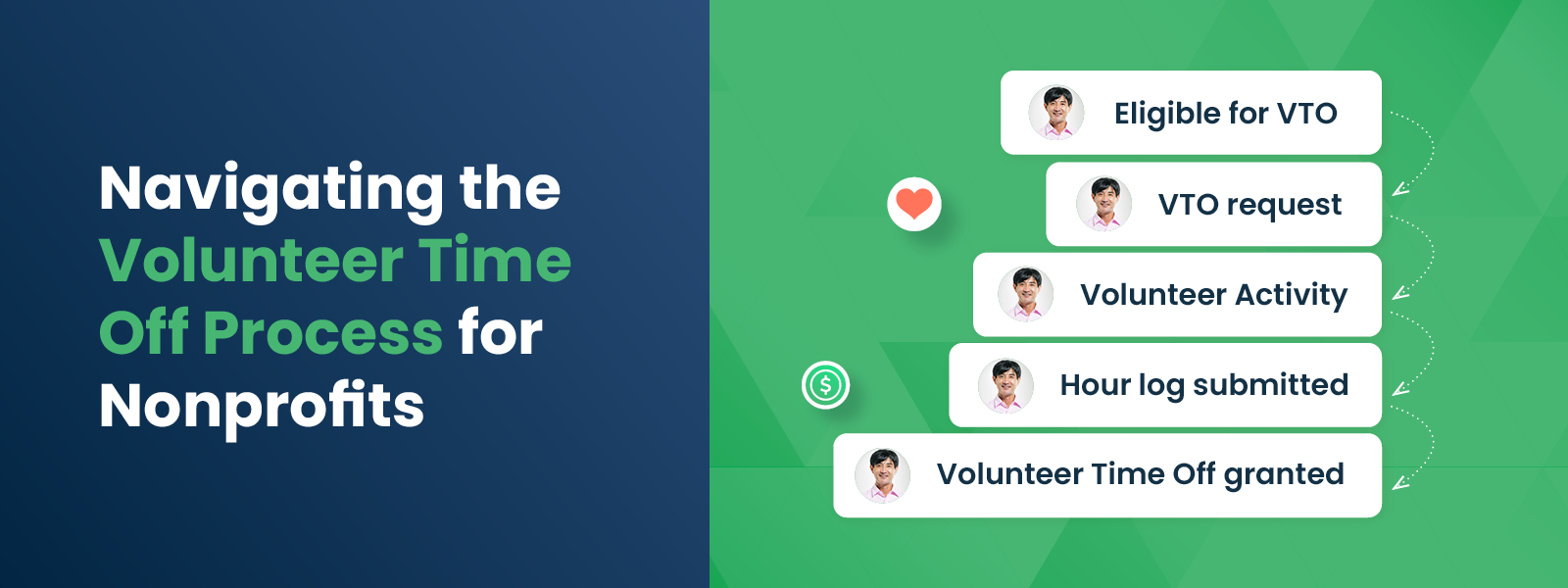
Volunteers are the engines that keep nonprofits running. They staff events, mentor beneficiaries, clean up parks, and perform the essential day-to-day tasks that allow organizations to thrive. However, the number one barrier preventing supporters from volunteering more is a lack of time. Between professional responsibilities and personal lives, finding a few hours to slip away during the workday can feel impossible for your supporters. This is where Volunteer Time Off letters become a critical tool in your communication arsenal.

Volunteer Time Off (VTO) is a corporate benefit where companies pay their employees to volunteer during work hours. It removes the conflict between “earning a living” and “making a difference.” Yet, despite the fact that 66% of employers provide some form of paid time off program, many employees are unaware this benefit exists or are hesitant to request it.

By sending strategic Volunteer Time Off letters, your nonprofit can educate your supporters, encourage them to utilize their corporate benefits, and unlock hundreds of hours of reliable, daytime volunteer support. Furthermore, VTO is often a gateway to financial support; companies that offer VTO often offer volunteer grants (financial donations based on hours served).

In this guide, we’ll cover:

If you are ready to fill your daytime volunteer shifts and deepen relationships with corporate partners, this guide is your roadmap.

The Strategic Value of Promoting VTO

Why should a nonprofit spend time teaching volunteers about their own HR benefits? Because VTO solves the two biggest problems volunteer coordinators face: recruitment and retention.

When a volunteer has to take unpaid leave or use precious vacation days to support you, the “cost” of volunteering is high. When they can use VTO, the cost becomes zero—in fact, they are being paid to be there. This dynamic shifts volunteering from a sacrifice to a perk.

Expanding Your Volunteer Pool Companies with paid VTO programs offer an average of 20 hours per year per employee. This is approximately 2.5 days of full-time work that each supporter could dedicate to your mission. By sending Volunteer Time Off letters, you are essentially inviting supporters to take a “paid field trip” to your organization. This appeals to professionals who want to help but cannot commit to weekends or evenings.

Unlocking Financial Revenue VTO and volunteer grants are cousins in the corporate philanthropy world. If a company values volunteering enough to pay its employees for it, it likely also offers “Dollars for Doers” grants. 40% of Fortune 500 companies offer volunteer grant programs. By getting a volunteer in the door via VTO, you are setting the stage to ask them to log their hours for a financial grant later.

Did You Know? 62% of individuals report that the ability to volunteer during business hours would be the top factor for a positive experience. By proactively encouraging VTO, you are directly improving donor satisfaction and engagement.

The Anatomy of a Perfect VTO Appeal

Writing a request for a supporter to take time off work requires tact and excitement. You aren’t asking for a favor; you are reminding them of a benefit they have earned. To ensure your Volunteer Time Off letters are effective, they should contain these five core elements:

1. The “Value Proposition”

Start by framing the letter around the impact the volunteer can make and the benefit to them. “Spend a day out of the office making a difference” is a compelling hook.

2. The Educational Pivot

Assume the volunteer doesn’t know their company offers VTO. Use phrases like, “Did you know your company might pay you to volunteer with us?” This positions you as a helpful resource, not just a requester.

3. Clear Eligibility Data

If you know they work for a VTO-friendly company (like Patagonia or Deloitte), be specific. Mentioning their employer by name increases open rates and engagement.

4. The “Easy Button” (CTA)

Provide a clear call to action. Do not just say “come volunteer.” Say, “Sign up for our specific VTO-friendly Friday shifts here” or “Click here to download a flyer to show your manager.”

5. The Financial Connection

Briefly mention that their time might also result in a financial grant. This plants the seed for future fundraising without making a direct monetary ask.

Scenario 1: The Known Eligible Volunteer Time Off Letter

The highest conversion rate comes from volunteers you know work for VTO-friendly companies. If your database indicates a supporter works for a company like Thomson Reuters (which offers 2 paid days/year) or GM Financial (8 hours/quarter), you can send a highly specific letter.

Subject: Take a paid day off to support [Nonprofit Name]!

Body:

Dear [Volunteer Name],

We know how hard you work, and we appreciate every moment you spend supporting [Nonprofit Name]. We also know that balancing a career with your passion for our mission can be a challenge.

Great news: Because you work at [Employer Name], you don’t have to choose between work and volunteering.

Our records show that [Employer Name] offers a generous Volunteer Time Off (VTO) program. This means you are eligible for [Insert Hours, e.g., 16 hours] of paid time off specifically to volunteer with organizations like ours.

Why not use a VTO day to join us? We have several upcoming daytime opportunities that would be perfect for using your VTO benefit:

  • [Event/Shift Option 1]
  • [Event/Shift Option 2]

Next Steps:

  • Check your internal HR portal to confirm your available VTO hours.
  • Register for a shift on our calendar [Link].
  • Enjoy a day out of the office making a real difference!

Thank you for being a champion for our cause—both in and out of the workplace.

Sincerely,

[Signature]

Quick Tip: Companies like Microsoft focus heavily on skills-based volunteering during VTO. If you are writing to a tech professional, tailor the letter to ask for specific help with IT, web design, or data analysis during their VTO hours.

Scenario 2: The Unknown Eligibility Volunteer Time Off Letter

For the majority of your database, you may not know their employer, or you may not know if that employer offers VTO. In this case, your Volunteer Time Off letters serve as a discovery tool. You are educating them on the concept and asking them to investigate.

Subject: A perk you might be missing out on…

Body:

Dear [Volunteer Name],

Volunteers like you are the heartbeat of [Nonprofit Name]. We are constantly amazed by your dedication.

We wanted to share a tip that many of our supporters use to spend more time giving back without sacrificing their weekends. Did you know that 66% of companies now offer paid Volunteer Time Off (VTO)?

This means your employer might pay you to spend a morning, afternoon, or full day volunteering with us during the work week. It’s a great way to recharge, give back, and utilize a benefit you may not even know you have.

How to find out: Check your employee handbook or ask your HR representative if your company offers “Volunteer Time Off” or “Community Service Days.”

If they do: We would love to host you! We have shifts available [Days of week] that fit perfectly into a VTO day. Check out our schedule here: [Link].

Plus: Many companies that offer VTO also offer Volunteer Grants—meaning they will donate money to us for every hour you serve. It’s a double win for our mission!

Thank you for everything you do.

Sincerely,

[Signature]

Scenario 3: The Volunteer Time Off Advocacy Letter

What if a volunteer checks, but their company doesn’t offer VTO? Don’t let the conversation end there. Employees have significant leverage to shape corporate culture. You can provide a template for them to send to their HR department to advocate for a VTO program. This positions your nonprofit as a thought leader and partner in their professional development.

Subject: Help bring VTO to [Employer Name]

Body:

Dear [Volunteer Name],

Thanks for checking into VTO for us! Even though [Employer Name] doesn’t currently offer a paid volunteer program, your inquiry shows them that their employees care about community impact.

Many companies launch VTO programs because employees ask for them. If you are interested in advocating for this benefit, we’ve drafted a short note you can share with your HR team or manager.

Sample Email to Leadership/HR:

“Hi [Name],

I am an active volunteer with [Nonprofit Name] and am passionate about supporting our community. I recently learned that many companies in our industry are offering Paid Volunteer Time Off (VTO) as a way to support employee well-being and corporate social responsibility.

Research shows that VTO improves employee engagement and retention. Would [Company Name] be open to exploring a VTO pilot program? I would love the opportunity to use a workday to give back to the causes that matter to our team.

Thanks, [Employee Name]”

Regardless of the outcome, we appreciate you going the extra mile to advocate for service!

Sincerely,

[Signature]

Best Practices for Sending VTO Emails

To ensure your Volunteer Time Off letters result in filled shifts, you need to be strategic about when and how you send them.

1. The “Use It or Lose It” Campaign

Most corporate VTO hours reset on January 1st. In October and November, send a dedicated email reminding volunteers that they might have unused VTO hours that will expire. Frame it as “Don’t leave your benefits on the table!” This creates urgency during the critical year-end giving season.

2. Group Volunteer Pitches

VTO is often used for team-building. Modify your letters to ask volunteers to bring their whole department. “Have VTO? Bring your team for a Service Day!” is a compelling pitch for managers looking for morale-boosting activities.

3. Integrate into Onboarding

When a new volunteer signs up with you, include a section on VTO in their welcome packet. “Check if your employer offers VTO” should be a standard step in your onboarding checklist, right next to signing the waiver.

4. Leverage Data Tools

If you are using a tool like Double the Donation, you can identify which of your donors work for VTO-eligible companies automatically. This allows you to segment your email list and send the “Known Eligibility” template only to the people you know can act on it, increasing conversion rates and reducing email fatigue.


Wrapping Up & Next Steps

Volunteer Time Off letters are a low-cost, high-impact way to increase your volunteer capacity. By guiding your supporters to utilize the corporate benefits available to them, you validate their desire to help while securing the daytime support that is often so hard to find.

Remember, you are not imposing on your volunteers; you are helping them access a perk they have earned. You are empowering them to integrate their professional life with their personal values.

Ready to fill your volunteer calendar?

  • Audit your list: Use an employer append or screening tool to find out where your volunteers work.
  • Update your site: Add a “Workplace Giving” section to your volunteer page that mentions VTO.
  • Send the emails: Use the templates above to launch your first VTO awareness campaign this month.

Start turning corporate policy into nonprofit impact today! Plus, see how a solution like Double the Donation Volunteering can help your team grow its impact with ease.

Navigating the Volunteer Time Off Process for Nonprofits

Navigating the Volunteer Time Off Process for Nonprofits

Volunteers are the engines that keep nonprofits running, fueling everything from event logistics to daily operations. But for many supporters, the biggest barrier to getting involved isn’t a lack of passion—it’s a lack of time. Between 9-to-5 jobs and personal responsibilities, finding hours to dedicate to your mission can be a challenge. This is where Volunteer Time Off (VTO) changes the game. By compensating employees for the time they spend volunteering, companies are removing the logistical hurdles that prevent supporters from showing up.

For nonprofits, understanding the Volunteer Time Off process is not just about logistics; it is about unlocking a massive, untapped reservoir of supporter bandwidth. When a company pays its employees to volunteer, your organization gains access to motivated, reliable, and often highly skilled help without the risk of donor burnout. However, simply hoping volunteers know about these benefits isn’t enough. You need a strategy to guide them through the administrative steps, ensuring they can utilize their benefits to support your cause.

In this guide, we’ll cover:

With 66% of employers now providing some form of paid time off program for volunteering, the opportunity is vast. Yet, without a clear roadmap, these hours often go unused. By mastering the nuances of the process—from registration to verification—your nonprofit can turn corporate policy into tangible impact.

What is Volunteer Time Off?

Volunteer Time Off, often abbreviated as VTO, is a type of employee benefit where team members receive a designated number of hours to volunteer with nonprofit organizations above and beyond their existing paid time off (PTO). Essentially, it is a mechanism through which employees partake in volunteer activities during work hours while still receiving their regular pay.

While corporate philanthropy often focuses on cash donations or matching gifts, VTO focuses on human capital. It removes financial and logistical barriers for volunteers, producing a larger pool of supporters for your organization to engage with. When supporters are compensated by their employers for their time, they are more likely to get involved initially and continue their support over the long term.

Did You Know? The number of companies offering VTO programs has increased by 2 in 3 over the last decade. Furthermore, 49% of individuals state that work commitments are their biggest obstacle to volunteering. Promoting the Volunteer Time Off process directly addresses this pain point!

Why the VTO Process Matters for Your Nonprofit

Understanding the mechanics of VTO is crucial because the burden of proof often falls on the volunteer. Unlike a direct corporate grant that might be handled between a CSR officer and your development director, VTO is an employee-driven benefit. If your volunteers don’t know the process, they likely won’t use the benefit.

By familiarizing your team with how these requests are made, approved, and verified, you can become an active partner in the process. You can provide the necessary documentation, offer shifts that align with corporate requirements, and remind volunteers to utilize their hours before they expire. This proactive approach transforms your organization from a passive recipient of help into a strategic partner for corporate employees.

Step 1: Registration and Employer Identification

The Volunteer Time Off process begins long before the volunteer arrives at your facility. It starts the moment a supporter expresses interest in an event or opportunity.

The Volunteer’s Role: The individual visits your website or volunteer portal to sign up for a specific shift. At this stage, they are looking for dates and times that fit their schedule.

The Nonprofit’s Role: Your primary goal here is data collection. You cannot assist a volunteer with their VTO request if you do not know where they work. During the registration process, integrate a field for employment information. This allows you to identify VTO opportunities immediately using employer data.

If you utilize volunteer management software or a corporate giving database, you can prompt volunteers to search for their employer while signing up for a shift. This is the most critical step in the funnel; catching the volunteer at the point of registration ensures that VTO is top-of-mind before they even check their calendar.

Step 2: Determining Eligibility for VTO

Once the volunteer has registered and provided their employer’s name, the next step in the Volunteer Time Off process is verifying that their specific company offers a VTO benefit and that your nonprofit is eligible to receive it.

Corporate Criteria: Every company has different guidelines. Some offer VTO only to full-time employees, while others extend it to part-time staff. Additionally, companies offer an average of 20 hours of paid volunteer time per year (equaling about 2.5 days), but this varies wildly.

Organization Eligibility: Companies may also have restrictions on the types of activities they support. While most 501(c)(3) organizations are eligible, some corporations may restrict VTO for political or religious activities.

How to Streamline This: Instead of asking volunteers to dig through their employee handbooks, you can use a corporate giving database to connect eligible supporters to volunteer time off opportunities instantly. These tools can populate eligibility requirements, minimum hours, and links to the company’s internal portal, effectively doing the research for the volunteer.

Step 3: Submitting the VTO Request and Pre-Approval

This is the step where many potential volunteers drop off if they are not properly supported. Before the volunteer shift occurs, the employee typically must submit a formal request to their employer.

The Request Workflow: In most corporate portals (such as Benevity, CyberGrants, or YourCause), the employee must log in and submit a request for “Volunteer Time Off.” They will need to provide:

  • The name of the nonprofit.
  • The date and time of the volunteer shift.
  • A brief description of the duties they will perform.
  • The number of hours requested.

Getting Pre-Approval: Most companies require this request to be approved by the employee’s direct manager or the HR department before the volunteering takes place. This ensures the employee’s absence won’t disrupt business operations.

Quick Tip: Create a “VTO Cheat Sheet” for your major corporate partners. If you know you have many volunteers from a specific local company (e.g., Home Depot or Target), draft a template email or PDF that gives them the exact description of duties and tax ID number they need to fill out their internal request forms.

Step 4: Completing the Volunteer Shift

With approval in hand, the volunteer arrives to complete their service. While this seems straightforward, it is a vital part of the Volunteer Time Off process because it is where the “transaction” of time occurs.

On-Site Experience: Ensure the volunteer has a positive experience! Remember, 62% of individuals report that the ability to volunteer during business hours is a top factor for a positive experience. If they are using VTO, they are effectively “on the clock” for their employer while serving your mission. Treat their time with the same respect you would a major donor’s money.

Tracking Hours: Accurate timekeeping is essential. Whether you use a digital check-in system or a paper sign-in sheet, you must have a verifiable record of exactly when the volunteer started and stopped their shift. This data will be required for the final step of the process.

Step 5: Verification and Proof of Volunteerism

The final step in the Volunteer Time Off process occurs after the shift ends. To ensure the employee is paid for their time (and not docked a vacation day), they usually need to provide proof of volunteerism to their employer.

Methods of Verification:

  • Digital Verification: Many CSR platforms will send an automated email to the nonprofit’s volunteer coordinator asking them to click a link and verify that the employee showed up.
  • Signed Forms: Some companies require a physical form signed by a nonprofit representative.
  • GPS/Geofencing: Newer platforms allow volunteers to check in via mobile app, verifying their location at your facility.

The “Double Dip” Opportunity: This verification stage is the perfect moment to ask about other corporate giving programs. If a company offers VTO, there is a high likelihood that they also offer Volunteer Grants (monetary donations based on hours served) or Matching Gifts. When verifying hours, ask the volunteer: “Does your company also donate money for the hours you just served?”

Top Companies with Standout VTO Programs

Familiarizing yourself with major employers that offer VTO can help you target your outreach. If you see volunteers registering with email addresses from these domains, you know they likely have access to a VTO benefit.

1. Patagonia

Patagonia is a leader in corporate activism. Their program offers up to 18 paid volunteer hours per year. Furthermore, they offer an environmental internship program where employees can take up to two months of paid time away from work to volunteer with an environmental group.

2. Thomson Reuters

This major information conglomerate offers two paid days (16 hours) of volunteer time each year. Their program is inclusive of company-sponsored volunteer activities and focuses on local community investment .

3. Microsoft

A giant in corporate philanthropy, Microsoft is known for its high matching gift limits, but they also support volunteerism vigorously. They focus on accessible legal knowledge and services and hack-for-good tech innovation events .

4. Deloitte

Professional services firms are among the most likely to offer paid VTO. Deloitte offers generous VTO, encouraging their highly skilled workforce to engage in skills-based volunteering .

5. GM Financial

GM Financial structures their VTO to encourage regular engagement, offering 8 hours per quarter for full-time staff and 4 hours per quarter for part-time staff . This quarterly structure is perfect for recurring volunteer roles.

Marketing the VTO Opportunity to Your Supporters

Even the most generous VTO program is useless if the employee doesn’t use it. Nonprofits play a vital role in marketing these benefits. Here are several strategies to promote the Volunteer Time Off process to your audience.

1. Create a Dedicated “Volunteers” Page

Your website should have a centralized hub for volunteer resources. If you already have a volunteer page, incorporate specific information about paid volunteer time off programs. Explain that volunteering during the workday is a valid and encouraged way to support the organization.

2. Leverage Social Media

Social media is an excellent tool for inspiring action. Share information about VTO programs on your channels. Use engaging visuals and testimonials from volunteers who have successfully used their VTO days.

Example Post: “Did you know you could get paid to hang out with us? Many companies like [Company A] and [Company B] offer Volunteer Time Off. Check your benefits and spend a day giving back!”

3. Implement Personalized Outreach

If you have captured employer data during registration, use it! Implement personalized outreach that speaks directly to the donor’s employment status.

Strategy: Send an automated email to all volunteers who work at GM Financial, reminding them that their 8 hours of VTO resets every quarter.

4. Encourage Group Events

VTO is often used for team-building. Encourage your existing volunteers to organize group events. Sometimes, encouraging a single volunteer to rally their colleagues is all it takes to expand your reach significantly . Pitch a “Department Day of Service” where a whole team uses their VTO together.

Tools to Streamline the VTO Process

Managing the Volunteer Time Off process manually can be time-consuming, especially when dealing with multiple companies and verification methods. Investing in dedicated software can automate these steps and increase your revenue.

Double the Donation’s Solutions Tools like Double the Donation and its complete automation platform are not just for matching gifts. They maintain a massive database of over 24,000 company records that includes data on VTO and volunteer grants, too.

How Automation Helps:

  • Seamless Integration: The software integrates with your volunteer management system to prompt volunteers to search for their employer during sign-up.
  • Instant Education: The database connects eligible supporters to actionable next steps and forms immediately.
  • Automated Email Streams: You can set up automated email streams that drive supporters to claim their VTO or volunteer grants after they have registered.

By automating the identification and follow-up steps, you ensure that every eligible volunteer is aware of their benefit and knows exactly how to use it, without adding administrative burden to your volunteer coordinator.

Measuring Success and Optimizing Your Efforts

To ensure your focus on the Volunteer Time Off process is yielding results, you need to track the right metrics. Establish a baseline and monitor key performance indicators (KPIs) to refine your strategy.

Key Metrics to Track:

  • Corporate Volunteer Hours Logged: Track the total number of hours contributed by employees using corporate VTO programs.
  • Volunteer Grants Received: Since VTO often leads to volunteer grants, track the monetary value generated by these volunteers.
  • Employee Participation Rate: Monitor which companies in your area have the highest participation rates. This helps you identify where to focus your relationship-building efforts.

Continuous Improvement: Use the data you collect to solicit feedback from volunteers. Are they finding the internal approval process difficult? Are your volunteer shifts too short or too long for a standard VTO day? Use surveys to understand barriers and refine your donor journey.


Wrapping Up & Next Steps

Mastering the Volunteer Time Off process is a powerful way to diversify your support streams. It transforms the volunteer experience from a personal sacrifice of time into a professional benefit, allowing you to engage a workforce that is eager to give back but constrained by the 9-to-5 grind.

By understanding the steps—registration, eligibility, request, service, and verification—and actively marketing these opportunities, your nonprofit can build stronger relationships with corporate partners and secure the operational support you need to thrive.

Ready to start capitalizing on corporate volunteerism?

  • Audit your volunteer intake forms: Ensure you are collecting employer information.
  • Educate your team: Make sure your volunteer coordinators know how to verify hours for major local employers.
  • Leverage technology: Explore tools like Double the Donation to automate eligibility checks and outreach.

Don’t let these valuable hours go to waste. Start guiding your supporters through the VTO process today and watch your volunteer program grow. Plus, find out how Double the Donation Volunteering can help!

Maximizing Volunteer Time Off Requests for Nonprofits

Maximizing Volunteer Time Off Requests for Nonprofits

The most valuable resource a nonprofit has is its people. Volunteers power events, drive programs, and provide the essential manpower needed to fulfill your mission. Yet, for many dedicated supporters, the desire to help is often hampered by the constraints of a traditional work schedule. This is where corporate philanthropy steps in to bridge the gap. Through Volunteer Time Off (VTO) programs, companies pay their employees to step away from their desks and into their communities. However, accessing this benefit requires navigating a specific administrative hurdle: Volunteer Time Off Requests.

For nonprofits, understanding how these requests work is not just administrative trivia; it is a strategic necessity. When you demystify the request process for your supporters, you remove the barriers standing between your organization and hundreds of hours of skilled, reliable, and “free” labor. Furthermore, because VTO programs are often tied to volunteer grants (in which companies donate money for hours served), facilitating these requests can directly increase revenue.

In this guide, we’ll cover:

By mastering the mechanics of Volunteer Time Off Requests, your nonprofit can transform corporate policies into tangible impact, ensuring that your volunteers can afford to give you the time you so desperately need.

The Strategic Value of Volunteer Time Off

Volunteer Time Off (VTO) is a type of employee benefit where team members receive a designated number of hours to volunteer with nonprofit organizations above and beyond their existing paid time off. Essentially, it is a mechanism through which employees partake in volunteer activities during work hours for regular pay.

For nonprofits, the rise of VTO is a game-changer. It provides operational support without added costs and produces a larger pool of supporters to engage with by removing financial and logistical barriers. When supporters are compensated by their employers for the time they spend with you, they are more likely to get involved and continue their support over time.

Moreover, the prevalence of these programs is skyrocketing. The number of companies offering VTO has increased by two in three over the last decade. With 66% of employers providing some sort of paid time off program for volunteering, the potential for your nonprofit to tap into this resource is massive.

Did You Know? Lack of time is the primary barrier to volunteerism. 49% of individuals state that work commitments are their biggest obstacle to volunteering. However, 62% of individuals report that the ability to volunteer during business hours would be the top factor for a positive experience. Promoting Volunteer Time Off Requests directly solves this problem.

The Anatomy of a Volunteer Time Off Request

To help your volunteers utilize their benefits, you must understand what they are required to submit to their employers. While every company has a slightly different portal or policy, a standard Volunteer Time Off Request generally requires specific data points to ensure the time is being used for legitimate charitable purposes.

This request is the formal internal process an employee must complete to get paid for their time away. It typically includes three main categories of information:

1. Employee and Policy Information

The company needs to verify that the requester is eligible for the benefit.

Employee Eligibility: Not all staff members may qualify. The request often cross-references the employee’s status (full-time vs. part-time) against the company’s guidelines.

Accrued Hours: The form will check the VTO hours the employee has accrued or is allotted for the year. For example, companies with paid VTO programs offer an average of 20 hours per year.

2. Nonprofit Information

The employer must verify that your organization is a valid charity.

Eligible Organizations: The request will ask for your nonprofit’s name and likely your tax ID or 501(c)(3) status to ensure you meet the company’s philanthropic criteria.

Contact Details: You may need to provide a contact name or email at your organization who can verify the volunteer’s attendance.

3. Volunteer Activity Information

This section details what the employee will actually be doing.

Qualifying Activities: The employee must describe the activity to ensure it aligns with the company’s values and VTO policy.

Date and Duration: The specific date of the shift and the number of hours requested are crucial for payroll giving purposes.

Quick Tip: Create a “VTO Cheat Sheet” for your volunteers. This simple PDF or webpage should list your organization’s legal name, Tax ID/EIN, a brief description of volunteer duties, and the contact info for your volunteer coordinator. When a volunteer opens their corporate portal to submit a Volunteer Time Off Request, having this info ready makes the process frictionless.

The Lifecycle of a VTO Request

Navigating the corporate bureaucracy can be intimidating for volunteers. By understanding the lifecycle of a request, your nonprofit can guide supporters through each stage, ensuring they don’t drop out of the process due to confusion.

Step 1: Identification and Registration

The process begins when a supporter registers for an event or shift with your nonprofit. At this stage, it is critical to identify where they work. If you know their employer, you can inform them of their VTO eligibility immediately.

Step 2: Submission of the Request

Before the volunteer shift occurs, the employee must log into their company’s HR or CSR portal to submit the formal request. They will input the dates, times, and your organization’s details. This acts as a request for time off, similar to asking for a vacation day, but coded specifically as volunteer service.

Step 3: The Approval Process

Once submitted, the request enters an internal approval process. This usually involves the employee’s direct manager approving the time away from work to ensure it doesn’t interfere with business operations. It may also involve the CSR department verifying that your nonprofit is an eligible 501(c)(3).

Step 4: Completing the Service

The volunteer completes their shift with your organization. This is the most important part! Ensure they sign in and out so you have an accurate record of their hours.

Step 5: Verification and Follow-Up

After the event, the employee may need to provide proof of service to their employer to finalize the VTO claim. Furthermore, this is the perfect moment to encourage the volunteer to check if their company also offers a volunteer grant (a monetary donation for hours served). 40% of Fortune 500 companies offer volunteer grant programs, so a VTO request often opens the door to further funding.

Top Companies with Standout VTO Programs

Familiarizing yourself with companies that offer generous VTO policies helps you target your outreach. If you see volunteers registering with email addresses from these domains, you should immediately encourage them to submit a Volunteer Time Off Request.

Patagonia

Patagonia is a leader in corporate activism. Their program offers up to 18 paid volunteer hours per year. Furthermore, they offer an environmental internship program where employees can take up to two months of paid time away from work to volunteer with an environmental group.

Thomson Reuters

This major information conglomerate offers two paid days (16 hours) of volunteer time each year. Their program is inclusive of company-sponsored volunteer activities and focuses on local community investment.

GM Financial

GM Financial structures their VTO to encourage regular engagement. They offer 8 hours of VTO per quarter for full-time staff and 4 hours per quarter for part-time staff, focusing on strengthening communities.

Microsoft

A giant in corporate philanthropy, Microsoft is known for its high matching gift limits, but they also support volunteerism vigorously. While they focus heavily on pro bono services, they are a prime example of a company that integrates volunteering into its culture.

Sentinel Group

Sentinel Group offers two paid days of service (16 hours) each year, focusing on education, communities, and health and wellness.

Did You Know? Professional services, information technology, and financial services companies are the most likely to offer paid VTO programs. If your nonprofit is located near hubs for these industries, your VTO potential is likely very high.

Marketing Strategies to Drive Requests

Your volunteers likely don’t know they have VTO available, or they don’t know how to use it. It is up to your nonprofit to market the opportunity. Here are several strategies to promote Volunteer Time Off Requests to your supporter base.

1. Dedicate a Page on Your Website

Create a centralized “Volunteers” page on your website. If you already have one, update it to include specific information about paid volunteer time off programs. Explain that volunteering during the workday is a valid and encouraged way to support the organization and link to resources that explain the request process.

2. Leverage Social Media

Social media is an excellent tool for inspiring action. Share information about VTO programs on your channels. Use engaging visuals and testimonials from volunteers who have successfully used their VTO days to “take a day off to do good”. This social proof can be the nudge other supporters need to submit their own requests.

3. Identify Opportunities with Employer Data

Your supporters’ employment data contains a wealth of information about available engagement opportunities. If you already know where a volunteer works, look into the company’s volunteer incentive programs. If you don’t have this data, consider using a corporate giving database tool or an employer append service to fill in the gaps.

4. Implement Personalized Outreach

Once you identify supporters who work for companies with VTO programs, initiate tailored communications. Don’t just reach out to current volunteers; engage donors who work for VTO companies as well. Focus your outreach on the benefits of paid volunteerism—a meaningful experience and a fun day out of the office.

5. Encourage Group Events

If you have existing supporters who work for companies with paid VTO policies, see if they would be willing to rally their colleagues. Encouraging a single volunteer to organize a group activity can expand your reach significantly. Corporate teams often look for VTO opportunities that accommodate groups, so positioning your nonprofit as “VTO-friendly” for groups is a smart strategy.

Leveraging Technology to Automate Requests

Managing the nuances of different corporate policies can be time-consuming. Fortunately, technology can streamline the Volunteer Time Off Request process, ensuring you capture every available hour without overburdening your staff.

Seamless Integration

Tools like Double the Donation integrate directly with your volunteer management software. When a volunteer registers for a shift, the system can prompt them to search for their employer. This captures employment data at the moment of highest intent.

Actionable Insights

Once the employer is identified, the database connects eligible supporters to volunteer grant and VTO opportunities. The system can provide the volunteer with their specific company’s guidelines, forms, and instructions, effectively automating the “how-to” portion of the request.

Automated Follow-Up

You can set up automated email streams to drive supporters to claim volunteer grants and VTO. For example, if a volunteer from Thomson Reuters signs up for a shift, the system can automatically send them an email reminding them that they have 16 hours of paid volunteer time available and linking them to the portal where they can submit their request.


Wrapping Up & Next Steps

Volunteer Time Off Requests represent a massive, underutilized opportunity for nonprofits to increase their capacity and deepen relationships with corporate partners. By shifting the perspective of volunteerism from a “nights and weekends” activity to a part of the professional work week, you open the door to a new demographic of skilled, energetic supporters.

The key to success lies in education and facilitation. Your volunteers want to help, but they need you to show them how to navigate the corporate process. By providing the right information, marketing the opportunity effectively, and leveraging technology to automate the nudges, you can turn corporate VTO policies into real-world impact for your mission.

Ready to start maximizing your corporate volunteer support?

  • Audit your forms: Ensure you are asking for employer information on your volunteer registration pages.
  • Create a guide: Build a simple VTO instruction sheet for your volunteers with your nonprofit’s tax ID and contact info.
  • Get the right tools: Explore Double the Donation to see how automation can help you identify and mobilize VTO-eligible supporters.

Don’t let these valuable hours go to waste. Start guiding your supporters through the VTO process today. Plus, find out how Double the Donation Volunteering can help!