
Mastering Corporate In-Kind Donation Guidelines-An Overview

Mastering Corporate In-Kind Donation Guidelines: An Overview
In the world of corporate philanthropy, cash grants and matching gifts often command the most attention. However, for nonprofits aiming to stretch their budgets, build professional capacity, and acquire essential resources, corporate in-kind donation guidelines unlock a source of support that is often more accessible and less competitive. In-kind donations for nonprofits (or the donation of goods, services, or expertise instead of cash) provide vital “budget relief,” allowing you to allocate financial resources directly to mission delivery while acquiring high-value assets.

In-kind giving is a strategic exchange. Companies have specific logistical and tax requirements, making their donation process highly regulated by established corporate in-kind donation guidelines. These rules serve as the gatekeepers to a consistent supply of valuable resources. For the proactive fundraiser, understanding these guidelines is the key to aligning your needs perfectly with what a corporation is eager to donate, ensuring your pitch speaks the language of efficiency and corporate social responsibility.

By mastering the nuances of these policies, you can move beyond general donation requests and craft targeted appeals that are practically pre-approved.

In this guide, we’ll cover:

Ready to transform your organization’s wishlist into actionable partnerships? Let’s dive into the rules of the road for securing high-value in-kind support.

What Are Corporate In-Kind Donation Guidelines?

Corporate in-kind donation guidelines are the formal policies set by businesses to manage their non-monetary charitable contributions. These rules are put in place primarily to ensure:

  • Tax Compliance: The donation must be made to an eligible 501(c)(3) nonprofit to qualify for a corporate tax deduction.
  • Brand Alignment: The donation supports a cause that reflects the company’s values and public image.
  • Logistical Efficiency: The company only donates products or services it can easily provide (e.g., a software company will donate licenses, not bottled water).

These guidelines are not abstract barriers; they are direct clues on how to succeed. For your nonprofit, they offer essential instructions on how to frame your request. A successful in-kind appeal speaks the language of efficiency and corporate social responsibility (CSR), demonstrating how your need for an item aligns with the company’s desire to reduce inventory, use employee skills, or gain positive recognition.

Did You Know? In-kind giving is a popular option for corporations because it allows them to dispose of surplus inventory or utilize employee expertise (pro bono work) while receiving a tax deduction for the item’s fair market value. For companies, donating an overstocked product often makes more business sense than selling it at a discount.

Nonprofit Eligibility: Mission Alignment and Geographic Scope

The first two filters in any in-kind donation guideline are often the strictest: mission and location. These criteria quickly filter out organizations that do not fit the company’s strategic philanthropic model.

Mission Alignment and “Pillars”
Companies organize their giving around “pillars” of impact. Your request must resonate with these stated values. Guidelines will explicitly state which cause sectors are eligible.

  • Technology Companies (e.g., Microsoft, Google): Often prioritize STEM education, digital literacy, and capacity-building (donating software/laptops). If your mission is environmental clean-up, you would pitch a request for a data analysis intern (a skill) rather than physical cash, aligning it with their tech pillar.
  • Grocery Chains (e.g., Whole Foods, Trader Joe’s): Focus on hunger relief, community wellness, and local schools. Their guidelines may strictly limit donations to perishable goods that would otherwise go to waste.
  • Home Improvement/Hardware (e.g., Home Depot): Focus on veteran housing, community revitalization, and disaster relief. Requests must often involve physical building materials or tools.

If your nonprofit’s mission doesn’t directly align with the company’s stated pillars, your request for an in-kind donation will likely be denied. You must be prepared to articulate the connection clearly.

Geographic Restrictions
The vast majority of in-kind donation guidelines favor local support because it offers the company high-visibility ROI and simplifies logistics. For example, a local branch manager is unlikely to approve a request for items to be shipped across the country.

  • Guideline Clue: Look for phrases like “serving communities where our employees live and work” or “donations are limited to organizations within a 50-mile radius of a retail location.”
  • Strategy: Target companies with a strong physical presence near your facility. Local businesses often have greater autonomy and budget flexibility for in-kind donations than national headquarters.

Available Donation Types: Products, Services, and Space

Corporate in-kind donation guidelines are most specific when defining what a company is willing to give. Your request must be a match for their product inventory or core expertise.

1. Product/Goods Donations (Tangible Assets)
These are physical items. The guidelines will define the scope:

  • Inventory Type: A furniture store might donate surplus desks. A beverage company might donate bottled water for an event. Your request should align with their product line.
  • Condition: Most companies donate new or gently used items. For instance, a tech company might donate refurbished laptops after an internal upgrade cycle.
  • Exclusions: Highly specialized items, medical equipment (unless you are a hospital), or items that are costly to ship are often excluded. The donation must be easy for the company to process.

2. Services or Expertise (Pro Bono)
Pro bono services are non-cash gifts of professional expertise; the donation of employee time and skill.

  • Guidelines: These are usually governed by the company’s employee volunteer programs. The guidelines may require the nonprofit to submit a formal “scope of work” to define the project (e.g., “design a new website,” or “review legal compliance”) to ensure the employee’s time is used efficiently. This allows the employee to use their professional skills in a tax-deductible way.

3. Intangible Assets (Space/Media)
Some companies donate the use of their assets or intellectual property.

  • Guidelines: This can include the free use of a corporate conference room for a board meeting or a hotel donating a weekend stay for a silent auction. Media companies may donate advertising space or airtime.
  • Tech Example: Google’s Ad Grants program is essentially an in-kind donation of $10,000 per month in advertising credits.

Submission Deadlines and Approval Cycles

Timing is critical in the in-kind process. Unlike a cash grant, which can take six months to approve, in-kind donations often have more immediate needs, but still require proper lead time.

Deadlines for Goods

  • Rolling Applications: Many retailers have continuous online forms for local product donations. Approval is typically granted by a local store manager or community affairs officer.
  • Event-Specific Deadlines: If you are requesting goods for a gala or auction, guidelines usually require the request to be submitted at least 4 to 8 weeks in advance of the event. Companies need this lead time to assess inventory and manage logistics.

Deadlines for Services

  • Quarterly Review: Pro bono service requests often align with the corporate partner’s fiscal calendar, as they need to allocate employee hours. Submitting a request in Q4 might be too late to secure time with their marketing team.

Actionable Insight: Many companies make the application process very easy. Look for “Community Giving” or “Sponsorship” pages on corporate websites. They often include a direct link to an online form for in-kind requests. Utilizing a corporate giving database can instantly provide these links, eliminating manual search time.

The Value Exchange: How to Justify Your Ask

Corporate in-kind guidelines require you to demonstrate value. This is not just about what you need; it’s about what the company receives in return for their support. Your request should clearly articulate the value exchange.

Components of a Winning In-Kind Pitch:

  • Nonprofit Information:
    • Legal Name & Tax ID (EIN).
    • Mission Statement (1-2 sentences).
    • Contact Person for Logistics.
  • The Specific Request: Clearly define the item or service, including quantity and exact model (e.g., “10 Microsoft Surface Pro laptops,” not just “computers”).
  • The Value Proposition (ROI):
    • Visibility: State what the company will receive in return (logo placement on the program, social media shout-outs, website acknowledgment).
    • Impact: Explain how the specific item solves a problem (e.g., “Donated chairs will replace broken ones, allowing us to serve 50 more meals nightly”).
    • Tax Benefit: Remind the company that your 501(c)(3) status allows them to deduct the fair market value of the donation.

By focusing on this value exchange, you show the company that your nonprofit is a professional partner capable of delivering clear recognition for their support.

The Long-Term Value of In-Kind Partnerships

In-kind giving is rarely a “one-and-done” transaction. For savvy nonprofits, it is a gateway to cash sponsorships and grants.

  • Proving Reliability: By successfully managing an in-kind donation (e.g., providing quick verification, using the items well, and sending excellent thank-you notes), you prove to the company that you are reliable and easy to work with.
  • Building Relationships: The individual who approves the donation at the corporate level (the CSR manager or marketing director) is now a warm contact. You can steward this relationship over time.
  • The Upsell: The following year, you can approach the same contact with a strategic sponsorship request, referencing the success of the previous in-kind donation: “Last year, your donation of catering saved us $500, which went directly to our literacy program. This year, we’d like to invite you to be a Bronze Sponsor for that same event, with guaranteed logo placement to reach 5,000 local families.”

In this way, the corporate in-kind donation guidelines serve as the first step in a much larger partnership journey.

Leveraging Technology to Target Local Support

You don’t need to guess which companies offer what. Corporate in-kind donation guidelines are often indexed in centralized databases.

Step 1: Use a Database Tool
Tools like Double the Donation aggregate corporate giving data. While best known for matching gifts, these databases also include links to corporate grant and sponsorship portals, giving you access to:

  • In-Kind Donation Application Links.
  • The company’s primary mission pillars.
  • Geographic funding focus.

Step 2: Decode the “About Us” Page
Look for the “Community Impact” report. This document often lists last year’s grantees and the types of non-cash support provided (e.g., “5,000 hours of pro bono consulting”). If a company has a history of donating computers, your request for laptops is highly validated.

Step 3: Target Donor Employers
Use employer appends to identify where your existing donors and volunteers work. If you see a cluster of support from a local law firm, send them an in-kind request for pro bono legal services for your next board meeting.


Wrapping Up & Next Steps

Mastering corporate in-kind donation guidelines is the key to unlocking the full spectrum of corporate philanthropy. By respecting the rules, aligning with the company’s product line and values, and meticulously tracking the submission process, you move from being a hopeful recipient to a sophisticated partner.

These guidelines are not limitations; they are a structure for success. When you show a company exactly how their non-cash assets can solve a real problem for your mission, you make the decision to support you an easy and logical one.

Ready to secure vital resources?

  • Audit Your Needs: Create a detailed list of goods and services you currently pay for but could receive in-kind (e.g., printing, catering, software).
  • Target and Research: Use a database to identify local companies that offer product donations and check their guidelines for mission and location fit.
  • Submit the Form: Find the direct online application link for in-kind requests for your top prospects, and submit a targeted request today.

Start leveraging the power of in-kind giving, and watch your budget stretch further than you thought possible. See how Double the Donation can help you uncover the right opportunities, too! Get a demo to see our corporate giving database in action.

Corporate Sponsorship Guidelines-Criteria for Nonprofits

Corporate Sponsorship Guidelines: Criteria for Nonprofits
In the dynamic and competitive landscape of nonprofit fundraising, securing sustainable revenue requires looking far beyond individual donations and annual appeals. While individual giving is the heartbeat of your mission, corporate sponsorships act as the adrenaline, providing the massive capital, operational resources, and brand visibility needed to truly scale your impact. However, unlocking these funds is not as simple as asking nicely or sending a generic letter. Just like volunteer grants or major foundation awards, corporate sponsorships are governed by a specific, often rigid, set of rules known as corporate sponsorship guidelines.

These guidelines serve as the gatekeepers to billions of dollars in potential funding. They dictate which nonprofits are eligible, what types of projects are funded, the timeline for disbursement, and the specific deliverables expected in return. For many development teams, these rules can feel opaque, restrictive, or overwhelmingly complex. But for the savvy fundraiser, they are a detailed roadmap to success. By mastering corporate sponsorship guidelines, you can stop wasting time on “cold” leads that were never going to convert and start pitching partnerships that are practically pre-approved because they align perfectly with the company’s stated objectives.

Whether you are seeking cash underwriting for a gala, a program grant for a new STEM initiative, or in-kind donations for nonprofits such as technology or supplies, understanding the fine print is the key to unlocking the vault. Ignoring these guidelines is the fastest way to a rejection, while leveraging them is the secret to building long-term, mutually beneficial relationships.

In this comprehensive guide, we will explore:

Ready to turn corporate policy into nonprofit power? Let’s dive deep into the rules of engagement for corporate sponsorships.

Understanding the Strategic Purpose of Sponsorship Guidelines

To navigate corporate sponsorship guidelines effectively, you must first understand why they exist. Corporate sponsorship guidelines are the published (or sometimes internal) policies that companies use to manage their philanthropic and marketing budgets. Unlike individual donors who often give from the heart based on emotion, corporations give from a strategic plan based on data and business objectives.

These guidelines serve three primary purposes for the corporation:

  • Risk Management: They ensure the company does not fund controversial causes, politically charged organizations, or entities that could damage their reputation.
  • Strategic Alignment: They ensure every dollar spent advances the company’s business goals, brand values, and corporate social responsibility (CSR) targets.
  • Operational Efficiency: Major corporations receive thousands of requests annually. Guidelines act as a filter to quickly eliminate unqualified requests, saving the CSR team time.

For a nonprofit, these guidelines represent the “rules of the game.” They tell you exactly what the company is looking for. A bank might have guidelines prioritizing “financial literacy” and “economic development,” while a grocery chain might focus on “hunger relief” and “community health.” When you understand that these guidelines are designed to help the company achieve its goals, you can frame your request as a solution to their problem, rather than just a plea for help.

The first and most critical section of any corporate sponsorship guideline document focuses on eligibility. Before a company even considers the merit of your project or the reach of your event, they need to know if you legally and strategically qualify for their support. Skipping this step is the most common mistake fundraising teams make.

501(c)(3) Status and Legal Standing

The baseline requirement for almost all corporate funding is active 501(c)(3) tax-exempt status (or the equivalent in other countries). Companies need this for their own tax deduction purposes and to ensure they are funding legitimate charitable work. If your nonprofit is in the process of applying for status or is operating under a fiscal sponsor, you must check the guidelines carefully. some corporations will fund fiscally sponsored projects, while others strictly require the applicant to hold the designation directly.

Mission Alignment: The Pillars of Giving

Most major corporations organize their giving around specific “pillars” or focus areas. These are usually derived from the company’s industry or their corporate values. If your mission does not fall within one of these pillars, your likelihood of funding drops to near zero.

Examples of Mission Pillars include:

  • Target: Often focuses on community wellness, design, and equity.
  • Verizon: Prioritizes digital inclusion, climate protection, and human prosperity.
  • Bank of America: Centers on economic mobility, workforce development, and basic needs.

Guidelines will explicitly state which cause sectors are eligible. A savvy fundraiser reads these pillars and finds the intersection. For example, if you are an arts organization approaching a bank, you don’t pitch “art for art’s sake.” You pitch your arts education program as a vehicle for “workforce development” and “creative skills training,” aligning your mission with their economic mobility pillar.

Geographic Restrictions

“Location, location, location” applies to sponsorships just as much as real estate. Many companies strictly restrict funding to communities where they have a physical footprint—retail stores, headquarters, distribution centers, or factories. Look for guideline phrases like “serving communities where our employees live and work.”

If you are a local nonprofit, your best strategy is to target local branches of national chains. These local offices often have discretionary budgets with guidelines that favor local impact over national reach. Conversely, if you are a national organization, you must demonstrate how your program can scale across the corporation’s entire market.

Identifying the “Red Flags”: Exclusionary Criteria

Just as important as knowing what companies will fund is knowing what they won’t. Almost every set of corporate sponsorship guidelines includes a list of exclusions. Submitting a proposal that falls into one of these categories shows a lack of research and can damage your reputation with the funder.

Common exclusions found in corporate guidelines include:

  • Political and Religious Activities: Most public companies will not fund political campaigns, lobbying efforts, or religious organizations for sectarian purposes (though they may fund a soup kitchen run by a church if it serves the general public).
  • Individual Support: Corporations almost never sponsor individuals. You cannot get corporate sponsorship for one person’s travel to a conference or a single student’s scholarship; the funds must go to the organization to be distributed.
  • General Operating Costs: Many guidelines specify that they prefer “programmatic support” over “general operating support.” They want to buy a specific outcome (e.g., “500 meals served”) rather than pay for the electric bill, even though operating costs are essential.
  • Capital Campaigns: While some large corporations fund building projects, many strictly exclude capital campaigns from their standard sponsorship budgets, reserving those for special, invitation-only grants.

Financial vs. In-Kind: Navigating Sponsorship Types

Not all sponsorships involve a check. Corporate guidelines often separate opportunities into financial sponsorships and in-kind donations, each with its own set of distinct rules and application processes. Understanding which “bucket” of resources you are applying for is crucial.

Financial Sponsorships

These are cash contributions, often tied to events (galas, walks, conferences) or specific program underwritings. Guidelines for financial sponsorships are usually the most rigorous.

  • Tiered Structures: Guidelines often dictate sponsorship tiers (e.g., Platinum, Gold, Silver) and the specific marketing deliverables required for each level.
  • Dollar Limits: They may specify a minimum or maximum ask amount (e.g., “Requests must be between $5,000 and $25,000”). Asking for $50,000 when the cap is $25,000 is an immediate disqualifier.

In-Kind Donations

In-kind support involves the donation of goods (product) or services (pro bono work). This is an underutilized avenue for many nonprofits.

  • Product Guidelines: These are often more flexible than cash guidelines but restrict what can be requested. For example, an airline might donate flight vouchers for a silent auction but strictly forbid cash requests. A hardware store might donate lumber for a shelter but not give money for labor.
  • Application Processes: Some large retailers (like Home Depot, Costco, or Walmart) have “open” applications for in-kind product donations that are completely separate from their grant cycles. These can often be approved at the store manager level, bypassing the complex corporate committee.

Corporate Volunteerism

Another form of non-monetary sponsorship is corporate volunteerism. Guidelines often encourage employee engagement. If a company cannot give you cash, their guidelines might allow them to “sponsor” a service day where 50 employees paint your facility. While not a direct check, the value of this labor and the relationship building it facilitates is immense.

Mastering the Timing: Sponsorship Deadlines and Fiscal Cycles

Timing is everything in fundraising. Corporate fiscal years do not always align with the calendar year, and corporate sponsorship guidelines dictate the rhythm of when proposals are accepted, reviewed, and paid out. Ignoring these cycles can result in a “yes” that doesn’t get funded for 12 months.

The Difference Between Fiscal and Calendar Years

While individuals give heavily in December, corporations operate on fiscal years. A company’s fiscal year might run from July 1 to June 30, or February 1 to January 31.

The “Spend Down” Opportunity: If a company’s fiscal year ends in June, their budget might be empty by May—or, they might be desperate to “spend down” a surplus before the books close. Knowing the fiscal calendar guidelines allows you to time your ask perfectly to capture these end-of-year funds.

Rolling vs. Fixed Deadlines

  • Rolling Deadlines: Some companies accept requests year-round and review them monthly or quarterly. These are often smaller sponsorships or local community grants. The strategy here is to submit 3-6 months before your event to allow time for committee review.
  • Fixed Funding Cycles: Corporate grants for nonprofits and major sponsorships often have strict windows (e.g., “Applications open Feb 1 – March 31”). Missing this window by a day means waiting a full year. You must create a “Deadline Calendar” for your top 20 prospects that tracks opening dates, not just closing dates, to ensure you are early in the queue.

The “Value Exchange”: Defining ROI and Deliverables

Perhaps the most distinct difference between a grant and a sponsorship is the expectation of return. Because sponsorships often come from marketing dollars rather than pure philanthropic endowments, the guidelines will outline what the company expects in return. This is the Return on Investment (ROI).

To win these funds, you must speak the language of marketing, not just charity. Your nonprofit marketing team should be involved in crafting these proposals to ensure the deliverables are realistic and valuable.

Brand Visibility and Logo Placement

Guidelines will be specific about how their brand is treated. They may require:

  • Logo Placement: Specific requirements for where and how their logo appears (website, event banners, t-shirts, annual reports).
  • Exclusivity: High-level sponsorships often demand industry exclusivity (e.g., if a bank sponsors you, their guidelines may prohibit you from accepting sponsorship from a rival bank).

Audience Access and Engagement

Modern sponsorship guidelines prioritize engagement over simple logo placement. Companies want access to your audience.

Deliverables to offer: The ability for an executive to speak at your event, a booth to distribute product samples, or digital access, such as a dedicated email blast to your donors. If your proposal doesn’t explicitly address these ROI guidelines (promising the exact deliverables they ask for), it will likely be passed over.

Impact Reporting

Post-event reporting is often a mandatory guideline. Companies may require a report 6 months post-grant detailing how the funds were used and the marketing impressions generated (e.g., “Our logo was seen by 5,000 attendees”). Failure to submit this report often results in being blacklisted from future funding.

Research Strategies: How to Decode Corporate Policies

You do not need to guess what the guidelines are. Most public companies publish their corporate sponsorship guidelines on their “Community,” “CSR,” or “Investor Relations” web pages. However, finding them and interpreting them requires a strategic approach.

Step 1: Leverage Databases

Don’t waste time scouring search engines manually. Use professional tools. Platforms like Double the Donation aggregate corporate giving data. While primarily known for matching gifts, these databases include deep links to corporate grant and sponsorship portals, saving you hours of research time.

Step 2: Decode the “About Us” and CSR Reports

If guidelines are vague, look for the company’s “Community Impact” or “ESG” (Environmental, Social, and Governance) report. This document often lists last year’s grantees. This offers a “shadow guideline.” If you see five education nonprofits on that list, and you are an animal shelter, the unwritten guidelines clearly favor education, regardless of what the website says.

Step 3: Strategic Inquiry

If you have done your research and still have questions, send a brief inquiry email. “We are reviewing your sponsorship guidelines and wanted to clarify if [Specific Program] falls within your current funding priorities.” This simple step can save you from writing a full proposal for an ineligible project. Additionally, leveraging prospect research techniques can help you identify if any of your board members have connections to the decision-makers at these companies, which can sometimes help bypass rigid initial screenings.

Creating a Proposal That Wins

Once you have identified a prospect and confirmed that you meet their guidelines, the final step is to craft the proposal. The golden rule here is mirroring. Your proposal should mirror the language, structure, and priorities found in their guidelines.

If their guidelines mention “workforce development,” do not describe your program as “job training”—use their exact phrase. If they measure success in “lives touched,” do not report “hours served.” By using their internal lexicon, you signal that you are a partner who understands their world. Furthermore, ensure your proposal clearly outlines donor retention strategies, showing how you plan to steward their gift and maintain the relationship long-term.


Wrapping Up & Next Steps

Navigating corporate sponsorship guidelines is the difference between “fundraising” and “strategic partnership.” By respecting the rules, aligning with the pillars, and timing your approach, you move from being a supplicant to a solution provider. You are helping the company achieve its CSR and marketing goals while they fund your mission.

Ready to secure your next sponsor?

  • Audit your top prospects: Go to the websites of your top 5 local vendors. Find their “Community Giving” page and read the guidelines to see if they offer matching gifts or direct grants.
  • Check your eligibility: Ensure your GuideStar profile and tax documents are up to date so you don’t get disqualified on technicalities.
  • Calendar the deadlines: Add the application windows for your top prospects to your team’s calendar today so you never miss a cycle.

Don’t let the fine print scare you. Master the guidelines, and you unlock the vault to sustainable corporate funding. Plus, see how tools like Double the Donation’s corporate sponsorships database can help! Request a personalized demo today to get started.

Marketing Corporate Sponsorships Internally to Your Staff
Marketing Corporate Sponsorships Internally to Your Staff

Securing corporate partners is often viewed as the sole responsibility of the development director or the major gifts officer. It is their job to pound the pavement, make the cold calls, and slide the pitch decks across mahogany tables. However, this siloed approach leaves a massive amount of opportunity on the table. The most fruitful corporate sponsorships often start not with a cold call, but with a warm introduction from someone already inside your organization’s orbit. To truly unlock the potential of corporate fundraising, you must treat marketing corporate sponsorships internally as a top strategic priority.

When your entire ecosystem, from your board of directors and program staff to your volunteers and interns, understands the value of sponsorships and how to identify them, your prospecting pipeline expands exponentially. Your program manager might have a vendor who is looking to give back. Your volunteer coordinator might be managing a team from a company with a massive grant budget. Even your board member might play golf with a marketing executive looking for local visibility.

If these internal stakeholders do not know what you are looking for or how to spot an opportunity, these leads wither and die. By building an internal marketing campaign focused on corporate sponsorships, you transform your entire organization into a team of scouts.

In this guide, we’ll cover:

By shifting your culture to one where corporate partnerships are everyone’s business, you ensure that no opportunity for funding, in-kind goods, or strategic growth slips through the cracks.

Why Internal Awareness is the Engine of Corporate Fundraising

The traditional model of sponsorship acquisition is linear: Identify a target, find a contact, and make a pitch. This is effective but limited by the bandwidth of your fundraising staff. Internal marketing shifts this to a network model. It leverages the “six degrees of separation” theory, operating on the premise that the resources you need are likely already within the network of the people you know.

However, staff and volunteers often suffer from “fundraising blindness.” They view their roles as distinct from revenue generation. A program director sees a need for new computers for a classroom but assumes the money must come from a general fund. If they were educated on marketing corporate sponsorships internally, they might instead think, “I know our IT vendor has a community giving program; let me ask if they would sponsor this lab.”

The Cost of Silos:

  • Missed Warm Leads: Cold outreach has a low conversion rate. Warm introductions from staff or volunteers skyrocket your chances of getting a meeting.
  • Asset Mismanagement: Program staff know your mission’s needs best. Without their input, development teams might pitch sponsorships that don’t align with actual programmatic goals.
  • Vendor Leverage: Your organization spends money. Every vendor you pay is a potential sponsor. If your finance team isn’t trained to see this, you are missing out on reciprocal business relationships.

Internal marketing bridges these gaps. It empowers every team member to see themselves as a brand ambassador capable of sparking a transformative partnership.

Segmenting Your Internal Audience for Maximum Impact

Just as you wouldn’t send the same appeal letter to a major donor and a first-time giver, you shouldn’t use a “one size fits all” message for your internal teams. To market sponsorships effectively, you need to tailor the “ask” to the specific roles within your organization.

1. The Board of Directors
What they need to know: The strategic value of corporate partnerships beyond just cash (e.g., credibility, audience expansion).
The “WIIFM” (What’s in it for them?): Board members are responsible for the financial health of the organization. Sponsorships provide stability. Furthermore, connecting their own companies to the nonprofit can boost their professional profile.

2. Program and Operations Staff
What they need to know: How sponsorships can directly fund the equipment, supplies, or expansion desires they have for their specific programs.
The “WIIFM”: It makes their jobs easier. Instead of scraping by with budget cuts, a sponsor could provide the exact resources they need to succeed.

3. Volunteers
What they need to know: That their employers might offer more than just volunteer grants; they might offer event sponsorships or in-kind donations.
The “WIIFM”: It deepens the impact of their time. A volunteer who brings their company on as a sponsor becomes a hero in both their workplace and your organization.

Strategy 1: Mapping Your Organization’s Vendor Ecosystem

One of the most immediate ways to demonstrate the power of marketing corporate sponsorships internally is to look at where your money is already going. Your finance and operations teams hold the keys to a list of businesses that already value your organization: your vendors.

The “Vendor Audit” Campaign: Launch an internal initiative to review every company your nonprofit pays. This includes your bank, your insurance brokerage, your printing company, your landlord, and even your catering services.

Action Steps for Staff:

  • Finance Team: Ask them to pull a list of the top 20 vendors by annual spend.
  • Program Team: Ask them to list vendors they rely on for program delivery (e.g., software providers, equipment suppliers).

Once this list is generated, educate your staff on the concept of “reciprocal partnership.” Teach them that it is appropriate and strategic to approach these vendors. The script is simple: “We value our business relationship with you and have been a loyal customer for years. We are looking for corporate partners for our upcoming initiative, and we would love to feature you as a sponsor for our community.”

Quick Tip: Companies typically have three budgets they can pull from: the Philanthropic/Foundation budget, the Marketing/Advertising budget, and the Community Relations budget. When you market sponsorships internally, teach your staff that if a company says “we have no grant money,” the conversation isn’t over. They might have marketing dollars available for sponsorship visibility.

Strategy 2: Training Staff to Identify “Sponsorship Assets”

One reason staff members hesitate to suggest sponsorships is that they don’t know what the nonprofit has to sell. They think sponsorship is just putting a logo on a gala program. You need to educate them on the diverse “assets” your organization controls that are valuable to corporations.

The “Asset Discovery” Workshop: Host a brainstorming session with your program, marketing, and volunteer teams. The goal is to list everything your organization does that reaches an audience.

Examples of Assets to Highlight:

  • Physical Space: Naming rights for a room, a garden, or a building wing.
  • Digital Reach: Logos in newsletters, social media takeovers, or website banners.
  • Audience Access: Speaking opportunities at webinars, recruiting tables at events, or access to young professionals.
  • Employee Engagement: Exclusive volunteer days or team-building workshops hosted by your nonprofit.

When your staff understands that a “Corporate Volunteer Day” is a sponsorship asset that can be sold, they start looking at their programs differently. They realize that the corporate group coming in to paint the walls isn’t just doing a favor; they are receiving a team-building service that has market value.

Strategy 3: Equipping Your Team with a Sponsorship Toolkit

Internal marketing fails when the barrier to action is too high. If a staff member identifies a lead but doesn’t know what to say or send, they will likely let the opportunity pass. You must arm them with a “Sponsorship Toolkit” that makes the handoff seamless.

What to Include in the Toolkit:

  • The “One-Pager”: A visually appealing PDF that summarizes the organization’s impact, audience demographics, and high-level sponsorship opportunities.
  • The “Elevator Pitch”: A three-sentence script staff can memorize. Example: “My organization is launching a new STEM initiative that reaches 500 local students. We’re looking for corporate partners who want to show their support for education and reach local families. I thought of your company immediately.”
  • The Referral Form: A simple internal form (Google Form or Microsoft Form) where staff can log a lead. It should ask: Who is the company? Who is the contact? How do you know them?

By centralizing these resources on your internal intranet or shared drive, you remove the friction. A staff member can identify a lead, download the one-pager, send it, and log the referral in under five minutes.

Did You Know? 90% of consumers would switch brands to one associated with a good cause, given similar price and quality. Teach your staff this statistic. It empowers them to approach businesses not with a plea for charity, but with a strategic business proposition that helps the company compete in the market.

Strategy 4: Gamifying the Prospecting Process

Let’s face it: data entry and lead generation can be dry. To keep marketing corporate sponsorships internally top-of-mind, you need to inject some energy into the process. Gamification creates a sense of fun and healthy competition around uncovering revenue.

The “Sponsorship Scout” Challenge: Run a quarterly contest for all non-fundraising staff and volunteers.

The Objective: Identify the most qualified corporate leads.

The Points System:

  • 1 Point: Submitting a new company name with a contact.
  • 5 Points: Securing an introductory meeting for the development director.
  • 10 Points: The company signs a sponsorship agreement.

The Reward: A tangible prize like a gift card, an extra vacation day, or a team lunch.

Why This Works: It keeps sponsorship radar active. A program coordinator walking into a local coffee shop might notice a “Community Board” and snap a picture of a business card because they want the points. It trains the reticular activating system of your staff to constantly scan the environment for opportunities.

Strategy 5: Celebrating Wins to Build Momentum

The most powerful marketing tool is success. When a sponsorship comes in through an internal referral, do not keep it a secret. broadcast it loudly to the entire organization.

The “Deal of the Month” Spotlight: In your all-staff meeting or internal newsletter, feature the story of the sponsorship.

The Narrative: “Thanks to our volunteer coordinator, Sarah, we secured a $5,000 sponsorship from Big Bank! Sarah noticed that one of her regular volunteers was a branch manager. She passed the name to the development team, we set up a meeting, and now Big Bank is sponsoring our summer camp snacks.”

Visual Trackers: Place a visual goal tracker in a common area (break room or virtual workspace). Show the progress toward the corporate fundraising goal. When staff see the bar moving, they feel a sense of ownership. They realize that their leads are actually turning into resources that help the mission.

Impact Connection: Always connect the money back to the mission. Don’t just say “We raised $10,000.” Say “We secured a $10,000 sponsorship from TechCorp, which completely paid for the new software our case managers have been asking for.” This proves to the program staff that their participation in fundraising directly improves their daily work life.

Leveraging Technology to Manage the Pipeline

As your internal marketing efforts bear fruit, you will have an influx of leads. Managing these on sticky notes or email threads is a recipe for disaster. You need a centralized system to track relationships and ensure no partner falls through the cracks.

Corporate Giving Databases: Utilize tools like Double the Donation. While primarily known for matching gifts, these databases offer deep insights into corporate philanthropy programs, including grant cycles and volunteer incentives. When a staff member suggests a company, the development team can instantly look them up to see if they have a known giving program.

CRM Integration: Ensure your donor database has fields for “Corporate Connection” or “Referral Source.” Tag the staff member who brought in the lead. This allows you to run reports at the end of the year and see exactly how much revenue was generated through internal referrals, justifying the investment in the program.


Wrapping Up & Next Steps

Marketing corporate sponsorships internally is about breaking down the walls between “program work” and “fundraising work.” It is about building a culture where every team member understands that they have a role to play in resourcing the mission. When you equip your staff with the knowledge, tools, and motivation to spot opportunities, you unlock a network of warm leads that no amount of cold calling could ever replicate.

By mapping your vendors, training your team on assets, gamifying the process, and celebrating every win, you create a sustainable engine for corporate growth. You move from a scarcity mindset to one of abundance, realizing that the partners you need are likely already just one degree of separation away.

Ready to mobilize your team?

  • Audit Your Vendors: Ask finance for a list of your top 20 vendors today.
  • Build the Toolkit: Create a simple one-pager that staff can email to their contacts.
  • Launch the Contest: Announce a “Sponsorship Scout” challenge at your next staff meeting.

Don’t let your greatest fundraising resource (your own people) sit on the sidelines. Start the conversation today and watch your corporate partnerships thrive.

Ready to supercharge your strategy? Get a personalized demo of Double the Donation to see how our platform can help!

A Complete Corporate Sponsorship Educational Resources List
A Complete Corporate Sponsorship Educational Resources List

Diversified revenue is the holy grail of nonprofit financial stability, and for sustainable growth, corporate partners often provide the muscle needed to lift heavy financial burdens. Corporate sponsorships, ranging from event underwriting to long-term strategic alliances, provide organizations with the capital, credibility, and audience reach needed to significantly scale their impact.

However, navigating the corporate landscape can often feel like learning a completely new language. Terms like “ROI,” “brand activation,” “lead generation,” and “market alignment” often replace the emotional, mission-driven appeals traditionally used with individual givers. Nonprofits often struggle to bridge the gap between their mission’s needs and a corporation’s marketing budget.

To successfully cross this divide, you need a centralized library of corporate sponsorship educational resources that guides you from the initial confusion of prospect research to the final triumph of a stewardship report. In this comprehensive guide, we have curated the ultimate collection of articles, guides, templates, and webinars designed to help your nonprofit master the art of corporate partnership. We will cover:

  • The Fundamentals: Understanding the corporate sponsorship ecosystem.
  • Prospecting: How to identify, research, and qualify the right corporate partners.
  • Beyond Cash: Leveraging volunteer programs, in-kind donations, and more.
  • The “Ask”: Structuring proposals, valuing assets, and closing the deal.
  • Data & Trends: Using employer appends and statistics to back up your pitch.
  • Video Learning: Deep dives from industry experts on relationship building.

Whether you are a development director building a program from scratch or a seasoned pro looking to optimize your pitch deck, these resources will equip you with the knowledge to turn your nonprofit into a corporate magnet.

The Fundamentals of Corporate Sponsorships

Before you send a single email or dial a phone number, you must build a strong intellectual foundation. One of the most common mistakes nonprofits make is confusing corporate philanthropy with corporate sponsorship. While they are related, they function very differently.

Philanthropy is often altruistic: a donation made with little expectation of commercial return. Sponsorship, however, is a business arrangement. It is a marketing transaction in which a company provides resources in exchange for access to the commercial potential associated with your nonprofit. This might mean placing their logo in front of your wealthy donors, associating their brand with your good works to improve their public image, or gaining access to your events for client entertainment.

To succeed, you must understand corporate giving as a spectrum. On one end, you have pure charity; on the other, pure marketing. Sponsorship sits firmly in the middle. The following resources provide the essential “101” level knowledge needed to understand what companies are looking for and how to position your organization as a valuable partner rather than a charity case.

Corporate Sponsorships Guide: Start here. This comprehensive guide defines the different types of sponsorships (financial, media, in-kind, etc.) and outlines the lifecycle of a partnership. It breaks down the “exchange of value” concept, helping you identify what you actually have to sell (e.g., newsletter subscribers, event attendees, social media reach). It is the perfect primer for your entire team.

Corporate Grants for Nonprofits: Grants often require a different approach than marketing sponsorships. They are usually handled by a corporate foundation rather than the marketing department. This guide explains the nuances of grant writing for corporations vs. private foundations, how to find these specific opportunities, and the importance of reporting on outcomes.

Companies That Donate to Nonprofits: You can’t pitch a sponsor if you don’t know who is giving. This resource lists major corporations with established giving programs. It serves as an excellent starting point for understanding which major brands are already active in the nonprofit space, allowing you to study their giving patterns and preferences.

Ultimate Guide to Corporate Grants and In-Kind Giving: For a deep dive, download this comprehensive guide. It combines strategy with tactical checklists to ensure you are maximizing every avenue of corporate support, ensuring no stone is left unturned in your search for resources.

Key Takeaway: Shift your mindset from “charity” to “opportunity.” When you approach a sponsor, you aren’t just asking for money; you are offering a business solution. You are providing access to a targeted audience, positive brand association, and tangible community impact that they can report to their shareholders.

Strategic Identification and Corporate Sponsorship Prospecting

The “spray and pray” method (or sending generic proposals to every company in town or every Fortune 500 CEO) is a waste of time and resources. Success in sponsorship lies in strategic identification. You need to find companies whose values align with your mission (Mission Match) and whose target audience overlaps with your own (Audience Match).

For example, a local hospital foundation shouldn’t just pitch random tech companies; they should pitch health insurance providers, medical device manufacturers, and local wellness brands. These companies want to reach the exact people who walk through the hospital doors.

Deep Dive Resources on Prospecting:

How to Identify Corporate Partnerships with Double the Donation: This article breaks down the research process into actionable steps. Learn how to map your donor network to find “warm” leads—companies where your board members or major donors already have connections. It also explains how to analyze a company’s CSR (Corporate Social Responsibility) report to find alignment. If a company’s CSR report focuses entirely on environmental sustainability, and you are an arts organization, you know not to waste your time.

Corporate Sponsorships Available in Our Database: Technology can significantly speed up your search. This resource explains how utilizing a corporate giving database can instantly reveal which companies in your network offer sponsorships, grants, or matching gifts. Instead of manually Googling hundreds of businesses, you can filter by sector, giving history, and geographic focus.

Quick Tip: Look at your vendors! The companies you already pay (your bank, your insurance provider, your printing service, your landscape company) are excellent sponsorship prospects. You are already a customer; you have leverage. A request for sponsorship from a client is much harder to ignore than a cold email.

Beyond Cash: Maximizing Corporate Philanthropy Channels

While direct sponsorship is a major revenue stream, a holistic corporate strategy involves tapping into employee engagement programs. Companies today are desperate to retain talent, and they use social good programs to keep employees happy. Smart nonprofits align their sponsorship asks with these internal HR goals.

By understanding the mechanisms of employee giving, you can offer sponsors a package that includes not just branding, but also tangible opportunities for their teams to get involved. This creates a “sticky” relationship—it is much harder for a company to cut funding to a nonprofit where their employees are actively volunteering and donating.

Essential Employee Engagement Resources:

Volunteer grants: This is free money that many organizations miss. Also known as “Dollars for Doers,” these programs involve companies donating money to nonprofits where their employees volunteer. If a corporate team sponsors your 5K run and shows up to hand out water, you should also be collecting volunteer grant revenue for those hours. This guide explains how to claim these funds.

Volunteer time off: Many modern corporations offer VTO as a perk, paying employees to spend a day volunteering instead of working. This guide helps you understand how to design volunteer experiences that appeal to corporate teams, making your nonprofit a preferred destination for these paid volunteer days. A company is more likely to sponsor an event if it can also send 20 employees on VTO to support it.

Payroll giving: This is one of the most efficient ways to secure long-term unrestricted funding. Through payroll giving, employees deduct a small amount from their paycheck automatically. This resource explains how to work with corporate partners to get your nonprofit listed as a beneficiary in their payroll systems, often accompanied by a corporate match.

In-kind donations for nonprofits: From software to event catering, in-kind gifts can transform your operations. However, they can also be a logistical nightmare if not managed well. This article teaches you how to value these gifts for your financial statements, how to accept them gracefully (or decline them politely if they aren’t useful), and how to steward these non-monetary donors just as passionately as cash donors.

The Pitch: Corporate Sponsorship Marketing and Templates

Once you have identified your prospects and understood their motivations, you need to make the ask. This is where many nonprofits stumble. They treat a sponsorship proposal like a grant application or a direct mail appeal. A sponsorship proposal is a sales document. It needs to be professional, benefit-focused, visually appealing, and concise.

Your proposal must clearly answer the question: “What is in it for the company?” If your proposal focuses 90% on your financial need and only 10% on the benefits to the sponsor, it will likely be rejected.

Tools for Crafting the Perfect Proposal:

Templates for Requesting Sponsorships: Don’t stare at a blank cursor. These templates provide a proven structure for your outreach, whether you are sending a cold email to a marketing director or a formal letter to a local business owner. Customize them to fit your voice, but keep the structure: Hook (the opportunity), Connection (why them?), Ask (the investment), and Benefit (the return).

Marketing Corporate Sponsorships: How do you fulfill your promises? If you promised a sponsor social media mentions, logo placement, and speaking time, you need a system to deliver those assets. This article explores how to promote your sponsors effectively to ensure they get the ROI they paid for, and come back next year. It discusses activation strategies that go beyond the logo, such as interactive booths or co-branded content.

Data & Trends: Building Your Sponsorship Case

When you walk into a boardroom (or jump on a Zoom call) to pitch a partnership, you need data. Executives respond to numbers. Understanding the broader trends in corporate philanthropy helps you position your nonprofit as a forward-thinking partner. Furthermore, knowing your own data is crucial. Can you tell a potential sponsor how many of their employees already support you?

Leveraging Data for Partnerships:

Employer appends guide: This is a powerful data strategy for identifying corporate prospects. By performing an employer append, you add “employer” data to your existing donor records. This reveals where your individual donors work. If you discover that 50 of your donors work for Home Depot, you have a compelling case to approach Home Depot for a sponsorship, citing their employees’ existing support as proof of mission alignment.

Corporate sponsorship statistics: Did you know that 84% of consumers are more likely to buy from a company that supports charitable causes? This resource is packed with stats that prove the business case for sponsorship. Use them in your slide decks to show potential partners that supporting you is good for their bottom line. Data points regarding employee retention, brand loyalty, and purchasing preference are ammunition for your champion within the company.

Did You Know? Corporate giving is remarkably resilient. Even during economic downturns, many companies maintain their CSR budgets because they view community engagement as essential to their brand reputation and employee retention. While marketing budgets may shrink, “Community Impact” budgets often remain stable.

Video Learning: Expert-Led Corporate Sponsorship Webinars

Reading guides is essential, but sometimes you need to hear directly from the experts. Double the Donation has produced a series of high-impact webinars featuring industry thought leaders. These sessions dive into the nuances of relationship building, activation, and long-term strategy, offering a level of detail that articles sometimes miss.

On-Demand Webinars to Watch and Learn:

How Nonprofits Can Land Corporate Sponsorships: Looking to engage new potential partners in your nonprofit’s engagement efforts? Discover expert tips and tricks for targeting and landing the right sponsorships!

Proven Tips for Nurturing Corporate Sponsors: Getting the check is just the beginning; the real work begins after the deposit clears. This webinar teaches you the art of stewardship: how to keep sponsors happy, engaged, and ready to renew. It covers topics like impact reporting, mid-year check-ins, and surprise-and-delight tactics.

Strategies for Corporate Sponsorship Success: Learn how to use sponsorships not just for revenue, but to drive broader engagement with your mission. This includes using corporate partners to expand your audience and using sponsorship activation to recruit new volunteers.

What Companies Look for in Nonprofit Partnerships: Take a look at the corporate side of things to ensure your team has a solid understanding of nonprofit partnerships. Hear insights from leading corporations to help tailor your organization’s overall strategy.

Pro Tip: Use these webinars as professional development for your board members. Board members often feel intimidated by corporate fundraising because they don’t understand it. Share a link and ask them to watch it before your next fundraising committee meeting to get everyone aligned on strategy and terminology.


Wrapping Up & Next Steps

Investing time in these corporate sponsorship educational resources is an investment in your nonprofit’s long-term sustainability. By moving from ad hoc, desperate asks to a strategic, data-driven sponsorship program, you insulate your organization from donor churn. Not to mention, you can unlock vast new resources for your mission.

The corporate sector is looking for partners. They have goals to meet, employees to engage, and communities to support. They need content for their newsletters, causes for their volunteers, and stories for their annual reports. With the right knowledge and the right pitch, your nonprofit can be the solution they are looking for.

Don’t leave corporate revenue to chance. Dive into these resources today and start building the partnerships that will power your future. You can even request a personalized demo of Double the Donation to see how our tools can help!

Top Sponsorship Web Pages-Examples & Best Practices

Top Sponsorship Web Pages: Examples & Best Practices
In the nonprofit sector, individual donors are the heartbeat of your mission, but corporate partners are the adrenaline that can propel your organization to new heights. Corporate sponsorships offer more than just funding; they provide brand validation, access to new audiences, and resources that can scale your impact overnight. However, attracting these partners requires a shift in strategy. You aren’t just asking for a donation; you are proposing a business arrangement. And in the digital age, your pitch begins long before you shake hands with a CSR director; it begins on your website.

Corporate decision-makers are researching potential nonprofit partners online. If they cannot find a dedicated section on your site that speaks their language—ROI, audience demographics, and brand alignment—they will move on to an organization that does. This is why optimizing your sponsorship web pages is a non-negotiable step in a modern fundraising strategy.

Your sponsorship page serves as your 24/7 corporate development officer. It must articulate your value proposition, showcase the benefits of partnering with you, and provide a frictionless path to engagement.

In this comprehensive guide, we will cover:

Ready to turn your website into a corporate magnet? Let’s explore how to build the perfect sponsorship hub.

The Strategic Value of Dedicated Sponsorship Web Pages

Why build a specific page for sponsorships? Can’t companies just use the “Donate” button?

The answer is a resounding “no.” Corporate sponsorship is fundamentally different from individual philanthropy. While a donor gives from the heart, a corporation gives from the budget: specifically, marketing or community affairs budgets. They need to justify the expenditure to stakeholders, shareholders, or a board of directors.

A general donation page appeals to altruism. Sponsorship web pages must appeal to mutual benefit.

1. Positioning Your Nonprofit as a Professional Partner

When a company visits your site, they are vetting you. A dedicated page signals that you are “corporate-ready.” It shows you understand the nuances of brand partnerships, you have assets (logos, media kits) ready, and you are prepared to deliver on your promises.

2. Inbound Lead Generation

Cold calling companies is time-consuming and often yields low returns. An optimized sponsorship page acts as an inbound lead generator. By using the right keywords and outlining clear partnership opportunities, you attract companies that are actively looking for CSR (Corporate Social Responsibility) opportunities in your sector.

3. Streamlining the Sales Cycle

A great sponsorship page answers the “FAQ” of corporate partners before they even ask. By listing your reach, your impact stats, and your partnership tiers, you educate the prospect. By the time they contact you, they are already qualified leads who understand what a partnership looks like.

5 Real-World Examples of High-Performing Sponsorship Web Pages

To understand what makes a sponsorship web page successful, we must look at organizations that are winning in the corporate arena. We have analyzed five diverse examples, from massive national health organizations to university alumni associations, to identify the tactics you can replicate.

1. St. Jude Children’s Research Hospital

View the page: https://www.stjude.org/get-involved/other-ways/partner-with-st-jude.html

St. Jude is a powerhouse in corporate fundraising, and their web presence reflects that. Their “Partner with St. Jude” page is masterfully designed to cater to different types of corporate goals.

Sponsorship web page example

What they do right:

  • Segmentation of Opportunities: St. Jude understands that not every company wants the same thing. They clearly categorize opportunities into “Employee Engagement,” “Cause Marketing,” and “Sponsorships.” This allows a Human Resources director to find employee giving info just as easily as a Marketing Director finds licensing info.
  • Trust Signals: The page immediately highlights current partners like Best Buy and Domino’s. This “social proof” tells prospective partners, “Big brands trust us with their reputation, and you can too.”
  • Emotional & Rational Balance: They balance the emotional hook (“Save children’s lives”) with rational business benefits (“Align your brand with a purpose”).

Key Takeaway: Don’t lump all corporate interactions into one bucket. Segment your sponsorship web pages to address the specific business goals of your partners, whether that is marketing, HR retention, or executive networking.

2. The Salvation Army

View the page: https://www.salvationarmyusa.org/corporate-partnerships/

The Salvation Army operates on a massive scale, yet its sponsorship page is surprisingly direct and accessible. They focus heavily on the scope of their impact to attract partners looking for national reach.

Sponsorship web page example

What they do right:

  • Clear Value Proposition: They lead with their ubiquity: “Doing the Most Good.” For a corporate partner, this signals that a partnership with the Salvation Army offers nationwide visibility.
  • The Inquiry Form: Instead of a generic “info@” email address, they utilize a specific inquiry form that asks for the company name, contact title, and partnership interest. This pre-qualifies the lead and ensures it is routed to the right department.
  • Focus on Customization: The text emphasizes that they build “customized” partnerships. This is appealing to corporations that want to create a unique campaign rather than just buying a Gold/Silver/Bronze package.

Key Takeaway: If you have a wide geographic reach or a highly recognizable brand, lean into it. Also, use a structured form rather than an email link to gather data on your prospects immediately.

3. Blood Cancer United (Formerly LLS)

View the page: https://bloodcancerunited.org/article/corporate-partnerships-lls

The Leukemia & Lymphoma Society (formerly known as LLS) uses its page to tell a story of innovation and urgency. More specifically, this group positions its corporate partners as heroes in the fight against blood cancers.

Sponsorship web page example

What they do right:

  • Highlighting Specific Campaigns: LLS promotes specific, brand-name campaigns like “Light The Night” and “Visionaries of the Year.” This gives corporations tangible vehicles for sponsorship rather than just a general donation.
  • Employee Engagement Focus: They heavily emphasize how partnering with LLS engages employees. In the current corporate climate, where retention and culture are top priorities, pitching sponsorship as a team-building tool is a brilliant strategy.
  • Data-Driven: They likely use data points regarding research advancements to show sponsors that their money is generating results (cures), which companies can then tout in their own annual reports.

Key Takeaway: Frame your sponsorship opportunities around specific campaigns or events. It is easier for a company to say “yes” to sponsoring a specific Fall Gala or a Research Initiative than a general operating fund.

4. The YMCA

View the page: https://www.ymca.org/get-involved/partner

The YMCA is a community-based organization, and its sponsorship page reflects a deep commitment to shared values. They aren’t just selling logo placement; they are selling “Social Responsibility.”

Sponsorship web page example

What they do right:

  • Values-First Messaging: The headline isn’t “Sponsor Us,” it’s “Partner.” The copy focuses on strengthening communities, youth development, and healthy living. This attracts companies that have specific CSR pillars they need to satisfy.
  • Visual Diversity: The imagery used on the page reflects the diverse communities it serves. For corporations with Diversity, Equity, and Inclusion (DEI) goals, the YMCA presents itself as a perfect partner to help meet those objectives.
  • National vs. Local: They provide a path for national partnerships while acknowledging their federated model, directing local businesses to local Ys.

Key Takeaway: Review your prospective sponsors’ CSR statements. If they value “Healthy Living,” make sure your sponsorship web pages explicitly use that language. Mirroring their values makes the “yes” easy.

5. Florida State University Alumni Association

View the page: https://alumni.fsu.edu/sponsorship-opportunities

Educational institutions operate differently from charities, and the FSU Alumni Association example is a masterclass in selling access to an audience.

Sponsorship web page example

What they do right:

  • Demographic Clarity: They implicitly (and often explicitly) sell access to their alumni base—an educated, often affluent demographic. For sponsors like insurance companies, banks, or travel agencies, this is a highly lucrative target market.
  • Event Specificity: They list specific events (Homecoming, Seminole Clubs). This allows businesses to target their sponsorship geographically or by interest group.
  • Benefit Tiers: Unlike some nonprofits that are vague, alumni associations are often very clear about what you get: tables at events, newsletter mentions, and digital ads. It is a transactional, clear-cut marketing buy.

Key Takeaway: Don’t be afraid to sell your audience. If you have a newsletter with a high open rate or an event with high-net-worth attendees, state that clearly. Sponsors pay for access.

The Anatomy of a High-Converting Sponsorship Page

You don’t need the budget of St. Jude to have a page that converts. Whether you are a small local charity or a growing regional nonprofit, your sponsorship web pages should include these five essential building blocks.

1. The “WIIFM” (What’s In It For Me) Header

Corporate partners are asking, “What do I get out of this?” Your headline and opening copy should answer this. Instead of “Help Us,” try “Partner With Us to Reach [Number] Community Members.” Frame the relationship as a business partnership that drives their goals while funding your mission.

2. Audience & Impact Stats (The “Media Kit” Lite)

Marketing directors make decisions based on data. Include a section that highlights your reach.

  • Digital Reach: Website hits, email subscribers, social media followers.
  • Event Attendance: How many people attend your gala? Who are they (CEOs, families, students)?
  • Program Impact: “Your sponsorship helps 500 families.”

Quick Tip: Use infographics. A busy executive scans; they don’t read. A graphic showing “10k Email Subscribers” is more powerful than a paragraph of text.

3. Social Proof (Logo Garden)

Place a grid of logos of your current or past sponsors. This is psychological validation. If a local bank sees that their competitor is sponsoring you, they will want to be there too. If they see respected national brands, they will feel safe investing their marketing budget with you.

4. Clear Sponsorship Tiers or Menu

While you want to offer customization, providing a baseline “menu” helps anchor the conversation.

  • Presenting Sponsor ($10k): Speaking opportunity, top logo placement.
  • Gold Sponsor ($5k): Table at event, newsletter shoutout.
  • Community Partner ($1k): Logo on website.

Listing these helps the company determine if you fit their budget before they even reach out.

5. A Low-Friction Contact Mechanism

Do not hide your contact info. Include a specific email (e.g., partnerships@yournonprofit.org) or a short form. Ask for:

  • Name & Title
  • Company Name
  • Type of Partnership Interest (Event, In-Kind, General)

SEO Strategies for Sponsorship Pages

You want companies to find you when they are looking for local CSR opportunities. SEO (Search Engine Optimization) is how you make that happen.

Target “Commercial” Keywords

Donors search for “donate to [cause].” Sponsors search for different things. Optimize your sponsorship web pages for keywords like:

  • “Corporate partnership opportunities [City]”
  • “Sponsor a [Cause] event”
  • “CSR partners in [Region]”
  • “Charity team building [City]”

Leverage Local SEO

Most sponsorship is local. Ensure your page includes your city, county, and region in the meta title and description. If you are the “Austin Animal Shelter,” ensure your page text says “Best Corporate Sponsorship Opportunities in Austin.”

Create Downloadable Assets

Create a PDF “Sponsorship Packet” or “Media Kit” and host it on the page. Name the file with keywords (e.g., 2025-Austin-Charity-Sponsorship-Kit.pdf). Google indexes PDF files, and this gives you another chance to rank in search results.

Integrating Sponsorships with Other Corporate Giving

The smartest nonprofits don’t treat sponsorships in a silo. They view “Corporate Giving” as a holistic ecosystem. Your sponsorship web pages should cross-pollinate with other revenue streams.

The Matching Gift Connection

A company that sponsors your event is a prime candidate for a matching gift program. They already support you!

  • On the Page: Include a blurb: “Does your company match employee gifts? A sponsorship is just the beginning. Ask us how to engage your employees in matching gift programs to double your impact.”
  • In the Pitch: When you pitch a sponsor, ask if they have a matching gift program. If their employees attend your gala and donate, those gifts could be matched.

Tools like Double the Donation are essential here. You can use their database of matching gift companies to research your potential sponsors. If you see that a prospect has a generous matching gift program (e.g., a 2:1 ratio), you know they are culturally aligned with employee giving. You can pitch a sponsorship that includes an “Employee Giving Week” where the company matches staff donations up to a certain amount.

Volunteer Grants (Dollars for Doers)

Many sponsors want to send teams of volunteers to your site for a “Day of Service.” This is a great photo op for them.

  • The Upsell: Remind them that many companies offer Volunteer Grants (financial donations for hours worked).
  • The Strategy: “Sponsor our 5K Run, and bring a team of 20 volunteers to work the water stations. If your company offers volunteer grants, that service could generate an additional $2,000 for the cause!”

By weaving these narratives together on your web page, you educate the corporation on how to maximize its support.

Best Practices for Corporate Sponsorship Web Page Maintenance

Your sponsorship page acts as a 24/7 pitch deck for prospective partners. A stagnant page is a major red flag that signals to businesses that your organization is inactive. To ensure this asset remains an effective revenue generator, commit to a routine maintenance strategy that keeps your content fresh, accurate, and compelling.

Here’s what we recommend:

  • Update Regularly: Nothing kills a potential partnership sale faster than a header inviting companies to “Sponsor our 2019 Gala” in 2026. This tells the prospect that the page hasn’t been touched in years, which degrades your credibility. Ensure that “Upcoming Events” have yet to come. If a specific date isn’t set, use a placeholder like “Coming Spring 2026” to maintain relevance.
  • Refresh Your Stats: Sponsors view their contributions as investments and want to verify the potential return on investment. In the nonprofit sector, this ROI is often measured by audience reach and program impact. If your website lists data from five years ago, you are likely underselling your value. For instance, if your email newsletter list has grown from 5,000 to 10,000 subscribers, update that number immediately. A larger audience justifies a higher sponsorship price point because it offers greater exposure for the sponsor’s brand.
  • Check Logos: Your sponsorship page can serve as a recognition wall, but this section requires careful management. If a sponsor relationship has ended and they have not renewed, remove their logo. Conversely, be diligent about adding new partners as soon as they sign on. Prompt recognition validates their decision to support you and demonstrates to other prospects that your program is active and popular within the business community.

Finally, ensure the page functions seamlessly. Test your contact forms and media kit download buttons regularly to ensure you never lose a lead to a technical error. Additionally, verify that your page is mobile-responsive, as many corporate decision-makers may review your site on their phones between meetings.


Wrapping Up & Next Steps

Your sponsorship web pages are the front door for your corporate revenue. They bridge the gap between a company’s marketing goals and your mission’s financial needs. By analyzing the success of organizations like St. Jude and the YMCA, we can see that clarity, segmentation, and value-driven messaging are the keys to success.

Don’t let your website be a passive brochure. Turn it into an active member of your development team.

Ready to upgrade your corporate fundraising?

  • Audit your current page: Does it speak to a marketing director, or just a donor?
  • Add a search tool: Use tools like Double the Donation to help corporate partners see if they are already set up for matching gifts or volunteer grants.
  • Build your media kit: Gather your stats and create a downloadable PDF to place on the site today.

Start treating your sponsorships like the business partnerships they are, and watch your corporate revenue grow. Request a personalized demo of Double the Donation to see how our comprehensive corporate giving database can help supercharge your efforts!

Compelling Corporate Sponsorship Letters-Free Templates

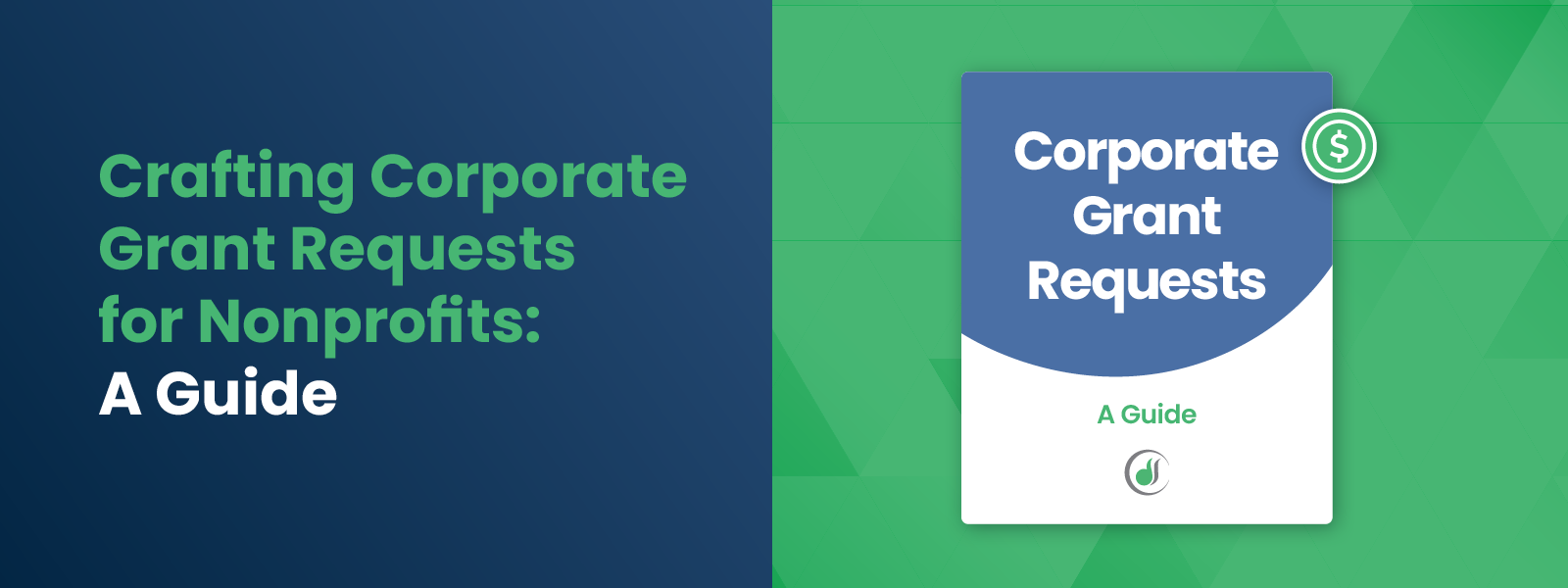
Compelling Corporate Sponsorship Letters: Free Templates
Securing funding is a perennial challenge for nonprofits. While individual donors are the backbone of many organizations, relying solely on personal giving can leave you vulnerable to economic shifts and donor fatigue. To build a robust, sustainable financial foundation, you must diversify your revenue streams. This is where corporate philanthropy comes in. By mastering the art of corporate sponsorship letters, you can unlock a vault of resources ranging from cash sponsorships and corporate grants to valuable in-kind donations of goods and services.

Corporate sponsorships are more than just a donation; they are strategic partnerships. Companies want to support missions that align with their values, engage their employees, and enhance their brand reputation. However, these partnerships rarely happen by accident. They start with a proactive, well-crafted request.

For many development professionals, staring at a blank page is the hardest part. How do you balance the “ask” with the value proposition? How do you sound professional yet passionate?

In this guide, we’ll cover:

Whether you are looking to fund a gala, secure laptops for a classroom, or win a major grant for a new program, these templates and strategies will help you write corporate sponsorship letters that get results.

The Strategic Value of Corporate Partnerships

Before you start drafting, it is crucial to understand the landscape. Corporate philanthropy is not a monolith; it comes in various forms, each with its own expectations and “currency.” Tailoring your corporate sponsorship letters to the specific type of support you need is the first step toward a “yes.”

Corporate Sponsorships

These are typically marketing arrangements. A company provides funding (usually for an event or specific program) in exchange for marketing benefits. The ROI for the company is brand visibility, access to your audience, and positive public relations. When writing these letters, you must speak the language of marketing—impressions, logo placement, and audience demographics.

Corporate Grants

Grants are philanthropic gifts, often distributed through a corporate foundation. These are typically restricted to specific initiatives (Program Support Grants), capacity building, or general operating support. Unlike sponsorships, grants are less about logo placement and more about social impact. Your letter here needs to focus on outcomes, data, and mission alignment.

In-Kind Donations

In-kind giving refers to the donation of goods, services, or expertise rather than cash. This can include anything from office supplies and food for events to pro bono legal counsel or technology hardware. In-kind donations provide “budget relief,” allowing you to allocate cash resources elsewhere. These requests should focus on specific needs and logistical ease for the donor .

Did You Know? Corporate giving creates a “win-win-win.” Nonprofits gain resources, companies boost employee engagement and brand reputation, and communities receive better services. When you send a sponsorship letter, you aren’t just asking for help; you are offering a partnership that benefits the company, too.

The Anatomy of a Winning Sponsorship Letter

Regardless of whether you are asking for products or a check, effective corporate sponsorship letters share a common DNA. They are concise, personalized, and value-driven.

Every effective letter should contain the following elements:

  1. The Personal HookNever address a letter to “To Whom It May Concern.” Research the specific contact person—usually a CSR manager, marketing director, or community affairs officer. Open with a connection, such as a shared value or a mention of their recent work in the community.
  2. The Mission (The “Why”)Briefly explain who you are and what problem you are solving. Keep this high-level but emotionally resonant.
  3. The Specific Ask (The “What”)Be clear about what you need. Are you asking for $5,000 for an event? 20 laptops for a school? Vague requests get vague answers.
  4. The Value Proposition (The “WIIFM”)“What’s in it for me?” Explain what the company gets in return. For sponsorships, this is marketing value. For grants, it is social impact metrics. For in-kind, it might be tax deductions or employee engagement.
  5. The Call to Action (CTA)Tell them exactly what to do next. Should they reply to the email? Visit a website? Schedule a call?

Template 1: The General Event Sponsorship Request

Use this template when you are seeking cash support for an event (like a gala, run/walk, or conference) in exchange for marketing visibility.

Subject: Partnership Opportunity: Sponsor the [Event Name] with [Nonprofit Name]

Body:

Dear [Contact Name],

I hope this note finds you well. I’ve been following [Company Name]’s recent work in [mention a specific community initiative or value], and I see a natural alignment between your commitment to [Community Value] and the work we do at [Nonprofit Name].

Our Mission

At [Nonprofit Name], we are dedicated to [Brief Mission Statement, e.g., providing after-school tutoring to at-risk youth]. Last year alone, we served [Number] individuals, helping to build a stronger community for all of us.

The Opportunity

We are writing to invite [Company Name] to become a lead sponsor for our upcoming [Event Name] on [Date]. This event attracts [Number] local leaders and community members, offering a unique platform to showcase your brand’s commitment to [Cause].

Sponsorship Benefits

As a sponsor at the [Sponsorship Level, e.g., Gold] level, [Company Name] would receive:

  • Logo placement on all event signage and digital materials.
  • Social media shout-outs to our [Number] followers.
  • VIP tickets for your leadership team.
  • The opportunity to speak during the opening remarks.

Next Steps

Your support of [Amount] would directly fund [Specific Impact, e.g., materials for 50 students]. I have attached a full sponsorship packet with further details.

Would you be open to a brief 10-minute call next week to discuss how we can customize this partnership to meet your marketing goals?

Sincerely,

[Your Name]

[Title]

[Nonprofit Name]

[Phone Number]

Template 2: The Corporate Grant Request (Letter of Inquiry)

Many corporate grants require a formal application via a portal, but a Letter of Inquiry (LOI) or introductory email can open the door. Use this to introduce a specific program that needs funding.

Subject: Inquiry: Supporting [Program Name] to achieve [Impact Goal]

Body:

Dear [Program Officer Name],

I am writing to introduce you to [Nonprofit Name] and to inquire about the possibility of submitting a proposal for [Company Name]’s [Specific Grant Program Name].

We admire [Company Name]’s dedication to [CSR Focus Area, e.g., STEM education or environmental sustainability], as outlined in your recent social responsibility report. We believe our new initiative, [Program Name], aligns perfectly with your goal to [Company Goal].

The Problem & Solution

Currently, [State the Problem, e.g., local high schools lack coding resources]. To address this, [Nonprofit Name] is launching [Program Name], which will [Specific Action, e.g., provide coding bootcamps for 200 students].

Expected Impact

With a grant of [Amount], we project we can:

  • Equip [Number] classrooms with necessary technology.
  • Train [Number] teachers.
  • Improve student proficiency scores by [Percentage]%.

We are a 501(c)(3) organization in good standing with a track record of fiscal responsibility. We would welcome the opportunity to submit a full proposal detailing our budget, timeline, and evaluation metrics.

Thank you for your time and for [Company Name]’s continued leadership in our community.

Sincerely,

[Your Name]

[Title]

[Nonprofit Name]

[Website Link]

Quick Tip: Corporate grants often focus on specific areas such as “Program Support” (funds for a specific initiative) or “Capacity Building” (funds to improve infrastructure). Tailor your letter to match the specific language used on the company’s giving page.

Template 3: The In-Kind Donation Request

Use this template when you need goods (food, auction items, technology) or services (printing, consulting) rather than cash.

Subject: Donation Request: Helping [Beneficiary Group] with [Company Name] products

Body:

Dear [Manager/Owner Name],

My name is [Your Name] and I am the [Title] at [Nonprofit Name], a local organization dedicated to [Mission].

We are big fans of [Company Name]. In fact, our team frequently visits your [Location/Store]! I am reaching out today to see if you would be willing to support our upcoming [Event/Program] with an in-kind donation of [Specific Item, e.g., gift cards, catering, or office supplies].

Why This Matters

On [Date], we are hosting [Event], which will support [Beneficiary]. Securing these items as a donation allows us to direct more of our limited budget straight to our programs, ensuring that [Impact Statement, e.g., every dollar goes toward feeding families].

Benefits to You

In exchange for your generosity, we would be thrilled to:

  • Acknowledge [Company Name] in our event program.
  • Post a “Thank You” photo with your product on our social media channels.
  • Provide a tax receipt for the fair market value of the donation.

We are looking for [Specific Quantity/Type of Item], but we are grateful for any contribution you can make.

Thank you for considering this request and for being such a vital part of our local business community.

Best regards,

[Your Name]

[Title]

[Nonprofit Name]

Template 4: The Follow-Up

Silence does not mean “no.” It often means “busy.” If you haven’t heard back in 2-3 weeks, send a polite nudge.

Subject: Following up re: [Original Subject Line]

Body:

Dear [Name],

I’m writing to circle back on my previous note regarding a potential partnership between [Company Name] and [Nonprofit Name].

We are moving forward with our planning for [Event/Program], and we would love to have [Company Name] involved. I know this is a busy time of year, so I wanted to ensure my previous message didn’t get lost in the shuffle.

Do you have 5 minutes this week for a quick chat? I’d be happy to answer any questions you might have about our audience or the impact of this partnership.

Thanks again,

[Your Name]

Template 5: The Stewardship (Thank You) Letter

The most important letter you write is the one after you get the check. Proper stewardship ensures the sponsor comes back next year.

Subject: You made a difference! Thank you from [Nonprofit Name]

Body:

Dear [Contact Name],

On behalf of the board, staff, and those we serve at [Nonprofit Name], thank you for [Company Name]’s generous sponsorship of [Event/Program].

Because of your contribution of [Amount/Item], we were able to [Specific Result, e.g., raise $50,000 for cancer research]. Your support didn’t just put a logo on a banner; it helped us [Impact Story].

Delivering on our Promise

Per our agreement, we were delighted to feature [Company Name] in [list marketing deliverables executed]. We have attached a brief impact report and photos from the event for you to share with your team and customers.

We are proud to count [Company Name] as a partner and look forward to working together again to build a better community.

With gratitude,

[Your Name]

[Title]

[Nonprofit Name]

Best Practices for Corporate Outreach

Templates are a great starting point, but your strategy determines your success. Here are three best practices to keep in mind when sending corporate sponsorship letters.

1. Research and Prospecting

Don’t waste time pitching companies that don’t fund your type of mission. Use tools to identify businesses with established giving programs.

  • Check CSR Reports: Look for companies that explicitly state they support your cause (e.g., education, environment, hunger relief).
  • Leverage Local Presence: Companies with a physical presence in your community are more likely to give because it benefits their employees and customers directly.
  • Use Databases: Platforms like Double the Donation (primarily for matching gifts) also maintain extensive records on corporate grant and in-kind programs, helping you find eligibility criteria and application links quickly .

2. Personalize the “Ask”

Generic blasts get deleted. Mention a specific initiative the company has done recently. “I saw that [Company] recently sponsored the Jazz Festival…” shows you did your homework. Furthermore, check your own donor database. If an employee of the company is already a donor to your nonprofit, mention that! “We are proud to have several [Company] employees among our active supporters” is a powerful social proof.

3. Focus on “In-Kind” as a Gateway

If a company says no to cash, pivot to in-kind. It is often easier for a manager to approve a product donation than a check. Once you have established a relationship through an in-kind gift, you can steward them toward a cash sponsorship next year.

Leveraging Technology to Find Partners

Finding the right contact information and guidelines for corporate sponsorship letters can be time-consuming. This is where technology bridges the gap.

Tools like Double the Donation’s database are invaluable for this research. While best known for matching gifts, the database also flags companies that offer:

  • Volunteer Grants: Cash for volunteer hours.
  • Community Grants: Direct funding opportunities.
  • In-Kind Donations: Programs for product giving.
  • And more!

By using a search tool, you can instantly see which companies in your donor network have these programs, what their eligibility requirements are, and where to submit your application . This data allows you to send highly targeted letters to the companies most likely to say “yes.”


Wrapping Up & Next Steps

Writing effective corporate sponsorship letters is a skill that pays dividends. By shifting your mindset from “asking for charity” to “proposing a partnership,” you open the door to sustainable revenue that can weather economic downturns. Remember, corporations want to give—they have CSR goals to meet and brands to build. Your job is simply to show them how partnering with you helps them achieve those goals.

Ready to start securing sponsors?

  • Build your prospect list: Look at your current donors and identify their employers.
  • Select your template: Choose the grant, sponsorship, or in-kind template that fits your immediate need.
  • Customize and Send: Add your specific mission details and send your first batch of 5 letters this week.

Don’t leave corporate money on the table. Use these templates to start building the partnerships that will power your mission for years to come, and see how Double the Donation’s corporate giving database can help power your efforts. Request a personalized demo today to get started!

Crafting Corporate Grant Requests for Nonprofits-A Guide

Crafting Corporate Grant Requests for Nonprofits: A Guide
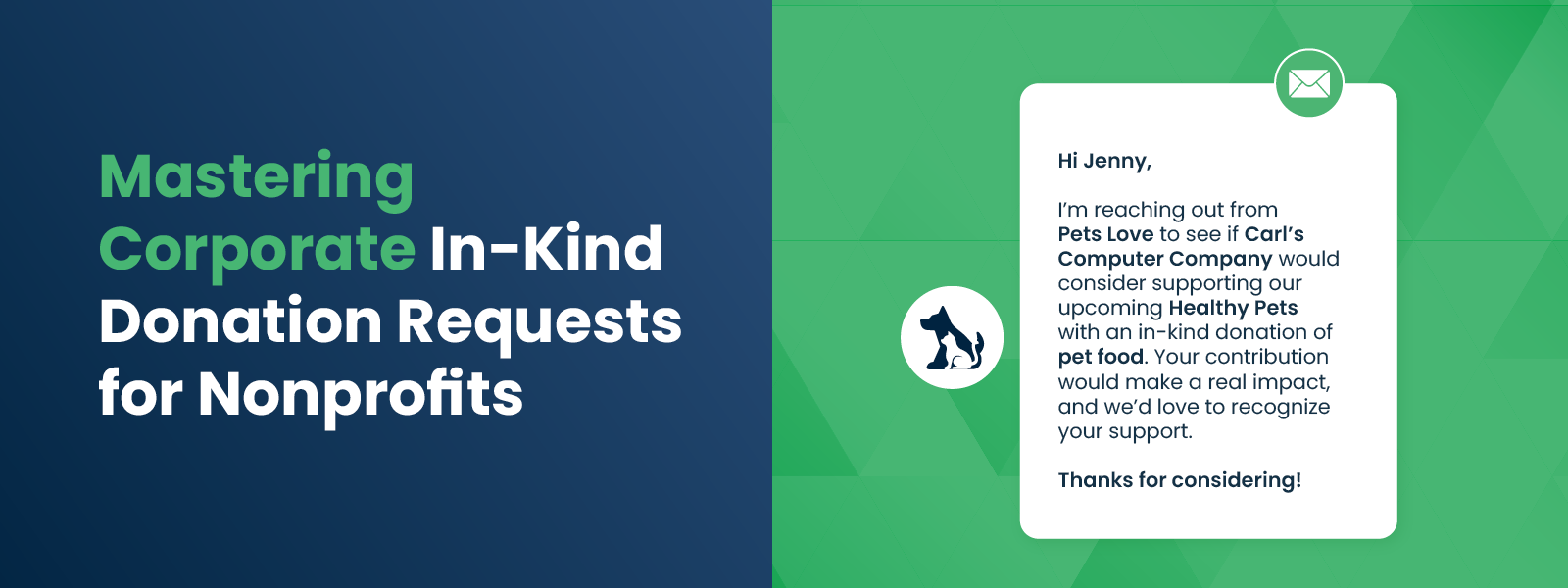
Corporate grants represent a massive reservoir of potential funding for the nonprofit sector, yet they often remain an untapped resource due to the perceived complexity of securing them. Unlike individual donations that may rely on emotional appeals, corporate grants are strategic investments made by businesses to align with their philanthropic goals and community values. Mastering the Corporate Grant Requests process can unlock significant, often unrestricted, funding that empowers your nonprofit to scale its impact and sustainability.

For many development teams, the path from identifying a prospect to cashing the check feels opaque. It requires a shift in mindset from “asking for help” to “proposing a partnership.” When you understand the specific steps corporations take to award funds—and what they need to see in return—you can position your organization not just as a beneficiary, but as a vital partner in achieving their Corporate Social Responsibility (CSR) objectives.

In this guide, we’ll cover:

Ready to diversify your revenue streams? Let’s demystify the process of submitting Corporate Grant Requests and set your organization up for long-term success.

The Strategic Value of Corporate Grants

Corporate grants differ significantly from government grants or individual major gifts. They are funds disbursed by a corporation (either directly or through a corporate foundation) to non-profit organizations. These grants are mutually beneficial: they provide your nonprofit with essential capital while helping the corporation meet its CSR goals, improve public image, and engage employees.

One of the biggest advantages of corporate grants is their flexibility compared to government funding. While federal grants often come with rigorous, time-consuming reporting requirements, corporate grants can be more accessible and sometimes offer general operating support—the “holy grail” of nonprofit funding. Furthermore, receiving a grant from a reputable company can serve as a “seal of approval,” boosting your credibility and making it easier to attract other donors.

Did You Know? Corporate giving benefits the company just as much as the nonprofit. Businesses that engage in philanthropy report enhanced brand reputation, stronger employee engagement and retention, and increased customer loyalty among socially conscious consumers . When you pitch a grant, you are offering a business solution.

The Anatomy of a Corporate Grant Request

To help your development team navigate the process, you must understand what corporations are actually looking for when they review an application. While every company has a slightly different portal or policy, a standard Corporate Grant Request generally requires specific data points to ensure the investment aligns with its business goals.

A robust request typically includes three main categories of information:

1. Nonprofit Information

The company must verify that your organization is a valid 501(c)(3) or equivalent charitable entity eligible to receive funds.

  • Organization Details: The legal name, mission statement, and history of your nonprofit.
  • Tax ID / EIN: This is the most critical piece of data for processing payments and verifying status.
  • Leadership and Governance: Information about your board of directors and executive leadership to ensure organizational stability.
  • Financial Health: Most applications require uploading recent financial statements or Form 990s to prove fiscal responsibility.

2. The Funding Request (The Ask)

This section details exactly what you need and how you will use it.

  • Specific Amount: You must ask for a specific dollar figure. Be realistic and base this on actual budgetary needs.
  • Project Narrative: A clear description of the program or initiative the grant will fund. This should include the problem statement, your proposed solution, and the target audience.
  • Budget Breakdown: A line-item budget showing how the grant funds will be allocated (e.g., staffing, supplies, marketing).
  • Impact Metrics: Corporations are results-oriented. You must define clear, measurable outcomes (e.g., “This grant will allow us to serve 500 additional meals”).

3. Return on Investment (ROI) for the Company

Unlike a simple donation, a Corporate Grant Request often implies a partnership. You need to articulate what the company receives in exchange for their support.

  • Brand Visibility: Will their logo be placed on event signage, t-shirts, or your website?.
  • Employee Engagement: Can you offer volunteer opportunities for their staff as part of the partnership?.
  • Community Impact: How does supporting your cause help them achieve their specific CSR goals (e.g., environmental sustainability or STEM education)?.

Quick Tip: Create a “Grant Cheat Sheet” for your grant writers. This document should list your nonprofit’s EIN, mission statement, standard boilerplate language for programs, and links to your most recent financial audits. Having this ready speeds up the submission process significantly.

The Corporate Grant Request Lifecycle

Navigating the corporate bureaucracy can be intimidating. By understanding the lifecycle of a request, your nonprofit can guide your team through each stage, ensuring you don’t drop out of the process due to confusion or missed deadlines.

Step 1: Prospecting and Research

The process begins with identifying the right opportunities. You need to find companies whose giving priorities align with your mission.

  • Research Alignment: Does the company fund projects in your geographic area? Do they support your specific cause sector (e.g., education, health, environment)?
  • Verify Eligibility: Check their website or CSR report to ensure you meet their specific criteria (e.g., some companies do not fund religious or political organizations).
  • Identify Deadlines: Some companies accept applications on a rolling basis, while others have strict annual or quarterly windows.

Step 2: The Application Process

Once you have identified a prospect, it is time to prepare the materials.

  • Tailor the Proposal: Never copy-paste a generic proposal. Use the company’s own language and values to describe your impact.
  • Submit via Portal: Most large corporations use online grant management systems. Ensure you have all required attachments (IRS letters, budgets) ready to upload.

Step 3: Review and Follow-Up

After submitting, don’t just wait and hope—stay proactive.

  • Tracking: Create a system to monitor submission dates and expected notification timelines.
  • The Nudge: If you haven’t heard back within the expected window (usually 2-3 weeks or longer for large grants), follow up politely with a brief email to express continued interest.

Step 4: Fulfillment and Stewardship

If approved, the work isn’t over.

  • Acknowledgment: Send a formal thank-you letter immediately.
  • Reporting: Most corporate grants require a post-grant report detailing how the money was spent and the impact achieved. Delivering these updates is crucial for securing future funding.
  • Public Recognition: Celebrate the partnership on social media or in your newsletter, as promised in your proposal.

Top Companies with Generous Grant Programs

Familiarizing yourself with companies that offer established grant programs helps you target your outreach. If you see volunteers from these corporations or know your donors work there, you should immediately investigate their Corporate Grant Requests process.

  • Bank of America: Bank of America focuses its philanthropic support on workforce development, basic needs, and community development. They award grants to nonprofits that are creating economic progress in underserved communities.
  • Google.org: Google’s philanthropic arm offers grants to nonprofits focused on technology-driven solutions. Key areas of interest include digital equity, climate action, and economic opportunity.
  • SC Johnson: This company supports nonprofits through community grants with a focus on sustainability, education, health, and economic development. Note that many of these are managed through local SC Johnson locations, making them great for community-based orgs .
  • Target: Target provides grants through its Target Foundation, supporting racial equity, early childhood education, and community wellness. They operate with a mix of national and local disbursements, often tied to their store footprint.
  • Verizon: The Verizon Foundation focuses on digital inclusion, climate protection, and human prosperity. They are particularly interested in STEM education and workforce development initiatives.

Did You Know? Many companies manage their philanthropy locally. For example, Marriott’s philanthropic efforts are often managed by individual hotel properties. Don’t just look at corporate headquarters; build relationships with the general managers of businesses in your specific zip code.

Best Practices for Winning Corporate Grants

Success in the Corporate Grant Requests process isn’t just about luck; it’s about strategy. Here are three best practices to increase your win rate:

1. Leverage Employee Connections

A “warm introduction” can fast-track your application. Use your donor database to see if any of your supporters work at the target company. Employees can often advocate for your cause or submit a nomination on your behalf, which is sometimes a requirement for specific grants.

2. Focus on Measurable Impact

Corporations are results-oriented. Your proposal should clearly state exactly what the funds will achieve. Instead of asking for “program support,” ask for “$5,000 to purchase 200 backpacks for at-risk youth.” Clear metrics give corporate officers the data they need to justify the expense to their stakeholders.

3. Align with Business Goals

Demonstrate how the partnership benefits them. If a bank is funding financial literacy, show how your program educates future customers. If a tech company funds digital inclusion, show how you are training the future workforce. Making this connection explicit strengthens your case.

One of the biggest hurdles in the Corporate Grant Requests process is simply knowing who gives to what. Manually scouring corporate “About Us” pages is time-consuming and inefficient. This is where technology bridges the gap.

Comprehensive corporate giving databases, like the one offered by Double the Donation, aggregate data on thousands of companies. These tools allow nonprofits to search for companies based on specific criteria, instantly revealing:

  • Which companies offer corporate grant opportunities
  • Details on in-kind donation initiatives
  • Information on employee volunteer incentives
  • Matching gift program guidelines
  • And more!

By using a centralized database, your team can skip the hours of research and go straight to the application phase. For example, a quick search might reveal that Cisco offers Global Impact Cash Grants for crisis response, or that Big Lots supports hunger and housing initiatives. Accessing accurate, up-to-date guidelines and forms ensures you never waste time applying to a company that doesn’t fund your type of mission.


Wrapping Up & Next Steps

Corporate Grant Requests represent a massive, underutilized opportunity for nonprofits to increase their capacity and deepen relationships with business partners. By shifting the perspective of fundraising from a simple “ask” to a strategic “partnership proposal,” you open the door to sustainable funding that can weather economic shifts.

The key to success lies in research and alignment. Corporations want to give, but they need you to show them how their investment will generate impact. By providing the right information, targeting the right partners, and leveraging technology to streamline the search, you can turn corporate CSR budgets into real-world impact for your mission.

Ready to start maximizing your corporate support?

  • Audit your network: Check your donor database to see where your supporters work. Are there connections to companies with grant programs?
  • Refine your wish list: Define exactly what you need funding for so you can pitch specific, measurable projects.
  • Get the right tools: Explore Double the Donation to see how our database can help you identify grant opportunities alongside matching gifts and volunteer incentives.

Don’t let these funds go unclaimed. Start building your corporate grant pipeline today and give your mission the resources it deserves. Request a personalized demo of Double the Donation to see in action how our solution can help power smarter corporate grant requests and more.

Mastering Corporate In-Kind Donation Requests for Nonprofits
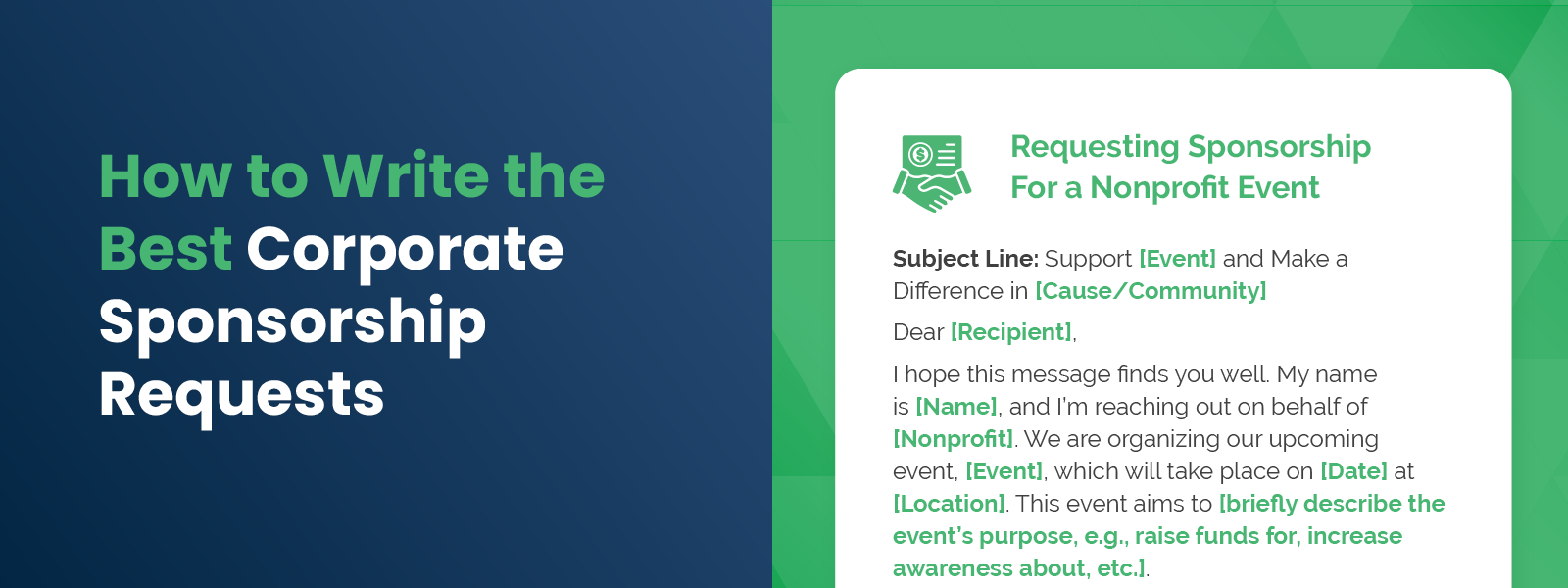
Mastering Corporate In-Kind Donation Requests for Nonprofits

Cash is king in the nonprofit world, but it isn’t the only currency that fuels mission-driven work. Imagine freeing up thousands of dollars in your operating budget by receiving donated laptops, professional legal services, or event space at no cost. This is the power of corporate in-kind donations: a vital but often underutilized resource that can dramatically expand your organization’s capacity without touching your bank account.

While many development directors are comfortable asking for monetary gifts, the Corporate In-Kind Donation Requests process can feel like uncharted territory. It requires a different approach to prospecting, valuation, and stewardship. Yet, when mastered, it transforms businesses from passive funders into active, hands-on partners. By understanding how to identify the right opportunities and navigate the specific workflows of corporate giving programs, you can unlock a treasure trove of goods and services that propel your mission forward.

In this guide, we’ll cover:


Ready to turn corporate generosity into tangible resources? Let’s dive into the step-by-step process of securing non-monetary support that makes a monetary difference.

The Strategic Value of In-Kind Giving

Before diving into how to get these donations, it is crucial to understand why they should be a pillar of your fundraising strategy. In-kind donations are non-monetary contributions of goods, services, or expertise. For a nonprofit, these gifts offer “budget relief,” as every dollar you don’t spend on office supplies, software, or consulting is a dollar you can allocate to direct program services.

Furthermore, in-kind giving is often the “foot in the door” for deeper corporate relationships. A local business that starts by donating auction items or catering for an event is far more likely to consider a cash sponsorship or employee volunteer day in the future. It allows companies to use their existing assets—excess inventory, specialized skills, or facilities—to do good, making it a lower-barrier ask than a direct cash grant.

Did You Know? In-kind services can be just as valuable as physical goods. “Intangible” donations like legal counsel, graphic design, or IT support utilize a company’s core competencies to solve complex nonprofit challenges that would otherwise require significant funding to address.

Step 1: Defining Needs and Creating an Acceptance Policy

The Corporate In-Kind Donation Requests process begins internally. Before you ask for a single item, you must know exactly what you need—and what you don’t need. Soliciting random items can turn your office into a storage unit for unusable goods, creating a logistical headache rather than a benefit.

Create a Targeted Wishlist

Work with your program staff to compile a specific list of goods and services that would immediately aid your operations. Be precise. Instead of asking for “office supplies,” ask for “20 reams of printer paper” or “5 standing desks.” This “wishlist” becomes a public-facing tool that guides donors to make useful contributions.

Establish a Gift Acceptance Policy

To protect your organization, you need a policy that defines what you will decline. This might include expired goods, damaged items, or property that comes with burdensome restrictions. A clear policy allows you to politely say “no” to donations that would cost you more to store or dispose of than they are worth.

Quick Tip: Publish your acceptance policy on your website. This transparency helps donors self-screen their contributions, ensuring you receive high-quality items while saving your team from having to reject gifts face-to-face.

Step 2: Prospecting and Identifying Corporate Partners

Once you know what you need, the next phase of the Corporate In-Kind Donation Requests process is finding the right partner to fulfill it.

Leverage Your Existing Network

Your best prospects are often hiding in plain sight. Screen your current donor database to see where your supporters work. An individual donor employed by a tech company might be your bridge to securing donated software or hardware. Using a corporate giving database can help you quickly identify which of these employers have established in-kind programs.

Target Local Businesses

Local businesses are frequently the most responsive to in-kind requests because they want to see a tangible impact in their immediate community. A local bakery might donate refreshments for a volunteer orientation, or a nearby print shop could offer pro bono printing for your annual report.

Research Major Corporations

For larger needs (such as airline tickets for a raffle or bulk product donations), look toward major corporations. Many national brands, including Google, Southwest Airlines, and the Home Depot, have formal application portals specifically for these types of requests.

Step 3: The Application and Proposal Workflow

With your targets identified, it is time to make the ask. This step in the Corporate In-Kind Donation Requests process varies depending on the size of the company.

Large corporations typically require you to submit a request through an online grant portal. You will need to provide your 501(c)(3) determination letter, a description of your mission, and specific details about the event or program the donation will support. These portals often have strict deadlines, so track these carefully.

Crafting a Proposal for Local Partners

For local businesses without a formal portal, a personalized proposal is key. Your pitch should clearly state what you need, how it will be used, and—crucially—what the company will receive in return. Unlike a simple donation, a corporate sponsorship request often implies a marketing exchange. Be specific about the benefits you can offer:

  • Brand Visibility: Logo placement on event signage, t-shirts, or your website.
  • Social Media Recognition: Dedicated posts thanking the sponsor to your followers.
  • Community Engagement: Opportunities for their employees to volunteer at the event they are sponsoring.

Treat this as a partnership proposal, not just a plea for free stuff. Show them how donating aligns with their business goals, such as reaching a specific audience or demonstrating community commitment.

Did You Know? When it comes to corporate in-kind donation requests, the right timing matters. Retailers are often more likely to donate excess inventory at the end of a season or fiscal quarter when they are looking to clear stock. Aligning your request with their business cycle can increase your chances of a “yes”.

Step 4: Fulfillment, Valuation, and Stewardship

Congratulations, your request was approved! But the Corporate In-Kind Donation Requests process isn’t over yet. The final phase involves logistics, accounting, and relationship building.

Logistics and Intake

Have a plan for receiving the items. Will you need a truck to pick up furniture? Do you have the refrigerator space for donated food? Clarify delivery details immediately to avoid burdening the donor.

Valuation and Receipting

You must provide a written acknowledgment for any in-kind gift worth $250 or more. While the donor is responsible for determining the specific tax-deductible value of the item, your receipt should include a detailed description of the goods or services received. For your own internal records, estimate the “fair market value” (FMV) so you can track how much budget these gifts have saved you.

Stewardship and Reporting

Don’t just send a receipt; send a story. Report back to the company on the impact of their gift. If a company donated books, send a photo of children reading them. If a firm donated legal services, share how much money they saved you—money that went directly to your beneficiaries. This “impact reporting” is the secret sauce that turns a one-time donor into a recurring partner.

Top Companies with Generous In-Kind Programs

Looking for a place to start? These industry giants are known for their robust in-kind giving programs and often have open applications on their websites.

1. Google

Through Google for Nonprofits, the tech giant offers immense in-kind value, including $10,000 per month in free search advertising (Google Ad Grants) and free access to the Google Workspace suite of productivity tools.

2. Southwest Airlines

A favorite for charity auctions, Southwest Airlines donates round-trip tickets to eligible nonprofit organizations to help them fundraise. These are highly coveted items that can drive significant bidding at fundraising galas.

3. Home Depot

The Home Depot Foundation focuses on improving the homes and lives of U.S. veterans and their families. They offer product donations (often via gift cards for materials) to nonprofits that align with this mission, helping organizations fix up facilities or build housing.

4. Whole Foods Market

Local Whole Foods stores often have the autonomy to make in-kind donations of food and products to community nonprofits. This is an excellent source for event refreshments or items for community pantries.

5. Crayola

Perfect for education-focused nonprofits, Crayola provides in-kind product donations to organizations focusing on arts and education, ensuring schools and programs have the creative tools they need.


Wrapping Up & Next Steps

Mastering the Corporate In-Kind Donation Requests process is about seeing opportunity where others see obstacles. It transforms your fundraising strategy from a singular pursuit of cash into a diversified approach that leverages every available resource, from software and services to supplies and space. By defining your needs, professionally pitching corporate partners, and stewarding those gifts with care, you can build a sustainable pipeline of support that directly relieves your budget and amplifies your impact.

Don’t let valuable resources go unclaimed. Start by creating your wishlist today, then look at your donor list to find the corporate connections that can make it a reality.

Ready to find your next corporate partner?

  • Audit your needs: What line items in your budget could be covered by an in-kind gift?
  • Build your list: Use tools like Double the Donation to identify companies with established giving programs.
  • Make the ask: Reach out to a local business partner this week with a specific, tangible request.

Start maximizing your mission’s potential by tapping into the full spectrum of corporate philanthropy today. You can even use Double the Donation’s corporate giving database to help supercharge your efforts!

How to Write the Best Corporate Sponsorship Requests
How to Write the Best Corporate Sponsorship Requests

Corporate sponsorships are often the “white whale” of nonprofit fundraising: highly sought after, incredibly valuable, but sometimes elusive to secure. For many organizations, a single sponsorship can underwrite an entire event, fund a new community program, or provide the essential technology needed to scale operations. However, treating corporate partners like ATMs (or simply hoping a business will notice your good work) is rarely a winning strategy. Success requires navigating Corporate Sponsorship Requests with intention, professionalism, and a clear value proposition.

Unlike individual donations, which are often driven by emotion and altruism, corporate sponsorships are business transactions rooted in mutual benefit. Companies want to know what they get in return, whether it is brand visibility, access to new audiences, or alignment with Corporate Social Responsibility (CSR) goals. To unlock this revenue stream, nonprofits must move beyond passive fundraising and adopt a proactive, step-by-step approach to identifying, pitching, and stewarding corporate partners.

In this guide, we will cover:

By mastering the technical and relational steps of Corporate Sponsorship Requests, your organization can build a sustainable pipeline of support that goes far beyond a one-time check. It is time to stop guessing and start executing a strategy that turns local businesses and major corporations into your most reliable allies.

The Strategic Value of Corporate Sponsorships

Before diving into the logistics of the process, it is vital to understand what distinguishes a sponsorship from other forms of giving. While corporate grants are typically philanthropic gifts restricted to specific programs or general operating support, sponsorships are often marketing agreements. The company provides funding or in-kind resources, and in exchange, the nonprofit provides marketing assets: logos on event signage, shout-outs on social media, or speaking opportunities.

This distinction is important because it opens up different budgets within a company. A grant might come from the corporate foundation, but a sponsorship often comes from the marketing or advertising budget. This allows nonprofits to tap into varied revenue streams. Furthermore, securing in-kind sponsorships (such as technology, office supplies, or event space) can significantly reduce overhead costs, allowing more cash revenue to flow directly to your mission.

Did You Know? Corporate giving is experiencing a massive surge. In 2024, corporate giving grew by an impressive 9.1%, reaching a total of $44.4 billion. This growth signals that businesses are more ready than ever to invest in nonprofit partnerships that align with their values and business goals.

Step 1: Prospecting and Identifying the Right Partners

The process begins with research. A “spray and pray” approach—sending generic letters to every company in the phone book—is inefficient and rarely effective. To maximize your success rate with Corporate Sponsorship Requests, you must identify prospects whose business goals and brand values align with your mission.

Leveraging Local and Mission Alignment

Start by looking at your immediate community. Companies with a strong presence in your service area are often the most motivated to support local causes because it builds goodwill with their specific customer base. Additionally, look for mission alignment. For example, a local hospital system is a natural fit for a health-focused nonprofit, while a tech firm might be interested in sponsoring STEM education programs.

Analyzing Your Existing Network

Your best prospects are often already in your orbit. Analyze your donor database to see where your current supporters work. If a board member or a major donor is an executive at a local firm, you have a warm introduction that bypasses the cold call phase. Prioritize companies where you already have a connection, such as current donors’, volunteers’, or board members’ employers, to significantly increase your chances of success.

Determining the Type of Support

During the prospecting phase, determine what kind of support you actually need. Are you looking for cash to fund an event? Or could in-kind donations be equally valuable? Many companies have specific programs for product donations, such as Big Lots, which donates overstock furniture and household items, or Crayola, which provides art supplies to educational organizations. Knowing exactly what you need helps you target the right companies.

Step 2: Crafting and Submitting the Proposal

Once you have a list of targets, the next phase is the “ask.” This is where you formally request support. Depending on the company size, this might involve an online application portal or a bespoke sponsorship proposal document.

Large corporations often manage their giving through structured online portals. For instance, companies like Coca-Cola or Bank of America have specific systems where nonprofits must register and submit requests. In these scenarios, it is critical to follow the guidelines precisely. You will likely need to provide your organization’s IRS 501(c)(3) letter, a program budget, and a clear description of how the funds will be used.

Writing a Winning Proposal

For companies without rigid portals, or when seeking higher-level event sponsorships, you will need to craft a proposal. This document should be tailored to the company’s interests, not just your needs.

A strong proposal includes:

  • The Opportunity: Clearly define the event or program.
  • Audience Demographics: Tell the sponsor who they will reach (e.g., “Our gala is attended by 500 local business leaders”).
  • Deliverables: Be specific about what the sponsor gets. Will their logo be on the website? Will they get a booth at the event?.
  • Impact: Show how their partnership will make a tangible difference in the community.

Quick Tip: When crafting Corporate Sponsorship Requests, clarity is king. Ensure your proposal includes measurable goals and outcomes. Companies want to see a return on investment (ROI), whether that is measured in social impact or brand impressions.

Step 3: The Corporate Review and Follow-Up Phase

After you hit “submit,” the process enters the review phase. For the nonprofit, this is often the “waiting game,” but it shouldn’t be a passive period. The timeline for approval can vary wildly; some companies review requests on a rolling basis, while others have quarterly or annual cycles.

Tracking Your Applications

Organization is essential here. Create a tracking system or spreadsheet to monitor your submission dates, key contacts at the company, and expected notification timelines. If you applied through a portal, check your status regularly. If you emailed a proposal, mark your calendar for a follow-up.

The Art of the Follow-Up

If you haven’t heard back within the expected window (typically 2-3 weeks for smaller requests, longer for major grants), it is appropriate to send a polite follow-up. Keep it brief and professional. Reiterate your excitement about the potential partnership and offer to provide any additional information they might need.

This persistence demonstrates professionalism. Even if the answer is “no,” how you handle the rejection matters. Always ask for feedback on your proposal and thank them for considering your organization. This keeps the door open for future opportunities.

Step 4: Securing Funds and Delivering ROI

Congratulations! The sponsor said “yes.” Now the process moves into the fulfillment and stewardship phase. This is arguably the most critical step because it determines whether the sponsor will renew their support next year.

Formalizing the Agreement

Upon approval, you may need to sign a sponsorship agreement or contract. This document outlines the payment schedule (or delivery date for in-kind goods) and the specific marketing benefits you promised. Ensure you have the vector files of their logos and any specific brand guidelines they require for your marketing materials.

Delivering on Promises (Fulfillment)

If you promised the sponsor a logo on the event banner, ensure it is there. If you promised social media posts, schedule them. This is the “transactional” part of the relationship where you deliver the marketing value the company paid for.

Stewardship and Reporting

After the event or program concludes, don’t just send a receipt. Send a comprehensive impact report. Did the event sell out? How many people saw their logo? If it was a programmatic grant, share specific metrics on how many people were helped. Acknowledge the gift promptly with a formal thank-you letter, and look for public ways to celebrate the partnership.

Did You Know? In-kind giving can be a gateway to cash sponsorships. Companies like Marriott provide food and beverage donations or meeting space, while tech giants like Cisco offer hardware and software. Establishing a relationship through an in-kind gift allows you to prove your value as a partner, making it easier to ask for financial support later.

One of the biggest hurdles in Corporate Sponsorship Requests is simply knowing who gives to what. Manually scouring corporate “About Us” pages is time-consuming and inefficient. This is where technology bridges the gap.

Comprehensive corporate giving databases, like the one offered by Double the Donation, aggregate data on thousands of companies. These tools allow nonprofits to search for companies based on specific criteria, instantly revealing:

  • Which companies offer matching gift programs.
  • Details on corporate grant opportunities and application links.
  • Information on in-kind donation initiatives.
  • Employee volunteer incentives.

By using a centralized database, your team can skip the hours of research and go straight to the application phase. For example, a quick search might reveal that Bank of America offers grants for workforce development, or that Home Depot has a specific portal for community product donations. Accessing accurate, up-to-date guidelines and forms ensures you never waste time applying to a company that doesn’t fund your type of mission.

Measuring the Success of Your Sponsorship Strategy

To refine your process, you must treat it like any other business strategy: track, analyze, and optimize. It is not enough to just count the dollars raised; you need to understand the cost of acquisition and the retention rate of your partners.

Key Performance Indicators (KPIs)

Consider tracking the following metrics to gauge the health of your sponsorship program:

  • Total Revenue: The aggregate cash and in-kind value generated.
  • Conversion Rate: The percentage of proposals submitted that result in a sponsorship. If this is low, you may need to refine your prospecting or your pitch.
  • Retention Rate: How many sponsors come back year over year? High retention indicates you are delivering good ROI.
  • Fulfillment Cost: How much time and money did it take to deliver the sponsorship benefits (e.g., printing banners, hosting VIP receptions)?
  • In-Kind Value: Don’t ignore non-cash gifts. Track the estimated market value of donated goods and services.

Regularly reviewing these figures helps you identify trends. Perhaps you have great success with local banks but struggle with national retailers. Or maybe your in-kind donations are high, but cash revenue is lagging. Use this data to adjust your efforts and focus resources on the highest-yield activities.


Wrapping Up & Next Steps

The Corporate Sponsorship Requests process is a journey of relationship building, strategic alignment, and professional execution. It transforms the way nonprofits view funding, shifting the perspective from “charity” to “partnership.” By rigorously identifying the right prospects, crafting value-driven proposals, and delivering on your promises, you elevate your organization’s standing in the business community.

While the process requires upfront effort—researching guidelines, writing proposals, and managing deliverables—the payoff is substantial. Corporate partners provide the stability, resources, and visibility that allow nonprofits to dream bigger and reach further.

Ready to supercharge your corporate fundraising?

  • Audit your assets: What can you offer a sponsor? (Event visibility, social media reach, volunteer opportunities).
  • Build your list: Use tools like Double the Donation to identify companies with established giving programs.
  • Start small: Pitch a local business on a small in-kind donation to build your confidence and portfolio.

Don’t leave corporate money on the table. Start actively managing your sponsorship pipeline today and watch your mission grow. Plus, see how solutions like Double the Donation’s corporate giving database can help!

Navigating the Corporate Grant Process-A Nonprofit Guide

Navigating the Corporate Grant Process: A Nonprofit Guide

Corporate grants for nonprofits represent a powerhouse of potential funding, yet they often remain an untapped resource due to the perceived complexity of identifying prospects and securing approvals. Unlike individual donations that may rely heavily on emotional appeals or personal connections, corporate grants are strategic investments made by businesses. These organizations are looking to align their financial resources with their philanthropic goals, community values, and business objectives. Mastering the corporate grant process can unlock significant, often unrestricted, funding that empowers your nonprofit to scale its impact and sustainability in ways that individual giving alone cannot support.

For many development teams, the path from identifying a prospect to cashing the check feels opaque and intimidating. It requires a fundamental shift in mindset from “asking for help” to “proposing a partnership.” When you understand the specific steps corporations take to award funds—and what they need to see in return regarding impact and data—you can position your organization not just as a beneficiary, but as a vital partner in achieving their business and social goals.

In this comprehensive guide, we will explore:

Ready to diversify your revenue streams? Let’s demystify the process of securing corporate funding and set your organization up for long-term success.

The Strategic Value of Corporate Grants

Corporate grants differ significantly from government grants or individual major gifts, both in how they are acquired and the benefits they offer. These funds are disbursed by a corporation (either directly through a marketing or community affairs budget or through a separate corporate foundation) to non-profit organizations. While the immediate benefit is obvious (cash in the bank), the strategic value goes much deeper.

First, corporate grants validate your organization’s work. Receiving funding from a recognized national or local brand serves as a “seal of approval.” This external validation can boost your credibility, making it easier to attract other donors, board members, and media attention. When a major bank or retailer invests in your mission, it signals to the rest of the community that your nonprofit is a safe, reliable, and impactful investment.

Second, these grants are mutually beneficial tools for corporate social responsibility (CSR). Corporations are under increasing pressure from consumers and employees to be good corporate citizens. By funding your nonprofit, they meet their CSR goals, improve their public image, and create stories they can share with their stakeholders. This alignment creates a partnership dynamic rather than a simple transactional donor-recipient relationship.

Finally, corporate grants offer flexibility. While federal or state grants often come with rigorous, time-consuming reporting requirements and strict restrictions on how funds can be used, corporate grants can be more accessible. Many offer general operating support—the “holy grail” of nonprofit funding—which allows you to keep the lights on, pay staff, and invest in infrastructure.

Did You Know? Corporate philanthropy is on the rise! In recent years, corporate giving has outpaced inflation, signaling a robust environment for nonprofits ready to tap into the Corporate Grant process. Companies are actively seeking partners who can help them deploy capital into communities effectively.

Understanding the Spectrum of Corporate Support

Before diving into the application process, it is crucial to understand that “corporate grants” are just one bucket within the broader landscape of corporate giving. Companies often have multiple avenues for supporting nonprofits, and understanding the nuances can help you approach the right department with the right ask.

Direct Cash Grants

These are monetary donations given to a nonprofit to support specific programs, capital campaigns, or general operations. They are typically awarded through a competitive application process managed by a corporate foundation or a community relations department.

Corporate Sponsorships

Unlike grants, which are charitable in nature, corporate sponsorships are often marketing transactions. A company provides funding in exchange for advertising, logo placement, and brand visibility at an event or within a program. The budget for sponsorships usually comes from the marketing department rather than the philanthropic foundation, meaning the “pitch” needs to focus on audience reach and brand alignment rather than just social impact.

In-Kind Donations

Not all support is financial. In-kind donations for nonprofits involve the transfer of goods or services rather than cash. This could include technology hardware, consulting services, pro bono legal work, or product donations (e.g., food for a food bank, lumber for a housing project). These donations can be incredibly valuable for offsetting budget line items.

Employee-Driven Giving

Some corporate funds are unlocked directly by the actions of employees. Volunteer grants (also known as Dollars for Doers) are programs where companies donate money to nonprofits based on the number of hours their employees volunteer. Similarly, matching gifts occur when a company matches a donation made by an employee, effectively doubling the donor’s impact.

The 4-Step Corporate Grant Lifecycle

Navigating the Corporate Grant process requires a structured, disciplined approach. While every company has its own timeline and quirks, the general lifecycle follows four distinct stages. Understanding these will help you manage your team’s time and expectations effectively, ensuring you don’t miss deadlines or waste resources on poor-fit prospects.

Step 1: Prospecting and Research (Pre-Award)

The process begins long before you write a single word of a proposal. This phase involves identifying companies whose philanthropic priorities align with your mission. This is the most critical step; a well-written proposal sent to the wrong company will always be rejected.

  • Alignment is Key: Companies typically fund specific “pillars” such as STEM education, environmental sustainability, workforce development, or hunger relief. Review their CSR reports to see exactly what they funded last year.
  • Geography Matters: Many corporations prefer (or are mandated) to fund organizations in communities where they have a physical footprint—offices, factories, distribution centers, or retail stores. If a company has no employees in your state, your chances of funding drop significantly.
  • Due Diligence: You must verify eligibility requirements. Does the company require 501(c)(3) status? Do they exclude religious or political organizations? Are their grants invitation-only, or is there an open application window? Thorough research here prevents wasted effort later.

Step 2: The Application and Proposal

Once you’ve identified a prospect, you enter the active application phase. This usually involves submitting a Letter of Inquiry (LOI) or a full grant proposal. Large corporations often utilize online portals like CyberGrants, SmartSimple, or Blackbaud.

  • The Narrative: Your proposal must tell a compelling story backed by data. You need to clearly define the problem (the community need), your solution (the program), and the specific outcomes you expect. Avoid jargon and focus on clarity.
  • The Budget: A transparent, realistic budget is crucial. It shows you have a plan for every dollar requested. Differentiate between direct costs (supplies, staff time) and indirect costs (overhead).
  • Adhering to Constraints: Corporate portals often have strict character limits (e.g., “Describe your mission in 500 characters”). Drafting your answers in a separate document first allows you to edit for brevity and impact before pasting them into the form.

Step 3: Review and Decision

After submission, the “waiting game” begins. Unlike individual donors who might write a check immediately, corporations have bureaucratic processes.

  • Internal Review: Program officers or employee committees review applications against a scoring rubric. They assess mission alignment, financial health (often reviewing your Form 990), and potential for impact.
  • Timeline: This can take anywhere from a few weeks to several months. Some companies review grants on a quarterly basis, while others have rolling deadlines. Patience is required, but a polite follow-up after a reasonable period is acceptable.

Step 4: Award and Stewardship (Post-Award)

If approved, you’ll receive a notification and potentially a grant agreement outlining terms. This isn’t the end of the road; it’s the beginning of a partnership.

  • Fulfillment: Funds are disbursed, often via electronic transfer or check. Ensure your finance team knows how to allocate these funds according to the grant agreement.
  • Reporting: Most corporate grants require a post-grant report detailing how the money was spent and the impact achieved. Did you meet your goals? If not, why? Timely and honest reporting is essential for securing future funding.
  • Recognition: Unless the donor requests anonymity, publicly thank them. Use social media, your newsletter, and press releases to highlight their generosity. This positive PR is often part of the ROI the company is seeking.

Top Companies with Standout Grant Programs

Knowing where to look is half the battle. While there are thousands of corporate foundations, some stand out due to the size of their giving and the clarity of their application processes. Here are a few major corporations with well-established grant programs that might align with your mission:

  • Google.org: Known for its focus on technology and innovation, Google.org offers grants to nonprofits that use technology to solve complex challenges. Beyond cash, they provide the Google Ad Grants program, offering up to $10,000/month in in-kind advertising to help nonprofits raise awareness and recruit volunteers.
  • The Walmart Foundation: This foundation focuses heavily on creating opportunity, advancing sustainability, and strengthening community. They offer local community grants ranging from $250 to $5,000. Because these decisions are often made at the local facility level, they can be easier for smaller local nonprofits to secure compared to national grants.
  • Bank of America Charitable Foundation: Their grants focus on economic mobility, including workforce development, community development, and basic needs like hunger and housing. They are a significant target for human services organizations and typically have specific application windows for different causes throughout the year.
  • The Home Depot Foundation: A prime example of niche funding, they strongly focus on veteran housing and disaster response. If your mission touches these areas, they are a high-priority prospect. They also engage their employees heavily in volunteer projects alongside the funding.
  • Wells Fargo Foundation: They prioritize financial health, housing affordability, and small business growth. They often look for programs that can demonstrate measurable outcomes in these specific economic areas and prefer to fund innovative solutions to systemic problems.

Quick Tip: Don’t ignore the “average” grant! While multi-million dollar grants make headlines, the average corporate grant size is often around $5,000 to $10,000. These smaller grants are typically less competitive and can build a track record of success that leads to larger funding later.

Best Practices for Winning Corporate Grants

Success in the Corporate Grant process isn’t just about luck; it’s about strategy, preparation, and positioning. Here are detailed best practices to increase your win rate and build lasting corporate relationships.

1. Tailor Your Proposal to the Funder

Never copy-paste a generic proposal. Corporate program officers can spot a “form letter” application from a mile away. Use the corporation’s own language—found in their CSR reports or website—to describe your impact. If they talk about “workforce readiness,” don’t just say “job training”; use their terminology to show alignment. Mirroring their language subconsciously reinforces that you are on the same team aiming for the same goals.

2. Leverage Employee Connections

A “warm introduction” can fast-track your application. Use your donor database to see if any of your supporters work at the target company. Employees can often advocate for your cause or submit a nomination on your behalf, which is sometimes a requirement for specific grants. Even if an employee cannot submit the grant, their insight into the company culture and current priorities can be invaluable during the drafting phase.

3. Focus on Measurable Impact

Corporations are results-oriented entities driven by ROI. Your proposal should clearly state exactly what the funds will achieve. Avoid vague statements like “we will help people.” Instead, use concrete metrics: “This $5,000 grant will provide 2,000 nutritious meals to families in [City Name], reducing local food insecurity by X%.” Clear metrics give corporate officers the data they need to justify the expense to their stakeholders and shareholders.

4. Visualize Your Data

Whenever possible, use charts, infographics, or bulleted lists to convey complex data. Grant reviewers often skim applications due to volume. Breaking up dense text with clear data points ensures your key impact statistics are seen and remembered. If the portal allows for attachments, include a one-pager that visually summarizes your program’s success.

5. Be Persistent but Polite

Rejection is part of the process. If your grant is denied, politely ask for feedback. Was it the timing? The budget? The program fit? Many corporations are willing to provide brief feedback that can help you succeed in the next cycle. Furthermore, a “no” today is often a “not right now.” Maintaining a professional relationship keeps the door open for future opportunities.

How to Find Corporate Grant Opportunities

Identifying the right opportunities is the first hurdle in the Corporate Grant process. Instead of manually scouring the web, utilize specialized tools and databases to streamline your search and focus your energy on high-probability prospects.

Grant Databases

Tools like GrantStation, Candid’s Foundation Directory, or GrantWatch allow you to filter thousands of grantmakers by geographic focus, cause, and funding amount. These platforms often provide detailed profiles on funders, including their average grant size, board members, and past grantees, saving you hours of research.

Corporate Giving Software

Platforms like Double the Donation are invaluable for the broader corporate giving landscape. While primarily known for matching gifts, these databases can help you identify companies with robust CSR programs. Often, a company with a matching gift program also has a grantmaking arm. Identifying these dual-threat companies allows you to double-dip: securing a corporate grant and mobilizing employee matching gifts simultaneously.

Local Business Journals

Don’t overlook local businesses! Your local business journal’s “Book of Lists” often ranks top corporate philanthropists in your city, providing a localized prospect list. These local branches of national companies or large regional businesses often have more autonomy and less competition than national headquarters.

Competitor Analysis

Look at the annual reports of other nonprofits in your sector. Who is funding them? If a bank is funding a literacy program at a nearby library, they have demonstrated an interest in education and community development. This “peer research” can uncover prospects you might have missed.

Common Mistakes to Avoid in Grant Writing

Even excellent programs can miss out on funding due to avoidable errors in the application process. Steer clear of these common pitfalls to keep your application in the “yes” pile.

  • Ignoring Guidelines: If the grant asks for a 2-page narrative, do not send 5 pages. If they say they do not fund capital projects, do not ask for building renovations. ignoring guidelines shows a lack of respect for the funder’s process.
  • Waiting Until the Last Minute: Corporate grant portals can crash, internet connections can fail, and questions can arise at the 11th hour. Aim to submit your proposal at least 48 hours before the deadline to avoid technical catastrophes.
  • Focusing on Needs Instead of Solutions: While it is important to establish the problem, the bulk of your proposal should focus on your solution and your organization’s capability to deliver it. Funders want to back winners, not just “needy” organizations.
  • Forgetting the Sustainability Plan: Corporations rarely want to fund a program indefinitely. They want to know how the program will continue after their grant runs out. Include a section on your long-term funding strategy to show you are thinking ahead.

Wrapping Up & Next Steps

The Corporate Grant process is a journey of relationship building, strategic alignment, and persistent execution. By treating corporations as partners rather than just checkbooks, you open the door to sustainable funding that can weather economic shifts. The effort required to research, draft, and steward these grants is significant, but the payoff—in terms of funding, credibility, and awareness—is well worth the investment.

Start by auditing your current programs to see which align with the focus areas of major corporate funders. Then, use tools to identify prospects where you already have a donor footprint. A small investment of time in research today can lead to a transformative partnership tomorrow.

Ready to uncover more revenue? While you pursue corporate grants, don’t leave money on the table from the donors you already have. Double the Donation helps you identify matching gift opportunities from the same companies you might be targeting for grants.

Request a demo of Double the Donation today to see how a comprehensive corporate giving strategy can supercharge your fundraising.