What Your Employer Appends Might Be Missing— and Why it Matters

What Your Employer Appends Might Be Missing⁠—and Why it Matters

When it comes to nonprofit fundraising, data is power—especially when that data tells you where your donors work. That’s why many organizations invest in employer appends to fill in the blanks.

But what if the data you’re relying on isn’t telling the whole story? While many employer appends can identify where someone works, they often stop short of revealing the most critical insights, leaving nonprofits with partial information and missed opportunities.

In a fundraising environment where every dollar counts, understanding what’s not included in your employer appends could be just as important as what is. That’s why we’re covering what your employer appends might be missing⁠—and why it matters⁠—in this blog. We’ll explore:

Here’s a hint: When your employer data lacks insight into workplace giving eligibility—like matching gifts or payroll giving programs—you could be overlooking powerful opportunities to boost revenue and deepen donor engagement.

The good news? With the right data strategy, those hidden opportunities don’t have to stay hidden. Let’s take a closer look.

What are employer appends?

Employer appends are the process of enhancing your nonprofit or school’s donor database by adding missing employment information. In other words, identifying the companies where your donors work. This is typically done by matching existing donor records (such as names, emails, mailing addresses, or phone numbers) against external data sources that contain employment details.

The goal of an employer append is to fill in the blanks in your donor data . The process typically involves:

  1. Submitting donor data – You provide a file with donor contact information.
  2. Matching records – The data is compared against large databases of consumer or professional information to find potential employer matches.
  3. Appending employer details – Where a reliable match is found, the donor record is updated to include their current employer.
  4. Returning enriched data – The updated file is delivered back to your team for use in segmentation, outreach, or analysis.

While the output may simply look like a new column in your spreadsheet, that added employer information can become a foundational piece of your donor profile. Keep in mind, though, that the accuracy, freshness, and source of the appended data can vary depending on the provider, which is why understanding the append process is key to making informed decisions about your strategy.

What your employer appends might be missing

While employer appends can tell you where a donor works, they often fall short of revealing what really matters: the invaluable opportunities tied to that employment info. If your current or prospective data append service only provides company names without any insight into workplace giving or corporate philanthropy programs or the ability to connect supporters directly to those programs with minimal operational lift from your team, you may be overlooking powerful ways to deepen engagement and increase revenue.

Let’s break down the key gaps:

Workplace giving eligibility

Most standard employer appends don’t include details about a donor’s eligibility for workplace giving programs. These are critical elements that can transform a single gift into a recurring or matched donation—but they’re often missing entirely from basic data append services.

Here are some common programs that can help boost your fundraising revenue:

  • Matching Gift Programs: Thousands of employers offer corporate matching gift programs where they double or even triple donations their staff make to qualifying nonprofits. However, these programs often slip through the cracks due to a lack of donor awareness⁠—and eligibility is not something typically covered by your standard append service.
  • Volunteer Incentives (Volunteer Grants and Paid Volunteer Time Off): Some companies reward employees for their volunteer hours with monetary grants or paid time off work. However, employer appends rarely flag whether a supporter’s company offers such a program, or how the individual can take advantage of it.
  • Payroll Giving Programs: Payroll giving is one of the simplest ways for donors to give consistently, yet it’s vastly underutilized. Traditional employer appends typically don’t identify whether a donor’s company has a payroll giving platform or how they can opt in, leaving both the donor and nonprofit in the dark.

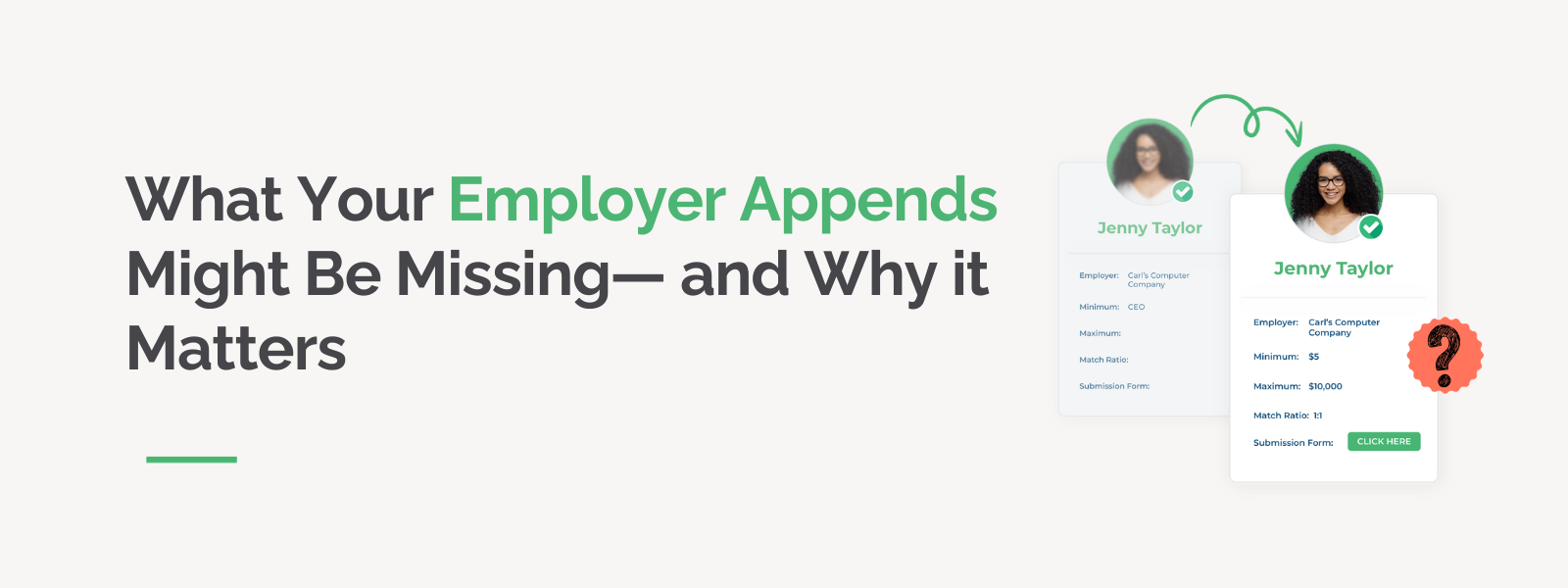
What your employer appends might be missing is workplace giving eligibility information, like this

Without this added layer of information, you might know where a donor works, but not how they can support your mission through their workplace. And knowledge is the first step to maximizing the programs’ impact! Not to mention, many companies offer multiple types of giving programs, meaning that without insight, you may be missing out on numerous revenue and engagement opportunities.

Corporate sponsorship opportunities

Another major blind spot with employer appends is the lack of visibility into a company’s corporate giving potential. While these appends may tell you where your donors work, they typically don’t reveal whether those employers have existing programs—like matching gifts, sponsorships, or grants—that support nonprofits their employees care about. That’s a missed opportunity, because many companies actively look to fund and partner with organizations their workforce is already supporting. Without this layer of insight, nonprofits risk leaving valuable corporate funding on the table.

Some of the opportunities that basic employer data typically misses include:

  • Corporate Grants (with Open Applications): Many companies use their corporate social responsibility (CSR) budgets to facilitate nonprofit grantmaking—including dedicated programs with open applications. Still, unless your data highlights which employers offer them, your organization could miss out entirely.
  • In-Kind Giving Programs:  Some companies offer product or service donations in addition to or instead of cash support. These can be incredibly valuable, and may even offer an opportunity for employees to advocate for your cause, but standard employer appends rarely include this type of insight.

What your employer appends might be missing is workplace giving eligibility information, like this

In short, many employer appends only scratch the surface. To truly unlock the potential behind donor employment data, nonprofits need more than just company names—they need actionable insights into the giving programs, incentives, and grant opportunities that come with each employer. Without it, you’re only seeing part of the picture.

Grow your workplace giving potential with employer data

Why corporate giving matters in employer appends

At first glance, employer appends may seem like just another piece of demographic data—useful for segmentation, but not much more. In reality, when enriched with corporate giving insights, employment information becomes one of the most powerful assets in your fundraising toolkit.

Here’s why corporate giving matters in the context of employer appends:

It Transforms Static Data into Actionable Insights

Knowing a donor works at “ABC Corporation” is useful. Knowing that ABC Corporation offers a 2:1 matching gift program with an annual cap of $10,000—and that your donor is eligible to participate—is a game-changer. When employment data is connected to corporate giving details, it empowers your organization to move from passive information to an active fundraising strategy.

It Reveals Untapped Revenue Opportunities

Billions of dollars in corporate giving go unclaimed each year, largely because donors and nonprofits simply don’t know these programs exist. When employer appends include corporate philanthropy details—like matching gifts, volunteer incentives, or payroll giving options—you gain a direct path to unlocking those funds.

It Enables Personalized, Impactful Donor Outreach

Imagine reaching out to a donor not just with a thank-you, but with tailored next steps: “Thanks for your gift—did you know your employer, XYZ, will double it?” or “As a volunteer and employee at [Company], you may be eligible for a grant to support the time you give.”

Personalized outreach built on meaningful employer data increases engagement, trust, and long-term value. And it’s much more impactful than a generic, catch-all version of the same message! Plus, with a solution like Double the Donation, the touchpoints can be automated with ease, connecting supporters directly to those next steps.

It Strengthens Relationships with Companies, Too

Employer data with corporate giving context can help your organization identify clusters of donors working at the same company, uncover advocates, and open the door to deeper relationships with corporate partners. Whether it’s through matching gifts, employee-nominated grants, or broader sponsorships, these insights help you build partnerships based on real data—not guesswork.

How Double the Donation fills in the gaps

Most employer appends stop at supplying a company name, but Double the Donation goes the extra mile. We help get you donor data in a way that doesn’t just tell you where your donors work; it tells you what that employer can do to support your mission and empowers you to connect supporters to those next steps.

At the heart of this enhanced approach is our industry-leading corporate giving database, which powers the employer data we can supply. When you work with Double the Donation, you gain access to a wealth of insights that most data providers simply don’t include.

Here’s how we fill in the critical gaps:

1. Workplace Giving Eligibility, Right in Your Appends

Unlike traditional appends that stop at a name match, our offering then gives you insight into:

  • Matching gift program availability and guidelines, including match ratios, minimum/maximum limits, and eligibility rules, along with submission links
  • Volunteer incentive program details, highlighting programs that reward employee volunteer hours with donations to nonprofits or paid time off work
  • Payroll giving options, identifying whether a donor’s employer offers direct paycheck contributions to nonprofits, and instructions on how to enroll

This information isn’t general—it’s mapped directly to the employer and backed by real-time updates from our proprietary database. That means when you append donor records with Double the Donation, you get not just where someone works but can then determine whether that employer offers programs that increase giving potential—and how to take action.

What your employer appends might be missing is workplace giving eligibility information, like this

2. Visibility Into Open Corporate Giving Opportunities

Our database also includes valuable insights into corporate sponsorships, grants, and in-kind donation programs—especially those with open applications or employee-directed giving components. When you combine our append services with our database insights, you can discover:

  • Which companies have active grant programs or donation funds
  • Whether those programs accept nonprofit applications (generally with links!)
  • How employees can advocate for your organization from within

By layering this intelligence onto employer data, you can identify donors who aren’t just supporters but potential gateways to corporate funding. This opens up new opportunities to pursue business partnerships strategically and based on facts.

3. Actionable, Automated, and Integrated

All this data becomes even more powerful when paired with Double the Donation’s complete workplace giving automation platform. When you use employer data with our automation tools, you can:

  • Prompt donors with personalized matching gift instructions
  • Surface relevant payroll giving and volunteer opportunities to encourage deeper involvement
  • Identify clusters of donors from the same company for targeted outreach
  • Track corporate giving revenue through a centralized dashboard

It’s a streamlined, end-to-end solution designed to maximize the impact of every employer connection in your database.

In short, Double the Donation transforms employer appends from basic data enhancement into a strategic fundraising advantage. With workplace giving eligibility and corporate sponsorship insights built-in, you’ll not only know who your donors work for—you’ll know how to turn that information into action.


Wrapping up & additional employer appends resources

At first glance, your employer append data might look complete. However, if it doesn’t reveal which donors are eligible for corporate giving programs, you’re only seeing part of the picture.

Without visibility into workplace giving opportunities like matching gifts or payroll giving, you may be missing the very insights that turn one-time gifts into multiplied impact.

The good news? There’s a better way to use employment data—one that not only tells you where your donors work but what giving opportunities come with it. When your data connects directly to corporate philanthropy programs, you unlock smarter fundraising, stronger donor relationships, and more dollars raised. It’s time to expect more from your employer appends and make sure nothing valuable is left out.

Ready to learn more about employer appends and data enhancement practices? Check out these additional recommended resources:

Grow your workplace giving revenue with Double the Donation

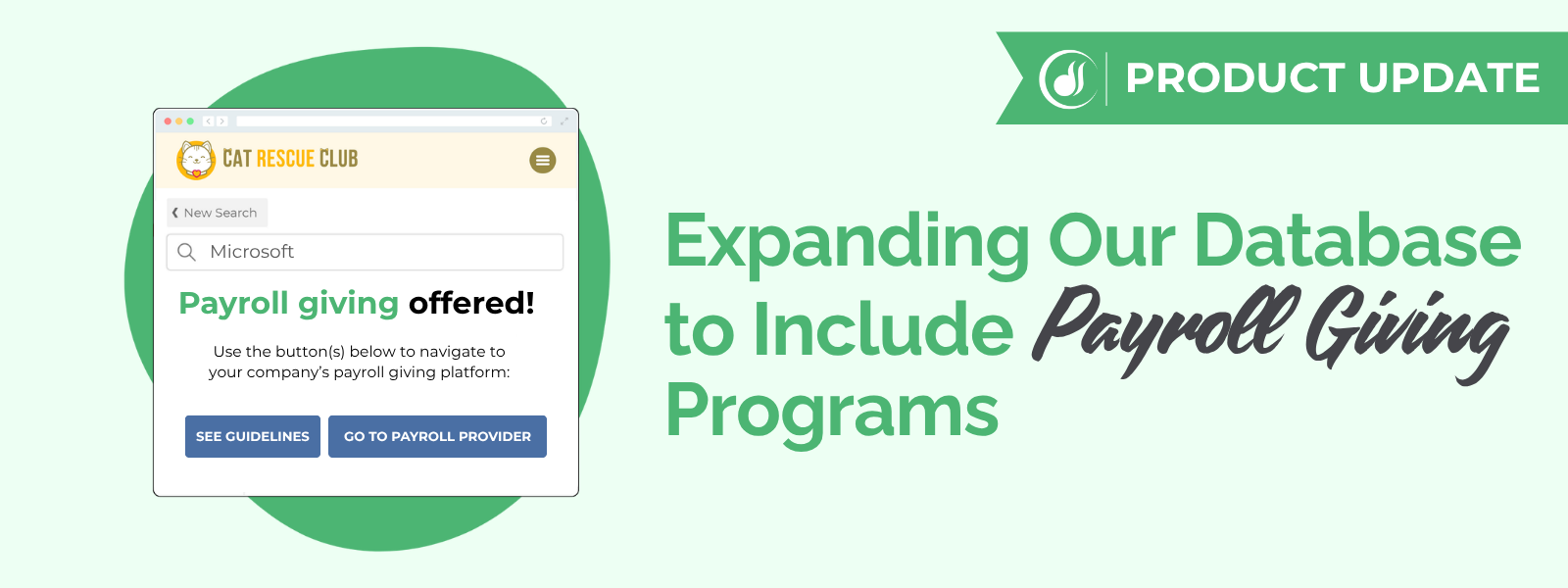
Why and How to Reach Out to Payroll Giving Donors [A Guide]

Why and How to Reach Out to Payroll Giving Donors [A Guide]

Avoid These 5 Employer Appending Mistakes Nonprofits Make
Avoid These 5 Employer Appending Mistakes Nonprofits Make

When it comes to maximizing donor intelligence, employer appending can be a game-changer for nonprofits looking to grow workplace giving revenue. By enriching your database with employment information—such as where your donors work and their eligibility for corporate giving programs—you unlock powerful insights that can drive your corporate giving success. But like any data project, success hinges on more than just good intentions. Many organizations rush into employer appends without the proper planning, only to encounter disappointing results. In this post, we’ll walk you through five common employer appending mistakes nonprofits make during the process—and, more importantly, how to avoid them.

These include:

  1. Starting with unclean or disorganized data
  2. Relying too fully on appends for data collection
  3. Choosing the wrong data appending vendor
  4. Lack of a data integration plan
  5. Not using the insights to power workplace giving programs

Avoiding these pitfalls doesn’t require a massive overhaul—just a more intentional approach. By understanding what can go wrong and planning accordingly, your nonprofit can turn employer appending into a smart, strategic asset.

Let’s dive into the five key mistakes to watch out for—and how to sidestep them for better results.

1. Starting with unclean or disorganized data

One of the most common—and most costly—mistakes nonprofits make when beginning an employer append is skipping the crucial step of data hygiene. If your donor records are riddled with typos, outdated contact info, or missing key fields, even the best appending service will struggle to return accurate or useful results.

Why It Matters:

Employer append vendors match your data against external databases using identifiers like name, address, email, and phone number. If that information is incorrect, inconsistent, or incomplete, the chances of a successful match drop significantly. Worse, it can lead to mismatched records or misleading insights that hinder your fundraising instead of helping it.

How to Avoid This Mistake:

  • Run a data audit before the append. Identify and flag duplicates, missing fields, and formatting inconsistencies.
  • Standardize your inputs. Make sure names are consistently formatted (e.g., “John A. Smith” vs. “Smith, John A.”), addresses follow USPS formatting, and emails are current.
  • Fill in the gaps. Verify and fill in basic information (like mailing address or phone number) before submitting your list for employer appending.
  • Create a clean version of your list. Work with a deduplicated and verified subset of records for the append process, especially if your full database contains outdated or inactive contacts.

Pro Tip: Cleaning up your data upfront not only boosts your match rates but also ensures you’re making decisions based on trustworthy information. By prioritizing clean, organized data from the start, your nonprofit sets the stage for a more successful—and actionable—employer append project.

2. Relying too fully on appends for data collection

Employer appending is a powerful tool—but it shouldn’t be your only strategy for collecting donor employment data. One major mistake nonprofits make is leaning too heavily on appending services to fill in all the gaps without putting systems in place to gather this information directly from supporters.

Why It Matters:

Appending services are only as good as the data they match against—and even the best providers can’t deliver 100% coverage. If your donor file lacks strong identifying information or the donor simply isn’t in the external database, you’ll be left with incomplete results. More importantly, relying solely on third-party sources limits your ability to capture current information directly from your audience and connect them to their workplace giving opportunities faster.

Avoid employer appending mistakes by collecting data through alternative means as well

How to Avoid This Mistake:

  • Add employer fields to your forms. Include optional fields for employer name and job title in donation forms, event registrations, volunteer sign-ups, and membership forms. Be sure to frame this field around discovering someone’s eligibility for a workplace giving program to increase reporting!
  • Use follow-up emails to gather info. After a donation or engagement, send a brief thank-you email with a friendly prompt asking supporters to share where they work so that you can connect them to their company’s matching gift, volunteer grant, or other workplace giving program.
  • Integrate employer info into donor conversations. Major gift officers and stewardship staff can ask about employment during one-on-one outreach, especially when building donor profiles. This helps them discover and communicate workplace giving opportunities back to supporters in real time, especially with the help of a corporate database tool like Double the Donation.

Pro Tip: Make it simple for the supporter to find and enter their company name! If you integrate your donation forms and volunteer management system with Double the Donation, supporters can search directly in our database, finding their employer’s information quickly and easily. That means they can be connected to any matches or grant opportunities in mere seconds!

By building employer data collection into your regular donor engagement, you create a more complete, up-to-date picture of your supporters—one that enhances append efforts and increases the accuracy of your workplace giving strategies.

3. Choosing the wrong data appending vendor

Not all employer appending vendors are created equal—and choosing the wrong one can undermine your data strategy. Some nonprofits make the mistake of selecting a vendor based solely on price or convenience without fully understanding what they’re getting in terms of data quality, match rates, compliance, and the ability to act on the information right away.

Why It Matters:

The vendor you choose determines how accurate, complete, and useful your appended employer data will be. A low-cost provider may rely on outdated or limited data sources, resulting in poor match rates or inaccurate employer information. Worse, vendors that don’t follow data privacy regulations can expose your organization to compliance risks.

How to Avoid This Mistake:

  • Do your homework. Research the vendor’s data sources, match process, and update frequency. Are they using verified, permission-based data? How often is their database refreshed?
  • Ask about match methodology. Some vendors use deterministic matching (precise identifiers), while others rely on probabilistic methods. Knowing the difference helps set realistic expectations about accuracy.
  • Check references and reviews. Ask for client testimonials or case studies from similar nonprofits. Learn how other organizations have used the service—and what kind of results they saw.
  • Clarify deliverables. Make sure you know what fields you’ll receive (e.g., employer name, title, industry, location, and workplace giving eligibility), how the data will be formatted, and how long the process will take.
  • Understand compliance and security standards. Choose a vendor that prioritizes data privacy, follows GDPR/CCPA where applicable, and offers clear terms on how data is handled and stored.

Pro Tip: Ultimately, the right vendor should act as a partner—not just a data provider. By choosing carefully, you ensure that the appended data adds real value to your workplace giving outreach efforts rather than becoming a missed opportunity or an administrative burden.

Grow your workplace giving potential with employer data

4. Not using the insights to power workplace giving programs

A surprising number of nonprofits go through the process of appending employer data—only to let those valuable insights sit unused. One of the biggest missed opportunities is failing to leverage employer information to fuel workplace giving programs, such as matching gifts, payroll giving, and corporate volunteer grants.

Why It Matters:

Employer data isn’t just nice to have—with workplace giving opportunities available, it can be a direct revenue driver. Many companies offer donation matching gifts, volunteer grants, and payroll giving programs (along with other forms of charitable support) for employees, but they often go untapped simply because the nonprofit doesn’t know which donors are eligible. If your organization collects employer information but doesn’t connect it to workplace giving outreach, you’re leaving money—and engagement—on the table.

How to Avoid This Mistake:

  • Run a workplace giving eligibility check. Use your appended employer data with a tool like Double the Donation to identify which donors work for companies that offer matching gifts, volunteer grants, payroll giving, and more.
  • Segment your communications. Create targeted outreach campaigns for donors who work at eligible companies. Tailor the messaging to inform them of the opportunity and guide them through the submission process.
  • Update your donation forms, volunteer sign-ups, and thank-you pages. Include prompts like “Does your employer offer matching gifts or volunteer grants?” and an employer search tool so supporters can take action immediately after engaging.
  • Incorporate into stewardship efforts. When thanking a donor, include a reminder about their company’s workplace giving program if you have that information on file.

Avoid employer appending mistakes by using the information to power workplace giving

Pro Tip: Workplace giving isn’t just about revenue—it’s also a great way to deepen donor engagement. When supporters see their employer amplifying their impact, it reinforces their commitment to your cause.

5. Not using the insights to strengthen corporate partnerships

While workplace giving is a valuable use of employer data, many nonprofits miss a second, equally powerful opportunity: using employment insights to build or deepen corporate partnerships. After all, appended employer data doesn’t just tell you where your donors work—it can reveal hidden connections to companies that may be strong candidates for in-kind gifts, event sponsorships, volunteer support, or even grants.

Why It Matters:

Your donor base may already include employees—sometimes even executives—at companies that align well with your mission. But without employment data, you won’t know who these individuals are or how to activate those connections. When nonprofits overlook this insight, they miss a chance to cultivate warm leads and grow high-impact corporate relationships rooted in shared values and personal ties.

How to Avoid This Mistake:

  • Analyze for concentration. Review your appended data to find clusters of donors working at the same company or within the same industry. These insights can reveal companies with an existing culture of giving or a natural connection to your cause.
  • Identify internal champions. Look for donors who may be well-positioned to introduce your organization to their company’s CSR team, philanthropic committee, or leadership. A warm intro often opens more doors than a cold pitch.
  • Personalize your corporate outreach. When reaching out to potential partners, mention your existing donor connections and the shared values that link your missions. This helps your proposal stand out and feel more authentic.
  • Pursue strategic asks. Use employer data to tailor your request—whether it’s an event sponsorship, an in-kind donation, or a volunteer service day—and show how the partnership would benefit both sides.

Pro Tip: Don’t wait for your corporate partnerships team to initiate this process—equip fundraisers and donor relations staff with employer insights so they can help uncover connections and spark new opportunities across departments.


Wrapping Up & Additional Employer Appends Resources

Employer appending can open new doors for workplace giving, but only if it’s done thoughtfully. By avoiding these five common mistakes, you’ll position your organization to make the most of your data investment.

The key is to treat employer appending not as a quick fix but as a strategic tool within your broader workplace and corporate giving efforts. With the right approach, the insights you gain can fuel smarter campaigns, deeper donor relationships, and, ultimately, greater impact.

Ready to learn more about employer appends for nonprofit fundraising? Check out these additional recommended resources:

Grow your workplace giving revenue with Double the Donation

Proven Ways to Increase Payroll Donations at Your Nonprofit
5 Proven Ways to Increase Payroll Donations at Your Nonprofit

Benefits of Payroll Giving for Nonprofits & Donors

Benefits of Payroll Giving for Nonprofits & Donors: A Win-Win